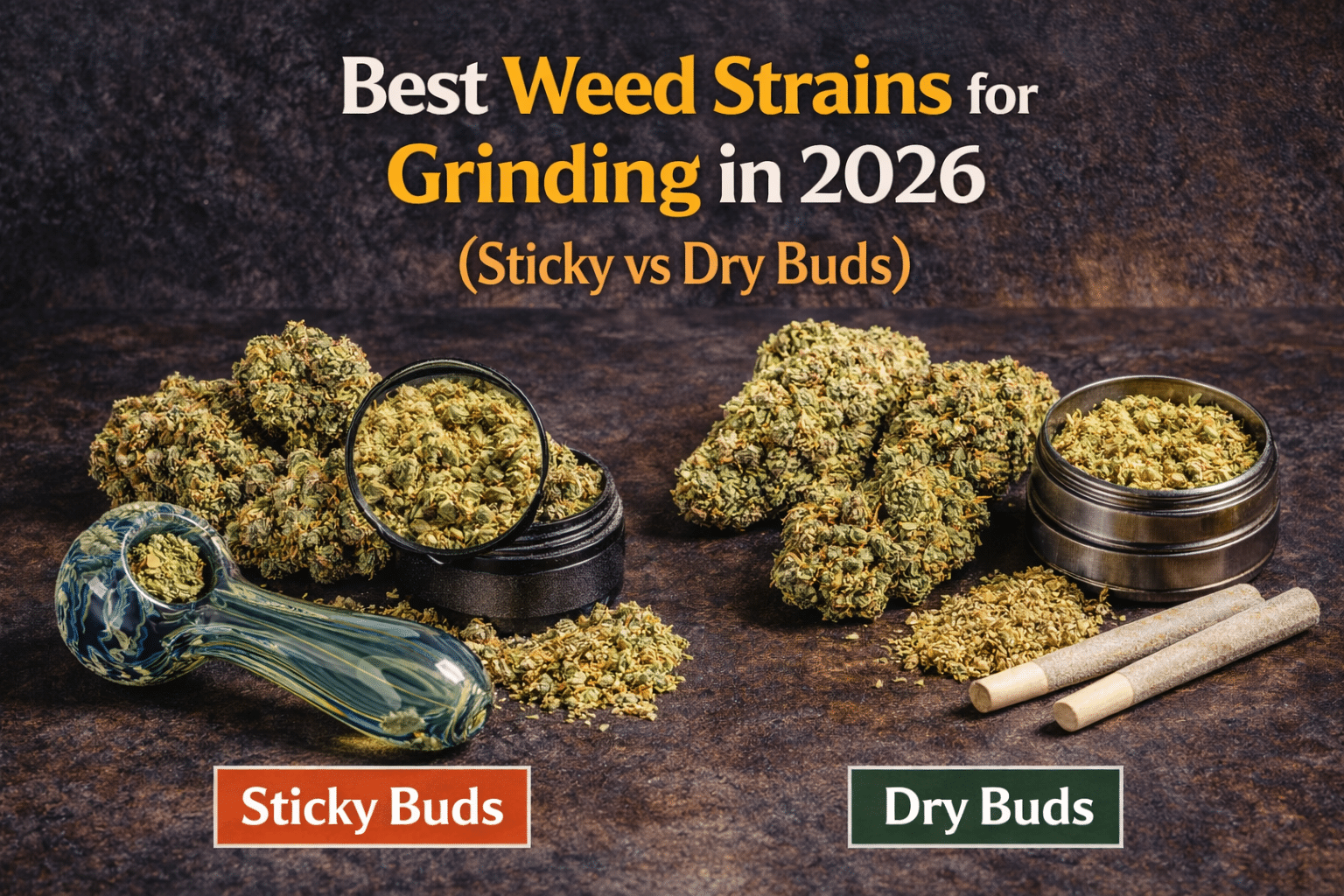
Not all cannabis grinds the same — and in 2026, the difference between sticky buds and dry buds is more important than ever. Modern genetics have pushed resin production, terpene density, and flower structure to new extremes. While that’s great for potency and flavor, it has also exposed a problem many users don’t think about:
Some strains are much harder to grind efficiently than others.
This article breaks down:
- Which types of weed grind best
- Which strains clog grinders
- Why sticky buds behave differently than dry buds
- How grind behavior affects airflow, burn quality, and potency
This isn’t about strain hype — it’s about physical behavior under grinding forces.
Why Some Weed Is Harder to Grind Than Others
Grinding difficulty is not determined by THC percentage alone. It depends on:
- Resin content
- Trichome density
- Moisture level
- Bud structure
- Terpene oil composition
Two strains with identical THC percentages can behave completely differently in a grinder.
Sticky Buds vs Dry Buds: What’s the Actual Difference?
Sticky Buds
Sticky buds are typically:
- High in resin
- Rich in terpenes
- Fresh or well-cured
- Dense and oily
They feel great to the touch — but present challenges when grinding.
Dry Buds
Dry buds are:
- Lower moisture
- Less resinous
- Older or over-cured
- More brittle
They grind easily but don’t always perform well when smoked.
The Best Weed Strains for Grinding Share Common Traits
Regardless of strain name, weed that grinds well usually has:
- Balanced moisture (not wet, not brittle)
- Resin that coats but doesn’t smear
- Buds that break cleanly under shear
- Trichomes that stay attached during grinding
These traits matter more than strain branding.
Sticky Buds: Pros and Cons for Grinding
Why Sticky Buds Are Challenging
Sticky strains often:
- Smear resin on grinder teeth
- Bind grinding chambers
- Compress instead of breaking apart
- Reduce airflow after grinding
The resin acts like glue, especially in grinders with poor tooth geometry or surface finish.
When Sticky Buds Grind Well
Sticky buds grind best when:
- Grinder teeth slice instead of crush
- Surfaces resist resin adhesion
- Grind output remains fluffy
- Structure is preserved
High-quality grinders handle sticky flower far better than cheap ones.
Dry Buds: Easier to Grind, Easier to Waste
Dry buds are often mistaken for “good grinding weed” because they break apart easily.
But dry buds:
- Turn into powder quickly
- Lose terpene content
- Burn hotter
- Degrade THC faster
Easy grinding does not equal efficient smoking.
Ideal Bud Condition for Grinding in 2026
The best grinding weed sits between sticky and dry.
The sweet spot:
- Slightly tacky exterior
- Buds spring back when squeezed
- No cracking sounds when broken
- Resin present but not wet
This balance produces the most consistent grind and best airflow.
Strain Categories That Grind Best in 2026
Rather than listing hype strains only, it’s more accurate to group strains by structure and resin behavior.
🌿 Best Balanced Grinder Strains
These strains tend to grind cleanly and consistently:
- Gelato family (Gelato 41, Gelato 33)
- Kush hybrids (OG Kush crosses)
- Wedding Cake phenotypes
- Zkittlez crosses (well-cured)
Why they work:
- Dense but not wet
- Resin evenly distributed
- Buds shear instead of smear
🔥 Stickiest Strains (Harder to Grind)
These strains often clog grinders:
- Gorilla Glue #4
- Grease Monkey
- GMO (Garlic Cookies)
- Slurricane
- Certain live-resin-heavy phenotypes
They are potent — but require excellent grinders and patience.
🌬️ Drier Strains (Easy to Grind, Lower Efficiency)
Often older or over-cured:
- Some sativas
- Budget flower
- Improperly stored strains
They grind fast but:
- Produce dust
- Burn harsh
- Waste cannabinoids
Why Grinder Quality Matters More With Sticky Strains
Sticky strains expose poor grinders instantly.
Cheap grinders:
- Smash flower
- Smear resin
- Bind quickly
- Lose efficiency
Precision grinders:
- Slice buds cleanly
- Preserve structure
- Reduce resin buildup
- Maintain airflow
Sticky weed separates good grinders from bad ones.
Grind Behavior and THC Delivery
Sticky buds usually contain:
- Higher terpene concentration
- Higher cannabinoid density
But if ground improperly:
- THC burns off early
- Airflow collapses
- Heat spikes
Proper grind unlocks sticky strain potential — poor grind wastes it.
Moisture Content Is the Silent Variable
Grinding sticky weed straight from humid storage causes:
- Resin clumping
- Airflow blockage
- Inconsistent burn
Letting flower breathe briefly before grinding often improves results.
How to Grind Sticky Weed More Effectively
For sticky strains:
- Use a medium grind
- Avoid over-grinding
- Clean grinder regularly
- Don’t pack bowls tightly
Controlled preparation matters more than brute force.
Why Dry Buds Feel “Weaker” Even When THC Is High
Dry buds:
- Lose volatile terpenes
- Burn hotter
- Produce harsher smoke
This leads users to consume more — which feels inefficient.
Sticky buds deliver better flavor and perceived potency when prepared correctly.
Grinding and Airflow Are Linked
The best grinding strains:
- Produce fluffy output
- Maintain air pockets
- Allow oxygen flow
- Burn evenly
Sticky or dry — airflow decides everything.
The Best Weed for Grinding Isn’t the Stickiest or the Driest
It’s the most balanced.
Perfect grinding weed:
- Has structure
- Has moisture control
- Has resin without smearing
- Responds to slicing, not crushing
Final Takeaway: Choose Bud Structure, Not Just Strain Name
In 2026, the best weed strains for grinding are those that balance resin content with structural integrity. Sticky buds offer the best flavor and potency, but only when paired with the right grinder and preparation. Dry buds grind easily but often waste cannabinoids.
Grinding performance depends on:
- Bud condition
- Resin behavior
- Grinder design
- Grind consistency
When those align, every session improves.
Grinding isn’t just preparation — it’s optimization.