
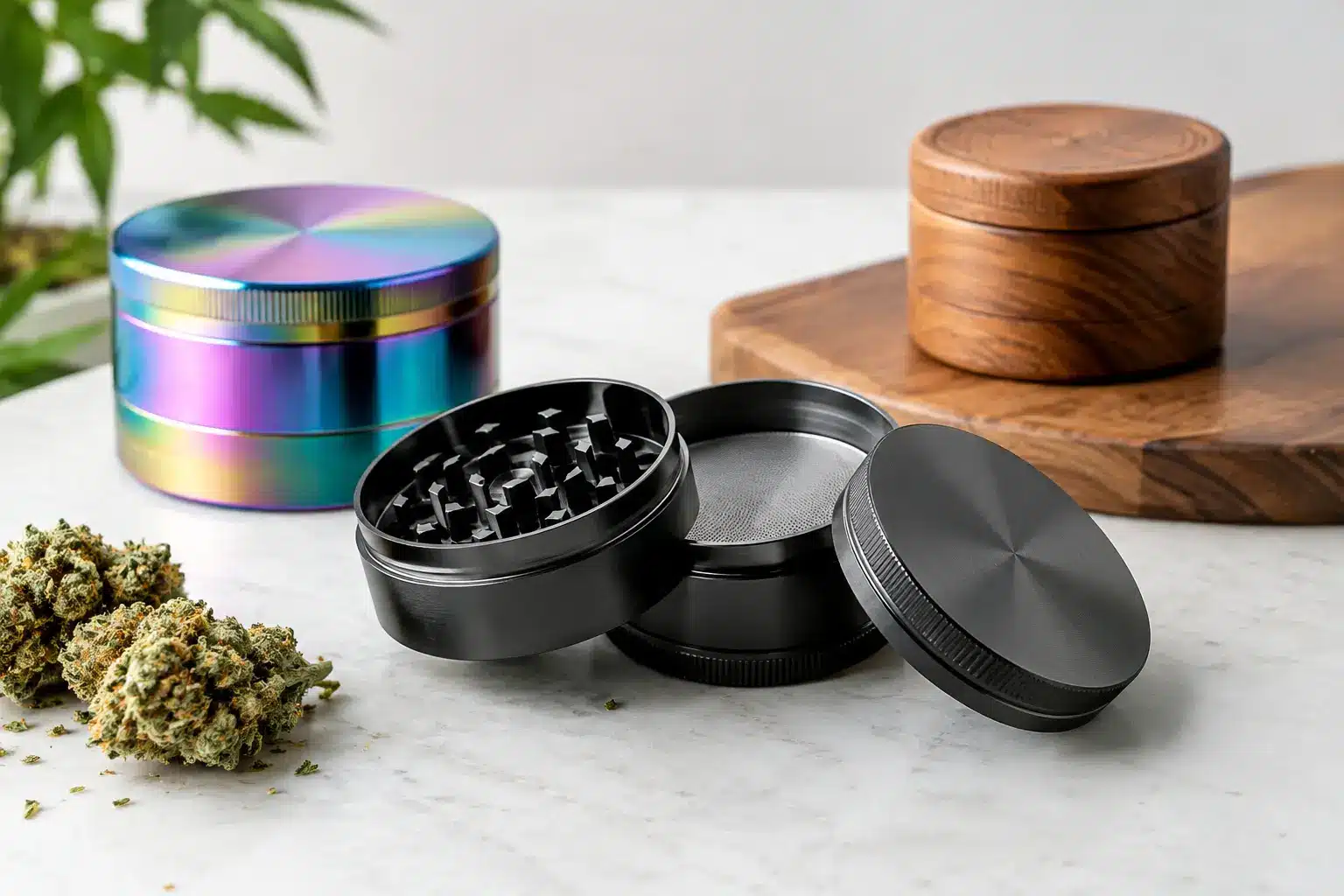
A grinder can look impressive in a product photo and still become a headache after a few sticky sessions. The weed grinder design trends worth paying attention to are not novelty finishes or oversized logos. They are engineering decisions that determine how cleanly a grinder turns, how evenly it breaks down flower, and whether it remains dependable years from now.
For serious cannabis users, the standard has changed. A grinder is no longer a disposable accessory tossed in a drawer when the lid starts binding. The best modern designs treat it as a precision tool: machined from the right material, built with intentional tooth geometry, and designed to reduce friction at every point of use.
Weed Grinder Design Trends Moving Beyond Gimmicks
The strongest trend in premium grinders is simple: performance is replacing decoration as the main design language. Bright colors, engraved artwork, and limited-edition finishes still have their place, but they cannot compensate for sloppy threads, soft metal, dull teeth, or poor chamber alignment.
Premium buyers are looking more closely at what happens beneath the finish. They want a grinder that opens smoothly, maintains a consistent feel, and produces material that is ready to pack, roll, or vaporize without repeated passes. That demand has pushed better manufacturers toward CNC machining, stronger aluminum alloys, magnetic closure systems, and configurations built around how people actually consume flower.
The difference is not subtle. A cheaply cast grinder can feel acceptable when new, then develop rough edges, metal-on-metal drag, and a lid that no longer seats properly. A precision-machined grinder begins with controlled dimensions, which creates a better experience from the first turn and protects that performance over time.
Threadless Magnetic Closures Are Replacing Frustrating Threads
Traditional screw-top grinders have one obvious weakness: threads collect resin and debris. Once buildup starts, opening the grinder can become a two-handed fight. Cross-threading is another common problem, particularly on lower-quality pieces where the threads are shallow or inconsistently cut.
Threadless magnetic designs address that failure point directly. Instead of relying on a threaded lid, the top aligns and closes with magnets. The result is faster access, less mess around the opening, and no thread damage to worry about. For frequent users, that is a meaningful daily upgrade rather than a cosmetic feature.
Magnetic closure only works when the fit is right. Weak magnets, loose tolerances, or poorly seated components can leave a lid feeling cheap or insecure. In a properly engineered grinder, the magnets complement precise machining. The lid locates cleanly, stays in place during use, and comes off without the sticky resistance associated with resin-coated threads.
There is a trade-off. Threadless designs demand a manufacturer that can hold tighter tolerances. A loose fit cannot be hidden behind a threaded connection. That is exactly why this trend favors companies that control their machining and assembly rather than relying on generic imported components.
CNC-Machined Teeth Are Getting More Intentional
Not all grinder teeth are designed to do the same job. Tooth count, shape, height, spacing, and cutting angle all affect the consistency of the finished herb. More teeth do not automatically mean a better grind. A crowded cutting surface can mash sticky flower instead of slicing it, while overly aggressive teeth may produce material that is too fine for a preferred smoking method.
The move toward CNC-machined tooth profiles gives manufacturers much more control than cast designs. Each tooth can be cut to a deliberate shape and location, creating a cutting pattern that pulls material through the grinder instead of simply compressing it. The goal is a fluffy, even result with less effort at the wrist.
This matters because consistency changes the entire preparation process. Evenly ground flower is easier to roll, packs more predictably in a bowl, and can promote more uniform airflow. If you use a dry herb vaporizer, particle size can also affect how consistently the chamber heats your material. There is no single texture that works perfectly for every consumer, but a quality grinder should produce a dependable result every time.
Sharp machining also has a durability advantage. Teeth that are precisely cut from solid aluminum are less likely to chip, bend, or wear down than thin, poorly formed teeth on a low-cost grinder. The design should stay effective after hundreds of sessions, not just the first week out of the box.
6061-T6 Aluminum Has Become the Serious Standard
Material selection is one of the clearest dividing lines between a premium grinder and a disposable one. Lightweight zinc alloys and mystery metals can make a grinder inexpensive, but they often sacrifice strength, longevity, and machining quality. The body may dent, the finish may degrade, and the moving surfaces may stop feeling smooth.
6061-T6 aluminum is a better answer for a tool that gets handled, twisted, dropped, and exposed to sticky plant material. It is strong without becoming unnecessarily heavy, corrosion resistant, and exceptionally well suited to precision CNC machining. It also allows designers to create clean edges, accurate mating surfaces, and structural strength without building a bulky brick.
The alloy alone is not the whole story. How it is machined, finished, inspected, and assembled matters just as much. A premium aluminum grinder should feel solid in the hand, but it should also rotate with control rather than dead weight. The best designs use the material to create confidence, not excess.
At Tahoe Grinder Co, that means designing and machining grinders in-house in the USA, where the production process can be controlled from the first cut through inspection and fulfillment. That control is what turns a material specification into a better ownership experience.
More Choice in Grinder Configuration, Not One-Size-Fits-All Design
Another major design trend is the recognition that users need different grinder setups. The old assumption that every customer should buy the same four-piece grinder is fading. Two-piece, three-piece, and four-piece designs each solve a different problem.
A two-piece grinder is direct and fast. It is ideal for users who want to grind flower and empty it immediately, with no extra chambers or screens. Compact two-piece designs are also easier to carry and clean. The trade-off is that you do not have a storage chamber or a separate collection area.
Three-piece grinders add a lower chamber, giving users a place to collect ground herb before use. For many people, this is the practical middle ground: the clean workflow of a premium grinder with more capacity and less need to open it over a tray every time.
Four-piece grinders add a screen and lower collection chamber. This configuration is preferred by consumers who want to separate fine material over time. It is useful, but not automatically better for everyone. Screens need occasional cleaning, and some users prefer to keep all of their flower together for a more immediate, uncomplicated routine.
Size matters as much as chamber count. Compact grinders work well for travel and smaller sessions, while large-diameter models provide more grinding surface, greater capacity, and more leverage for dense flower. A 90mm grinder is not subtle, but it can be the right tool for consumers preparing larger amounts or anyone tired of reloading a small grinder repeatedly.
Cleaner Interiors and Serviceable Designs Are Earning Attention
The best weed grinder design trends also recognize a basic truth: every grinder gets dirty. Resin is part of the job. The goal is not to pretend buildup will never happen, but to make the grinder easier to maintain and less likely to seize when it does.
Smooth chamber walls, well-finished edges, accessible components, and threadless openings all reduce the places where residue can create problems. A thoughtfully designed grinder should be easy to empty fully and straightforward to brush out when needed. That keeps your material cleaner and preserves the feel of the mechanism.
Durability is also becoming a design feature consumers expect to see backed by a real warranty. A lifetime warranty sends a clear message: the manufacturer expects the tool to remain in service. It is a stronger promise than a trendy colorway, and it is the kind of detail that matters once the newness wears off.
The Trend That Matters Most: Buying for Years, Not Sessions
The market will keep producing louder finishes, novelty shapes, and grinders that chase attention for a season. Some are fun. Very few improve the actual job of preparing flower.
Choose the features that match your routine: a compact two-piece for speed, a larger multi-chamber design for capacity, or a threadless magnetic model for cleaner daily access. Then judge the grinder by the fundamentals that never go out of style: precision machining, durable aluminum, sharp teeth, controlled tolerances, and a manufacturer willing to stand behind the tool long after the first grind.