
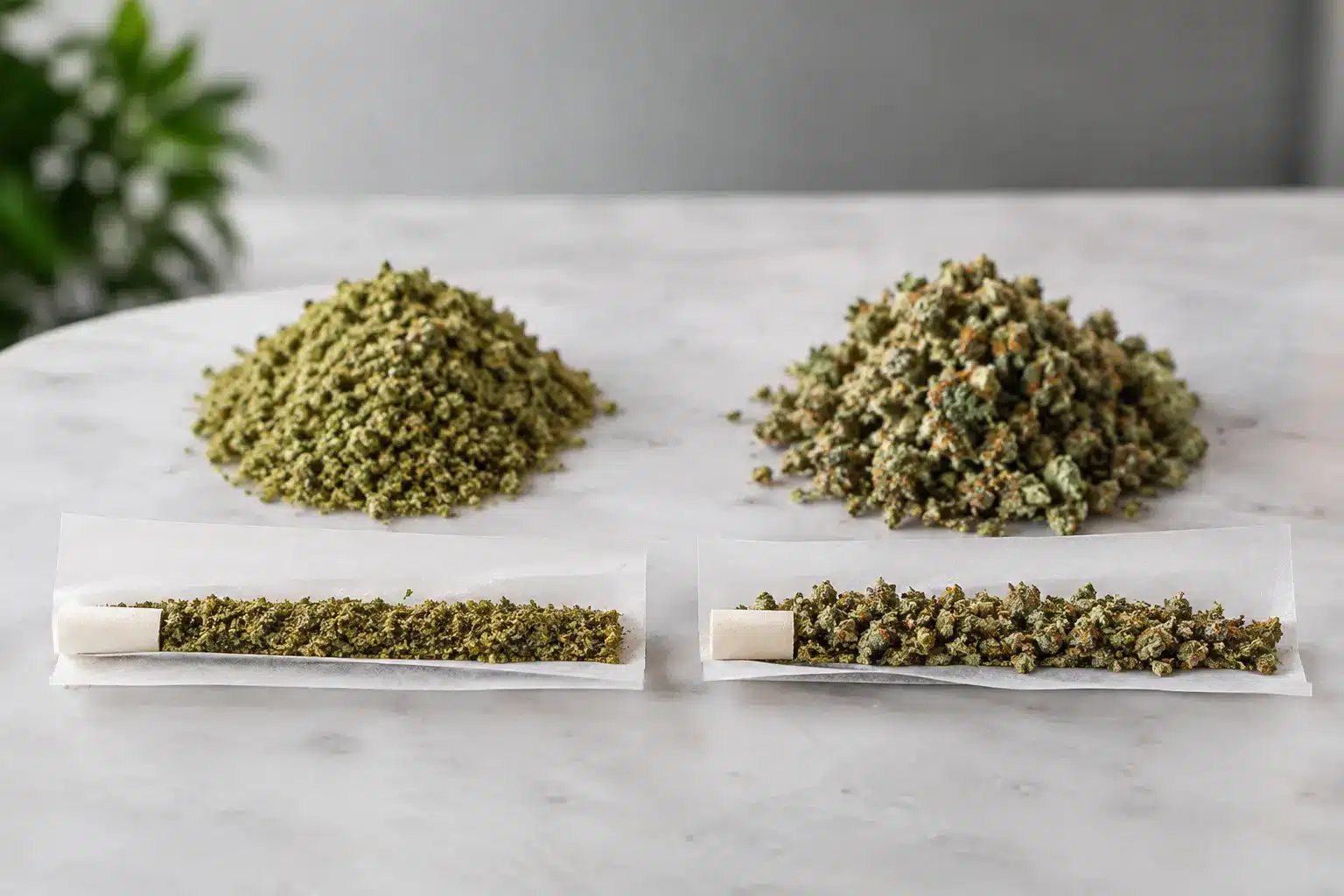
A bowl can look perfectly packed, light without a problem, and still smoke terribly. That is where an uneven grind smoking results example becomes useful: picture a mix of powdery dust, medium-sized herb, and a few dense chunks loaded into the same pipe. The first hit may pull hot and harsh. The next may barely pull at all. Then a chunk shifts, airflow opens up, and half the bowl burns away faster than you can enjoy it.
That is not bad luck. It is inconsistent particle size, and it changes how dried herb burns from the first draw to the last. A quality grinder is not just a convenient way to break up flower. It is the tool that sets the foundation for airflow, packing, burn control, and a more predictable smoking experience.
Uneven Grind Smoking Results Example in a Packed Bowl
Start with two grams of dry flower. In the first scenario, it is torn apart by hand or run through a dull, cheaply made grinder. The result is a pile with three very different textures: fine dust, loose fragments, and hard pea-sized pieces. You pack that blend into a bowl.
The fine material settles tightly at the bottom and around the sides. It restricts airflow once heat reaches it, especially if it gets pulled into the screen. The larger pieces leave empty pockets between them, so flame and hot air move unpredictably through the bowl. Those chunks also have more mass to heat through, meaning they often remain partially unburned while the surrounding smaller material turns to ash.
Now compare that to flower processed into a consistent, fluffy medium grind. The particles sit together without being compressed into a plug. Air can travel through the packed bowl with less resistance, while the material has a similar surface area across the load. The flame moves more evenly, the ember stays more stable, and each draw is easier to control.
The difference is obvious during a real session. An uneven bowl can start with a sharp, overly hot pull because small particles ignite quickly. A few draws later, it may require repeated relighting because larger pieces are not catching evenly. A properly ground bowl is not magic – moisture level, packing pressure, and smoking device still matter – but it removes one of the biggest sources of inconsistency before you ever use a lighter.
Why Particle Size Controls the Burn
Combustion is a surface-area problem. Smaller particles expose more surface to heat and oxygen, so they ignite and burn faster. Larger pieces expose less surface area and take longer to heat all the way through. When both are mixed together, they cannot burn at the same rate.
That mismatch creates the familiar cycle of harsh hits, tunneling, and wasted green material. Fine particles can burn ahead of the rest of the bowl. Larger pieces may char on the outside while staying green inside. If the load is tightly packed with dust, draw resistance rises and the hit can feel hotter because you naturally pull harder to get smoke through the restriction.
A consistent grind does not mean pulverizing flower into powder. In fact, over-grinding is its own performance problem. Powder can clog screens, get pulled into the mouthpiece, and make a bowl burn too quickly. The target is an even, manageable texture: broken up enough for uniform airflow, but not shredded into dust.
The Role of Airflow
Airflow is what keeps the ember alive between hits. With evenly sized material, air moves through many small, consistent gaps. With an uneven grind, the bowl contains both tight, blocked areas and oversized air channels. The tight areas choke the draw. The oversized channels let heat rush through one section while bypassing another.
This is why an uneven bowl often burns crooked. The issue is not always the lighter technique. It can begin with the texture of the flower itself.
The Role of Moisture
Fresh, sticky flower takes more force to break apart and can clump in a low-quality grinder. Very dry flower may crumble into excessive fines. Neither condition changes the goal: aim for a consistent result that suits the material in front of you.
With sticky herb, avoid forcing too much material into a small grinding chamber. Give the teeth room to work. With drier flower, use controlled turns rather than aggressively spinning until every piece is reduced to dust. Premium grinder geometry matters here because sharp, precisely machined teeth cut and separate material instead of crushing it into an unpredictable mix.
What Uneven Grinding Does to Flavor and Smoothness
Flavor is not separate from burn behavior. When one part of a bowl overheats while another part is barely burning, the smoke becomes harder to regulate. Repeated relights and long, forceful draws add more heat to material that may already be partially charred. That can flatten the flavor of the flower and make the session feel rougher than it needs to.
An even grind gives you more control over how the bowl progresses. You can corner the load, take measured draws, and keep the ember where you want it. The result is not that every strain tastes identical or that every hit will be mild. It means your grinder is no longer adding chaos to the equation.
This matters even more with small pipes and one-hitters, where a tiny amount of powder can block a screen quickly. It also matters with larger bowls, where uneven material has more opportunity to create an internal tunnel that wastes a section of the pack. Different devices reward different grind sizes, but none of them benefit from random particle sizes.
The Grinder Problems That Create an Uneven Result
Most uneven grinds come from a few mechanical failures. Dull teeth tear rather than cut. Loose tolerances let material shift away from the cutting surfaces. Poorly designed teeth mash sticky flower into clumps. Cheap finishes can wear, while rough threads collect residue and make consistent operation harder over time.
A grinder should feel controlled from the first turn. The teeth should engage the flower across the chamber instead of only crushing what lands in one spot. The lid and body should align cleanly, and the action should stay smooth as the grinder ages. Those details are not cosmetic. They decide whether each turn produces usable, even material or a frustrating mix that needs to be sorted by hand.
Material choice is part of that equation. Precision-machined 6061-T6 aluminum provides the structure needed for clean tooth geometry and durable performance. When a grinder is machined to tight tolerances, its components fit as designed and its cutting surfaces do their job consistently. That is a major reason serious users move away from flimsy cast grinders and treat a grinder as a long-term tool rather than a disposable accessory.
Tahoe Grinder Co builds its grinders in-house in the USA, controlling machining, finishing, inspection, and fulfillment rather than relying on generic drop-shipped hardware. That control shows up where it matters: dependable alignment, purpose-built tooth profiles, and a grind that is designed to stay consistent session after session.
How to Get a More Consistent Smoke
The best technique begins before grinding. Remove stems when practical, especially thick ones that can interfere with the teeth and leave oversized debris in the chamber. Load the grinder loosely rather than packing it to the point where the lid fights to close. A little space lets the teeth work through the flower instead of compressing it.
Turn with steady pressure. If the grinder suddenly becomes difficult to rotate, do not force it with excessive torque. Reverse slightly, then continue. That small reset helps reposition sticky material and prevents the crushing action that creates clumps and powder.
After opening the grinder, look at the texture before loading your piece. You want a fairly uniform bed of small, airy pieces. If you see obvious chunks, give them another controlled pass. If you see an excess of dust, use a gentler technique next time and avoid overworking dry material.
Packing matters after grinding, too. Fill the bowl evenly and keep the material loose enough for air to move through it. Pressing hard is rarely the answer to a fast-burning bowl. More often, it creates the restriction that leads to harsh, laborious draws. Let an even grind provide the structure, then use a light touch.
A consistent smoke starts with a consistent input. When your flower is cut cleanly, sized evenly, and packed with sensible airflow, the bowl becomes easier to light, easier to control, and far less likely to waste good material. Buy the grinder that gives your herb a fair chance to perform the way it should.