
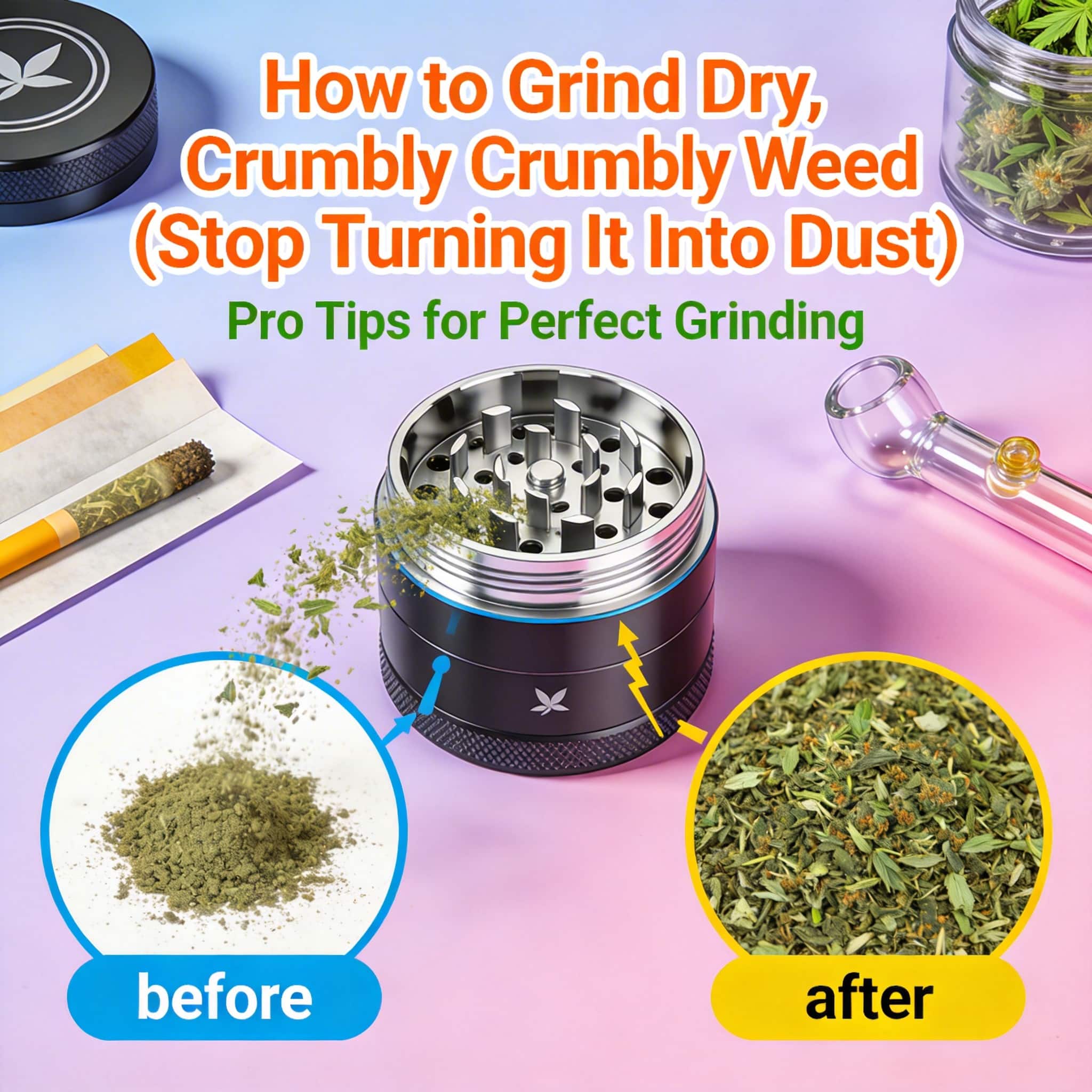
Dry, crumbly weed is one of the most common problems cannabis users run into—and one of the most misunderstood. It looks easy to grind, feels light in the hand, and breaks apart instantly. But the moment it goes into a grinder, it turns into dust, burns harsh, and wastes usable material.
This issue isn’t just about flower quality. It’s about moisture balance, grinder design, and technique. When dry weed is ground incorrectly, even high-quality tools like premium weed grinders can’t compensate.
Understanding how to handle dry flower properly is essential for anyone using glass pipes, rolling joints, packing bowls, or storing herb for later use.
Why Dry Weed Turns Into Powder Instead of a Fluffy Grind
Cannabis flower relies on a balance between plant fiber, resin, and natural oils. As flower dries out, those oils evaporate first. What remains is brittle cellulose that fractures instead of shears.
When dry weed enters a grinder—especially one with aggressive teeth—it doesn’t get cut. It gets crushed.
This problem becomes more noticeable when using:
- Fine-screen 4-piece weed grinders
- Small-tooth grinders
- Overloaded chambers
- Low-quality cast metal grinders
Properly machined aluminum grinders, such as those found in 2-piece weed grinders and 3-piece weed grinders, are far better suited for controlled grinding when moisture levels are low.
Ideal Moisture Level for Grinding Dry Weed
The sweet spot for grinding cannabis is 55%–62% relative humidity.
When flower drops below ~50% RH:
- Trichomes snap off
- Flower structure collapses
- Grinding creates dust instead of particles
If you store weed long-term in stash jars, especially glass jars with poor seals, dryness can happen faster than expected.
Rehydrating slightly—without overdoing it—restores elasticity and prevents dust formation.
How to Rehydrate Dry Weed Safely (Without Ruining It)
The goal is not to make weed moist. It’s to make it flexible enough to cut cleanly.
Best method:
- Place dry flower in an airtight stash jar
- Add a humidity pack (58%)
- Wait 12–24 hours
Avoid:
- Fruit peels
- Bread
- Water drops
- Steam
Uneven moisture causes mold risk and inconsistent grinding.
Grinder Loading Matters More With Dry Weed
Dry weed punishes overloading.
For best results:
- Fill your grinder only 20–30%
- Break large nugs by hand
- Remove stems completely
This applies whether you’re using 2-piece weed grinders, 3-piece weed grinders, or 4-piece weed grinders.
Underfilling reduces compression and prevents brittle flower from shattering on contact.
Grinding Technique That Prevents Weed Dust
If you’re using full rotations, you’re creating powder.
Instead:
- Use short, partial turns
- Rock the grinder back and forth
- Let teeth slice gradually
- Flip the grinder upside down for a few gentle turns mid-grind
This technique works especially well with precision-machined aluminum grinders and avoids over-processing dry flower.
Tooth Design Is Critical With Dry Flower
Dry weed exposes bad tooth geometry immediately.
Grinders that destroy dry weed often have:
- Spike-style teeth
- Uneven spacing
- Cast zinc alloy construction
- No visible machining marks
High-quality aluminum grinders—like those commonly found in square grinders, 2-piece weed grinders, and 3-piece weed grinders—use cutting geometry that shears flower instead of crushing it.
That difference alone determines whether dry weed becomes fluffy or dusty.
Why Screens Make Dry Weed Worse
Dry flower sheds trichomes aggressively.
In 4-piece weed grinders, this causes:
- Excessive kief separation
- Clogged screens
- Powder migrating into lower chambers
If weed is already dry:
- Use a 2-piece weed grinder
- Or a 3-piece weed grinder with a solid chamber
- Or temporarily remove the screen
This preserves cannabinoids and prevents airflow restriction.
Packing Bowls With Dry Weed (Glass Pipes & Hand Pipes)
Dry weed burns faster and hotter.
If you’re packing bowls in glass pipes, especially spoon pipes:
- Pack loosely
- Don’t tamp down
- Use flame edges, not direct center burn
Dusty weed restricts airflow and causes harsh hits, which is why pairing the correct grind with clean glass pipes makes a noticeable difference.
Why Weed Dust Is Bad (Beyond Harsh Smoke)
Grinding dry weed into dust causes:
- Faster terpene loss
- Hot combustion
- Airflow blockage
- Increased resin buildup in pipes
- Shorter grinder lifespan
This affects not only grinders but also accessories like metal rolling trays, which collect powder instead of usable flower.
When Dry Weed Can Still Work Well
Dry weed isn’t useless. It can perform well for:
- Joints
- Quick sessions
- Certain vaporizers
But only when grind size is controlled and structure is preserved.
Using properly machined aluminum grinders—especially medium-sized models found across 2-piece, 3-piece, and 4-piece weed grinder categories—makes dry flower manageable instead of frustrating.
Final Thoughts: Dry Weed Requires Precision, Not Force
Grinding dry weed successfully isn’t about grinding harder—it’s about grinding smarter.
Key takeaways:
- Restore light humidity
- Underfill your grinder
- Use controlled motion
- Avoid aggressive teeth
- Limit screen use
- Adjust packing technique
When handled correctly, dry weed delivers clean flavor, predictable airflow, and minimal waste—especially when paired with quality weed grinders, proper storage in stash jars, and well-maintained glass pipes.
Dust is optional.
Technique is everything.
If you want, next we can:
- Tighten anchor text for even better keyword flow
- Map internal links article-to-article for topical authority
- Create a standard internal link pack you can reuse in every grinder article
Just tell me which direction you want to go next.