
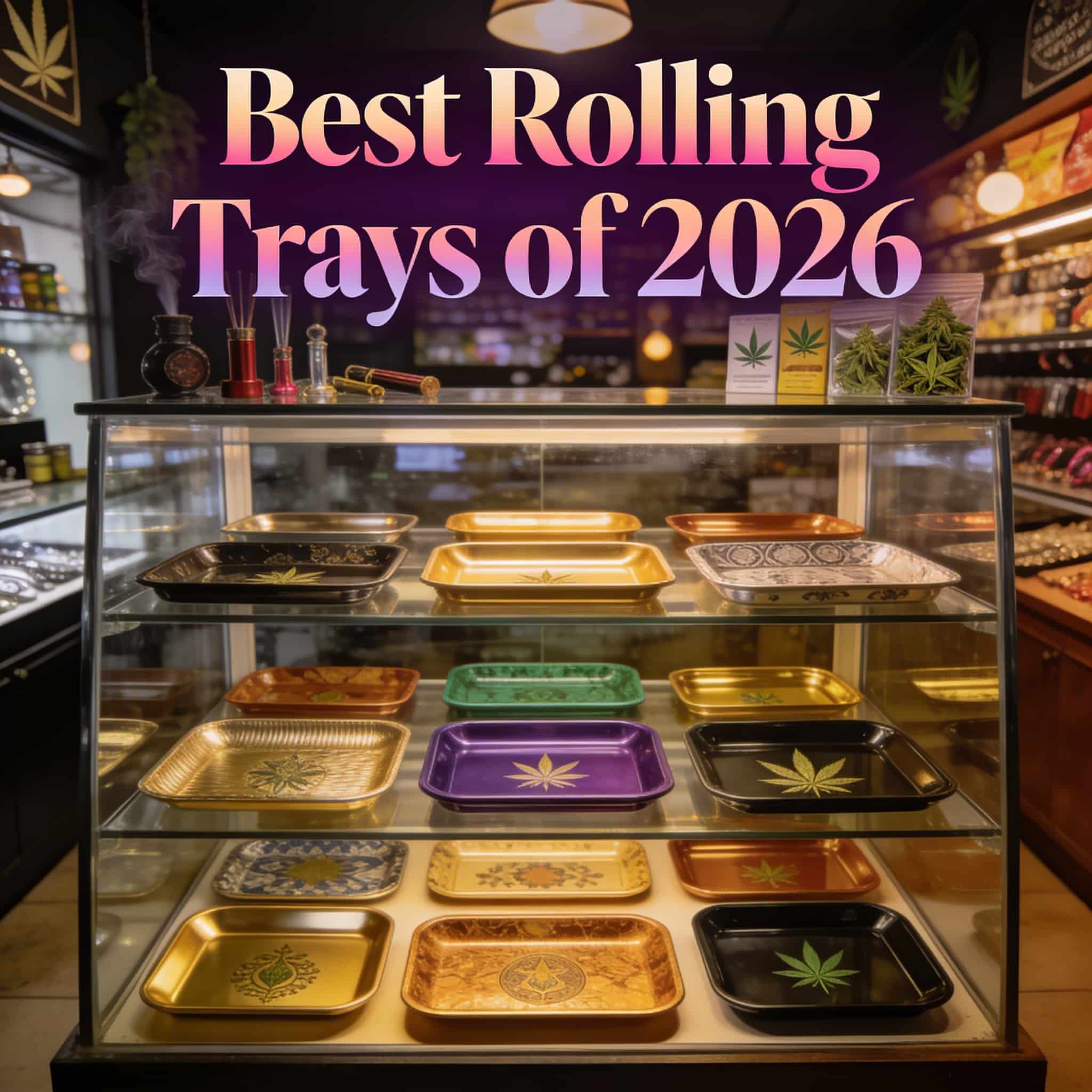
(Materials, Size & Workflow That Actually Matter)
Rolling trays are often treated as afterthoughts — cheap, decorative, or novelty accessories. In reality, a good rolling tray is one of the most important workflow tools in a smoking setup.
In 2026, flower is denser, stickier, and more terpene-rich than ever. That means spills cost more, cleanup matters more, and preparation technique directly affects session quality.
This guide breaks down what actually makes a rolling tray good, how materials change behavior, how size affects efficiency, and how to choose a tray that improves your workflow instead of getting in the way.
What a Rolling Tray Is Supposed to Do
A proper rolling tray should:
- Contain loose material
- Prevent weed loss
- Separate clean vs waste areas
- Speed up preparation
- Simplify cleanup
- Keep tools organized
If your tray doesn’t do these things, it’s decoration — not a tool.
Rolling Tray Materials (What Works & What Doesn’t)
Metal Rolling Trays (Best Overall)
Why metal dominates:
- Smooth, non-porous surface
- Easy to clean
- Doesn’t absorb odor
- Durable under daily use
- Allows precise reclaim
Metal trays let flower move freely without sticking or embedding.
Best use cases:
- Daily smokers
- Sticky flower
- Grinder-heavy setups
Metal is the gold standard.
Wood Rolling Trays (Aesthetic, Limited Function)
Pros:
- Natural look
- Warm feel
Cons:
- Absorbs resin and odor
- Harder to clean
- Flower sticks to grain
- Loses smoothness over time
Wood works visually — not functionally.
Silicone Rolling Trays (Situational)
Pros:
- Drop-safe
- Flexible
- Easy to pack away
Cons:
- Flower sticks
- Difficult reclaim
- Soft edges reduce control
Silicone is fine for travel — not precision.
Plastic Rolling Trays (Budget Only)
Pros:
- Cheap
- Lightweight
Cons:
- Scratches easily
- Holds odor
- Static causes material loss
- Degrades over time
Plastic trays are disposable by nature.
Why Smoothness Matters More Than You Think
A smooth tray surface:
- Prevents flower from sticking
- Makes reclaim easy
- Allows controlled movement
- Reduces waste
Texture = friction = lost material.
Rolling Tray Size Guide (Critical for Workflow)
Small Trays
Best for:
- Solo use
- Minimal kits
- Travel
Downside:
- No margin for error
- Easy to overcrowd
Medium Trays (Best for Most Users)
Best for:
- Grinder + pipe or joint
- Clean workflow
- Daily use
Medium trays strike the balance between space and control.
Large Trays
Best for:
- Group sessions
- Rolling multiple joints
- Complex setups
Risk:
- Encourages clutter if unmanaged
Raised Edges: Non-Negotiable
Good trays have raised edges.
They:
- Catch spills
- Prevent loss
- Make reclaim easy
- Keep material contained
Flat surfaces are not trays — they’re tables.
Workflow Zones (Why Organization Matters)
A great rolling tray has invisible zones:
Prep Zone
- Grinder
- Flower
- Papers or pipe
Tool Zone
- Lighter
- Packing tools
Waste Zone
- Ash
- Stems
- Used tips
Separating zones keeps sessions clean and efficient.
Why Rolling Trays Reduce Waste
Most waste happens:
- While grinding
- During transfer
- When rolling
A tray catches what would otherwise be lost forever.
Over time, trays pay for themselves in saved material.
Rolling Tray Weight & Stability
Light trays:
- Shift easily
- Tip under pressure
Heavier trays:
- Stay planted
- Feel controlled
- Improve precision
Weight matters more than aesthetics.
Cleaning & Maintenance
A good tray should:
- Wipe clean easily
- Not stain
- Not hold odor
Metal trays excel here.
Avoid letting ash and resin build up — it ruins workflow.
Common Rolling Tray Mistakes
- Treating trays as storage
- Overcrowding tools
- Mixing waste with flower
- Using textured surfaces
- Never cleaning the tray
Clean trays make better sessions.
Best Rolling Tray Setup (Minimalist)
For maximum efficiency:
- One medium metal tray
- Grinder
- Flower
- Papers or pipe
- Packing tool
- Lighter
Everything else lives off the tray.
How a Good Tray Improves Sessions
A clean, well-sized tray:
- Reduces stress
- Speeds prep
- Improves consistency
- Makes sessions intentional
Workflow affects enjoyment more than people realize.
Final Takeaway
The best rolling trays of 2026 aren’t flashy — they’re functional.
Prioritize:
- Smooth metal surfaces
- Medium size
- Raised edges
- Enough weight for stability
A good rolling tray doesn’t just hold your gear — it improves how you use it.
When prep is clean and controlled, everything that follows gets better.