
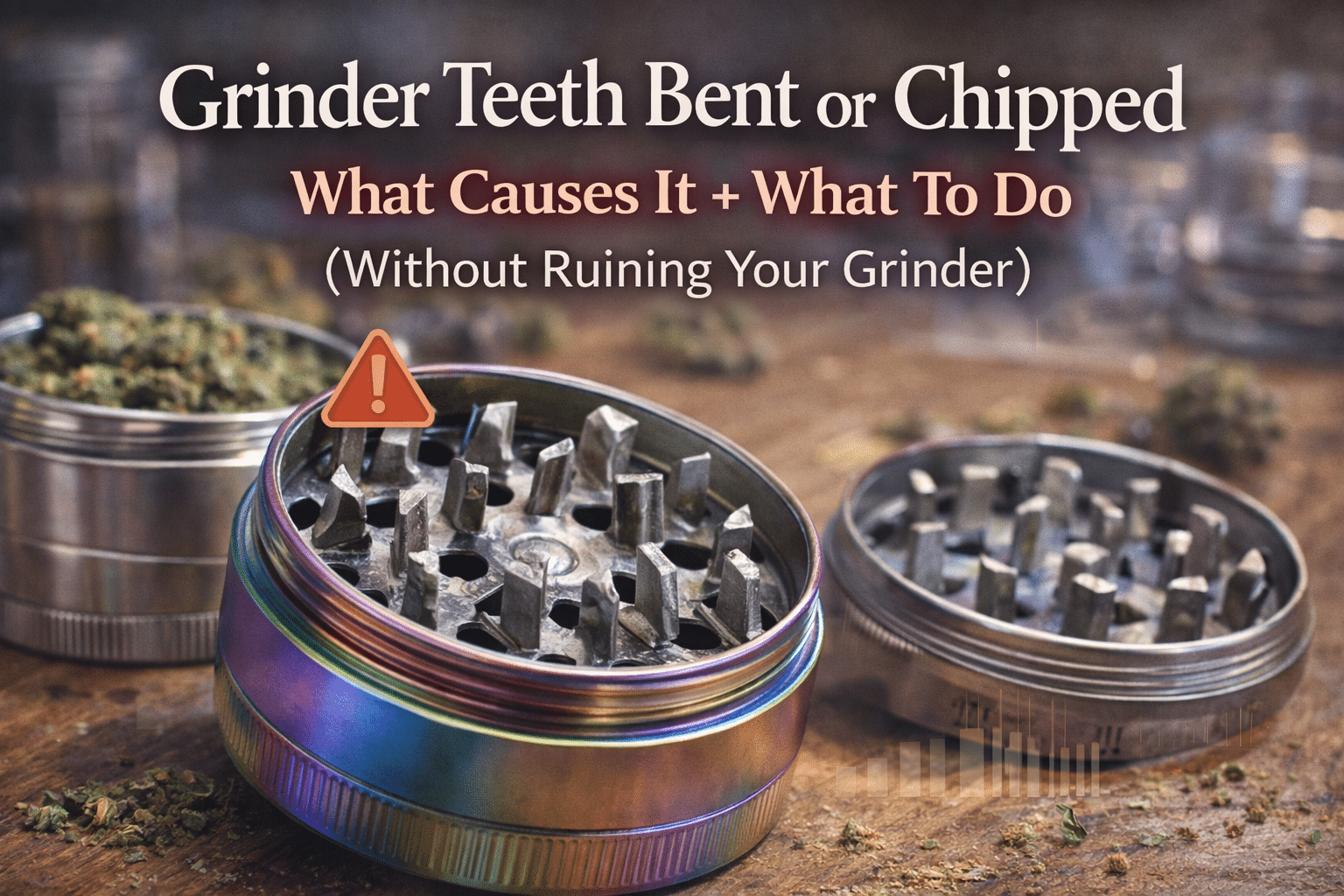
If you’ve noticed your grinder starting to grab, crunch unevenly, make dust, or feel “off,” there’s a good chance one or more teeth are bent or chipped. This isn’t as rare as people think — and it’s almost always caused by how the grinder is used, not just build quality.
The good news:
👉 Most damage is preventable
👉 Some damage is manageable
👉 And knowing when not to fix it matters just as much
Let’s break it down clearly.
What Grinder Teeth Are Actually Designed to Do
Grinder teeth are cutting tools, not crushers.
Their job is to:
- Slice flower fibers
- Shear trichome-rich material cleanly
- Maintain structural integrity of the grind
They are not designed to:
- Smash stems
- Pulverize seeds
- Force through foreign objects
When they’re used outside that design window, damage happens.
The Most Common Causes of Bent or Chipped Grinder Teeth
1️⃣ Grinding Stems (The #1 Killer)
Stems are:
- Fibrous
- Rigid
- Directionally strong
When a stem catches between teeth, torque transfers directly into the tooth — not evenly across the plate.
Result:
- Bent teeth
- Micro-fractures
- Chips at the tooth tip
👉 Fix: Remove large stems by hand before grinding.
2️⃣ Seeds & Hard Contaminants
Seeds are basically tiny rocks.
When a tooth hits a seed:
- There’s no give
- No shear
- Just impact
This causes:
- Chipping
- Edge rounding
- Hairline cracks
Even premium grinders can be damaged this way.
3️⃣ Overloading the Grinder
Too much flower:
- Prevents proper cutting
- Forces teeth to bind
- Increases torsional stress
This doesn’t usually snap teeth immediately — it bends them slowly over time, leading to:
- Inconsistent grind
- Increased resistance
- Dust production
👉 Grind in smaller batches.
4️⃣ Forcing a Jammed Grinder
This is where real damage happens.
If the grinder stops:
❌ Do not muscle through it
Forcing rotation:
- Twists teeth laterally
- Leverages thin tooth tips
- Causes asymmetrical stress
That’s how teeth bend instead of breaking cleanly.
5️⃣ Dropping the Grinder
Impact damage is sneaky.
A drop can:
- Slightly deform the tooth plate
- Knock teeth out of alignment
- Cause micro-chips you don’t see immediately
Symptoms show up later as:
- Uneven grind
- Binding
- Lid misalignment
How Bent or Chipped Teeth Affect Performance
Once teeth are damaged, you’ll notice:
- Uneven grind size
- Excessive dust
- More sticking
- Increased resin buildup
- Poor airflow in bowls or joints
This directly impacts:
- Glass pipes
- Joints (canoeing)
- Vaporizers (restricted airflow)
If grind quality suddenly changed, inspect the teeth first.
Can You Fix Bent Grinder Teeth?
⚠️ Short Answer: Usually no — and you shouldn’t try.
Attempting to bend teeth back:
- Weakens the metal
- Creates stress fractures
- Causes future breakage
Even if it “looks” straight, it’s compromised.
What Can Be Done Safely
✅ Thorough cleaning (resin exaggerates symptoms)
✅ Adjust grinding technique
✅ Accept reduced performance temporarily
If multiple teeth are bent or chipped, replacement is the correct move.
When Damage Is Cosmetic vs Functional
Cosmetic (OK to keep using):
- Minor tip rounding
- One slightly dulled tooth
- No binding or dust issues
Functional (Time to replace):
- Chipped teeth
- Bent teeth changing clearance
- Grinding feels crunchy or uneven
- Dust production spikes
Why High-Quality Grinders Resist Tooth Damage Better
Premium grinders use:
- Precision-cut tooth geometry
- Proper tooth spacing
- Hardened aluminum alloys
- Even torque distribution
This doesn’t make them invincible — but it gives them margin.
Explore well-machined options here:
👉 https://tahoegrinderco.com/product-category/all-products/
Grinder Type & Tooth Damage Risk
2-Piece Grinders
- Most torque on teeth
- More sensitive to overload
👉 https://tahoegrinderco.com/product-category/all-products/2-piece-weed-grinders/
3-Piece Grinders
- Best balance of control and load
👉 https://tahoegrinderco.com/product-category/all-products/3-piece-weed-grinders/
4-Piece Grinders
- Often overused with sticky flower
- Jam risk if not cleaned
👉 https://tahoegrinderco.com/product-category/all-products/4-piece-weed-grinders/
How to Prevent Tooth Damage Going Forward
- De-stem before grinding
- Inspect flower for seeds
- Grind in small batches
- Stop immediately if binding occurs
- Clean regularly to prevent resin jams
👉 https://tahoegrinderco.com/product-category/all-products/smoking-accessories/
The Big Truth About Grinder Teeth Damage
Bent or chipped teeth aren’t a mystery defect.
They’re feedback.
They tell you:
“This grinder was pushed beyond how it’s meant to work.”
Treat grinders like precision tools — not crushers — and they’ll last years, not months.
Final Takeaway
If your grinder teeth are bent or chipped:
- Don’t bend them back
- Don’t force it
- Don’t ignore performance changes
Understand the cause, adjust your process, and choose grinders designed to cut cleanly, distribute torque evenly, and protect tooth integrity over time.
That’s how you keep grind quality high — and frustration low.