
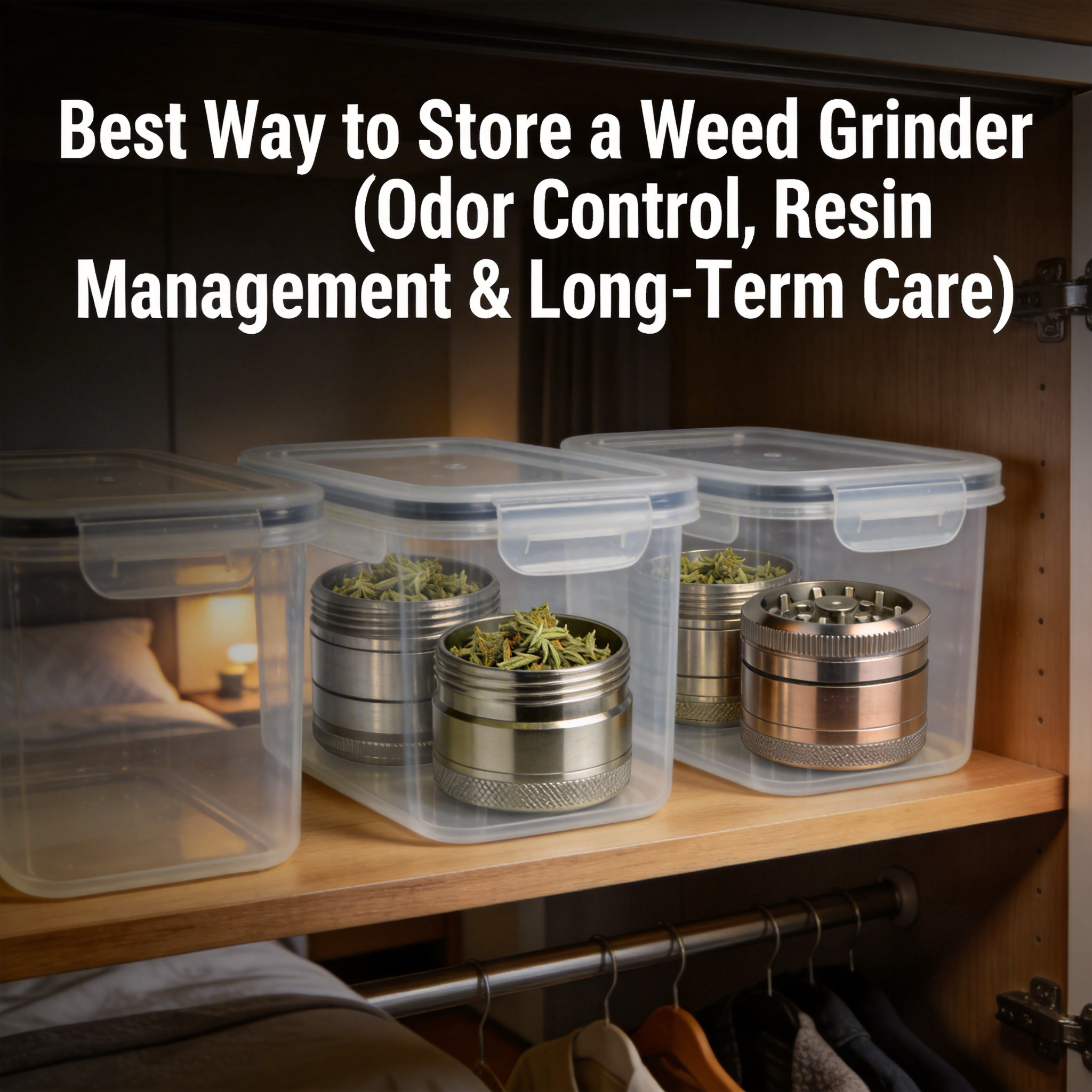
(Odor Control, Resin Management & Long-Term Care)
How you store your weed grinder matters far more than most people realize.
A grinder doesn’t wear out just from grinding — it degrades from poor storage. Odor buildup, resin hardening, moisture exposure, and surface damage all happen between sessions, not during them. In 2026, with resin-rich flower and tighter machining tolerances, improper storage shortens grinder lifespan dramatically.
This guide explains the best way to store a weed grinder to control smell, prevent resin problems, and preserve performance for years.
What Happens When a Grinder Is Stored Improperly
Poor storage leads to three main problems:
- Odor accumulation
- Resin hardening and binding
- Surface and alignment degradation
None of these happen instantly — they creep in over time and quietly ruin performance.
Odor: Why Grinders Smell Even When Empty
Grinders smell because resin is volatile.
After grinding:
- Terpenes evaporate slowly
- Oils off-gas
- Residue oxidizes
If a grinder is stored in open air or warm environments, odor intensifies instead of dissipating.
Best Odor-Control Storage Practices
Do this:
- Store grinders in airtight containers
- Keep them out of direct heat and sunlight
- Separate grinders from fresh flower
- Let grinders air briefly before sealing if heavily used
Avoid this:
- Leaving grinders loose in bags or drawers
- Storing grinders warm
- Sealing grinders immediately after heavy sessions without cooling
Odor is easiest to manage before it builds.
Resin: The Real Storage Enemy
Resin is the biggest long-term threat to grinder performance.
Improper storage causes resin to:
- Harden
- Thicken
- Bond surfaces together
- Increase friction permanently
Sticky residue becomes cement-like if left undisturbed in warm, dry air.
How Storage Affects Resin Behavior
| Storage Condition | Resin Outcome |
|---|---|
| Warm, dry, exposed | Hardens and binds |
| Cool, airtight | Stabilizes |
| Humid | Smears and spreads |
| Dirty container | Traps odor and debris |
Good storage slows resin chemistry.
Best Storage Environment for a Weed Grinder
The ideal grinder storage environment is:
- Cool
- Dry
- Dark
- Airtight
This minimizes:
- Terpene evaporation
- Oxidation
- Resin hardening
- Odor spread
Think controlled, not sealed-and-forgotten.
Should You Store a Grinder Empty or Loaded?
Always store grinders empty.
Storing flower inside a grinder:
- Accelerates resin buildup
- Compresses material
- Traps moisture
- Intensifies odor
- Encourages binding
Grinders are tools — not storage containers.
Short-Term vs Long-Term Grinder Storage
Short-Term Storage (Daily Use)
If you use your grinder daily:
- Empty it after sessions
- Lightly brush loose material out
- Store in an airtight container
- Keep away from heat sources
No deep cleaning required every day.
Long-Term Storage (Weeks or Months)
If you won’t use the grinder for a while:
- Clean it fully
- Dry completely
- Store disassembled if possible
- Place in airtight container
- Add a small desiccant pack (optional)
- Store in a cool, dark place
This prevents resin from curing onto surfaces.
Should You Store a Grinder Assembled or Disassembled?
Assembled is fine for short-term storage.
Disassembled is better for long-term storage.
Disassembly:
- Relieves surface contact pressure
- Reduces resin bonding
- Preserves alignment
- Makes reactivation smoother later
For high-end grinders, this matters.
What Containers Work Best for Grinder Storage
Best Options
- Smell-proof stash boxes
- Airtight metal tins
- Glass jars with gasket seals
- Purpose-built smell-proof pouches
Avoid
- Plastic bags
- Open trays
- Fabric pouches
- Cardboard containers
Plastic absorbs odor and transfers it back to the grinder.
Temperature Matters More Than People Think
Heat accelerates:
- Resin curing
- Terpene evaporation
- Odor intensity
- Surface bonding
Never store grinders:
- In cars
- Near windows
- Near electronics
- Near heaters
Cool storage dramatically slows degradation.
Humidity: Less Is More
Grinders prefer dry environments.
High humidity:
- Softens resin temporarily
- Causes smearing
- Spreads residue
- Encourages odor spread
If you live in a humid climate, airtight storage is non-negotiable.
Should You Clean Before Storing?
Yes — but only when storage exceeds a few days.
- Short breaks: no need to deep clean
- Long breaks: clean fully
Never store a dirty grinder long-term unless you want it glued shut later.
Odor Prevention Without Over-Cleaning
Over-cleaning damages grinders just as much as neglect.
Balance is key:
- Light brushing often
- Full cleaning occasionally
- Proper storage always
Storage is the quiet hero of grinder care.
Signs Your Storage Method Is Hurting Your Grinder
- Grinder sticks after sitting unused
- Odor intensifies over time
- Resin feels harder than before
- Rotation worsens between uses
- Performance declines without heavy use
These are storage failures — not grinding failures.
Ideal Grinder Storage Checklist
✔ Empty after use
✔ Store airtight
✔ Keep cool and dark
✔ Avoid heat
✔ Separate from flower
✔ Clean before long storage
✔ Use smell-resistant containers
Simple steps, massive impact.
Final Takeaway
The best way to store a weed grinder isn’t complicated — but it is intentional.
Odor control, resin management, and long-term performance all depend on what happens between sessions, not during them.
A grinder that’s stored correctly:
- Smells less
- Sticks less
- Lasts longer
- Performs better
Grinding is only half the equation.
Storage is what protects the investment.
Treat your grinder like the precision tool it is — even when you’re not using it.