
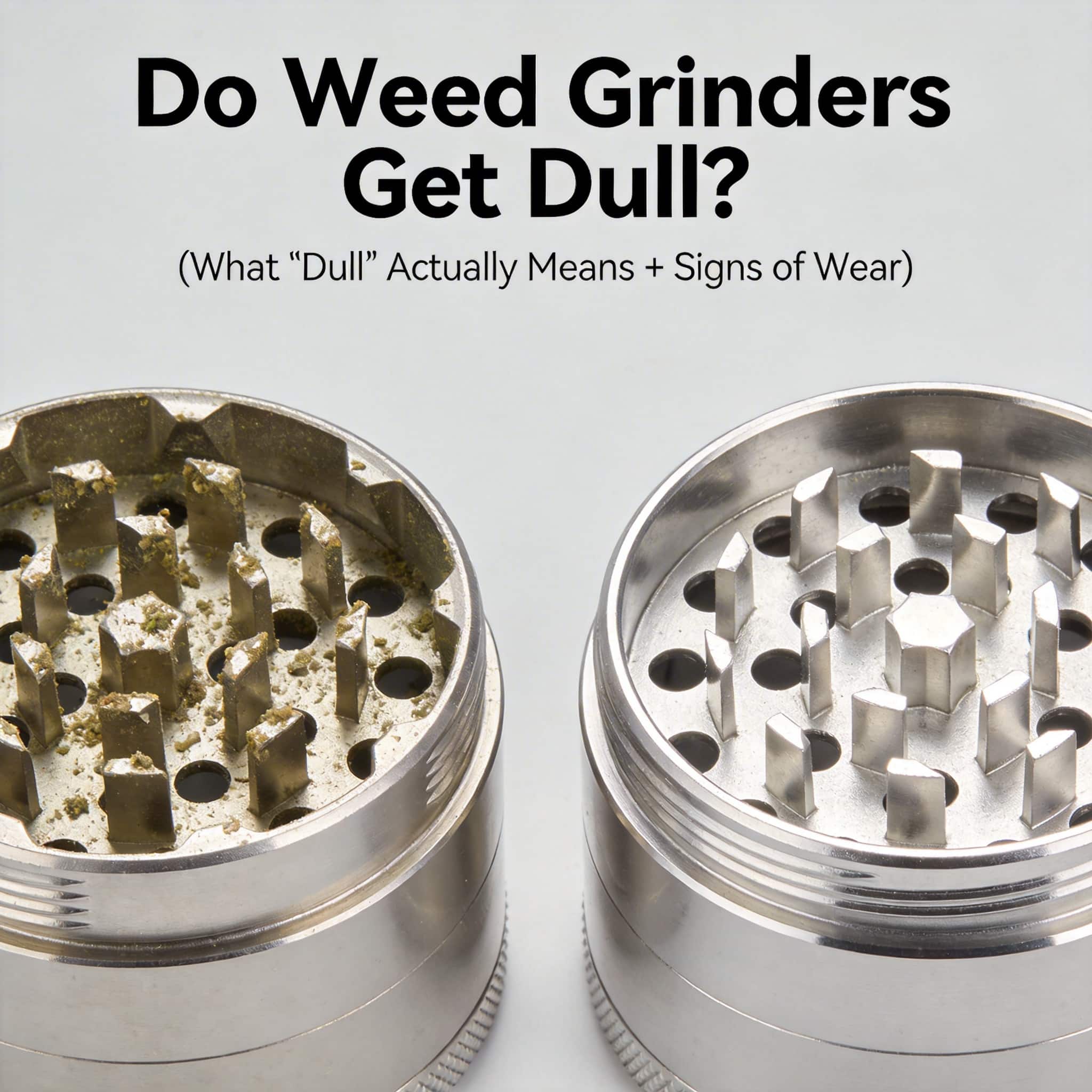
(What “Dull” Actually Means + Signs of Wear)
Yes—weed grinders do get dull. But not in the way most people imagine.
Grinder teeth don’t suddenly become smooth or useless overnight. They degrade gradually, in subtle ways that many users don’t notice until performance is already compromised. By the time a grinder “feels bad,” the wear has often been happening for months or years.
In 2026, with denser, stickier, resin-heavy flower, grinder wear is more obvious—and more consequential—than ever.
This guide explains what “dull” really means in a grinder, how wear actually happens, the warning signs to watch for, and when a grinder is truly worn out.
What “Dull” Means for Grinder Teeth
Grinder teeth don’t cut like knives. They shear and tear plant material through controlled contact and geometry.
When people say a grinder is dull, they usually mean:
- It takes more effort to turn
- Flower smears instead of breaking cleanly
- Grind becomes uneven or dusty
- Sticky strains bind more easily
These symptoms come from geometry degradation, not bluntness in the traditional sense.
How Grinder Teeth Actually Wear
1. Edge Rounding (Primary Wear Mode)
New grinder teeth have:
- Sharp cutting edges
- Defined angles
- Clean contact points
Over time:
- Edges round off microscopically
- Cutting becomes more crushing
- Resin smearing increases
- Resistance rises
This rounding is gradual and often invisible.
2. Surface Abrasion
Friction from:
- Resin
- Plant fibers
- Micro-debris
causes:
- Surface roughening
- Increased adhesion
- Higher friction
Painted or coated grinders wear fastest here.
3. Alignment Drift (Accelerated Wear)
As alignment shifts:
- Teeth no longer engage evenly
- Load concentrates on fewer points
- Wear accelerates unevenly
This compounds dullness quickly.
Why Sticky Weed Accelerates Dullness
Sticky strains:
- Increase torque
- Smear resin across edges
- Trap debris
- Increase friction per rotation
Modern flower simply stresses grinders more than older strains did.
The Early Signs a Grinder Is Getting Dull
Most users miss these early warnings:
- Grinder requires more twists than before
- Flower clumps instead of falling freely
- Output includes dust mixed with chunks
- Sticky strains bind more often
- Airflow in pipes or joints worsens
At this stage, cleaning may help—but wear is already present.
Advanced Signs of Grinder Wear
When dullness progresses:
- Grinder binds even when clean
- Teeth feel smooth instead of crisp
- Grinding produces powder consistently
- Rotation feels gritty or uneven
- Performance does not improve after cleaning
These indicate permanent geometry degradation.
Can Grinder Teeth Be Sharpened?
No.
Sharpening grinder teeth:
- Destroys geometry
- Creates uneven edges
- Causes metal shedding
- Worsens grind quality
Grinders are precision tools. Once geometry is lost, it cannot be restored.
Cleaning vs Dullness: Know the Difference
Dirty grinder symptoms:
- Sticky feel
- Gummy resistance
- Performance returns after cleaning
Dull grinder symptoms:
- Resistance remains when clean
- Output quality does not improve
- Teeth smear rather than cut
Cleaning fixes resin—not wear.
Do All Grinders Get Dull at the Same Rate?
No. Wear rate depends on:
- Material hardness
- Surface treatment
- Tooth geometry
- Alignment accuracy
- Usage habits
Fastest to Wear
- Plastic grinders
- Soft zinc alloys
- Painted or coated metals
Longest Lasting
- Anodized aluminum grinders
- Precision-machined teeth
- Well-aligned designs
How Long Should Grinder Teeth Stay Sharp?
In 2026, realistic expectations:
- Cheap grinders: months to 1–2 years
- Average metal grinders: 2–5 years
- High-quality anodized aluminum grinders: 10+ years
- Precision stainless steel grinders: decades (with tradeoffs)
Longevity is about design, not price tag alone.
How to Slow Down Grinder Dullness
You can’t stop wear—but you can slow it dramatically:
- Grind smaller loads
- Avoid forcing resistance
- Clean gently and regularly
- Avoid over-humid flower
- Don’t grind stems or seeds
- Use controlled rotation
Good technique preserves geometry.
When to Replace a Grinder
Replace your grinder if:
- It’s clean but still binds
- Teeth no longer cut cleanly
- Grind quality has permanently changed
- Sticky strains are unmanageable
- Performance does not recover
At that point, you’re fighting physics.
Final Takeaway
Yes, weed grinders get dull—but dullness isn’t obvious or dramatic. It’s subtle, gradual, and mechanical.
A grinder is worn out not when it breaks, but when:
- It stops slicing
- It starts crushing
- It loses consistency
Understanding wear helps you:
- Diagnose problems accurately
- Avoid damaging fixes
- Know when replacement is justified
Grinders don’t fail suddenly.
They whisper first.
Knowing what to listen for makes all the difference.