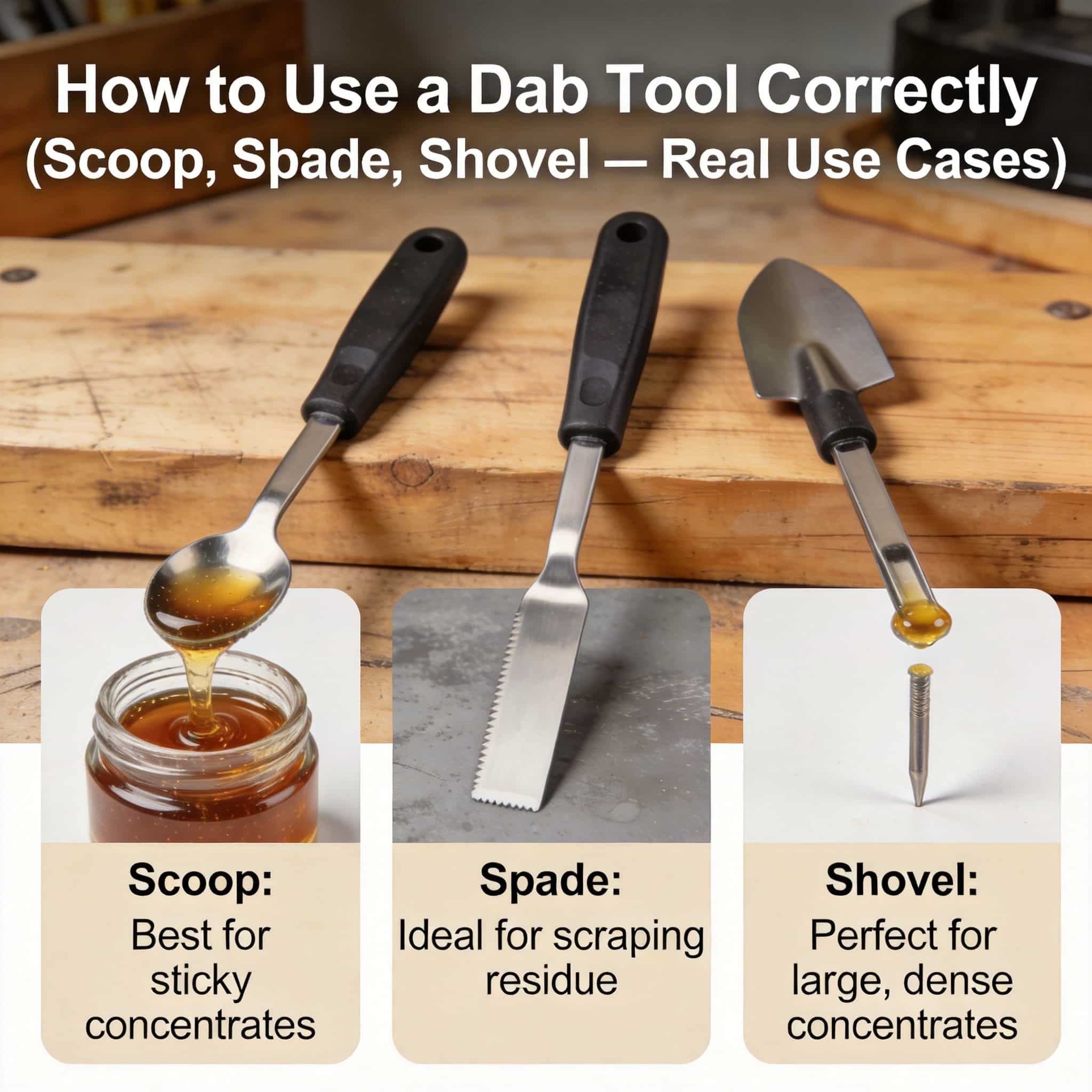
(Scoop, Spade, Shovel — Real Use Cases)
Dab tools look simple, but using the wrong one — or using the right one incorrectly — is the fastest way to waste concentrates, scorch flavor, or make a mess of your setup.
In 2026, concentrates are stickier, purer, and more temperature-sensitive than ever. That means dab tool choice and technique matter far more than they used to.
This guide breaks down the three most common dab tool shapes — scoop, spade, and shovel — exactly when to use each one, and how to handle concentrates cleanly and efficiently.
No gimmicks. No Instagram tricks. Just real use cases.
What a Dab Tool Is Actually Supposed to Do
A dab tool has one job:
Move concentrate from container to heated surface without loss, contamination, or temperature shock.
Good technique:
- Preserves flavor
- Reduces waste
- Improves vapor quality
- Keeps tools clean
- Prevents burns
Bad technique does the opposite.
Why Dab Tool Shape Matters
Concentrates vary wildly in texture:
- Shatter
- Wax
- Budder
- Crumble
- Live resin
- Rosin
- Sauce
No single dab tool shape works best for all of them.
That’s why tool geometry matters more than branding.
The Three Core Dab Tool Shapes
1. Scoop Dab Tool
Best for:
- Sauce
- Live resin
- Rosin
- Terp-heavy concentrates
- Semi-liquid extracts
Why the Scoop Works
The scoop is designed to contain material, not push it.
- Prevents dripping
- Holds viscous concentrates securely
- Allows controlled transfer
- Minimizes loss
How to Use a Scoop Correctly
- Dip gently into the concentrate
- Let material settle into the scoop
- Avoid scraping the container walls aggressively
- Transfer smoothly to the banger
- Rotate slightly to release material
Common Mistakes
- Overloading the scoop
- Flicking material off
- Scraping aggressively and contaminating product
Use the scoop like a ladle — not a knife.
2. Spade Dab Tool
Best for:
- Wax
- Budder
- Whipped concentrates
- Soft crumble
Why the Spade Works
The spade offers surface control.
- Easy to portion
- Allows shaping
- Releases cleanly
- Ideal for medium-firm textures
How to Use a Spade Correctly
- Press lightly into the concentrate
- Lift with minimal force
- Shape portion if needed
- Drop or slide into banger
Spades excel when concentrates hold shape but aren’t brittle.
Common Mistakes
- Pressing too hard (smearing)
- Using with liquid concentrates
- Scraping too aggressively
The spade is about control, not force.
3. Shovel Dab Tool
Best for:
- Crumble
- Dry wax
- Sugar
- Solid fragments
Why the Shovel Works
The shovel is designed to lift and transport dry material.
- Prevents scatter
- Handles brittle textures
- Moves chunks cleanly
- Minimizes breakage
How to Use a Shovel Correctly
- Slide under material gently
- Lift without tilting
- Transfer directly to heated surface
Shovels are precision tools — not pry bars.
Common Mistakes
- Using with sticky concentrates
- Tilting too much and dropping product
- Over-scooping dry material
Matching Dab Tool to Concentrate Type
| Concentrate Type | Best Tool |
|---|---|
| Sauce | Scoop |
| Live Resin | Scoop |
| Rosin | Scoop or Spade |
| Budder | Spade |
| Wax | Spade |
| Crumble | Shovel |
| Sugar | Shovel or Spade |
| Shatter | Spade (cold) |
Using the wrong tool increases waste fast.
Temperature Matters More Than People Think
Concentrate temperature affects how it behaves.
Cold Concentrates
- Firmer
- Easier to portion
- Less sticky
- Better for spade or shovel tools
Warm Concentrates
- Stickier
- Drip easily
- Better for scoop tools
If your concentrate is too soft, let it cool slightly before handling.
Proper Dab Transfer Technique
Regardless of tool shape:
- Move slowly
- Keep hands steady
- Avoid hovering over heat
- Release deliberately
- Don’t rush the drop
Fast movements cause:
- Drips
- Splatter
- Burns
- Lost product
Why Touching the Banger Matters
Never stab concentrate into a hot banger.
Correct technique:
- Gently touch tool to surface
- Let heat pull concentrate off
- Withdraw tool smoothly
This preserves:
- Flavor
- Tool cleanliness
- Nail surface
Forcing release scorches terpenes instantly.
How to Keep Dab Tools Clean (Without Overdoing It)
Dirty tools:
- Contaminate flavor
- Stick unpredictably
- Waste product
Best practice:
- Wipe tool after each dab (while warm, not hot)
- Deep clean only when buildup forms
- Avoid scraping residue aggressively
Clean tools behave predictably.
Common Dab Tool Mistakes
- Using one tool for everything
- Overloading the tool
- Handling warm concentrates with dry tools
- Flicking or shaking material
- Touching heated surfaces accidentally
Most dab messes come from rushing.
Do You Really Need Multiple Dab Tools?
If you use multiple concentrate types — yes.
A simple kit:
- One scoop
- One spade
- One shovel
Covers nearly all real-world use cases.
Safety Notes (Important)
- Metal tools conduct heat
- Never leave tools resting on hot surfaces
- Always place tools on heat-safe areas
- Keep fingers clear of bangers and nails
Most dab burns happen during transfer, not inhalation.
Final Takeaway
Dab tools aren’t decorative — they’re precision instruments.
Using the right tool:
- Reduces waste
- Preserves flavor
- Improves consistency
- Makes dabbing cleaner and safer
Scoop for liquids.
Spade for soft solids.
Shovel for dry textures.
When tool shape matches concentrate texture, everything feels easier — because it is.
Control beats speed.
Precision beats force.
And the right tool always beats improvisation.