
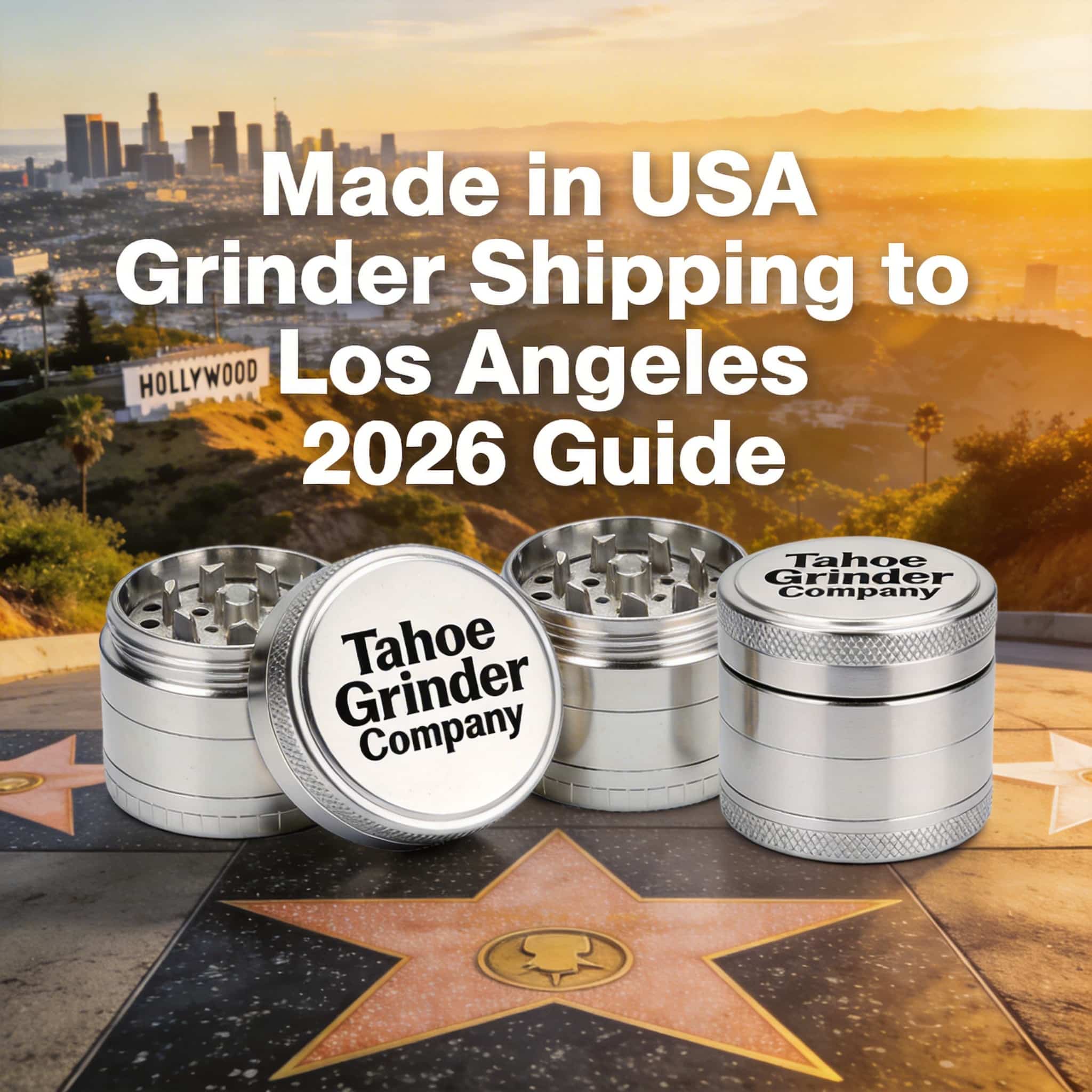
If you’re searching for a Made in USA grinder shipping to Los Angeles, you’re likely looking for two things:
- Premium build quality
- Fast, reliable delivery
In 2026, Los Angeles buyers are increasingly choosing domestically manufactured aluminum grinders over imported mass-produced alternatives.
Los Angeles


Los Angeles is a city where quality and presentation matter. Disposable gear doesn’t align with a refined lifestyle. Precision machining and clean finishes do.
Let’s break down why Made in USA matters — especially for buyers in California.
Fast California Shipping
When you order a grinder manufactured in the United States, especially on the West Coast, you benefit from:
✔ Shorter transit times
✔ No international shipping delays
✔ No customs processing
✔ Faster fulfillment
For Los Angeles customers, domestic shipping often means your order arrives quickly without the unpredictability that comes with overseas imports.
Instead of waiting weeks, you receive your grinder promptly and reliably.
No Import Delays
Imported grinders often involve:
- International transit
- Customs clearance
- Port congestion
- Variable delivery times
In contrast, ordering a Made in USA grinder means:
✔ Direct domestic shipping
✔ Fewer logistical interruptions
✔ More consistent delivery timelines
For buyers in Los Angeles CA, this reduces uncertainty and improves overall purchase experience.
Quality Over Mass Production
The biggest difference between domestic CNC machining and overseas mass casting is quality control.
Mass-produced grinders are often:
- Cast from zinc alloy
- Painted instead of anodized
- Manufactured in extremely high volumes
- Produced with looser tolerances
Made in USA CNC-machined grinders are typically:
✔ Cut from solid aluminum billet
✔ Hard anodized (not painted)
✔ Precision-threaded
✔ Produced in smaller, quality-controlled batches
That difference shows up in:
- Smooth thread engagement
- Consistent tooth geometry
- Long-term durability
- Overall feel in hand
Los Angeles buyers often prioritize build quality over quantity — and domestic machining supports that standard.
Designed for Long-Term Use
A premium aluminum grinder manufactured in the USA offers:
✔ Aerospace-grade aluminum
✔ Hard anodized finish resistant to wear
✔ Clean pollen collection
✔ Reduced thread wear over time
Instead of replacing a cheap grinder every year, many LA smokers invest once in a precision-machined build designed to last.
Tahoe Grinder Co – Precision Aluminum, Shipped to LA
Tahoe Grinder Co produces CNC-machined aluminum grinders designed for durability and clean aesthetic appeal.
Key features include:
- Aerospace-grade aluminum
- Hard anodized matte finishes
- Precision-threaded 4-piece construction
- Durable stainless kief screen
- Minimalist lid engraving options
For Los Angeles buyers looking for a Made in USA grinder shipping directly to California, domestic machining and fast fulfillment make a measurable difference.
The 63mm Flagship Option
For most Los Angeles smokers, a 63mm 4-piece aluminum grinder provides:
- Balanced capacity
- Smooth daily usability
- Clean pollen separation
- Premium weight and feel
It’s large enough for regular sessions but refined enough for everyday carry.
Final Verdict
If you’re searching for a Made in USA grinder shipping to Los Angeles, focus on:
✔ Domestic CNC machining
✔ Hard anodized aluminum
✔ Fast California delivery
✔ No zinc alloy
✔ No painted coatings
✔ Long-term durability
In a city that values quality and design, mass production isn’t enough.
Precision machining, clean aesthetics, and reliable shipping define the premium standard in 2026.