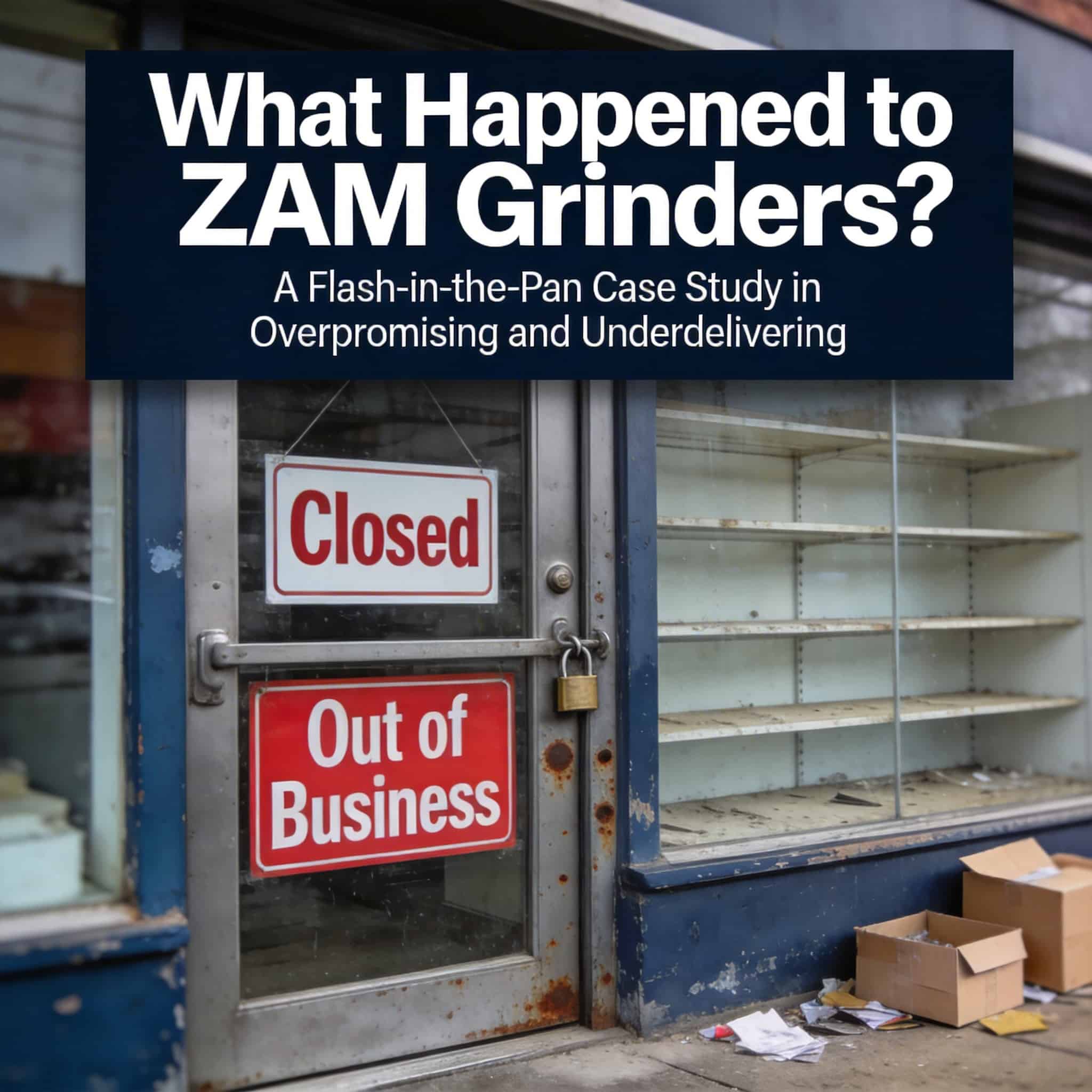
A Flash-in-the-Pan Case Study in Overpromising and Underdelivering
For a brief moment, ZAM Grinders looked like the next “it” brand in the premium grinder space. Slick renders, big claims, loud launches, and the usual promises: better machining, better design, better everything.
Then the orders started rolling in.
And according to a growing number of customers, that’s where things began to fall apart.
The Pattern Customers Keep Reporting
Across multiple recent Reddit threads and customer posts, a consistent pattern emerges — and it’s not a good one.
🚩 Missed Shipping Windows
Customers report ordering based on clearly advertised “5–7 business day” shipping timelines, only to experience:
- Orders sitting unshipped for weeks
- Stock issues disclosed after payment
- Deadlines quietly slipping with no proactive notice
One buyer explicitly stated they ordered early to accommodate international travel — and when they asked for a refund if the order couldn’t ship in time, they received no response until after the product finally shipped, making delivery impossible.
🚩 Silence When It Matters Most
Delayed shipping is frustrating.
Radio silence is unforgivable.
Multiple customers describe:
- Emails going unanswered for days or weeks
- Replies only arriving after irreversible steps were taken
- Refund requests acknowledged… then ignored
One customer summed it up bluntly:
“Now I’m just out the money and stuck waiting for a reply that never comes.”
🚩 Broken Promises, Rewritten After the Fact
Another recurring theme: commitments that evaporate.
Reported examples include:
- Promised priority shipping that never happened
- “Freebies” offered to smooth delays, then delivered as cheap throw-ins
- Excuses about shipping cost after promises were already made
In one case, a customer waiting over 40 days for shipment was told the company “thought it had already shipped” — a statement that raises serious questions about order management and internal controls.
“Great Product, Wouldn’t Recommend Ordering”
That sentence alone should terrify any premium brand.
Several customers openly admit the grinder itself is decent — even good — but still advise others not to order.
Why?
Because in this market, the product isn’t the hard part.
Delivery is.
The Grinder Industry Reality Check
Here’s the uncomfortable truth about this corner of the cannabis accessories world:
Grinders are not rare.
Machining isn’t magic.
And hype doesn’t clear orders.
This is a brutally competitive market dominated by companies that:
- Have been shipping consistently for years
- Maintain inventory discipline
- Understand logistics, not just CAD files
That’s why names like Tahoe Grinder Company and Santa Cruz Shredder have stayed standing while countless “next big things” quietly disappear.
Flash-in-the-Pan Brands Are Nothing New
Since 2017, established grinder manufacturers have watched the same cycle repeat:
- A new brand launches with bold claims
- Influencer buzz spikes interest
- Orders outpace operations
- Communication breaks down
- Customers get burned
- The brand goes quiet
According to longtime community members, ZAM’s founder has largely disappeared from public forums, reinforcing the perception that the brand couldn’t scale beyond the launch phase.
In this industry, silence is the loudest signal of all.
Why Established Brands Survive
Companies like Tahoe Grinder Company didn’t survive by accident.
They survived by:
- Shipping what they sell — on time
- Standing behind inventory actually in stock
- Defending their designs and trademarks aggressively
- Treating grinders like a long-term business, not a drop
That’s why Tahoe’s lineup of precision-machined grinders, threadless designs, and proven platforms continues to ship reliably — and why customers don’t have to wonder whether their order will exist in a month.
Premium products demand premium operations. There is no shortcut around that.
Final Thoughts
ZAM Grinders may not be “dead,” but based on customer experiences, it fits a familiar pattern: a brand that burned trust faster than it could build infrastructure.
In a market where functionally similar products are everywhere, trust is the only real differentiator.
Lose that — and no amount of machining tolerances will save you.