
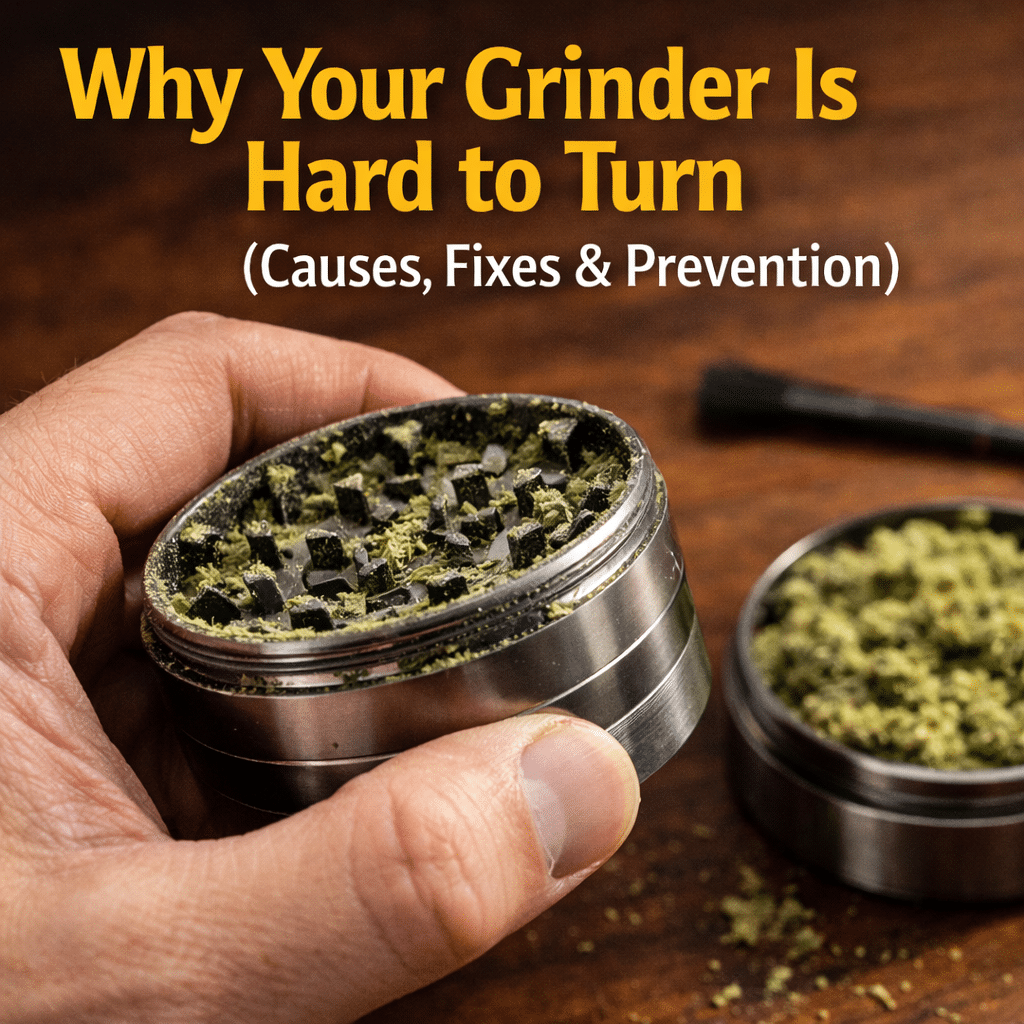
A weed grinder that’s hard to turn isn’t just annoying — it’s a sign that something mechanical is wrong. Grinding should feel smooth, controlled, and predictable. When resistance increases, binding starts, or the grinder suddenly seizes, the issue isn’t bad luck or “sticky weed being sticky.”
It’s physics.
In 2026, cannabis flower is denser, oilier, and more resin-rich than ever before. That has made grinder performance — and grinder problems — more noticeable. This guide explains why grinders become hard to turn, how to fix the problem correctly, and how to prevent it from happening again.
A Grinder Becomes Hard to Turn for Only a Few Reasons
Despite all the variables, grinder resistance almost always comes from one (or more) of these issues:
- Resin buildup
- Overfilling or compaction
- Misalignment
- Poor tooth geometry
- Surface finish degradation
- Foreign debris
- Structural wear
Understanding which one applies lets you fix the problem without damaging the grinder.
1. Resin Buildup (The Most Common Cause)
Why It Happens
Resin is sticky, oily, and adhesive. As you grind, it coats:
- Teeth
- Sidewalls
- Alignment surfaces
- Threads or magnet contact points
Over time, resin acts like glue and increases friction dramatically.
Sticky modern strains accelerate this process.
Signs Resin Is the Problem
- Grinder turns fine when empty, but binds when loaded
- Resistance increases gradually, not suddenly
- Grinder feels “gummy” rather than mechanically jammed
- Grinding gets harder with sticky strains specifically
The Correct Fix
- Disassemble the grinder completely
- Soak metal parts (not plastic) in isopropyl alcohol (90%+)
- Use a soft brush or toothbrush
- Rinse with warm water
- Dry fully before reassembly
Do not scrape aggressively — that damages surfaces.
Prevention
- Clean lightly every few weeks
- Avoid grinding wet or freshly humidified flower
- Don’t overfill the grinder
2. Overfilling the Grinder (Torque Overload)
Why It Happens
Grinders are designed to cut flower, not compress it. When you overfill:
- Flower compacts
- Teeth overload
- Torque spikes
- Alignment stress increases
Sticky weed makes this worse.
Signs Overfilling Is the Issue
- Grinder is hard to turn immediately
- Resistance feels uniform and heavy
- Grinder works fine with smaller loads
The Fix
- Use less flower per grind
- Break large buds by hand before grinding
- Grind in stages rather than forcing rotation
Prevention
- Never pack flower tightly
- Let buds move freely inside the chamber
3. Misalignment (Often Permanent)
Why It Happens
Misalignment occurs when:
- Threads wear unevenly
- Magnets shift or weaken
- Grinder halves deform
- Grinder is dropped
Once misaligned, teeth no longer engage evenly.
Signs of Misalignment
- Grinding feels rough or gritty
- Resistance changes depending on rotation angle
- Clicking, scraping, or metal-on-metal sensation
- Grinder binds even when clean and empty
The Fix
Unfortunately, true misalignment is rarely fixable.
You can:
- Clean thoroughly (sometimes resin masks alignment)
- Reassemble carefully
- Check for visible warping
If resistance persists when clean and empty, the grinder is worn.
Prevention
- Avoid dropping grinders
- Don’t force rotation
- Choose grinders with strong alignment systems (magnetic designs help)
4. Poor Tooth Geometry (Design Limitation)
Why It Happens
Some grinders are designed to crush, not slice.
Crushing teeth:
- Smash flower
- Increase resistance
- Smear resin
- Bind quickly with sticky strains
This isn’t user error — it’s a design flaw.
Signs Tooth Design Is the Problem
- Grinder struggles with sticky weed immediately
- Teeth clog frequently
- Flower smears instead of cutting
- Grinder has always felt stiff
The Fix
There is no fix for poor tooth geometry.
You can:
- Grind smaller amounts
- Clean more often
- Accept reduced performance
But the underlying issue remains.
5. Surface Finish Breakdown (Painted or Coated Grinders)
Why It Happens
Painted or coated grinders rely on decorative surface layers. Under friction:
- Coatings wear unevenly
- Rough patches form
- Resin sticks aggressively
- Resistance increases
Cleaning accelerates this degradation.
Signs This Is the Issue
- Visible coating wear
- Rough or scratchy feel
- Grinder gets worse after cleaning
- Binding increases over time
The Fix
Once surface finishes degrade, performance cannot be restored.
This is permanent mechanical wear.
Prevention
- Avoid painted or coated grinders
- Use grinders with structural surface treatments (like anodizing)
6. Foreign Debris (Sand, Stem, or Grit)
Why It Happens
Occasionally:
- Tiny stems lodge between teeth
- Grit or debris enters the chamber
- Packaging debris gets trapped
This causes sudden, sharp resistance.
Signs of Debris
- Resistance appears suddenly
- Grinder locks abruptly
- Grinding feels uneven or “jammed”
The Fix
- Disassemble immediately
- Inspect teeth and sidewalls
- Remove debris gently
- Clean if needed
Do not force rotation — this causes damage.
7. Structural Wear (End of Life)
Why It Happens
All grinders eventually wear.
Signs include:
- Rounded teeth
- Permanent resistance
- Loss of grind consistency
- Alignment issues
- Performance does not return after cleaning
At this point, the grinder has reached the end of its performance lifespan.
Why Forcing a Grinder Makes Everything Worse
Forcing rotation:
- Damages teeth
- Increases misalignment
- Accelerates wear
- Permanently degrades performance
If a grinder resists, stop and diagnose.
Why Sticky Weed Makes Grinder Problems More Obvious
Sticky weed doesn’t cause grinder problems — it reveals them.
Resin:
- Increases friction
- Amplifies poor design
- Exposes surface issues
- Accelerates wear
Good grinders handle sticky weed. Bad ones fail quickly.
How to Keep Your Grinder Turning Smoothly (Best Practices)
- Grind smaller amounts
- Clean regularly but gently
- Avoid over-humid flower
- Don’t force resistance
- Use consistent technique
- Choose grinders designed to slice, not crush
Final Takeaway
A grinder that’s hard to turn is sending you information.
Most of the time, it’s telling you:
- It needs cleaning
- It’s overloaded
- It’s worn
- Or it was never designed well in the first place
Understanding why resistance occurs lets you fix the problem correctly — or recognize when a grinder has reached the end of its useful life.
Grinding should feel smooth, controlled, and predictable.
If it doesn’t, something mechanical is wrong — and now you know exactly where to look.