
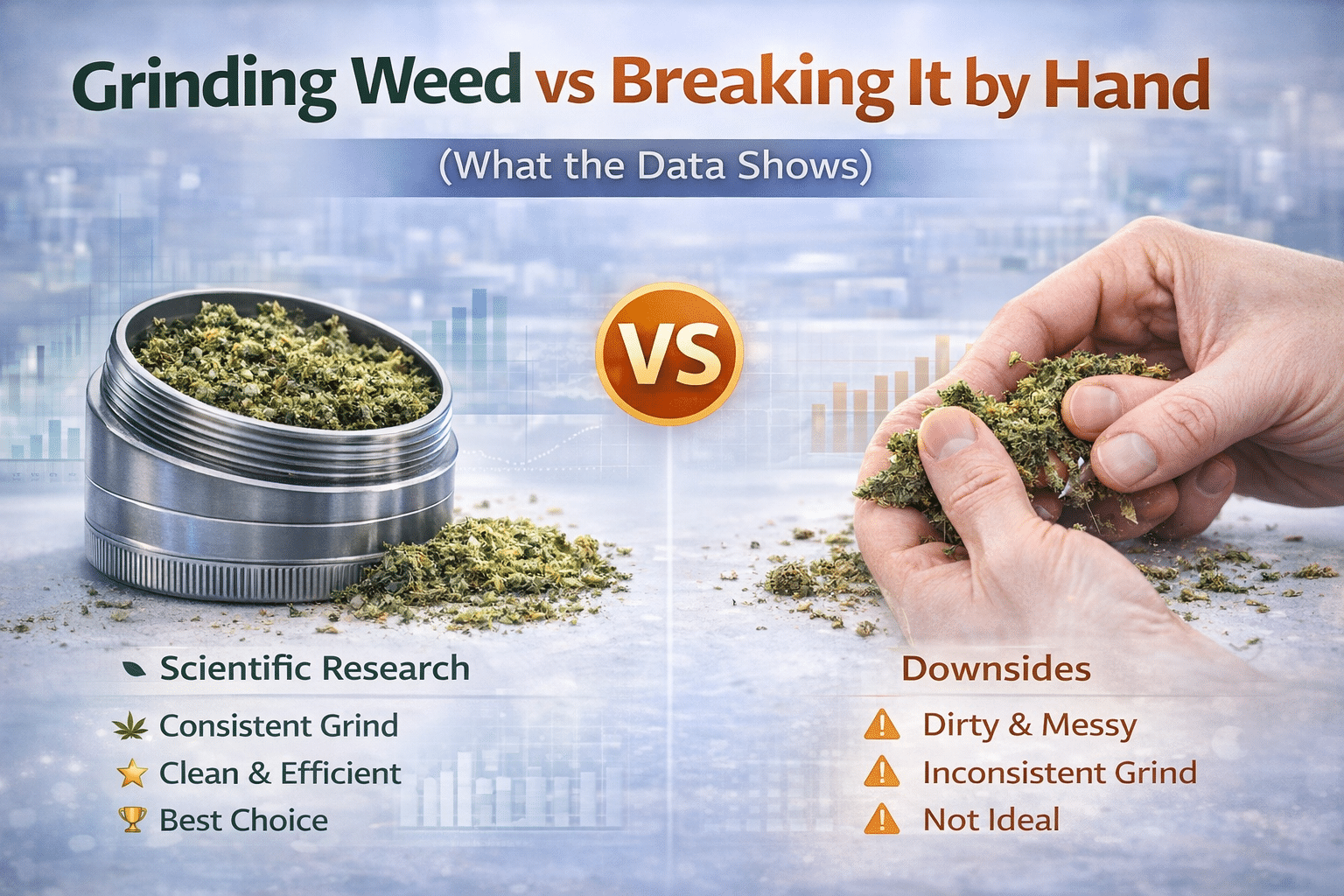
This debate has been around as long as cannabis itself.
Some people swear by breaking flower by hand, claiming it preserves trichomes and “keeps the good stuff intact.” Others insist grinding is essential for efficiency, airflow, and potency.
In 2026, we finally have enough combustion data, airflow analysis, and cannabinoid research to put this question to rest.
This isn’t opinion.
This is about measurable outcomes.
What Actually Changes When You Grind vs Hand-Break Flower
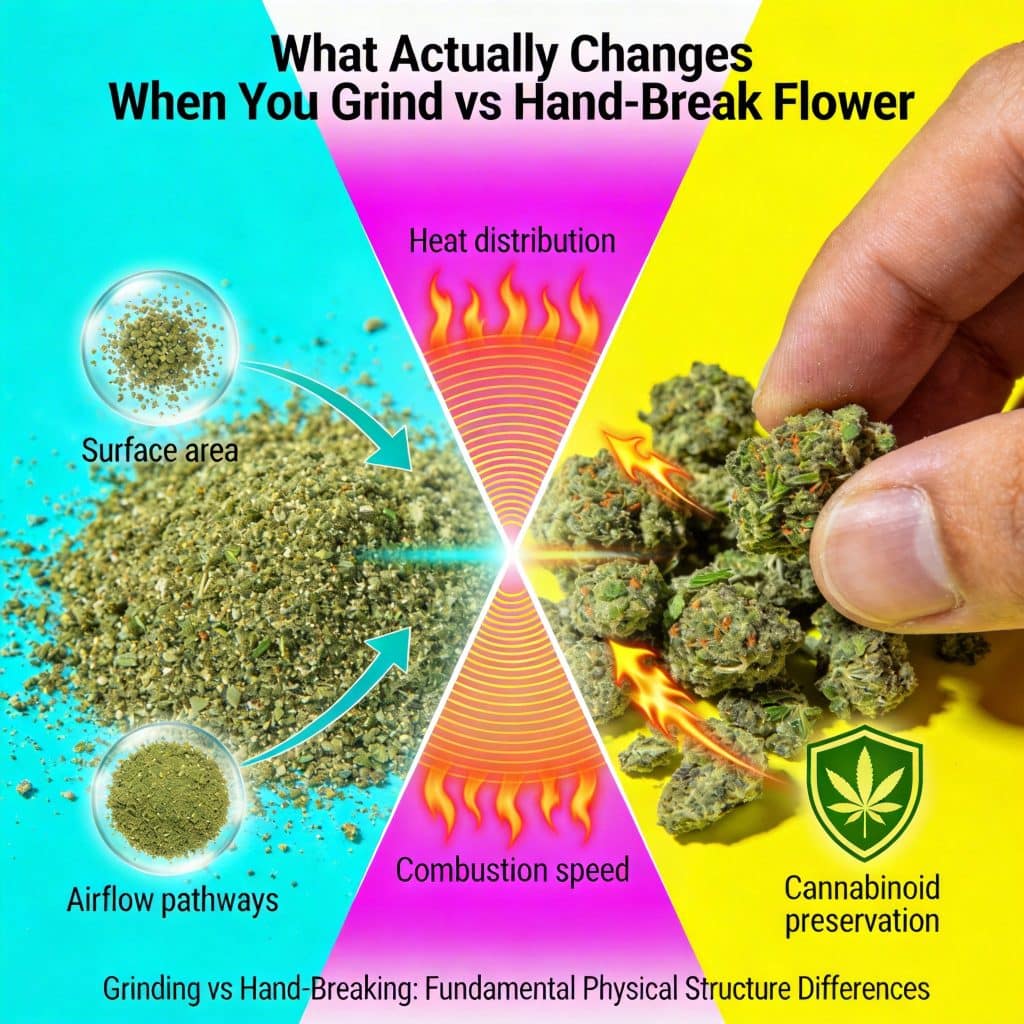
When you prepare cannabis, you’re doing more than making it smaller. You are controlling:
- Surface area
- Airflow pathways
- Heat distribution
- Combustion speed
- Cannabinoid preservation
Grinding and hand-breaking produce fundamentally different physical structures, which behave very differently when burned or vaporized.
Hand-Broken Weed: What Really Happens
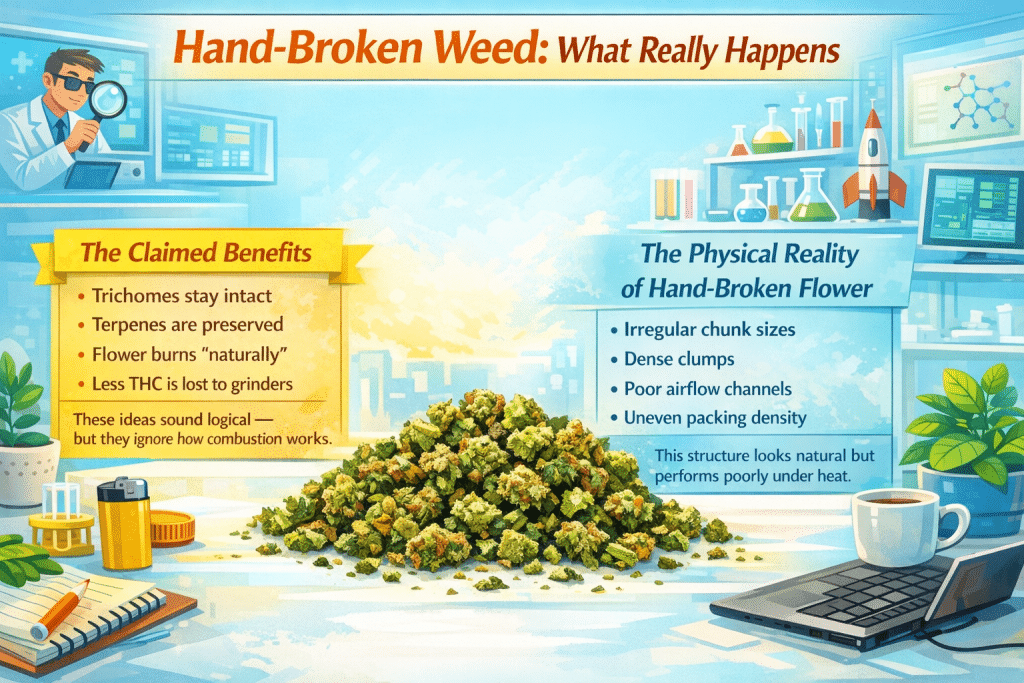
The Claimed Benefits
People who break weed by hand often believe:
- Trichomes stay intact
- Terpenes are preserved
- Flower burns “naturally”
- Less THC is lost to grinders
These ideas sound logical — but they ignore how combustion works.
The Physical Reality of Hand-Broken Flower
Hand-broken weed creates:
- Irregular chunk sizes
- Dense clumps
- Poor airflow channels
- Uneven packing density
This structure looks natural but performs poorly under heat.
Combustion Data: Why Irregular Size Wastes THC
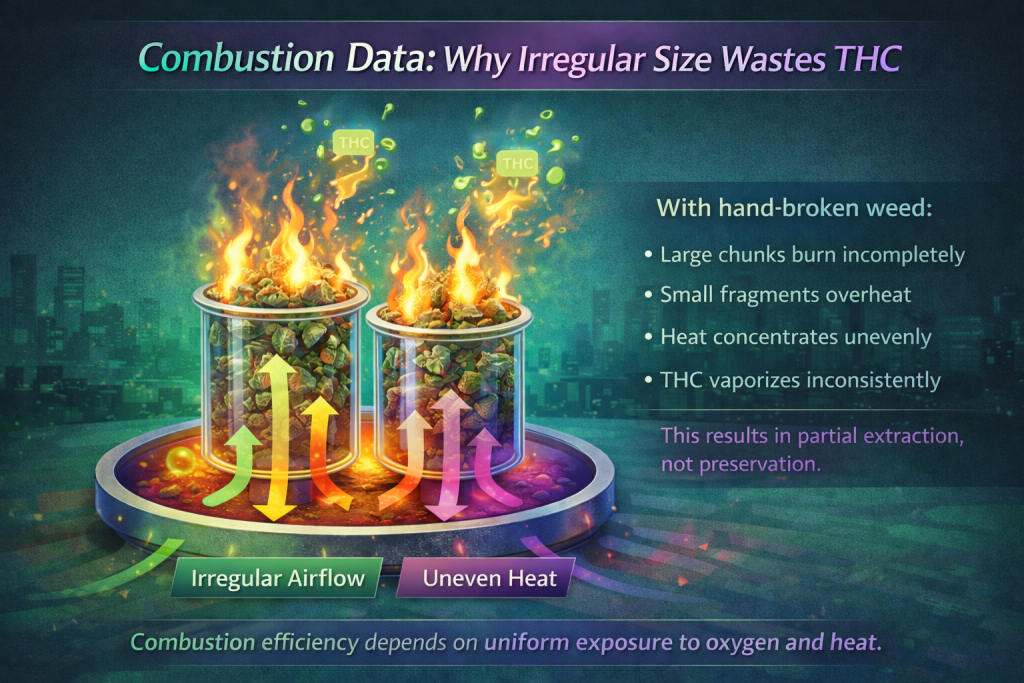
Combustion efficiency depends on uniform exposure to oxygen and heat.
With hand-broken weed:
- Large chunks burn incompletely
- Small fragments overheat
- Heat concentrates unevenly
- THC vaporizes inconsistently
This results in partial extraction, not preservation.
Grinding Weed: Controlled Structure Wins
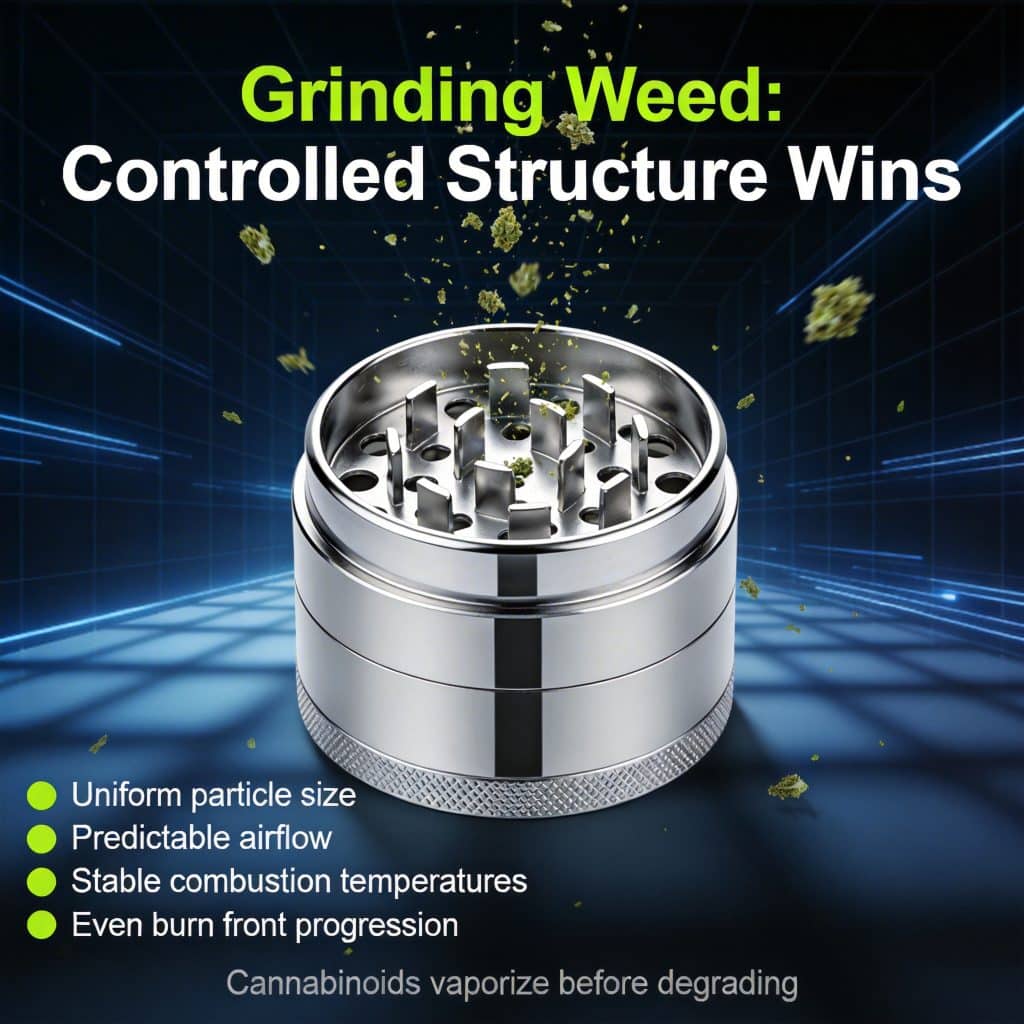
Grinding doesn’t destroy cannabinoids — uncontrolled heat does.
A quality grinder creates:
- Uniform particle size
- Predictable airflow
- Stable combustion temperatures
- Even burn front progression
This structure allows cannabinoids to vaporize and be inhaled before degrading.
Surface Area vs Structure: The Critical Distinction
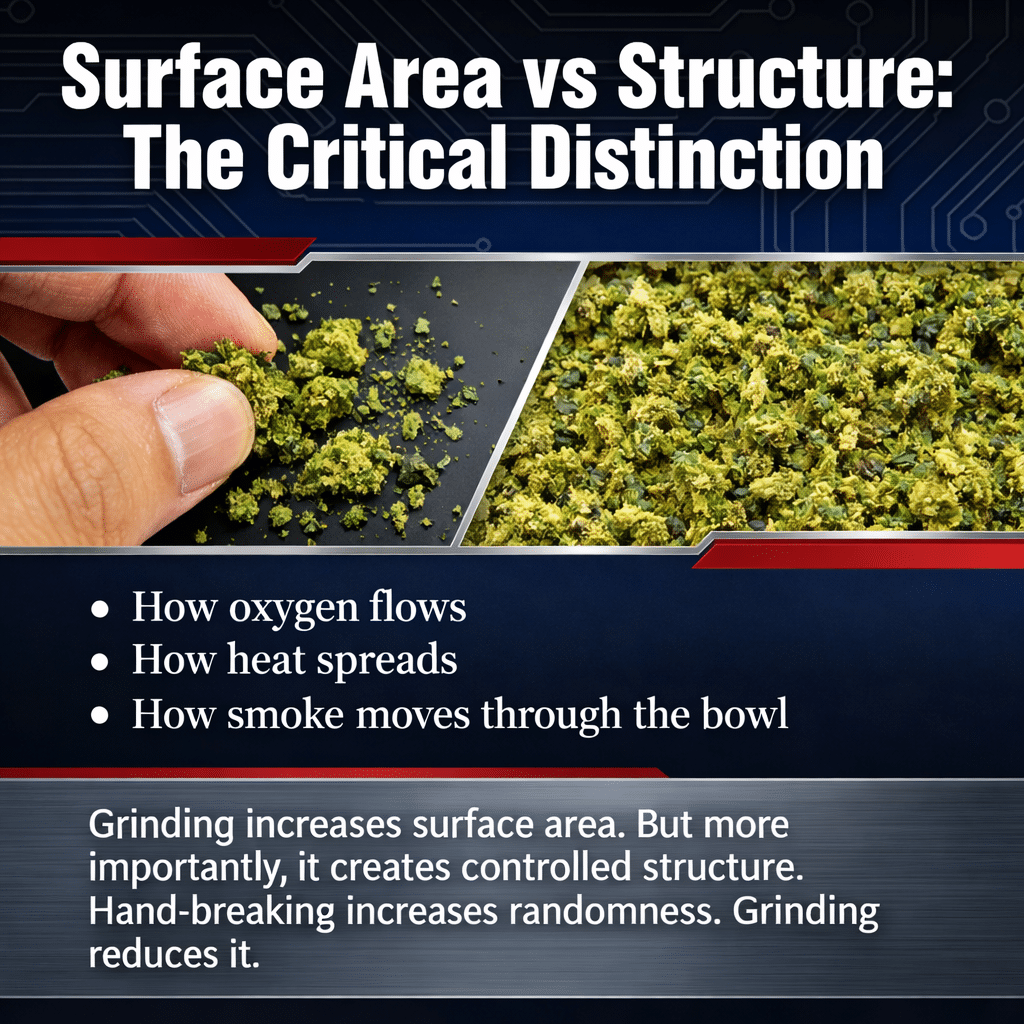
Yes, grinding increases surface area.
But more importantly, it creates controlled structure.
Structure determines:
- How oxygen flows
- How heat spreads
- How smoke moves through the bowl
Hand-breaking increases randomness. Grinding reduces it.
Trichome Loss: Myth vs Measurement
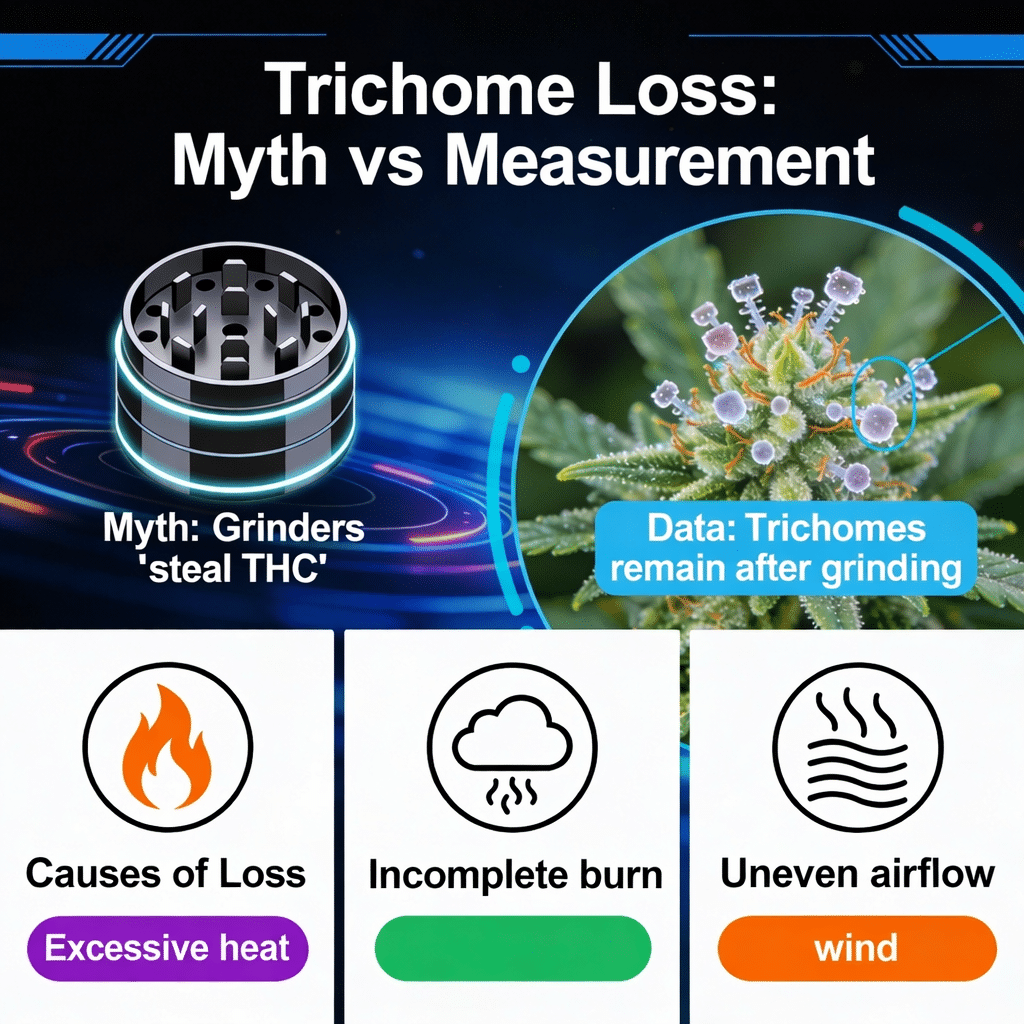
One of the biggest myths is that grinders “steal THC.”
What the Data Shows
- Trichomes do not disappear when grinding
- They remain attached to plant material
- Loss occurs primarily during combustion inefficiency, not grinding
What does cause loss:
- Excessive heat
- Incomplete burn
- Uneven airflow
Grinding reduces all three.
Airflow: The Most Overlooked Variable
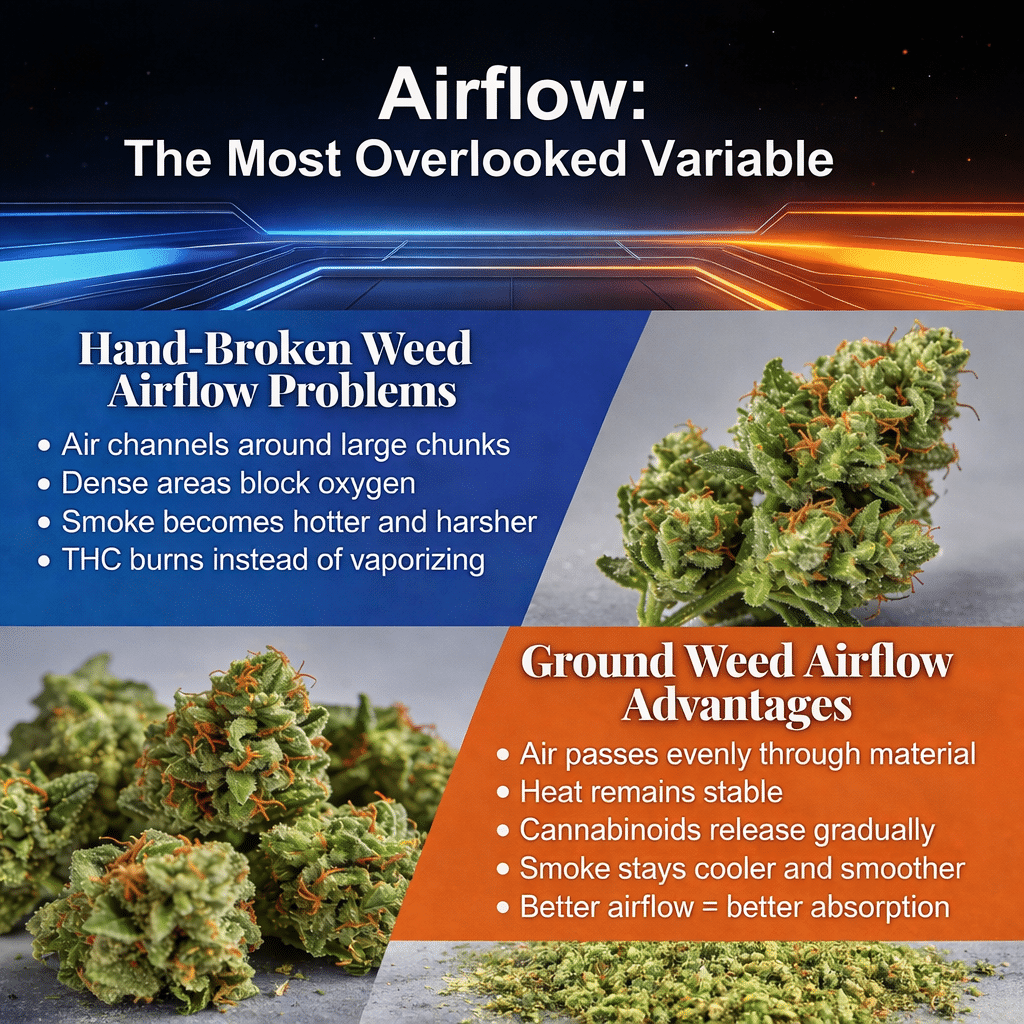
Airflow determines how efficiently cannabinoids reach your lungs.
Hand-Broken Weed Airflow Problems
- Air channels around large chunks
- Dense areas block oxygen
- Smoke becomes hotter and harsher
- THC burns instead of vaporizing
Ground Weed Airflow Advantages
- Air passes evenly through material
- Heat remains stable
- Cannabinoids release gradually
- Smoke stays cooler and smoother
Better airflow = better absorption.
Heat Distribution: Why Grinding Preserves THC
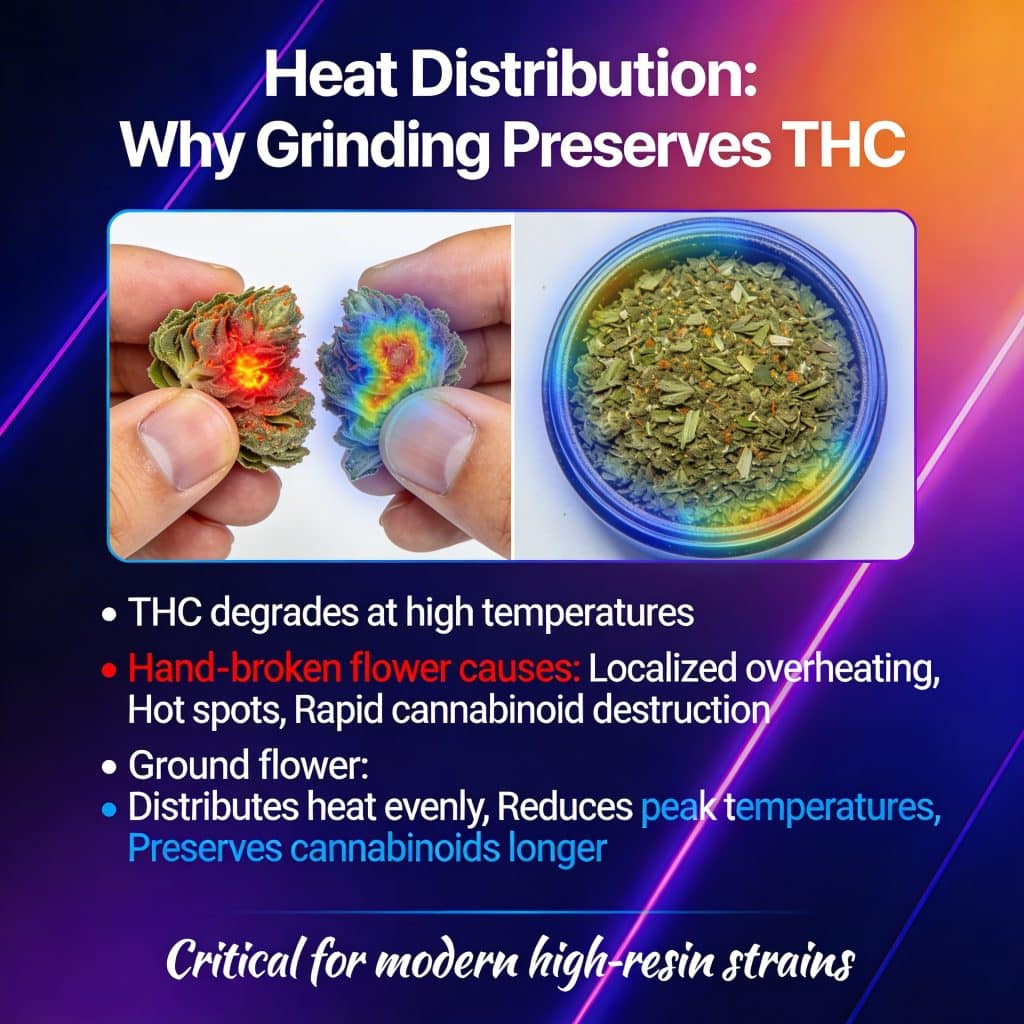
THC degrades at high temperatures.
Hand-broken flower causes:
- Localized overheating
- Hot spots
- Rapid cannabinoid destruction
Ground flower:
- Distributes heat evenly
- Reduces peak temperatures
- Preserves cannabinoids longer
This is critical for modern high-resin strains.
Modern Cannabis Changed the Rules
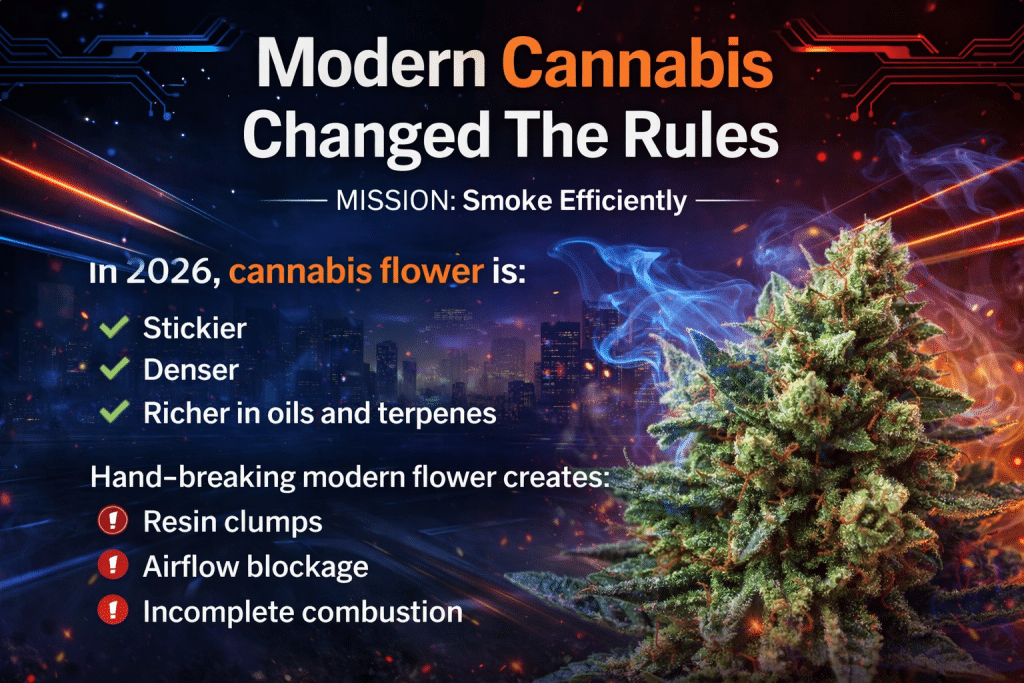
In 2026, cannabis flower is:
- Stickier
- Denser
- Richer in oils and terpenes
Hand-breaking modern flower creates:
- Resin clumps
- Airflow blockage
- Incomplete combustion
Grinding is no longer optional for efficiency — it’s necessary.
Grinding vs Hand-Breaking by Consumption Method
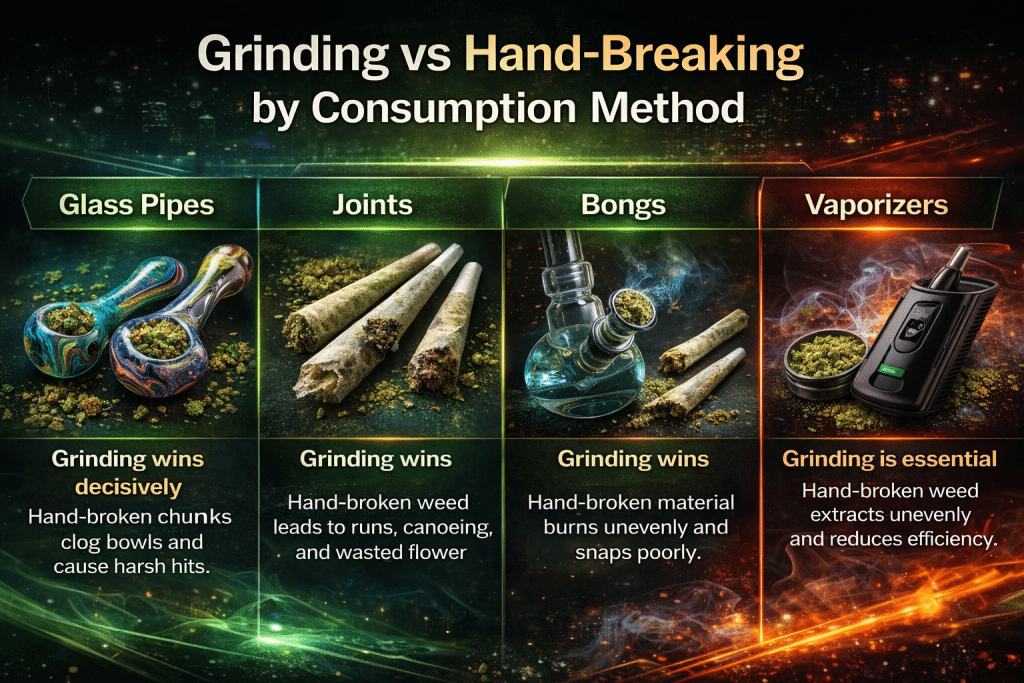
Glass Pipes
Grinding wins decisively
Hand-broken chunks clog bowls and cause harsh hits.
Joints
Grinding wins
Hand-broken weed leads to runs, canoeing, and wasted flower.
Bongs
Grinding wins
Hand-broken material burns unevenly and snaps poorly.
Vaporizers
Grinding is essential
Hand-broken weed extracts unevenly and reduces efficiency.
The “Slower Burn” Misconception
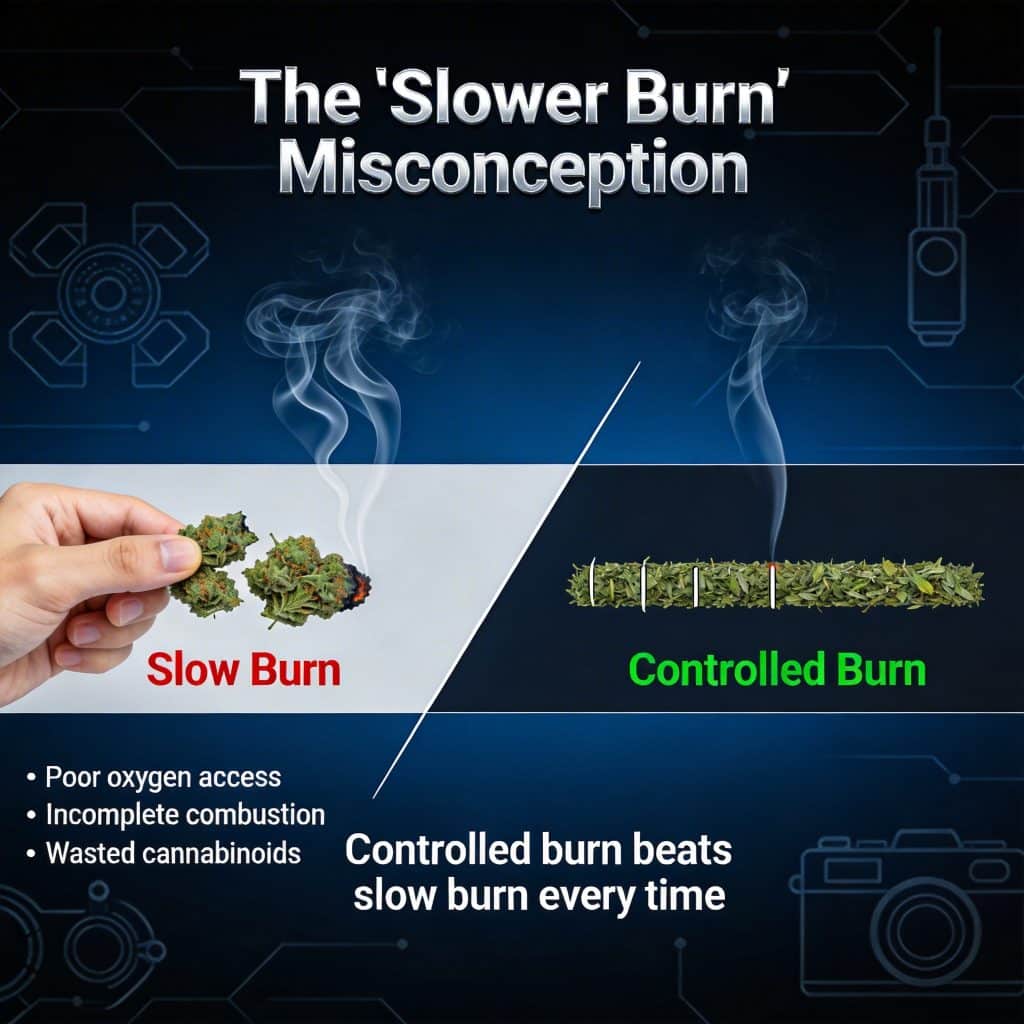
Hand-broken weed often burns slower — but slower does not mean better.
It means:
- Poor oxygen access
- Incomplete combustion
- Wasted cannabinoids
Controlled burn beats slow burn every time.
Efficiency vs Tradition
Hand-breaking weed is a tradition.
Grinding weed is a performance optimization.
Tradition does not equal efficiency.
The Verdict: What the Data Shows
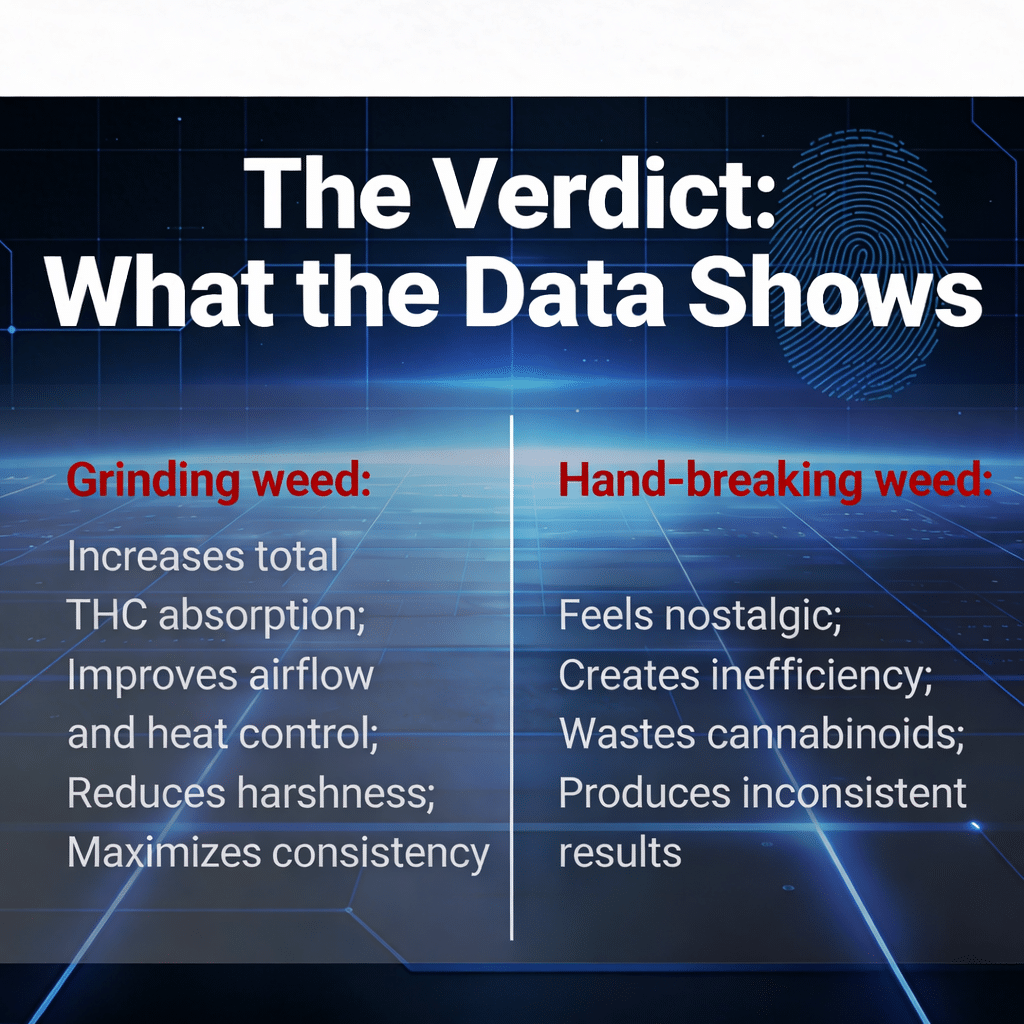
Grinding weed:
- Increases total THC absorption
- Improves airflow and heat control
- Reduces harshness
- Maximizes consistency
Hand-breaking weed:
- Feels nostalgic
- Creates inefficiency
- Wastes cannabinoids
- Produces inconsistent results
Final Conclusion
If your goal is:
- Better flavor
- Stronger effects
- Less wasted flower
- Smoother sessions
Grinding wins — objectively.
Hand-breaking may feel old-school, but data doesn’t care about nostalgia.
Grinding weed isn’t about convenience.
It’s about extracting what you paid for.