
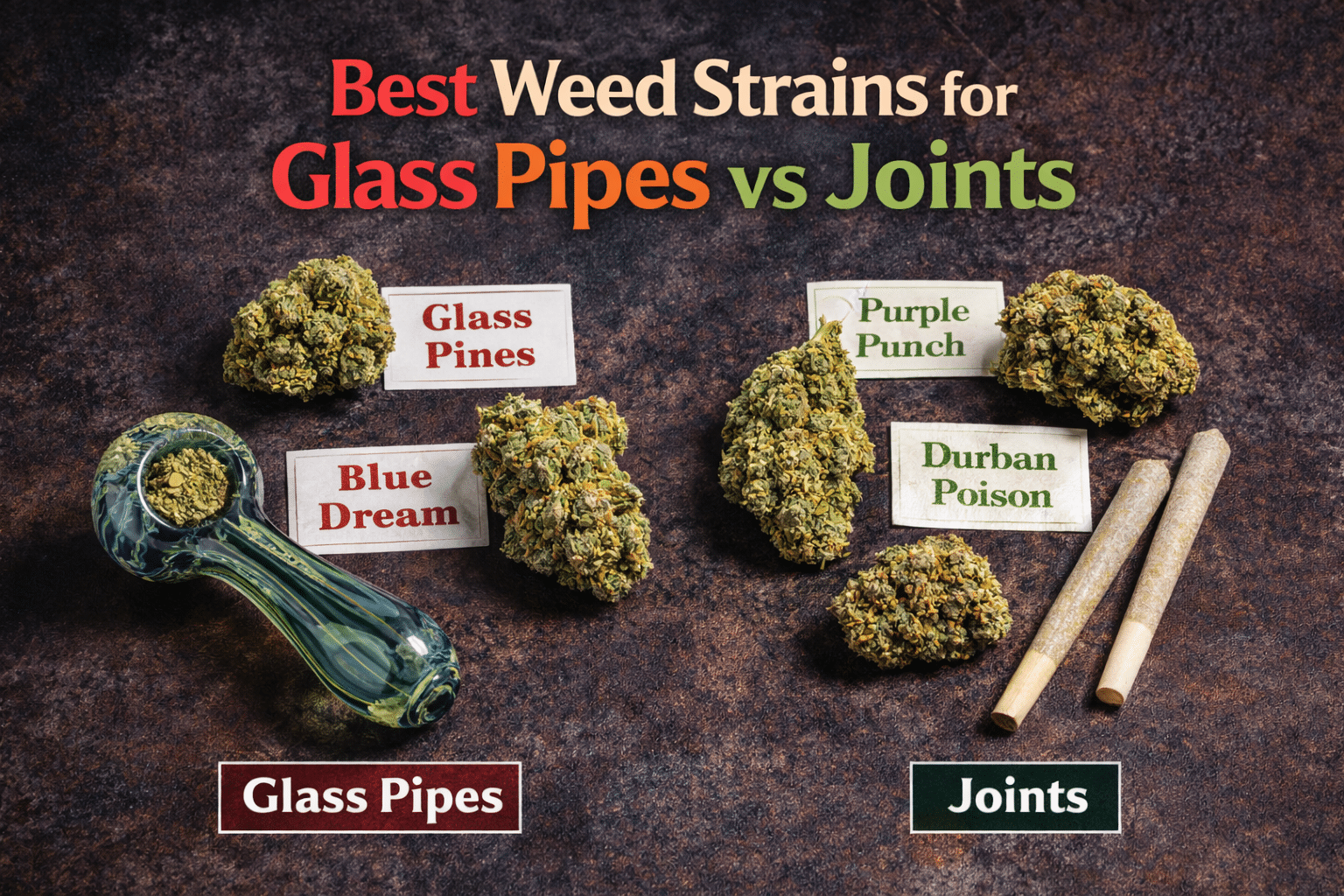
Not all weed performs the same across different smoking methods. A strain that tastes incredible in a glass pipe can feel harsh or uneven in a joint — and a strain that burns perfectly in a joint can feel muted or underwhelming in glass.
The difference isn’t just THC percentage or terpene profile. It comes down to bud structure, resin behavior, moisture content, and how heat and airflow interact with the flower.
In 2026, with modern cannabis genetics pushing higher resin and terpene density than ever before, choosing the right strain for the right smoking method matters more than it used to.
This guide breaks down which weed strains work best in glass pipes, which shine in joints, and why the same flower behaves differently depending on how it’s smoked.
Why Glass Pipes and Joints Favor Different Weed
Glass pipes and joints operate on completely different combustion dynamics.
Glass Pipes
- Direct airflow
- No paper
- Immediate heat exposure
- No combustion buffer
Glass pipes are unforgiving. They reveal everything — flavor, harshness, moisture imbalance, and grind issues.
Joints
- Paper combustion buffer
- Slower, rolling burn
- Distributed heat
- More forgiving airflow
Joints smooth out imperfections but demand flower that burns evenly and consistently over time.
Because of this, the same strain can feel completely different depending on the method.
What Makes Weed Good for Glass Pipes
Weed that performs well in glass pipes typically has:
- Strong terpene expression
- Balanced moisture (not wet, not brittle)
- Clean burn characteristics
- Buds that hold structure when ground
Glass pipes magnify flavor and heat. Strains that are too dry burn hot and harsh, while overly wet strains clog bowls and restrict airflow.
Best Weed Strains for Glass Pipes
Rather than focusing only on hype names, the most important factor is strain family behavior and bud structure.
Terpene-Forward, Dense Hybrids
These strains tend to shine in glass:
- Gelato family
- Wedding Cake
- Zkittlez crosses
- Runtz phenotypes
- Kush hybrids
Why they work:
- Dense but not brittle
- High terpene retention
- Smooth smoke when properly prepared
- Flavor clarity is excellent in glass
Glass pipes reward strains with flavor depth, not just THC.
Why Sticky Strains Often Taste Better in Glass
Sticky, resin-rich strains:
- Produce fuller flavor
- Release terpenes gradually
- Deliver stronger aroma through glass
As long as airflow is preserved, glass pipes showcase sticky flower beautifully.
What Makes Weed Good for Joints
Weed that performs well in joints typically has:
- Even moisture throughout the bud
- Moderate resin content
- Fibrous structure that burns evenly
- Resistance to canoeing
Joints rely on a slow, controlled burn, which means overly sticky flower can actually cause problems.
Best Weed Strains for Joints
Strains that burn cleanly and evenly in paper include:
- OG Kush
- Blue Dream
- Jack Herer
- Durban Poison
- Sour Diesel
Why they work:
- Slightly drier structure
- Fibrous buds
- Predictable combustion
- Less resin pooling
These strains hold an even cherry and minimize runs.
Why Some Strains Burn Poorly in Joints
Highly resinous strains:
- Smear inside paper
- Burn unevenly
- Cause canoeing
- Require constant attention
What tastes amazing in glass can become frustrating in a joint.
Sticky Buds: Better for Glass, Tricky for Joints
Sticky buds excel in glass because:
- No paper interference
- Heat is direct
- Flavor comes through clearly
In joints, sticky buds:
- Require extra prep
- Need perfect grind consistency
- Are more sensitive to packing density
Without careful preparation, they burn unevenly.
Drier Buds: Better for Joints, Harsher in Glass
Slightly drier buds:
- Light easily
- Burn evenly in paper
- Hold a stable cherry
But in glass:
- Burn hotter
- Feel harsher
- Lose terpene nuance
Paper acts as a buffer that glass does not provide.
Grind Size Plays a Bigger Role Than Most People Think
Even the best strain will perform poorly if grind doesn’t match the method.
Glass Pipes
- Medium, fluffy grind
- Preserves airflow
- Prevents hot spots
Joints
- Slightly finer but consistent grind
- Ensures even burn
- Prevents loose pockets
Grind consistency often matters more than strain choice.
Moisture Balance Is the Silent Factor
The same strain can behave differently day to day based on storage.
Too moist:
- Clogs glass
- Canoes joints
Too dry:
- Harsh in glass
- Burns too fast in joints
Balanced moisture improves both methods.
Why Glass Pipes Are Better for Evaluating Strains
Glass pipes reveal:
- True terpene profile
- Combustion behavior
- Smoothness
- Heat tolerance
That’s why many experienced users test new strains in glass before rolling joints.
Joints Are More Forgiving — but Less Precise
Joints smooth out:
- Minor grind inconsistencies
- Small moisture imbalances
- Slight structural flaws
But they also mute flavor slightly compared to glass.
Choosing the Right Strain for the Right Session
Use glass pipes when:
- Flavor matters
- You want immediate feedback
- You’re evaluating a strain
- The flower is resin-rich
Use joints when:
- You want a relaxed, extended session
- Sharing with others
- The flower is balanced or slightly dry
- Even burn is the priority
There Is No “Best” Strain — Only Best Match
The idea of a universally “best” strain ignores physics.
Different methods reward different traits:
- Glass favors flavor and balance
- Joints favor structure and burn stability
Matching strain to method unlocks better results without changing consumption.
Final Takeaway
The best weed strains for glass pipes are terpene-rich, balanced, and slightly sticky, while the best strains for joints are fibrous, evenly cured, and slightly drier. Neither is objectively better — they’re optimized for different combustion environments.
Understanding how bud structure, resin behavior, and moisture interact with your smoking method allows you to get more out of every strain you buy.
The flower didn’t change.
The method did.