

(Safe Alternatives That Actually Work)
Isopropyl alcohol is the go-to glass pipe cleaner for a reason — it works fast. But it’s not always available, not always desirable, and not always safe for every situation. Some people prefer natural methods. Others need alcohol-free options due to sensitivity, storage concerns, or location restrictions.
The good news: you can clean a glass pipe effectively without alcohol — if you understand what you’re trying to remove and how different substances interact with resin.
This guide explains safe, proven alternatives to alcohol, how to use them correctly, and what doesn’t work (despite what the internet claims).
What You’re Actually Cleaning Off a Glass Pipe
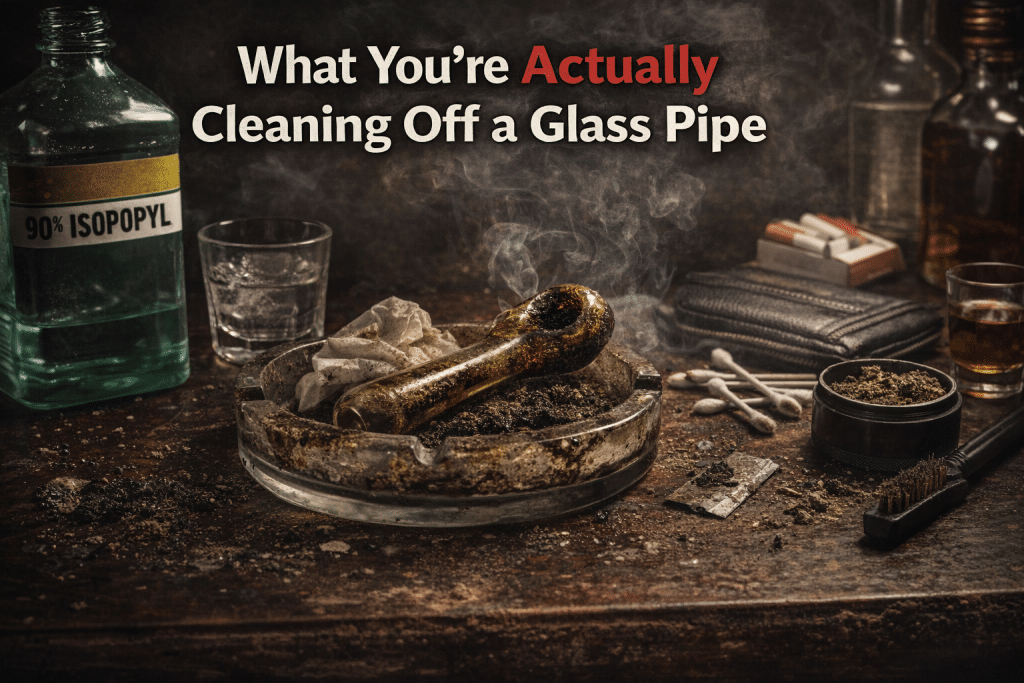
Before choosing a method, it helps to understand the enemy.
Glass pipe residue consists of:
- Hardened cannabis resin (oily, hydrophobic)
- Carbonized ash
- Tar-like byproducts
- Microscopic plant debris
Resin is oil-based, not water-based. That’s why hot water alone rarely works.
Effective alcohol alternatives must either:
- Dissolve oils
- Mechanically remove buildup
- Soften resin so it can be flushed out
The Best Alcohol-Free Glass Pipe Cleaning Methods
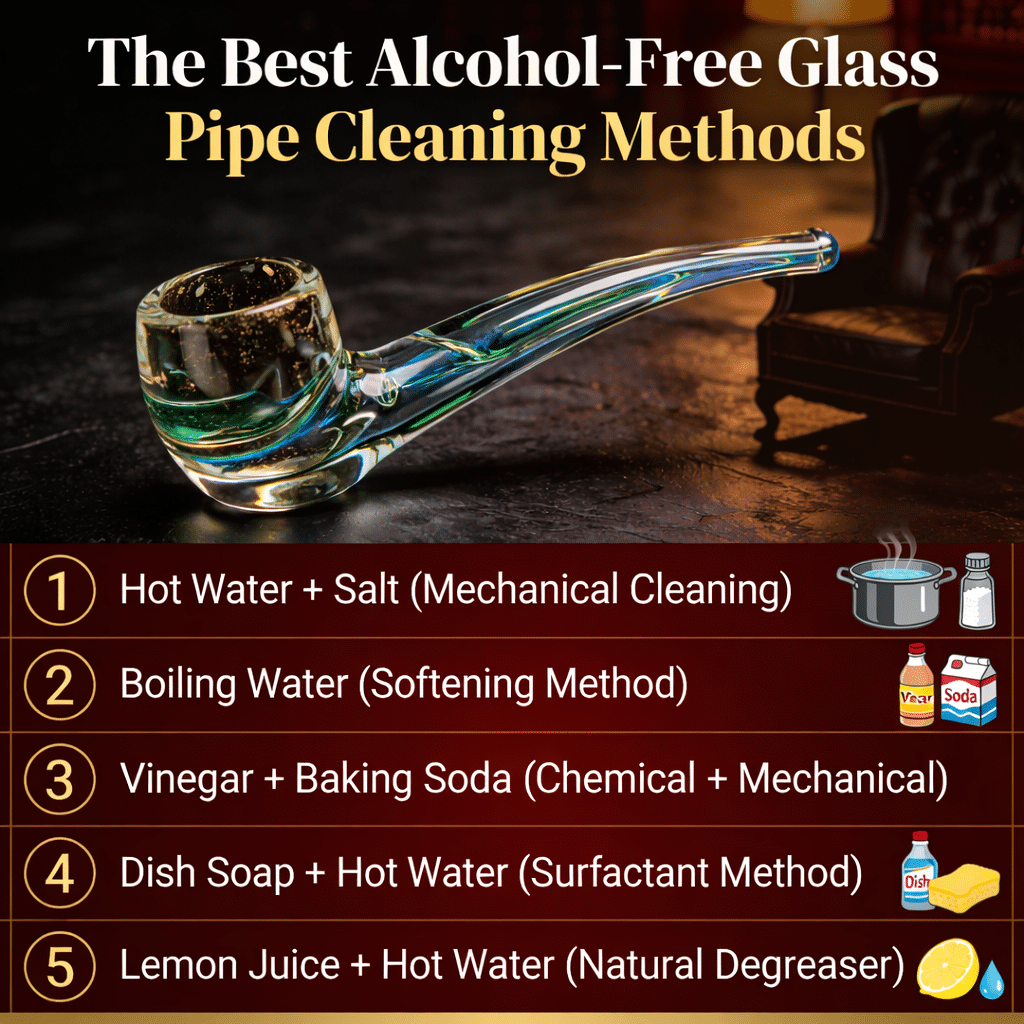
1. Hot Water + Salt (Mechanical Cleaning)
Best for: Light to moderate buildup
Salt doesn’t dissolve resin — it scrubs it off.
How to do it
- Rinse the pipe with very hot water (not boiling)
- Add coarse salt (kosher or sea salt)
- Cover openings and shake vigorously
- Rinse thoroughly with hot water
- Repeat if needed
Why it works
- Heat softens resin
- Salt acts as a non-damaging abrasive
- Glass is hard enough to withstand it
⚠️ Use coarse salt only. Fine salt dissolves too fast.
2. Boiling Water (Softening Method)
Best for: Loosening hardened resin
Boiling doesn’t remove resin — it softens it, making other methods more effective.
How to do it safely
- Place pipe in cold water
- Slowly bring to a gentle boil
- Boil for 20–30 minutes
- Let cool completely
- Flush with hot water
Important safety notes
- Never drop cold glass into boiling water
- Never place hot glass on cold surfaces
- Avoid thin or delicate glass
Boiling is best used before another cleaning method, not alone.
3. Vinegar + Baking Soda (Chemical + Mechanical)
Best for: Moderate residue and odor
This method doesn’t dissolve resin directly — it helps break adhesion and neutralize odor.
How to use it
- Add warm vinegar to the pipe
- Sprinkle in baking soda
- Let it fizz for 15–30 minutes
- Shake gently
- Rinse thoroughly with hot water
Why it works
- Vinegar softens buildup
- Baking soda provides light abrasion
- Fizzing helps loosen residue
⚠️ This method is slower than alcohol and may require repetition.
4. Dish Soap + Hot Water (Surfactant Method)
Best for: Light residue and regular maintenance
Dish soap works by lifting oils rather than dissolving them.
How to do it
- Fill pipe with very hot water
- Add a few drops of grease-cutting dish soap
- Shake and soak for 30–60 minutes
- Scrub with pipe cleaners if needed
- Rinse thoroughly
This works best if resin hasn’t fully hardened.
5. Lemon Juice + Hot Water (Natural Degreaser)
Best for: Light buildup and odor removal
Lemon juice contains citric acid, which helps loosen oils.
How to use it
- Mix lemon juice with hot water
- Soak pipe for 30–60 minutes
- Shake or scrub
- Rinse thoroughly
This method is gentle and safe but not powerful enough for heavy buildup.
What Does NOT Work (Despite Online Claims)
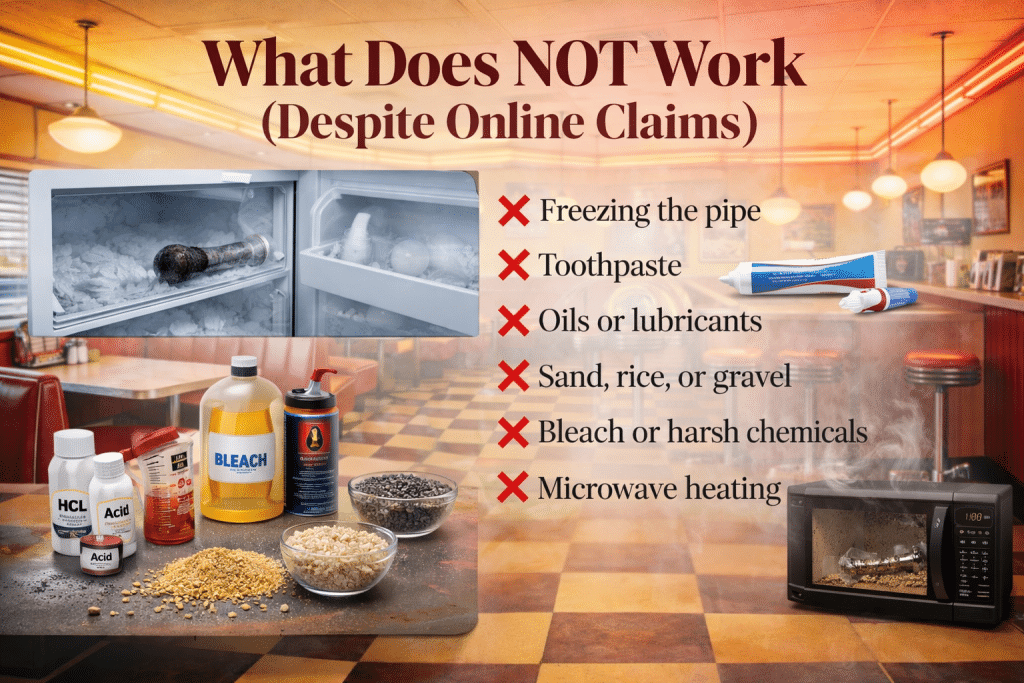
Avoid these — they waste time or damage glass:
- ❌ Freezing the pipe
- ❌ Toothpaste
- ❌ Oils or lubricants
- ❌ Sand, rice, or gravel
- ❌ Bleach or harsh chemicals
- ❌ Microwave heating
These either fail to remove resin or risk cracking the glass.
How to Clean a Glass Pipe Without Alcohol (Best Combo Method)
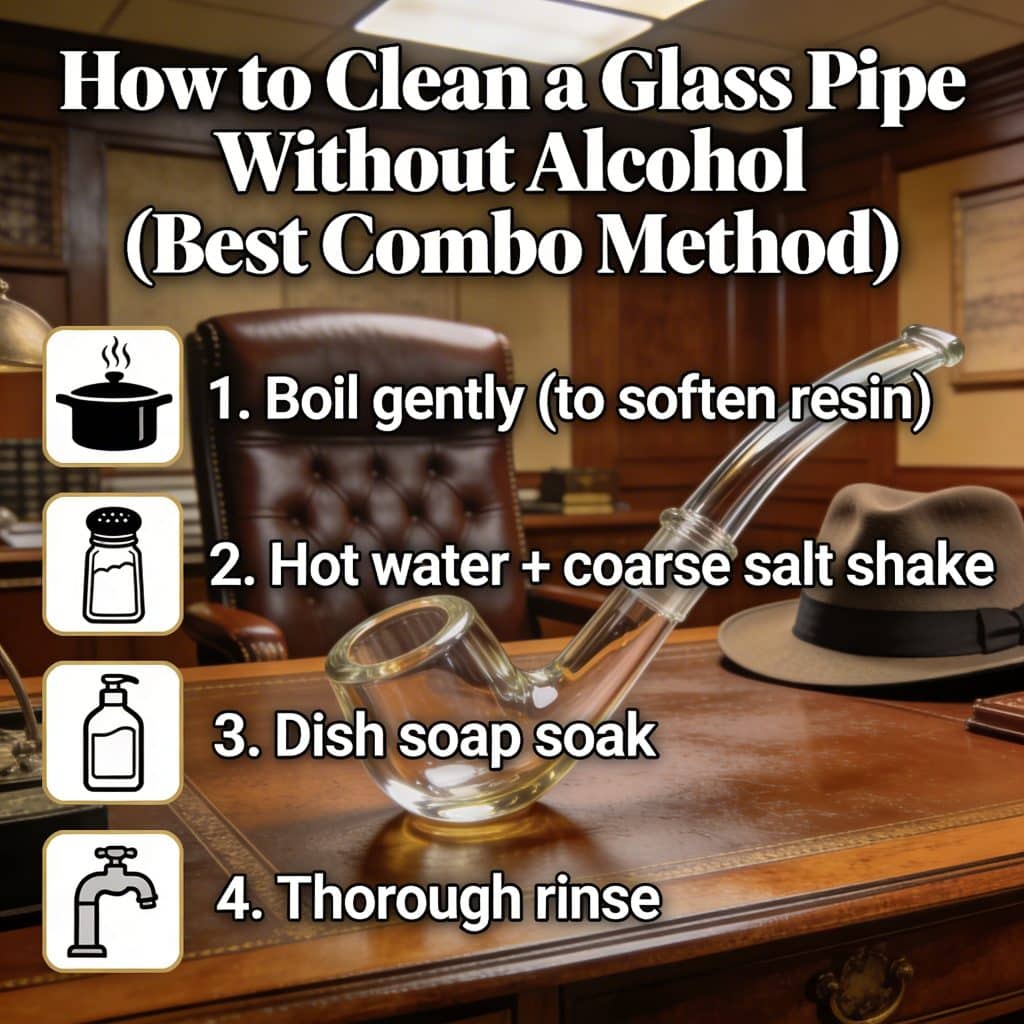
For best results without alcohol:
- Boil gently (to soften resin)
- Hot water + coarse salt shake
- Dish soap soak
- Thorough rinse
This combo removes most buildup safely.
How Often Should You Clean Without Alcohol?

Because alcohol-free methods are less aggressive, frequency matters.
- Light users: once per week
- Daily users: every 2–3 days
- Sticky strains: clean sooner
Regular cleaning prevents resin from curing onto glass.
Odor Control Without Alcohol

After cleaning:
- Rinse with lemon water or vinegar water
- Air dry completely
- Store in a ventilated, dry space
Odor persists when moisture and resin coexist.
Preventing Heavy Buildup in the First Place
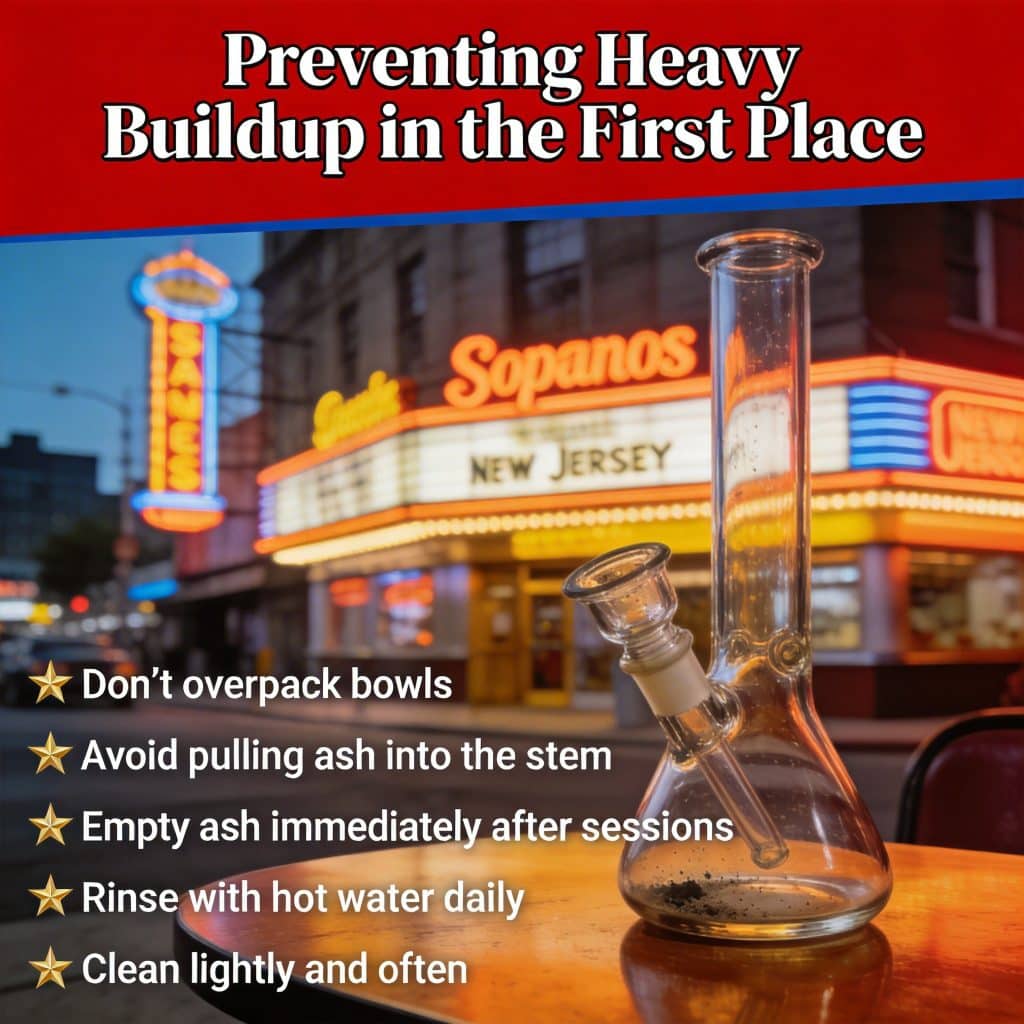
- Don’t overpack bowls
- Avoid pulling ash into the stem
- Empty ash immediately after sessions
- Rinse with hot water daily
- Clean lightly and often
Maintenance reduces the need for deep cleaning.
When Alcohol-Free Methods Aren’t Enough

If:
- Airflow remains restricted
- Resin feels hard and immovable
- Flavor doesn’t return after cleaning
Then alcohol or a purpose-made cleaner may be required.
There’s no shame in using the right tool — alcohol just isn’t the only one.
Final Takeaway
You can clean a glass pipe without alcohol — safely and effectively — if you understand resin behavior and use the right combination of heat, abrasion, and surfactants.
Alcohol is fast.
Alternatives are slower — but they work.
The key is consistency. Clean early, clean gently, and your glass will stay smooth, flavorful, and free-flowing without harsh chemicals.