
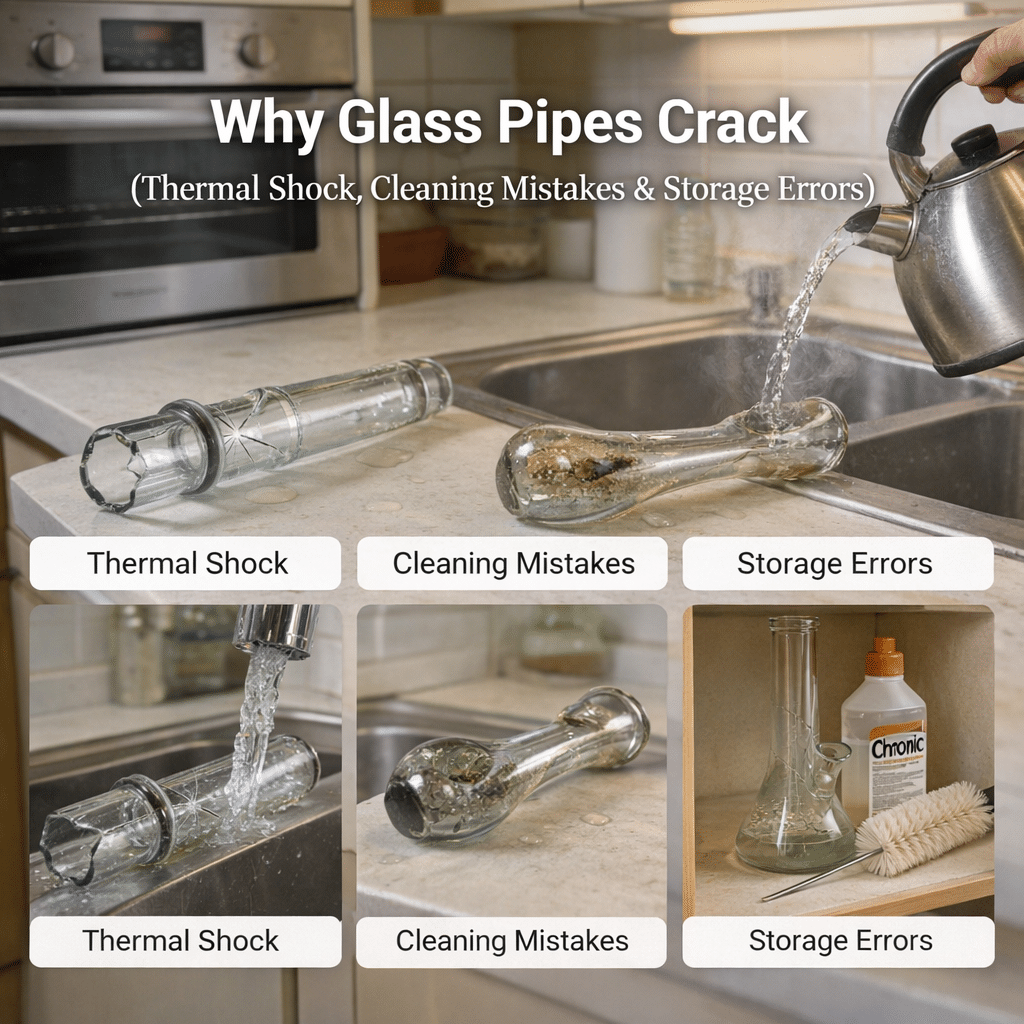
(Thermal Shock, Cleaning Mistakes & Storage Errors)
When a glass pipe cracks, most people assume it was “cheap glass” or bad luck. In reality, glass pipes almost always crack because of thermal stress, not impact. Even high-quality borosilicate glass can fail if it’s exposed to the wrong conditions.
Cracking isn’t random. It’s mechanical and predictable.
This guide explains why glass pipes crack, the specific mistakes that cause it, and how to prevent cracks permanently—without babying your pipe.
The Real Cause of Most Cracks: Thermal Shock
What Thermal Shock Actually Is
Thermal shock occurs when glass experiences rapid, uneven temperature change.
Glass expands when heated and contracts when cooled. If different parts of the pipe change temperature at different rates, internal stress builds. When that stress exceeds the glass’s tolerance, the glass cracks.
This happens even without impact.
Why Pipes Are Vulnerable to Thermal Shock
Glass pipes experience extreme temperature gradients:
- Bowl area heats rapidly from flame
- Stem and mouthpiece remain cool
- Cleaning introduces cold or hot water suddenly
- Storage environments change temperature
The bigger the temperature difference, the higher the stress.
Borosilicate vs Soft Glass (Important Context)
Borosilicate glass:
- Has low thermal expansion
- Resists thermal shock far better
- Tolerates repeated heating and cooling
Soft (soda-lime) glass:
- Expands more when heated
- Is far more crack-prone
- Fails faster under repeated heat cycles
Borosilicate reduces risk—it does not eliminate it.
The Most Common Ways Glass Pipes Crack
1. Cold Water on a Hot Pipe (Most Common)
This is the #1 pipe killer.
What happens:
- Bowl is hot
- Cold water hits exterior or interior
- Outer glass contracts instantly
- Inner glass is still expanded
- Stress fractures form
Even borosilicate can crack this way.
Rule: Never rinse a hot pipe.
2. Boiling or Freezing Without Gradual Transition
Thermal shock works both directions.
Common mistakes:
- Dropping a cold pipe into boiling water
- Taking a pipe from freezer to flame
- Placing a hot pipe on cold surfaces
Glass needs gradual temperature change.
3. Cleaning Too Aggressively
Cracking isn’t always immediate.
Aggressive cleaning causes:
- Microfractures
- Stress points
- Weak zones that crack later under heat
Common mistakes:
- Scraping with metal tools
- Forcing brushes into tight areas
- Using abrasive materials
- Repeated boiling without cooldown
The pipe survives cleaning—then cracks days later during use.
4. Resin Hardening and Uneven Heating
Resin isn’t just sticky—it affects heat flow.
As resin builds up:
- Heat distributes unevenly
- Hot spots form
- Localized expansion increases
- Stress concentrates in one area
This is why dirty pipes crack more often than clean ones.
5. Poor Storage (Slow, Silent Damage)
Storage issues cause delayed cracks.
Risky storage conditions:
- Hot cars
- Window sills
- Near heaters
- Unpadded bags
- Loose drawers
Repeated temperature cycling weakens glass over time, even without visible damage.
6. Impact Isn’t Always Obvious
Tiny impacts matter.
Light knocks:
- Create microfractures
- Don’t cause immediate breakage
- Fail later under heat stress
That “mystery crack” often started with a minor bump days earlier.
Why Pipes Often Crack at the Bowl or Joint
Certain areas crack first because they experience the most stress.
High-risk zones:
- Bowl base
- Bowl-to-stem transition
- Carb hole area
- Decorative weld points
These areas:
- Heat fastest
- Cool unevenly
- Experience structural transitions
This isn’t coincidence—it’s stress concentration.
Why Cracks Sometimes Appear “Out of Nowhere”
Glass cracks don’t always happen instantly.
The timeline:
- Stress or microfracture forms
- Pipe survives multiple uses
- Stress accumulates
- Crack suddenly propagates
The cause happened earlier—the crack just finished later.
How to Prevent Glass Pipes From Cracking
1. Let Pipes Cool Before Cleaning
Always wait until the pipe is room temperature before rinsing.
2. Avoid Temperature Extremes
No freezer tricks. No boiling shortcuts. No cold countertops.
3. Clean Gently, Not Aggressively
Soak. Shake. Rinse. Repeat.
Don’t scrape or force tools.
4. Clean Regularly
Clean pipes heat more evenly than resin-coated ones.
5. Store Smart
- Room temperature
- Padded containers
- Away from heat and sunlight
- Not loose in bags or cars
6. Use Controlled Flame
Torching the bowl concentrates heat fast. Gentle flame control reduces stress.
Myths About Glass Pipe Cracking
“Thicker Glass Won’t Crack”
Thickness helps with impact, not thermal shock.
“Only Cheap Glass Cracks”
False. All glass cracks if stressed improperly.
“Cracks Mean Bad Manufacturing”
Sometimes—but most cracks are user-induced stress failures.
When a Cracked Pipe Is No Longer Safe
Stop using a pipe if:
- Cracks extend into the airway
- Cracks grow after use
- Edges feel sharp
- Airflow changes suddenly
Cracked glass can shed shards. It’s not worth the risk.
Final Takeaway
Glass pipes don’t crack randomly. They crack because of thermal shock, stress concentration, and time.
The biggest enemies are:
- Rapid temperature changes
- Aggressive cleaning
- Poor storage
- Resin buildup
- Hidden microfractures
Treat glass with gradual transitions and consistent care, and even daily-use pipes can last years.
Most cracked pipes didn’t fail suddenly—they were stressed slowly until physics finally won.
Once you understand why glass cracks, preventing it becomes simple—and predictable.