
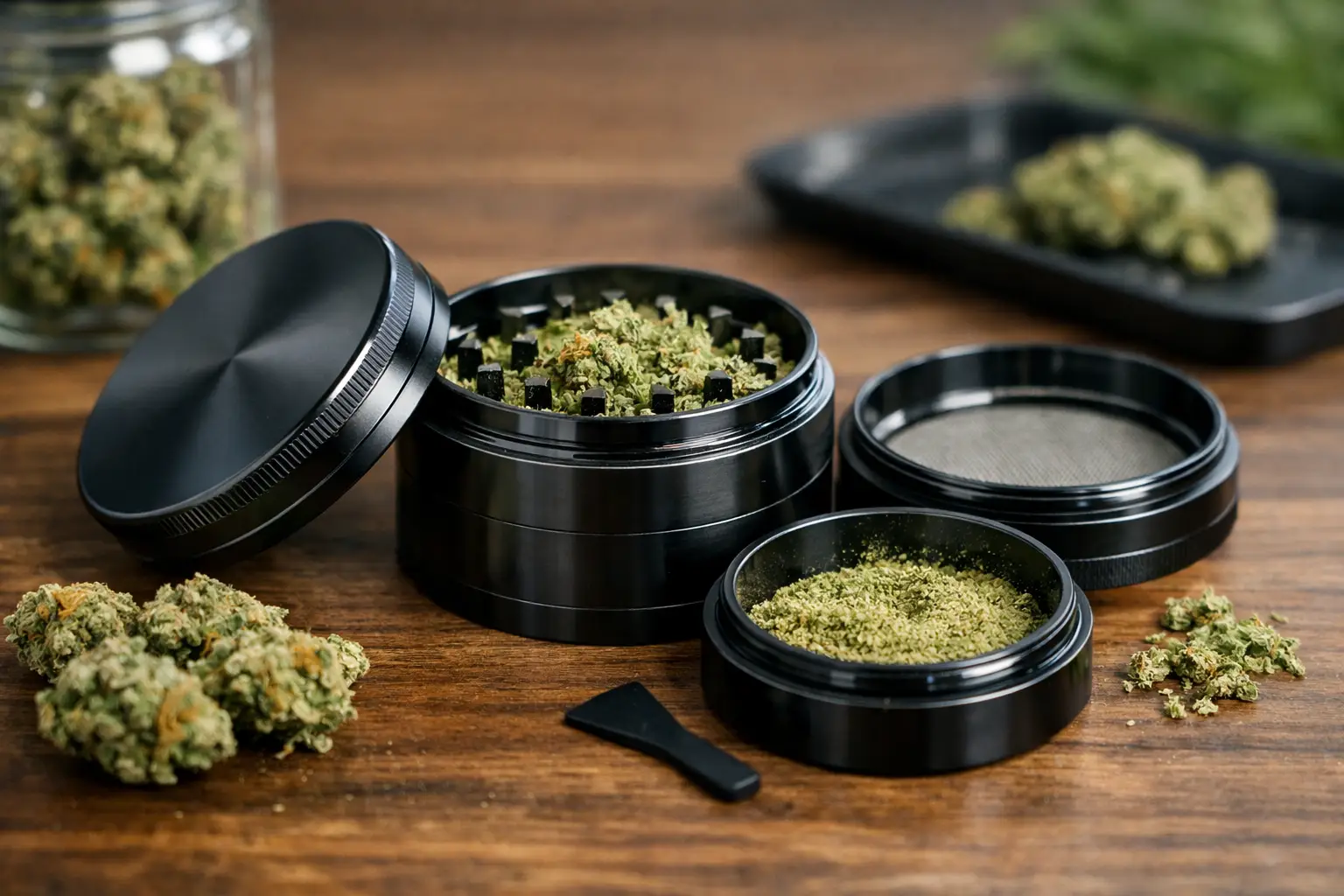
A grinder that sticks shut with a weak magnet, binds after a week, or leaves you with a chunky, uneven grind is not premium. If you are shopping for the best magnetic weed grinder, the real question is not which one looks good in a product photo. It is which one keeps performing month after month, with clean rotation, consistent texture, and zero nonsense when you are packing a bowl, rolling up, or loading a vape.
That is where magnetic design stops being a gimmick and starts being a functional advantage. The best versions do more than hold the lid in place. They improve speed, reduce frustration, and make the grinder feel like a precision tool instead of a disposable accessory.
What makes the best magnetic weed grinder different
A magnetic grinder is only as good as the engineering around the magnet. Plenty of cheap grinders use a magnetic lid, but that alone does not make them smooth, durable, or worth owning. If the teeth are poorly cut, the tolerances are loose, or the aluminum is soft, the magnet is just covering up a weak build.
A true premium magnetic grinder combines several things at once. The lid should seat securely without wobble. The body should rotate smoothly under load, not just when it is empty. The teeth should shred herb evenly rather than crush it into random chunks. And the finish should hold up to real use without flaking, scratching excessively, or leaving the grinder feeling gritty after a few sessions.
This is why serious buyers pay attention to machining quality first. A grinder is a mechanical tool. It lives or dies by precision.
Why magnetic design matters in daily use
The biggest practical benefit of a magnetic grinder is simple – faster access with fewer points of failure. Threaded lids can cross-thread, collect buildup in the threads, and become annoying over time. A magnetic top removes that friction point. Open, load, close, grind. That sounds basic, but anyone who has fought a sticky lid knows how much better a clean magnetic fit feels.
There is also a reliability advantage. A good magnet keeps the lid seated while you grind and while you carry it, which helps prevent accidental spills. That matters whether the grinder lives on your tray at home or goes into a bag, drawer, or travel kit.
Still, magnet strength has to be balanced. Too weak and the lid shifts. Too strong and the grinder feels awkward to open quickly. The best magnetic weed grinder gets that balance right. Secure, not stubborn.
Material quality is not optional
If you want a grinder that lasts, start with the metal. Cheap zinc alloy grinders are everywhere because they are inexpensive to produce, but they tend to wear faster, feel heavier in the wrong way, and lack the long-term precision of a well-machined aluminum grinder. For a premium build, 6061-T6 aluminum is the standard worth paying for.
That alloy gives you strength without unnecessary bulk. It machines cleanly, holds tolerances well, and supports a more refined feel in the hand. More important, it helps the grinder maintain performance over time. Teeth stay true. The body stays solid. Rotation stays consistent.
This is one of those areas where price usually tells part of the story. If a magnetic grinder is suspiciously cheap, something had to give. Usually it is the material, the machining, or the inspection process.
The best magnetic weed grinder should grind evenly
Most buyers focus on lids, colors, and chamber count first. The better question is what the grind actually looks like when you are done. That is the whole job.
A good magnetic grinder should produce a consistent texture that fits your smoking style. For bowls, you typically want an even medium grind that burns cleanly without clogging airflow. For joints and blunts, slightly fluffier material can help with an even roll and steady burn. For dry herb vapes, consistency matters even more because uneven pieces can affect extraction.
Tooth design has a huge impact here. Sharp, well-spaced teeth cut through herb instead of mashing it. Proper alignment matters too. If the teeth are not machined with precision, the grinder may feel acceptable at first but deliver a less controlled result, especially with sticky flower.
This is where premium manufacturing separates itself from mass-market accessory sellers. Clean geometry produces clean results.
Choosing the right chamber setup
The best magnetic weed grinder for one person is not automatically the best for another. It depends on how you use it.
A 2-piece grinder is the most direct option. You load flower, grind it, and use it. Fewer parts, less cleaning, and a straightforward feel. If you want speed and simplicity, this setup makes sense.
A 3-piece grinder adds storage below the grinding chamber, which helps if you like preparing more than one session at a time. It keeps ground herb contained and ready without requiring a separate container.
A 4-piece grinder adds a screen and lower chamber for kief collection. For some users, that is a major advantage. For others, it is unnecessary. If you like collecting finer material over time, a 4-piece design is worth it. If you want all plant material to remain together for each session, a simpler configuration may suit you better.
There is no fake universal answer here. The best magnetic weed grinder is the one that matches how you actually consume.
Size affects performance more than most buyers expect
Small grinders are easy to carry and store, but they usually trade away capacity and leverage. Large grinders process more herb with less effort and often feel smoother because you have more surface area to grip during rotation.
If you grind small amounts occasionally, a compact model can be enough. If you smoke regularly, share sessions, or prefer fewer reloads, a larger grinder is usually the better tool. Bigger grinders also tend to be more comfortable for users who are tired of cramped hand positioning and choppy rotation.
This is not just about convenience. It is about control. A properly machined larger grinder often feels more stable and more capable under real load, especially with dense or sticky flower.
Signs you are looking at a cheap grinder
Not every product description tells the truth, but bad grinders usually leave clues. If the material is vague, the manufacturing origin is unclear, and the marketing leans on color options instead of mechanical quality, be careful.
Look closely at what is missing. If there is no mention of machining tolerances, alloy type, inspection standards, or warranty support, that usually means those details are not strengths. The same goes for grinders sold through generic marketplaces with recycled images and almost no useful product specs.
A premium grinder should be easy to explain in technical terms because there is real engineering behind it.
Why direct manufacturing matters
One of the most overlooked buying factors is who actually makes the grinder. There is a big difference between a company that designs, machines, inspects, and ships its own products and a seller that sources generic inventory from whoever can produce it cheapest.
When a manufacturer controls production, quality is easier to maintain. Design changes can be implemented faster. Problems can be corrected at the source. And the final product tends to reflect actual standards rather than whatever came out of a bulk catalog order.
That matters even more with a precision accessory. If you are buying the best magnetic weed grinder, you are not just buying aluminum and magnets. You are buying machining discipline, assembly quality, and confidence that the product was built to perform, not just to sell.
That is also why a lifetime warranty carries weight when it comes from a company with real production control. It signals that the grinder was built for long-term ownership, not short-term replacement.
How to judge a magnetic grinder before you buy
Start with the fundamentals. Check the material, the chamber configuration, and the overall size. Then look at the finer details: tooth design, lid fit, finish quality, and whether the brand explains how the grinder is made.
You should also think honestly about your own use. If you mainly grind at home and want storage plus kief collection, a larger 4-piece magnetic grinder is likely the better fit. If you want something compact and fast for everyday sessions, a 2-piece or 3-piece design may be smarter.
And yes, aesthetics matter, but only after performance. A grinder can look premium and still grind badly. The reverse is rarely true.
For buyers who are done wasting money on jam-prone, soft-metal grinders, this is exactly why a company like Tahoe Grinder Co stands out. Precision CNC machining, 6061-T6 aluminum, thread-less magnetic design, and lifetime warranty coverage are not cosmetic claims. They are the difference between a grinder that feels great on day one and one that still performs after years of real use.
The best magnetic weed grinder should make preparation feel easier, cleaner, and more consistent every single time you use it. When the machining is right, you stop thinking about the grinder and start noticing the session.