
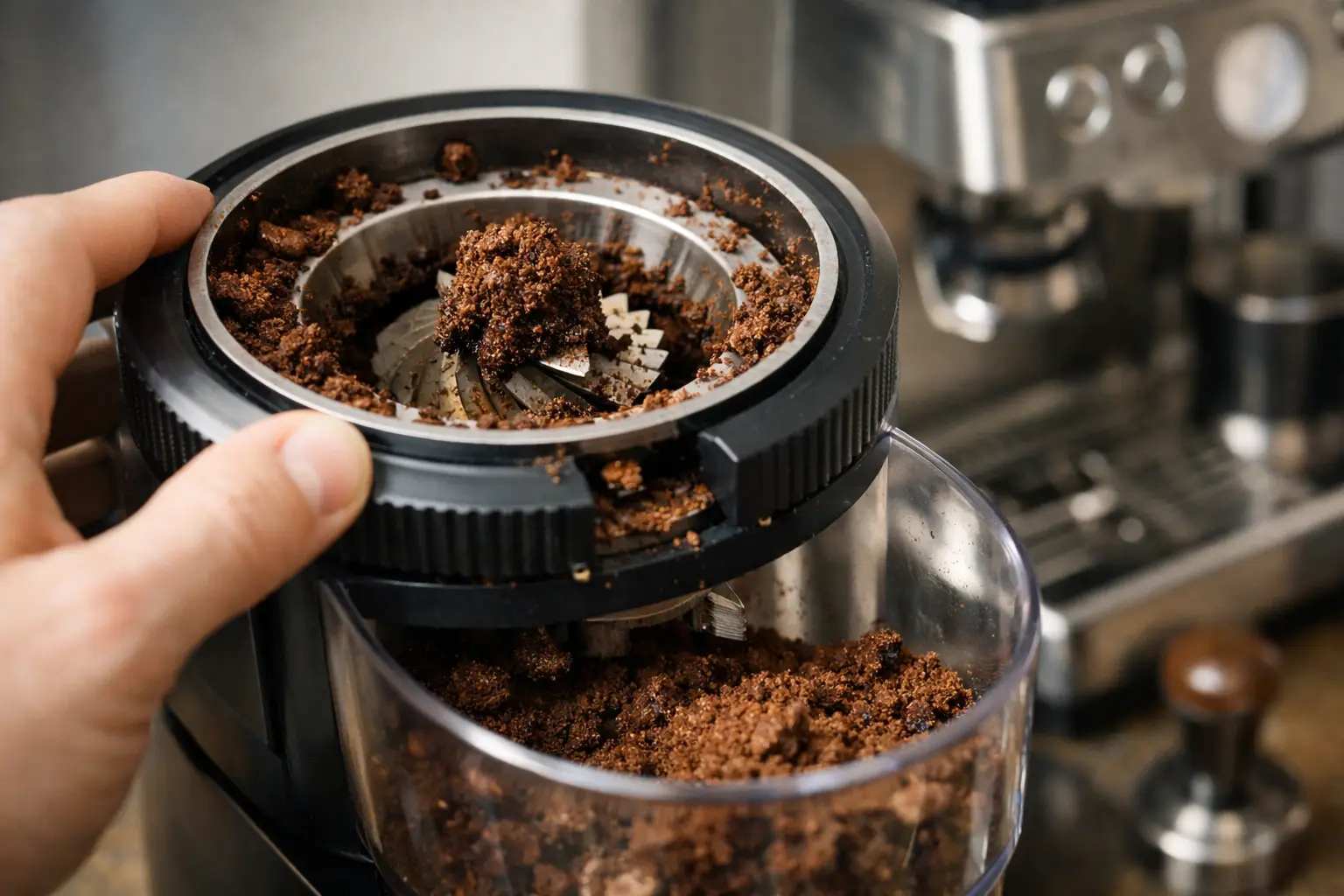
You load your herb, give the lid a turn, and suddenly the whole session slows to a stop. If you’re asking why my grinder gets stuck, the answer usually isn’t bad luck. It’s friction, buildup, moisture, overpacking, or a grinder that was never machined well enough to stay smooth under real use.
A grinder should feel controlled, not unpredictable. When it starts binding, grinding unevenly, or locking up completely, that’s a performance problem. And most of the time, the cause is easy to identify once you know what is happening between the teeth, the rim, and the lid.
Why my grinder gets stuck in the first place
The most common reason a grinder sticks is resin buildup. Dried herb naturally leaves behind sticky oils, and those oils collect on the teeth, around the lip, and along any contact points where metal slides against metal. At first, you barely notice it. Then the action gets heavier, the lid starts dragging, and eventually it feels like the grinder is fighting you.
Moisture is another major factor. Herb that is too fresh, too dense, or not cured well can gum up a grinder fast. Instead of breaking apart cleanly, it compresses and smears. That creates resistance between the teeth and leaves behind more residue, which only makes the next grind worse.
Overloading matters too. A lot of people pack a grinder like they’re trying to save time, but too much material reduces the room the teeth need to cut and move. Instead of slicing through flower, the grinder starts compressing it into a dense mass. That is when lids bind, turns get harder, and the whole mechanism can seize.
Then there is the grinder itself. Poor tolerances, rough finishing, weak threading, and soft metal all increase the odds of sticking. A cheap grinder may feel acceptable on day one, but small machining inconsistencies become obvious once resin starts building. Precision matters more than most people realize.
The most likely causes of a stuck grinder
Resin and kief buildup
This is the big one. Sticky cannabinoids and fine plant particles collect over time and create a tacky layer inside the grinder. In a 4-piece grinder, buildup can also happen along the threading or chamber edges. In a 2-piece grinder, it often collects around the grinding rim where the top and bottom meet.
Once enough residue is present, the parts no longer glide. They drag. If you keep forcing it, that drag turns into a full jam.
Herb that is too moist
Fresh flower feels great in the jar, but it is not always ideal in the grinder. Slightly sticky herb can still grind well in a properly engineered unit. Very wet flower is different. It clumps, wraps around teeth, and smears resin onto every surface it touches.
The trade-off is simple. Drier herb usually grinds easier, but overly dry herb can grind too fine and lose some texture. The sweet spot is flower that still has life in it without being wet or spongy.
Too much pressure from overfilling
A grinder is designed to process a workable amount of material, not an entire session’s supply at once. When you overfill it, the teeth cannot engage properly. Instead of cutting in stages, they slam into packed flower with nowhere to move it.
That extra pressure makes sticking more likely, especially with dense nugs. Smaller loads usually produce a faster, smoother, more consistent grind.
Misalignment or bad machining
If the lid wobbles, the teeth don’t line up cleanly, or the edges feel rough, sticking may have less to do with your herb and more to do with the grinder’s construction. Tight tolerances are good. Poor tolerances are a problem. There is a difference.
A well-machined grinder feels precise without binding. A poorly made one often feels okay until residue builds up, then everything starts catching. This is where premium materials and controlled manufacturing make a real difference.
Cross-threading on multi-piece grinders
Not every stuck grinder is jammed at the teeth. Sometimes the issue is the body or chamber being screwed together at a slight angle. Cross-threading can lock parts in place and make the grinder feel completely seized.
This happens more often on low-quality units with rough or inconsistent threads. It can also happen when someone tightens a sticky grinder too aggressively after use.
How to fix a grinder that gets stuck
Start by not forcing it. If the grinder is binding, adding more hand strength can make the problem worse. You can bend components, damage threads, or grind residue deeper into contact areas.
First, empty out whatever herb you can remove easily. Then inspect the rim, teeth, and mating surfaces. If you see dark, sticky residue, that buildup is likely the main culprit. A soft brush or firm cleaning tool can remove loose kief and plant matter before it turns into a heavy resin layer.
If the grinder is still hard to turn, a full cleaning usually solves it. Separate all pieces carefully and remove visible residue from the teeth, interior walls, and edges where parts rotate or meet. Let everything dry completely before reassembling. Any leftover moisture can create fresh sticking.
For threaded models, check the threads closely before putting the grinder back together. If there is debris trapped there, clean it out fully. When you reassemble, start slowly and make sure the threads engage evenly. If it does not catch smoothly, back off and try again. Forcing misaligned threads is how a simple cleaning issue turns into actual damage.
If the problem keeps coming back quickly, look at how you are loading and what kind of flower you are grinding. Break larger nugs apart before loading. Use smaller amounts. If your herb feels especially fresh or tacky, let it air out slightly before grinding.
How to keep your grinder from sticking again
Clean before performance drops off
Most people wait too long. They keep using the grinder when it starts feeling slightly heavy, and by the time they clean it, the residue is thick enough to affect every turn. Light, regular cleaning is easier than rescuing a fully gummed-up grinder.
Don’t overpack the chamber
A grinder works best when the teeth have room to move material around as they cut. Stuffing every gap with flower creates drag and uneven texture. A moderate load produces better consistency and less strain on the grinder.
Use flower in the right condition
If your herb is very moist, expect more resistance and more cleanup. If it is extremely dry, expect a faster grind and finer output. Neither condition is automatically wrong, but each changes how the grinder performs.
Choose better grinder design
This is the part many people learn the hard way. Design details matter. Tooth geometry matters. Material hardness matters. Surface finish matters. So does whether the grinder relies on threads everywhere or uses a thread-less magnetic top that removes one of the most common sticking points entirely.
A precision CNC-machined grinder made from quality aluminum holds alignment better, wears more consistently, and tolerates repeated use far better than a bargain unit stamped out with loose standards. That is not branding hype. It is basic mechanical reality.
Why quality grinders stick less
A grinder is not just a container with teeth. It is a cutting tool. When the dimensions are off, even slightly, friction builds faster. When the material is soft, edges wear down and contact surfaces degrade. When the finish is rough, residue has more places to grab.
Better grinders reduce those failure points from the start. That means smoother rotation, cleaner cutting, less drag under load, and easier maintenance over time. Tahoe Grinder Co builds around that principle with precision CNC machining, durable 6061-T6 aluminum, and thread-less magnetic designs that eliminate a common source of jamming.
That does not mean any grinder is immune to sticky flower or neglect. It means a properly engineered grinder gives you more control, more consistency, and fewer problems before cleanup is even needed.
When a stuck grinder means it’s time to upgrade
If your grinder jams constantly, sheds finish, grinds unevenly, or feels rough even after cleaning, the issue may not be maintenance. It may be a grinder that was never built for long-term performance. Cheap grinders often fail gradually, then all at once. The warning signs are hard turning, metal-on-metal scraping, thread issues, and lids that no longer seat correctly.
A premium grinder should not feel disposable. It should process herb cleanly, hold up to daily use, and stay predictable with basic care. That is what serious users should expect from a serious tool.
If you have been asking why my grinder gets stuck, the real question might be whether your grinder is doing its job. A good one makes prep easier, not harder. Clean it before buildup gets heavy, avoid overloading it, watch your flower moisture, and pay attention to how well the grinder is actually made. Your session should start with smooth control, not a wrestling match with the lid.