
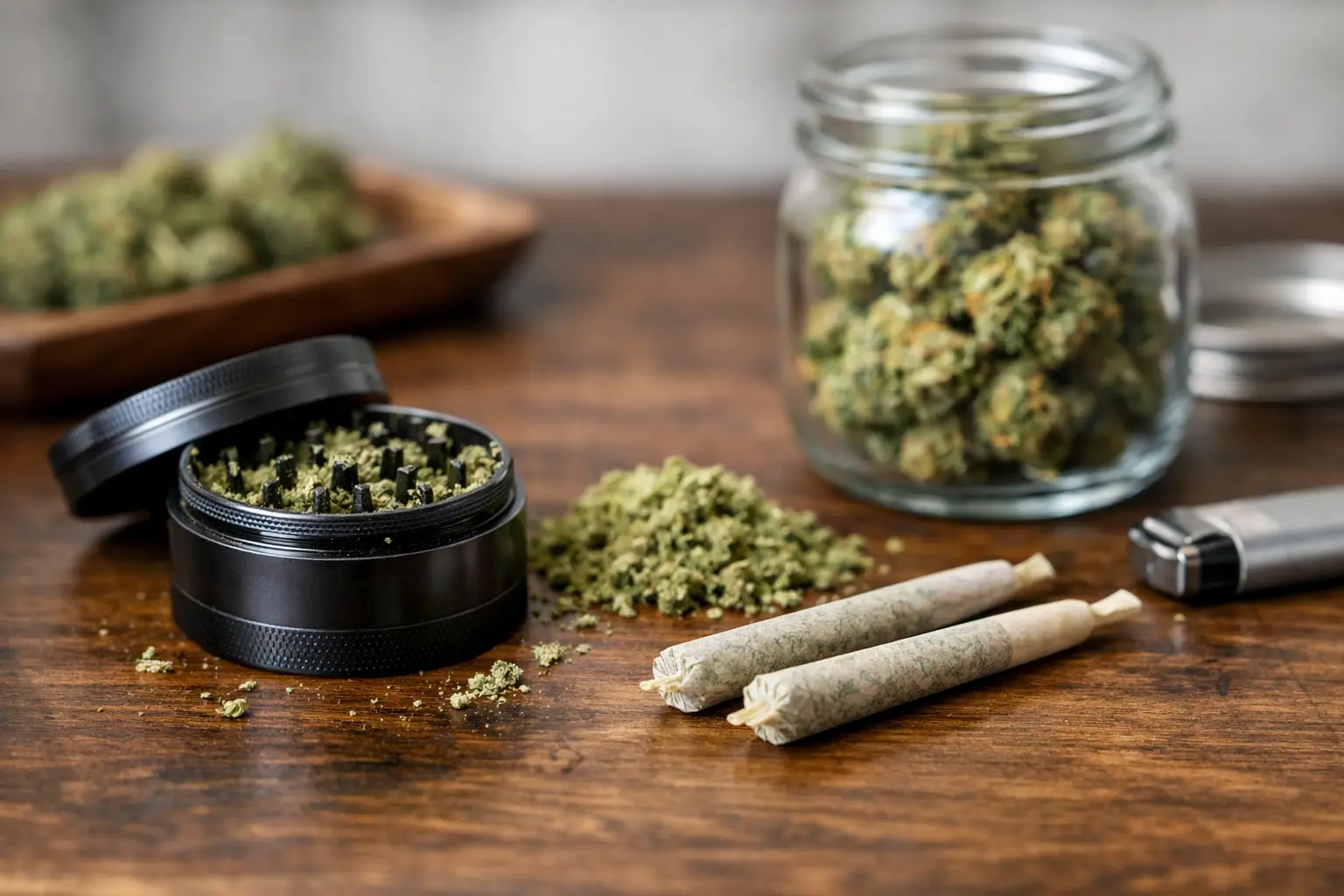
Roll a joint with flower that’s too chunky and it burns unevenly. Grind it too fine and airflow gets tight, the roll packs heavy, and the whole session feels off. That’s why finding the best grinder for joints is less about flashy finishes and more about one thing – repeatable, roll-ready consistency.
A proper joint grind should be fluffy, even, and easy to distribute from tip to tuck. It should hold enough structure to keep air moving while still exposing enough surface area for a clean, even burn. Cheap grinders miss that mark all the time. They shred unevenly, bind at the threads, dull fast, and turn a simple prep step into friction. If you care about how your joints smoke, your grinder matters more than most people think.
What makes the best grinder for joints?
The short answer is consistency. The best grinder for joints produces a medium, even texture without crushing the flower into dust or leaving behind random chunks that ruin the burn line.
That result comes from engineering, not luck. Tooth geometry affects how herb is cut and pulled through the grinding chamber. Sharp, well-spaced teeth create a more uniform texture. Tight machining tolerances keep the grinder turning smoothly instead of wobbling, cross-threading, or chewing up material unevenly. Strong magnets matter too, especially if you grind larger loads and want the lid to stay planted while you work.
Material is another separator. Lightweight pot metal grinders often feel fine on day one, then start flaking, sticking, or wearing down fast. A grinder made from 6061-T6 aluminum has a completely different feel in the hand and a much longer service life. It stays precise. It resists corrosion. It can handle repeated use without turning into a disposable accessory.
For joint smokers, that adds up to a simple standard: the grinder should be smooth to operate, fast to load, and consistent every time you roll.
Why joint smokers need a different grind than bowl smokers
A lot of buyers treat all grinders like they do the same job. They don’t. The texture that works well in a pipe or bong is not always ideal for a joint.
When you’re packing a bowl, a slightly denser or finer grind can still perform well because the flame and airflow are concentrated in a small space. A joint is different. The flower is spread across the full length of the paper, and every inconsistency shows up during the burn. One dense pocket can canoe the whole roll. One oversized chunk near the tip can tighten the draw. A powdery grind can make the joint feel harsh and restricted.
That’s why the best joint grinders tend to produce a fluffy, balanced consistency. You want herb that settles naturally into the paper, shapes easily, and burns from one end to the other without constant correction.
2-piece, 3-piece, or 4-piece?
If your goal is better joints, grinder configuration matters.
A 2-piece grinder is the most direct option. You load flower, grind, open, and pour. For many joint smokers, this is a strong choice because it keeps the process simple and gives you immediate access to the full grind. There’s no lower chamber to unscrew and no separation step between grinding and rolling. If you want fast prep and total control over texture, 2-piece designs are hard to beat.
A 3-piece grinder adds a storage chamber below the teeth. That can be useful if you like grinding a little more at once and keeping the material ready for multiple rolls. It also helps keep the grinding area less crowded, which can improve flow on larger loads.
A 4-piece grinder includes a kief screen and lower catch chamber. For some users, that’s a plus. For others, especially people chasing the fullest possible flavor and cannabinoid content in the joint itself, separating material may not be ideal every time. There’s no universal winner here. It depends on whether you want all material staying together for immediate use or prefer the flexibility of collection and separation.
If joints are your primary ritual, the best setup is usually the one that matches how you actually roll – quick single sessions, repeat use throughout the day, or larger prep in advance.
Size matters more than people expect
A small grinder can work fine for occasional use, but joint smokers often benefit from more diameter. Larger grinders give the teeth more travel, more cutting surface, and more room for flower to move instead of compacting too early.
That usually means a faster, more even grind with less effort. It also means you can prep enough herb for king-size papers or multiple joints without overloading the chamber. Overloading is one of the easiest ways to get a bad grind, even from a good grinder. When there’s not enough room for material to circulate, consistency drops.
For lighter users or people who roll personals, a compact grinder is still practical. For anyone who rolls regularly, especially larger joints, a mid-size or oversized grinder tends to feel better and perform better. More leverage, more capacity, and less repeated work.
The features that are actually worth paying for
Some grinder details are cosmetic. Others directly affect performance.
Sharp CNC-machined teeth are worth it because they cut cleanly instead of tearing flower apart. Precision-machined chambers are worth it because they stay aligned and rotate smoothly. A thread-less magnetic closure is worth it because it reduces wear points and gets rid of one of the most common failure areas in cheap grinders.
A textured exterior also matters more than it seems. If your hands are dry, sticky, or cold, grip makes a real difference. The same goes for chamber depth. Shallow designs may be fine for tiny amounts, but they become annoying fast if you roll more than a quick personal.
Then there’s durability. Lifetime warranty coverage is not a gimmick when the grinder is actually built to last. It signals confidence in machining, material choice, and long-term performance. That matters when so many grinders on the market are basically replaceable imports with short-term appeal and no real ownership value.
What to avoid when choosing the best grinder for joints
The biggest red flag is vague material language. If a brand won’t tell you what the grinder is made from, there’s usually a reason. Low-grade metal blends and coated alloys often look decent online but wear down fast, especially around teeth, lids, and threaded sections.
Another issue is poor fitment. If the lid rattles, the chamber alignment feels sloppy, or the teeth look stamped rather than machined, expect inconsistency. That inconsistency shows up in your roll. So does paint, flaking finishes, and weak magnets.
Also be careful with grinders that overpromise on novelty and underdeliver on function. Wild shapes and gimmick features don’t improve a joint. Uniform texture does. Smooth operation does. Reliable construction does.
How to choose the right grinder for your rolling style
If you mostly roll one joint at a time, a premium 2-piece or compact 3-piece grinder makes sense. You’ll get fast access to fresh-ground flower without extra steps.
If you roll larger papers, share often, or like to prep more herb in one session, a larger diameter grinder is the smarter move. You’ll get better capacity and usually a more efficient grind.
If you want to preserve every bit of material in the main grind for immediate smoking, lean away from over-separation. If you like collecting finer material over time, a 4-piece setup has a place. Neither option is automatically better. The right answer depends on how you smoke, how often you roll, and how much control you want over the final texture.
For buyers who are tired of replacing sticky, dull, poorly made grinders, the real upgrade is not complexity. It’s precision. That’s where a manufacturer-built grinder stands apart from generic smoke shop inventory. When the design, machining, finishing, inspection, and fulfillment are controlled in-house, you get a different level of consistency. That’s the difference between a grinder that looks good in a product photo and one that earns daily use.
Tahoe Grinder Co is built around that standard – premium aluminum grinders engineered to perform like serious tools, not throwaway accessories.
If you want the best grinder for joints, don’t chase hype. Choose the one that gives you the same fluffy, even, roll-ready grind every single time, because a better joint starts before the paper ever leaves the pack.