
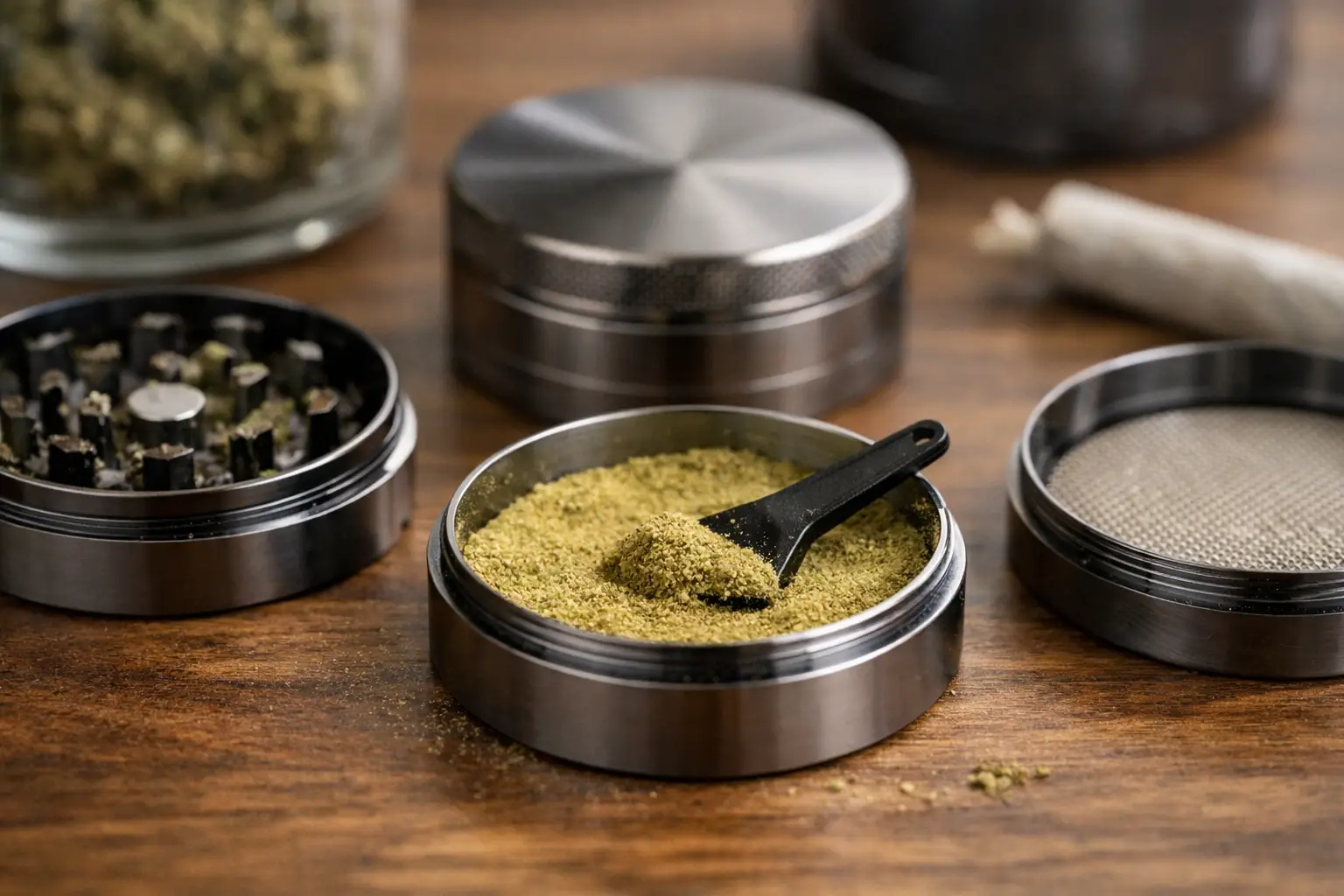
A kief catcher is not a gimmick or an extra chamber to ignore. It is the part of a quality grinder that separates and saves the fine, crystal-like trichomes that naturally fall from dry flower during grinding. Learning how to use a kief catcher correctly means getting more value from the herb you already own, without turning your grinder into a sticky, clogged mess.
For adult consumers in legal markets, the process is simple: grind dry flower in a multi-chamber grinder, let the screen do its job, and collect the fine material from the lower chamber when enough has accumulated. The details matter, though. Moisture level, screen care, grinder design, and patience all affect what ends up in the catcher.
What a Kief Catcher Actually Does
A kief catcher is typically found in a 4-piece grinder. The top section holds the teeth and grinding chamber. Beneath that sits a storage chamber for ground herb. Below it is a fine metal screen, followed by a bottom chamber that catches the smallest particles passing through the mesh.
Those particles are commonly called kief. They are largely made up of trichomes, the resin glands that contain many of the compounds associated with cannabis flower. Because trichomes are small and dry, they can break loose during grinding and pass through the screen while larger pieces of ground herb remain above it.
A 3-piece grinder may have a storage chamber but no dedicated screen and collection chamber. A 2-piece grinder is even more direct: grind, open, and use the herb. Neither design produces a separately collected reserve. That does not make them inferior – it makes them purpose-built for users who prioritize speed, portability, or a coarser, more direct grind.
How to Use a Kief Catcher Without Wasting It
Start with properly dried flower. Overly moist flower tends to smear, compress, and cling to the grinder teeth and screen instead of releasing cleanly. Flower that is extremely dry may shed a lot of material quickly, but it can also burn faster and feel harsher. The sweet spot is cured flower that breaks apart easily without turning to dust in your fingers.
Load the top chamber without overpacking it. Break larger buds into smaller pieces first, especially dense flower. Avoid placing thick stems in the teeth. Stems do not improve the grind, and they can put unnecessary leverage on the grinder while contributing nothing useful to the kief chamber.
Close the lid and rotate it with steady pressure. You do not need to muscle the grinder like a jar lid. A precision-machined grinder with sharp, properly spaced teeth should cut through dry herb efficiently. If you feel major resistance, stop and check for a stem, an oversized chunk, or sticky buildup instead of forcing the threads or magnetic connection.
After grinding, give the grinder a few light taps in the palm of your hand. This helps loose material settle into the herb chamber. Then open the storage section and remove only what you plan to use. The remaining ground flower can continue to move naturally across the screen over time as you use the grinder.
The bottom chamber is where patience pays off. Kief collects slowly because the screen is designed to separate fine particles, not dump everything through at once. Do not expect a full layer after one or two grinds. Depending on the flower, your grinder’s screen, and how often you use it, meaningful collection may take several weeks.
Let the Screen Work Naturally
Some users shake their grinder aggressively or toss a coin into the herb chamber to force more material through the screen. That can increase volume, but more is not always better. Excessive agitation may push more plant dust through along with trichomes, leaving you with a less refined collection.
A better approach is normal use. Keep the grinder upright when possible, use a consistent grinding motion, and allow ground flower to rest above the screen between sessions. If you want to encourage separation, a few gentle taps are enough. The goal is clean collection, not maximum debris.
When to Open the Kief Chamber
Open the catcher only when there is enough material to remove without scraping the chamber bare. A light dusting is easy to lose and difficult to handle. Waiting until there is a visible layer lets you gather it more cleanly with a small scraper or pick.
Many premium grinders include a small tool for this purpose. Use the flat edge gently and work from the outside inward. Avoid dragging a sharp metal object hard across the chamber floor or screen housing. Aluminum is durable, but unnecessary gouging creates places where fine material can cling.
If the kief seems stuck, do not attack it with heat, water, or household chemicals. First, let the grinder sit closed in a cool, dry place for a short time. A gentle tap may release loose material. If residue is still clinging to the walls, clean the grinder after emptying it completely, then allow every component to dry fully before reassembly.
Ways to Use Collected Kief
Kief is concentrated relative to ordinary ground flower, so a small amount goes a long way. The most common method is to sprinkle a modest pinch over ground flower in a bowl, pipe, or rolled preparation. This distributes it through the material instead of creating one overly dense spot that burns unevenly.
You can also save it for a later occasion. The bottom chamber functions as a reserve, which is one reason a 4-piece grinder appeals to long-term users. There is no requirement to use kief immediately. In fact, leaving it undisturbed until you have enough for your preferred preparation is often the cleanest option.
Use restraint. Adding a heavy layer can affect airflow, burn rate, and overall session intensity. If you are still learning your tolerance, start with a very small amount or keep your ground flower as-is. A kief catcher gives you choice and control. It does not require you to use every bit the moment it appears.
Keep Your Grinder Clean Enough to Perform
A kief catcher only works as well as the screen above it. Resin buildup, compressed plant matter, and pocket lint can reduce airflow through the mesh and slow collection. You do not need to deep-clean a grinder after every use, but regular inspection prevents a small maintenance issue from becoming a performance problem.
Brush loose herb from the teeth and screen area with a soft, dry brush. Keep the threads or magnetic mating surfaces free of debris so each chamber closes properly. If your grinder begins to bind, produces an inconsistent grind, or stops collecting material altogether, it is time for a more thorough cleaning.
For aluminum grinders, use cleaning methods appropriate for the material and remove any residue completely before using the grinder again. Never reassemble components while they are damp. Water trapped around threads, screens, or chambers can lead to clumping and compromises the clean, dry environment a kief catcher needs.
The grinder itself also makes a difference. Cheap units often use dull teeth, loose-fitting sections, weak screens, or coatings that wear down quickly. That creates uneven flower texture and unreliable separation. Tahoe Grinder Co machines its grinders from 6061-T6 aluminum with tight tolerances because a grinder should cut cleanly, close securely, and hold up through years of regular use – not become another disposable smoke-shop purchase.
Should You Choose a Grinder With a Kief Catcher?
It depends on how you prepare flower. A 4-piece grinder with a kief catcher is the right configuration if you like a consistent medium grind, prefer to store ground herb in the grinder temporarily, and want to collect fine trichomes over time. It adds parts and requires basic cleaning, but it delivers more control and makes use of material that would otherwise remain mixed into the grind or cling to the chamber.
A 2-piece model may be better if you grind only what you use immediately and want the fewest possible components. A 3-piece model offers a middle ground, with a separate storage chamber but no screened collection. Neither is a wrong choice. The best grinder is the one built for your actual routine, not the one with the most pieces.
Treat the kief catcher like a reserve chamber, not a race. Use dry flower, keep the screen clear, collect only when there is enough to handle, and let precision do the work. A well-built grinder turns a small detail at the bottom of the stack into a cleaner, more intentional part of every session.