
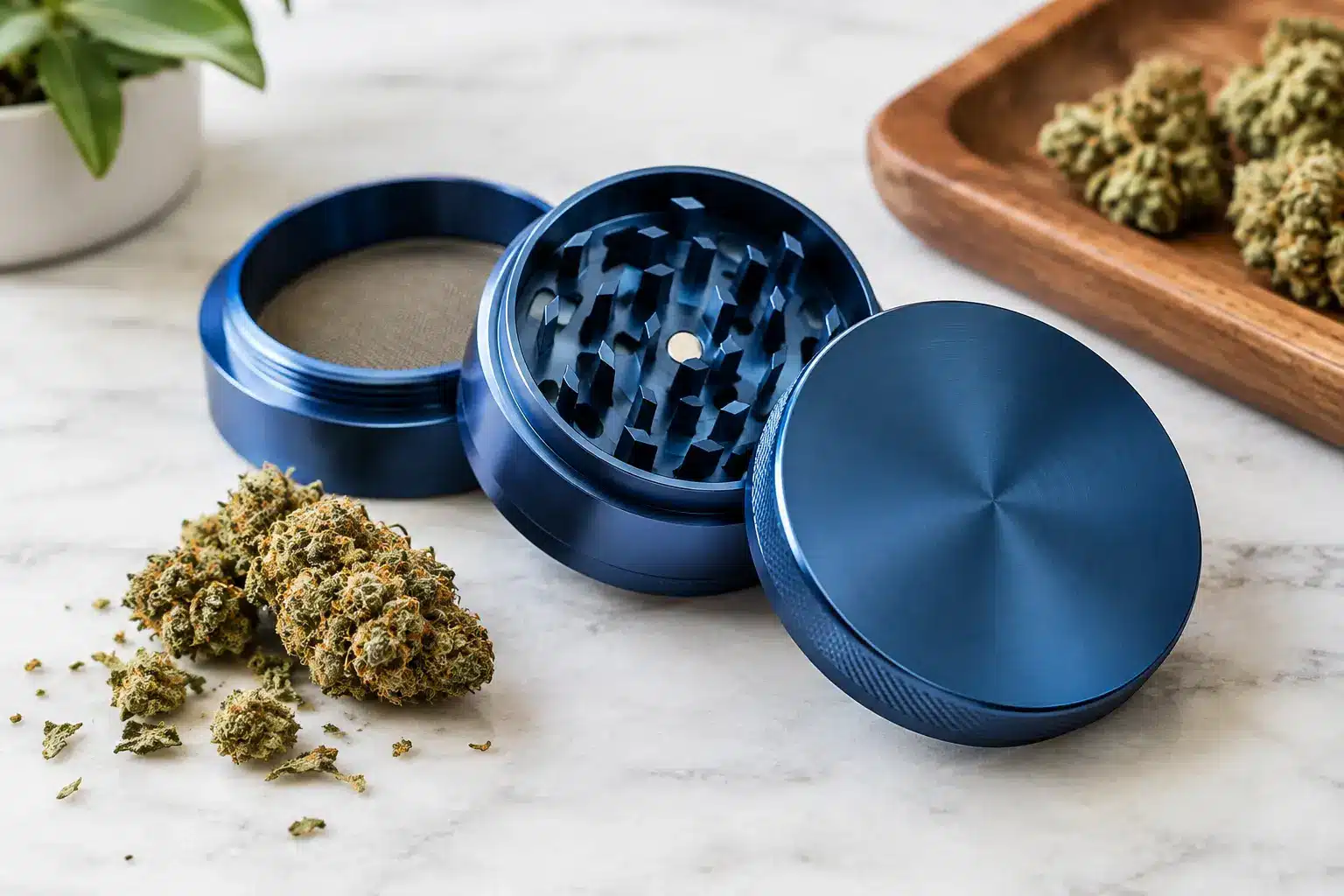
Cheap grinders usually fail in predictable ways: the finish flakes, the lid binds, the teeth dull, and what should take two turns becomes a fight with dry flower. An anodized grinder review should look beyond color and branding to answer the only question that matters after months of use: does this tool keep producing a clean, consistent grind without becoming a problem?
For serious herb users, anodized aluminum is one of the strongest material choices available. But the word anodized alone is not a quality guarantee. The base alloy, machining tolerances, tooth geometry, chamber design, and final inspection determine whether a grinder feels premium in your hand and performs like it for years.
What an Anodized Grinder Actually Brings to the Table
Anodizing is an electrochemical finishing process that converts the outer surface of aluminum into a hardened oxide layer. Unlike paint, which sits on top of the metal, anodizing becomes part of the surface. That gives an aluminum grinder improved resistance to scratches, oxidation, fingerprints, and everyday wear while allowing for clean, durable color.
The practical advantage is simple. A quality anodized grinder stays easier to handle, easier to clean, and better looking after repeated use. It also avoids the cheap plated feel common in low-cost grinders, where surface coatings can chip or wear at contact points.
Still, a bright finish should never be the reason you buy. A poorly machined anodized grinder is still poorly machined. If the lid rocks, the threads catch, the teeth are uneven, or the chambers do not seat correctly, anodizing cannot fix it. Finish protects quality. It does not create quality.
The best starting point is 6061-T6 aluminum, a high-strength alloy known for its balance of durability, machinability, and corrosion resistance. It is a meaningful step up from mystery-metal grinders with vague material claims. When paired with precision CNC machining, 6061-T6 provides the rigid, accurate platform a grinder needs to stay smooth under real use.
Anodized Grinder Review: The Details That Matter
A grinder is a simple tool only until you use a bad one. Then every engineering decision becomes obvious. The lid should close confidently. The teeth should cut rather than crush. The chambers should align without cross-threading. The finished herb should be even enough to pack, roll, or load consistently.
Here is what separates a premium anodized grinder from a disposable accessory.
CNC-machined teeth beat stamped metal teeth
Teeth do the real work. Their shape, spacing, sharpness, and alignment determine whether flower moves through the grinder efficiently or gets mashed into a sticky clump.
Precision-machined teeth deliver a more controlled cut, especially with dense, resinous buds. Well-designed teeth pull material through the grinding plate instead of leaving large chunks spinning endlessly around the chamber. That means fewer dead spots, less strain on your wrist, and a more uniform texture for smoking or vaporizing.
Stamped teeth in cheap grinders often feel adequate at first. The problem shows up later. Their edges can wear down, bend, or leave inconsistent gaps. Once that happens, grinding becomes slower and less predictable. A serious grinder should retain its cutting performance instead of asking you to replace it after a season.
Tight tolerances prevent the little annoyances
Machining tolerance is the allowable variation between the intended design and the finished part. In a grinder, tight tolerances are what make every component feel deliberate.
A properly machined lid sits flush. A magnetic closure connects securely. A multi-piece grinder opens and closes without the gritty, crooked feel that signals uneven threads or debris-prone contact surfaces. These details may sound small, but they are the difference between a tool you reach for automatically and one you tolerate because it is nearby.
Thread-less magnetic designs have a particular advantage for users tired of sticky threads. Resin buildup can turn threaded grinders into a maintenance job, especially when they are loaded with fresh, high-terpene flower. A secure magnetic lid removes one of the most common friction points. It also makes the grinder faster to open, load, and close.
There is a trade-off: magnet strength and fit must be right. A weak magnet can make a lid feel loose, while poor alignment defeats the point of the design. This is why production control matters more than a feature printed on a product page.
Chamber count should match how you consume
Anodized grinders come in several configurations, and no single layout is automatically best. The right choice depends on whether you value simplicity, storage, separation, or a compact carry setup.
A 2-piece grinder is direct and fast. It handles the basic job of breaking up flower and is often the best choice for users who prefer a simple, portable tool. With fewer parts, there is less to clean and less to misalign.
A 3-piece grinder adds a storage chamber beneath the teeth. This gives you a place for ground herb without adding a screen, making it a practical middle ground for daily use. It is a strong option for users who want convenience but do not care about collecting fine material separately.
A 4-piece grinder adds a screen and bottom collection chamber. The screen separates finer particles from the ground flower, giving users an additional chamber to collect over time. It is a popular setup, but it is not mandatory. If you want the fastest workflow and prefer all of your ground flower together, a 2-piece or 3-piece design may serve you better.
Size matters, too. Compact grinders are easier to carry and suit smaller sessions. Larger models provide more leverage, more loading room, and greater output per turn. An oversized 90mm grinder is built for people who are done making several small batches when they could process more flower cleanly in one pass.
The Finish Is Only as Good as the Manufacturing Behind It
A real anodized grinder review has to address where the grinder comes from and who controls its production. Generic smoke-shop inventory often changes factories, materials, and specifications without warning. One batch may feel decent; the next may use different aluminum, a different coating, or weaker assembly standards.
That inconsistency is exactly what direct manufacturing avoids. Tahoe Grinder Co machines, finishes, assembles, inspects, and ships its grinders from its own USA-based facility. Controlling the full process makes it possible to maintain the fit, finish, and functional standards that premium grinders require.
It also changes what a lifetime warranty means. A warranty is more credible when the company behind it understands how the grinder was designed and built, rather than simply reselling a product from an unknown supply chain. A quality grinder should be bought as long-term hardware, not as another recurring accessory expense.
How an Anodized Grinder Holds Up Over Time
The first week with a grinder tells you whether it looks good. The next year tells you whether it was worth buying.
A quality anodized aluminum grinder should resist the cosmetic abuse of daily carry, repeated handling, and routine cleaning. It should maintain smooth engagement between components and continue cutting herb evenly. Resin will still build up over time – that is normal when you are grinding aromatic flower – but it should not immediately turn the tool into a sticky, jammed mess.
Care is straightforward. Empty loose material after use, brush out the teeth and screen when needed, and avoid attacking the finish with harsh abrasives. If deep cleaning becomes necessary, follow the manufacturer’s care guidance for anodized aluminum and any magnets, screens, or seals in the design. Good maintenance extends the life of any grinder, but it cannot rescue weak materials or sloppy machining.
Color choice can affect how wear is perceived. Dark finishes often hide minor marks well, while brighter colors make a statement and may show surface scuffs more clearly. Neither choice changes the core performance if the anodizing and underlying machining are done correctly.
What Makes a Grinder Worth the Premium
The lowest-priced grinder is rarely the lowest-cost option. If it binds, sheds finish, produces uneven flower, or needs replacement in a few months, the bargain disappears fast. A premium anodized grinder earns its price through material integrity, dependable action, and ownership that stays satisfying long after the new-product shine wears off.
Look for clear material specifications, CNC-machined construction, an intentional chamber design, and a manufacturer willing to stand behind the tool. Be skeptical of vague claims like “aircraft aluminum” when there is no alloy, production detail, or warranty to support them. A good grinder does not need inflated promises. Its fit, weight, finish, and grind consistency make the case every time you use it.
Buy the configuration that fits your routine, then demand the build quality that lets it stay in that routine. Your flower deserves more than a grinder that merely turns. It deserves one engineered to perform.