
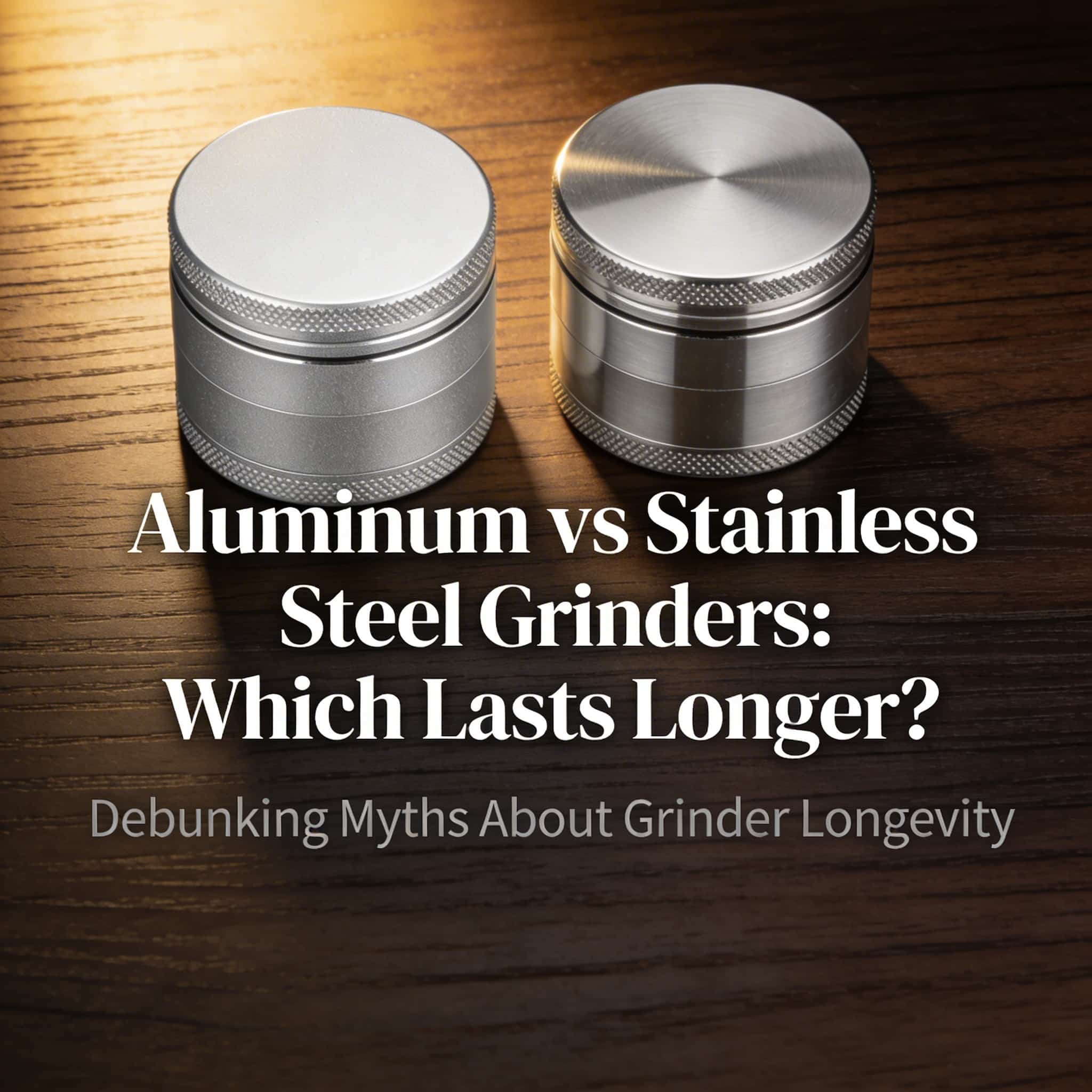
Longevity is one of the most misunderstood aspects of weed grinders. Many people assume that heavier automatically means stronger, and that stainless steel must outlast aluminum simply because it feels more substantial in the hand.
In reality, grinder lifespan has very little to do with weight — and everything to do with material behavior, surface treatment, machining precision, and wear mechanics.
In 2026, both anodized aluminum and stainless steel grinders can last for years or decades. But they fail in very different ways, and one material consistently offers a better balance of durability, performance, and long-term reliability for most users.
Let’s break it down properly.
What “Lasts Longer” Actually Means for a Grinder
When people ask which grinder lasts longer, they’re usually talking about several things at once:
- How long the teeth stay sharp
- Whether the grinder binds over time
- Whether alignment degrades
- How surfaces wear under friction
- Whether performance changes with age
A grinder that technically survives but grinds poorly is not “lasting” in any meaningful sense.
True longevity means:
- Structural integrity
- Consistent grind quality
- Minimal maintenance
- No degradation of function
Aluminum Grinders: The Modern Standard
High-quality aluminum grinders today are almost always anodized aluminum, not raw aluminum.
Why Anodized Aluminum Changes Everything
Anodizing converts the outer surface of aluminum into aluminum oxide, which is:
- Extremely hard
- Chemically inert
- Non-flaking
- Highly wear-resistant
This surface is significantly harder than untreated aluminum and comparable to some hardened steels in abrasion resistance.
The result is a grinder that:
- Resists wear
- Maintains tight tolerances
- Performs consistently for years
Stainless Steel Grinders: Extremely Durable, With Tradeoffs
Stainless steel grinders are known for:
- Exceptional structural strength
- Resistance to corrosion
- Long service life under extreme conditions
However, grinders are not industrial cutting tools. They are precision airflow and friction systems, and stainless steel introduces specific challenges in this context.
Tooth Wear: The Real Durability Test
Aluminum Grinder Teeth
In anodized aluminum grinders:
- Teeth are precision machined
- The hardened oxide layer protects edges
- Wear occurs slowly and evenly
- Grind quality remains stable
Because aluminum is lighter and easier to machine precisely, tooth geometry tends to be more consistent over time.
Stainless Steel Grinder Teeth
Stainless steel teeth are very strong, but:
- They are harder to machine precisely
- Poorly machined teeth cause excessive friction
- Weight increases crushing force
When stainless grinders wear, they tend to:
- Lose sharpness unevenly
- Bind more aggressively
- Degrade grind consistency
They may not break — but performance can suffer.
Alignment and Wear Over Time
Alignment is critical in grinders. Even minor misalignment increases friction and accelerates wear.
Aluminum Advantage
Anodized aluminum grinders:
- Are lighter
- Place less stress on magnets or threads
- Maintain alignment more easily
- Resist galling (metal-to-metal seizure)
This helps preserve smooth rotation long-term.
Stainless Steel Challenges
Stainless steel grinders:
- Are much heavier
- Increase load on alignment points
- Amplify friction if tolerances are off
- Can gall if surfaces rub improperly
They last structurally, but may become unpleasant to use.
Resin, Friction, and Long-Term Performance
Modern cannabis flower produces more resin than ever before.
Aluminum Behavior
Anodized aluminum:
- Resists resin adhesion
- Cleans easily
- Maintains smooth rotation
- Prevents buildup from becoming structural
This preserves performance over years.
Stainless Steel Behavior
Stainless steel:
- Attracts and holds resin more aggressively
- Can feel sticky over time
- Requires more frequent cleaning
- Amplifies friction when dirty
Longevity depends heavily on maintenance.
Threads vs Magnets: Material Interaction Matters
Many stainless steel grinders use threaded designs because magnets must be stronger to support the weight.
Threaded stainless grinders:
- Wear threads faster
- Trap resin
- Bind more frequently
Aluminum grinders pair extremely well with magnetic designs, reducing wear entirely in that area.
Drop Damage and Real-World Abuse
Aluminum Grinders
- May dent under extreme impact
- Usually remain functional
- Rarely crack or shatter
- Maintain internal alignment
Stainless Steel Grinders
- Resist denting
- Can deform mating surfaces
- May bind permanently after impact
- Harder to repair or realign
Durability isn’t just about resisting damage — it’s about recovering from it.
Weight Fatigue Over Time
Heavier does not always mean better.
Stainless steel grinders:
- Increase hand fatigue
- Encourage aggressive grinding
- Increase wear forces internally
Aluminum grinders:
- Provide better tactile control
- Reduce over-torquing
- Encourage consistent use patterns
This subtle difference affects lifespan more than people realize.
Longevity in Real Numbers
When properly made and maintained:
- Anodized aluminum grinders routinely last 10–20+ years with consistent performance
- Stainless steel grinders can last just as long structurally, but often degrade in usability sooner
Longevity isn’t just survival — it’s performance retention.
Which Lasts Longer in Practice?
If the question is:
“Which material physically survives the longest?”
Stainless steel wins.
If the question is:
“Which grinder stays usable, smooth, consistent, and efficient the longest?”
Anodized aluminum wins for most users.
Why Most Premium Grinders Still Use Anodized Aluminum
There’s a reason high-end grinder manufacturers continue to choose anodized aluminum:
- Precision machining
- Predictable wear
- Lightweight control
- Excellent longevity
- Food-grade inert surface
It’s not a cost shortcut — it’s an engineering choice.
Final Verdict
Stainless steel grinders are incredibly strong, but strength alone does not determine grinder lifespan.
Anodized aluminum grinders:
- Wear more predictably
- Maintain performance longer
- Resist resin and friction better
- Offer superior long-term usability
For most users in 2026, anodized aluminum grinders last longer where it actually matters — in daily performance, consistency, and reliability.
Longevity isn’t about how long a grinder exists.
It’s about how long it works the way it’s supposed to.