Choosing a weed grinder isn’t just about brand or material — size matters more than most people realize. Grinder diameter directly affects grind consistency, airflow, ease of use, and how enjoyable daily sessions actually are.
In 2026, with denser, stickier, terpene-rich flower, grinder size plays an even bigger role than it did in the past. A grinder that’s too small feels frustrating. One that’s too large becomes inefficient or overkill. The goal isn’t “bigger is better” — it’s right-sized performance.
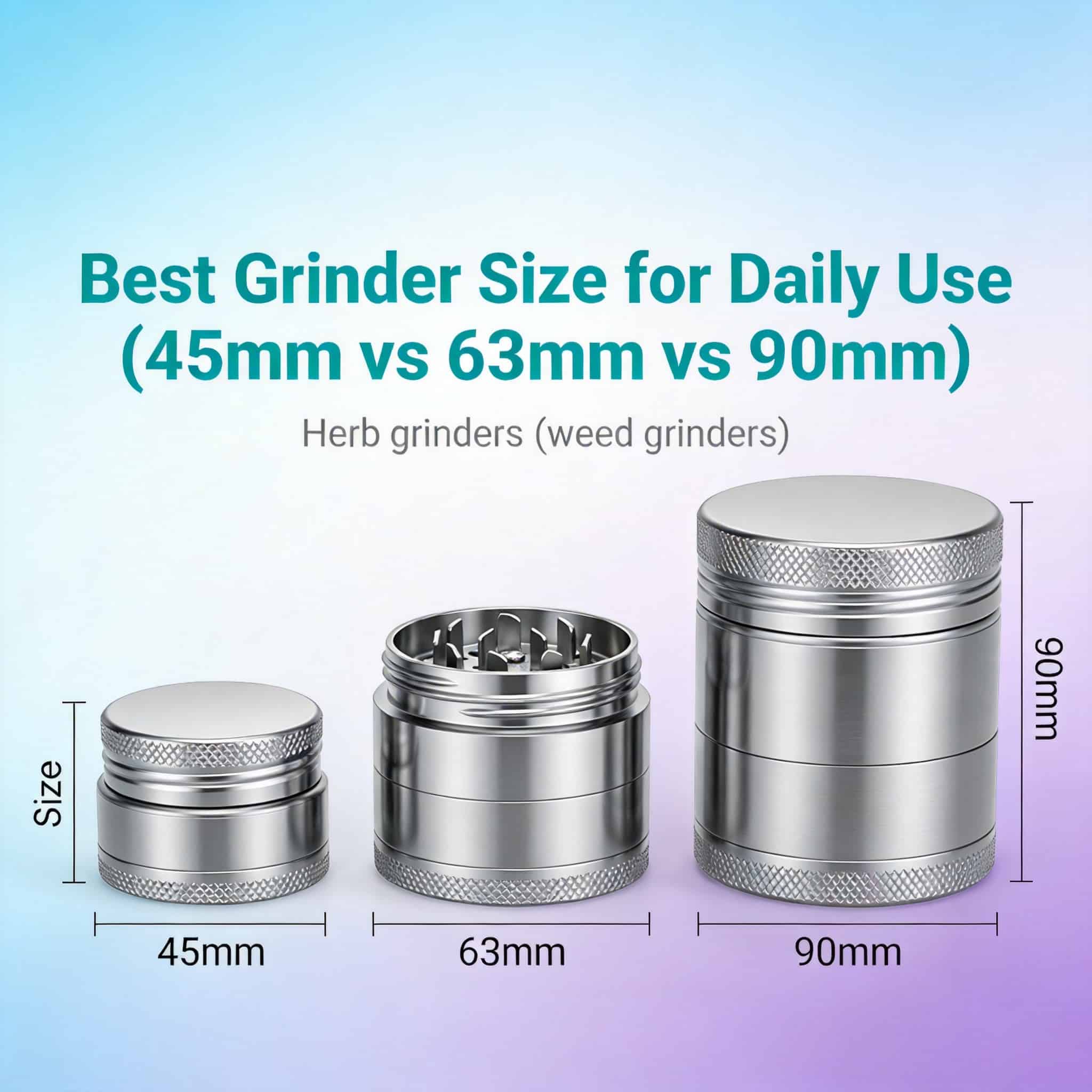
This guide breaks down the real differences between 45mm, 63mm, and 90mm grinders, and explains which size makes the most sense for daily use.
What Grinder Size Actually Affects
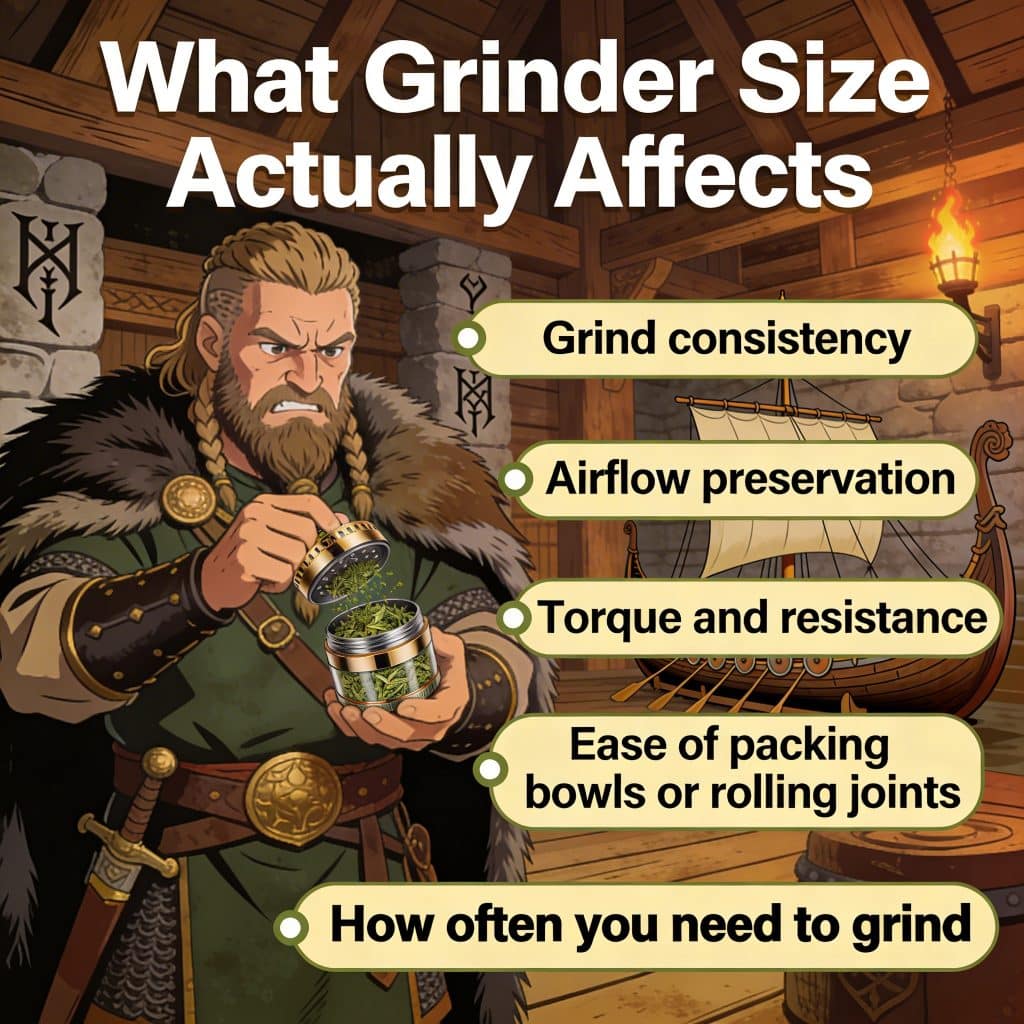
Grinder diameter influences several critical variables:
- Grind consistency
- Airflow preservation
- Torque and resistance
- Ease of packing bowls or rolling joints
- How often you need to grind
A poorly sized grinder can turn even premium flower into a frustrating experience.
45mm Grinders: Compact but Limited
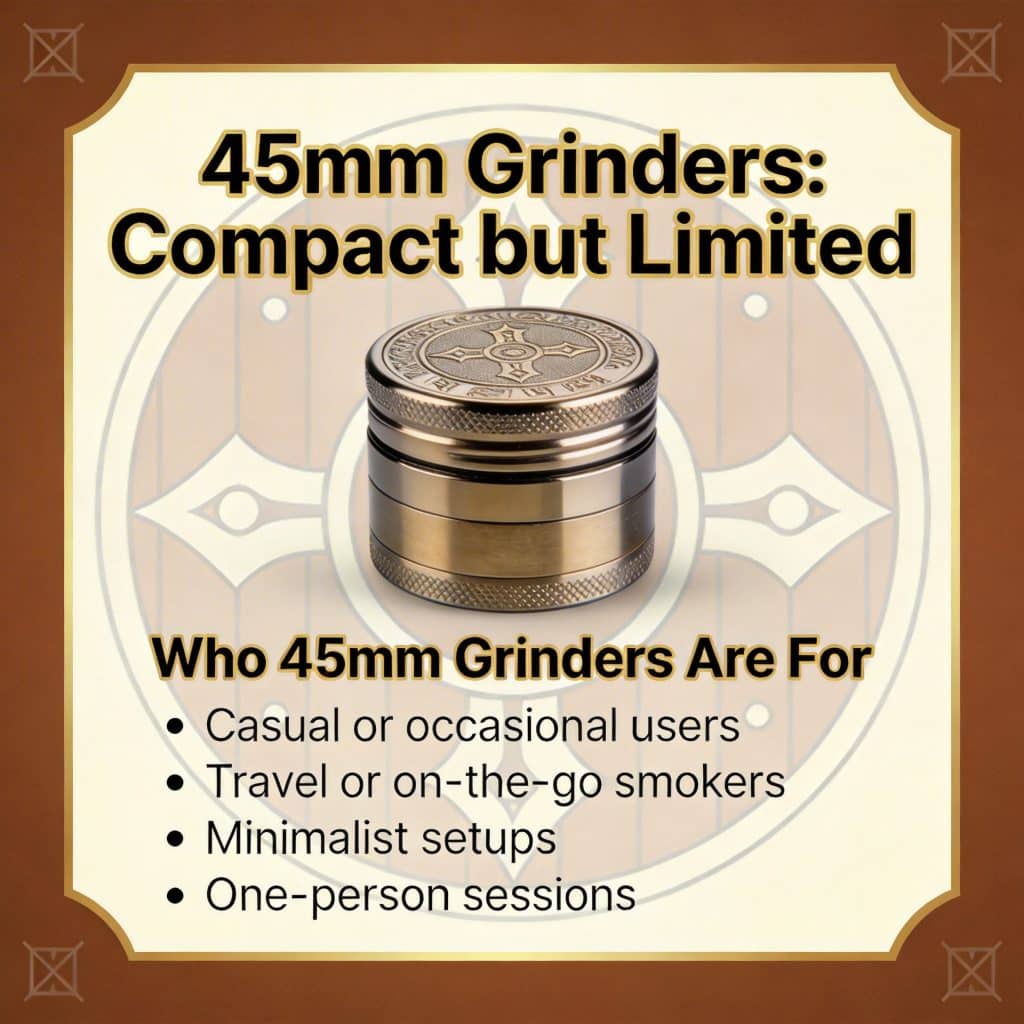
Who 45mm Grinders Are For
45mm grinders are typically chosen by:
- Casual or occasional users
- Travel or on-the-go smokers
- Minimalist setups
- One-person sessions
They’re small, discreet, and portable — but size comes with tradeoffs.
Pros of 45mm Grinders
- Extremely portable
- Lightweight
- Easy to pocket or stash
- Good for very small amounts
Cons of 45mm Grinders
- Limited grinding capacity
- Requires frequent refills
- Higher resistance with dense or sticky strains
- Less room for consistent tooth spacing
- More prone to clogging
With modern, resin-heavy flower, 45mm grinders often feel cramped and require more force per grind.
Daily Use Verdict (45mm)
For daily use, 45mm grinders often feel undersized, especially if you smoke multiple times per day or prefer glass pipes or bowls.
They work — but they’re not ideal.
63mm Grinders: The Daily Driver Sweet Spot
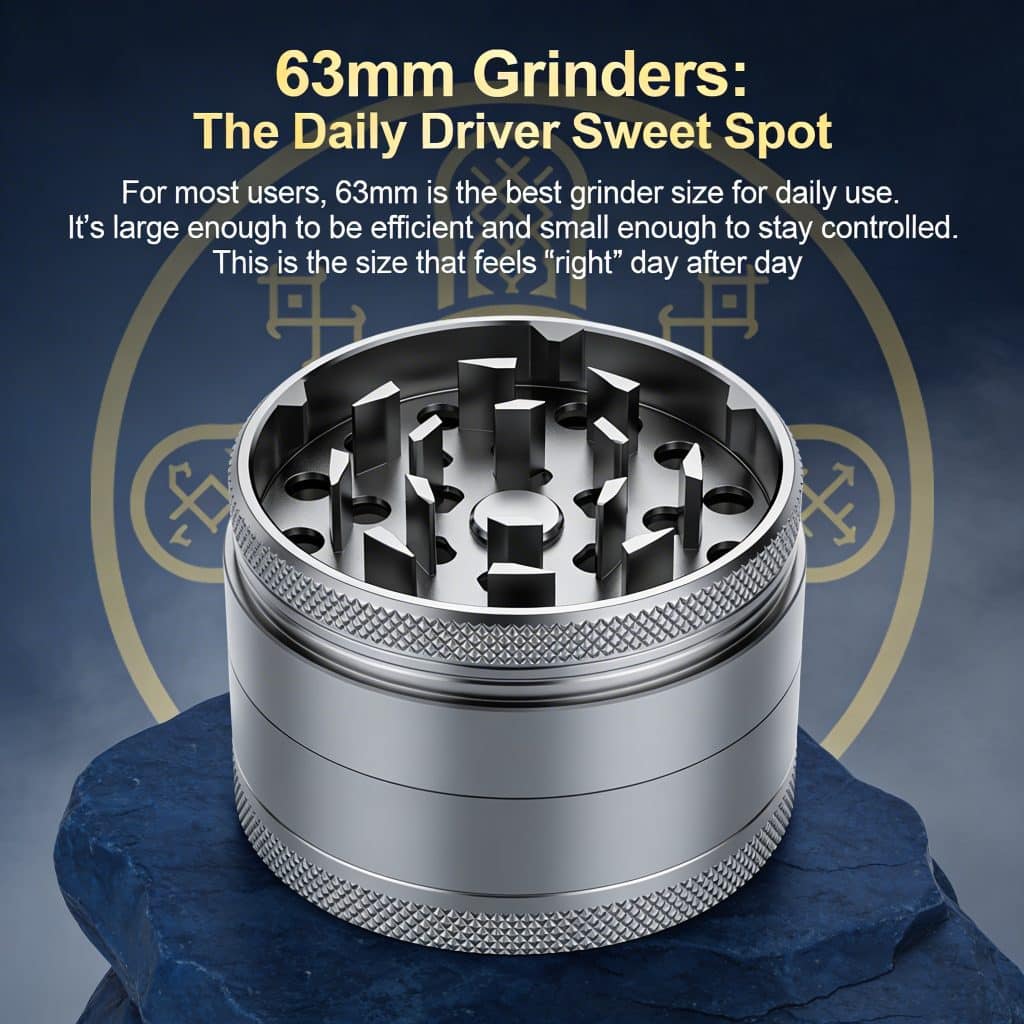
Why 63mm Is the Most Popular Size
63mm grinders have become the industry standard for a reason. They strike the best balance between capacity, control, and efficiency.
This size is large enough to handle modern flower comfortably while remaining easy to use daily.
Pros of 63mm Grinders
- Ideal capacity for daily sessions
- Excellent grind consistency
- Balanced torque (not too tight, not too loose)
- Handles sticky strains well
- Comfortable for most hand sizes
- Efficient without encouraging over-grinding
Why 63mm Works So Well for Modern Flower
In 2026, flower is:
- Denser
- Stickier
- More resinous
63mm grinders provide enough internal space for:
- Flower to move freely
- Teeth to slice instead of crush
- Air pockets to remain in the grind
This preserves airflow and prevents compaction.
Daily Use Verdict (63mm)
For most users, 63mm is the best grinder size for daily use.
It’s large enough to be efficient and small enough to stay controlled. This is the size that feels “right” day after day.
90mm Grinders: Maximum Capacity, Minimum Efficiency (For Daily Use)
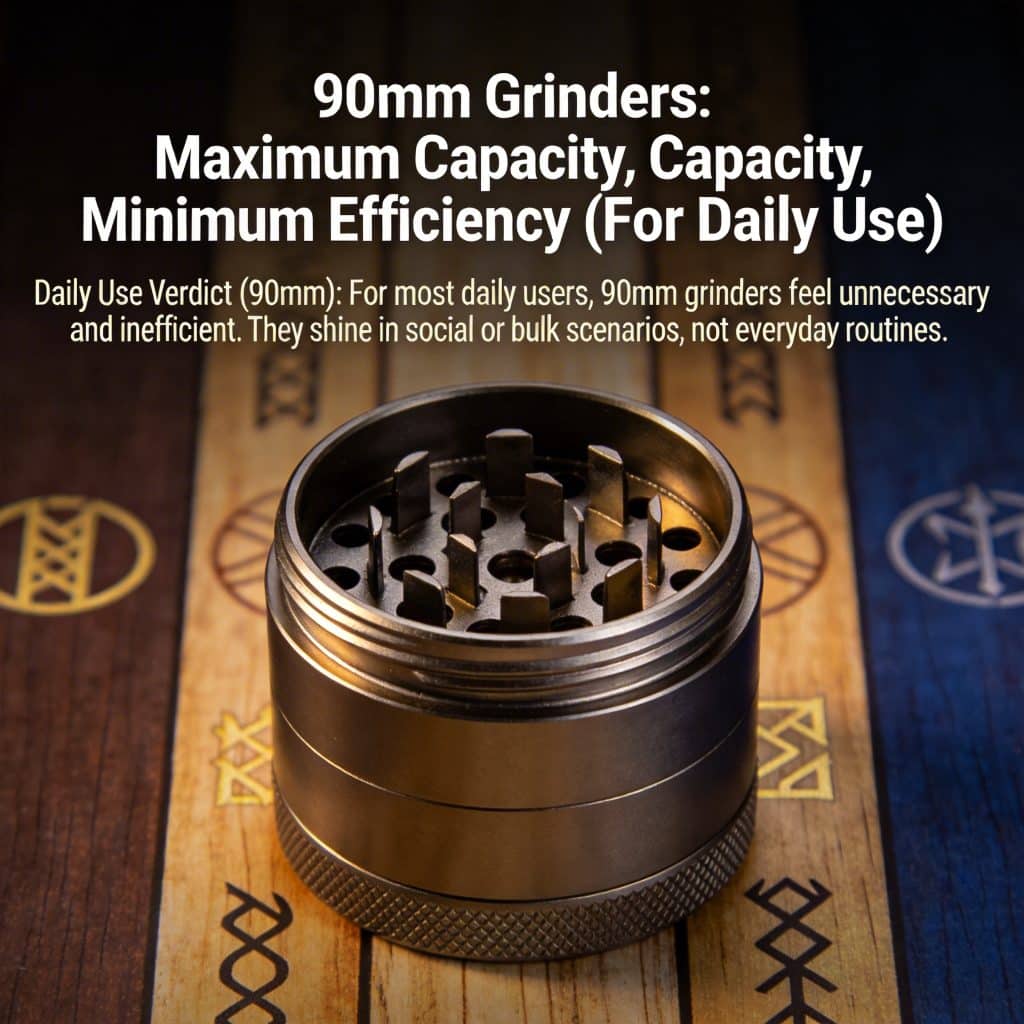
Who 90mm Grinders Are For
90mm grinders are designed for:
- Group sessions
- Heavy users
- Bulk grinding
- Session prep for multiple people
They’re impressive — but not always practical.
Pros of 90mm Grinders
- Huge grinding capacity
- Fewer grinding cycles
- Excellent for sharing
- Great for batch prep
Cons of 90mm Grinders
- Heavy and bulky
- Encourages over-grinding
- Less tactile feedback
- Can produce inconsistent grind if overloaded
- Slower for small daily amounts
Large grinders often sacrifice precision for volume.
Why Bigger Isn’t Better for Daily Use
Daily sessions usually involve:
- Small to moderate amounts
- Frequent grinding
- Precision over volume
90mm grinders are optimized for throughput, not finesse.
Daily Use Verdict (90mm)
For most daily users, 90mm grinders feel unnecessary and inefficient. They shine in social or bulk scenarios, not everyday routines.
Grind Consistency vs Grinder Size
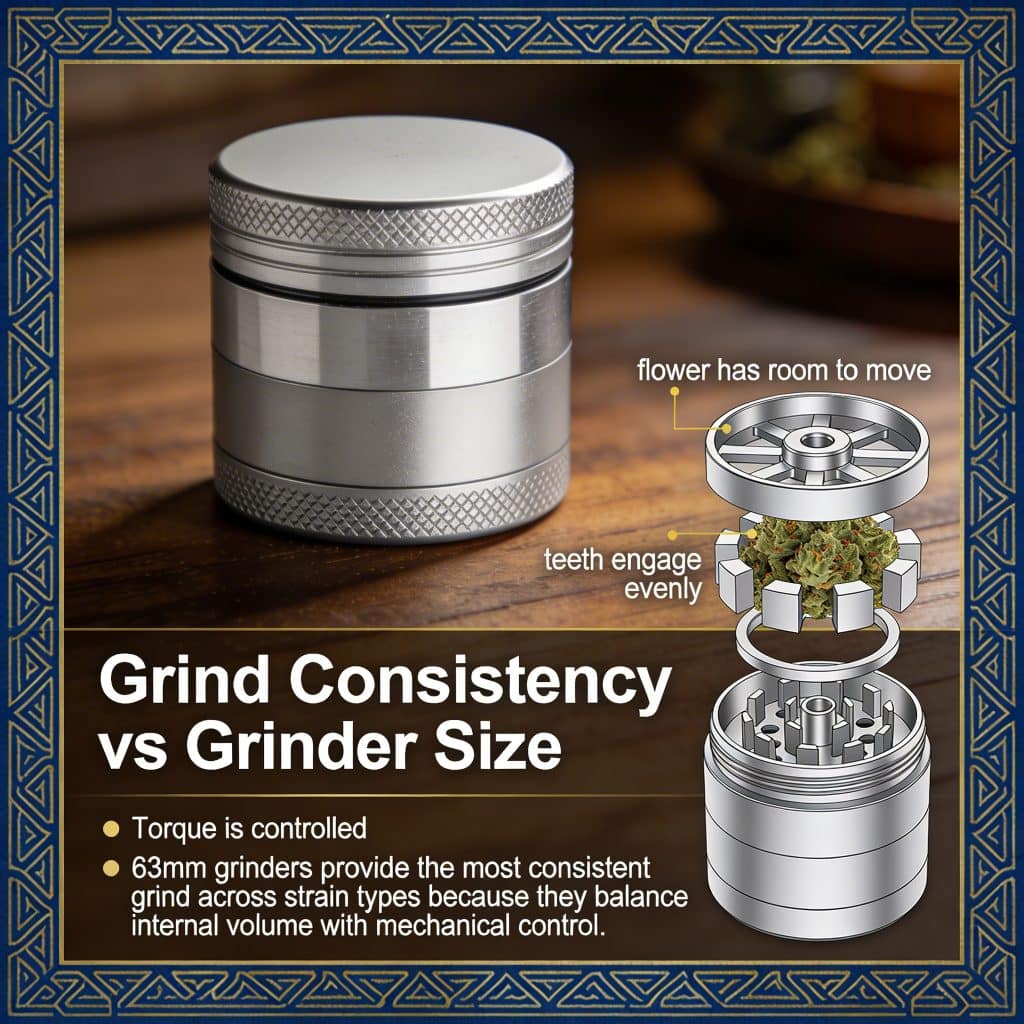
Grind consistency improves when:
- Flower has room to move
- Teeth engage evenly
- Torque is controlled
63mm grinders provide the most consistent grind across strain types because they balance internal volume with mechanical control.
Grinder Size and Airflow
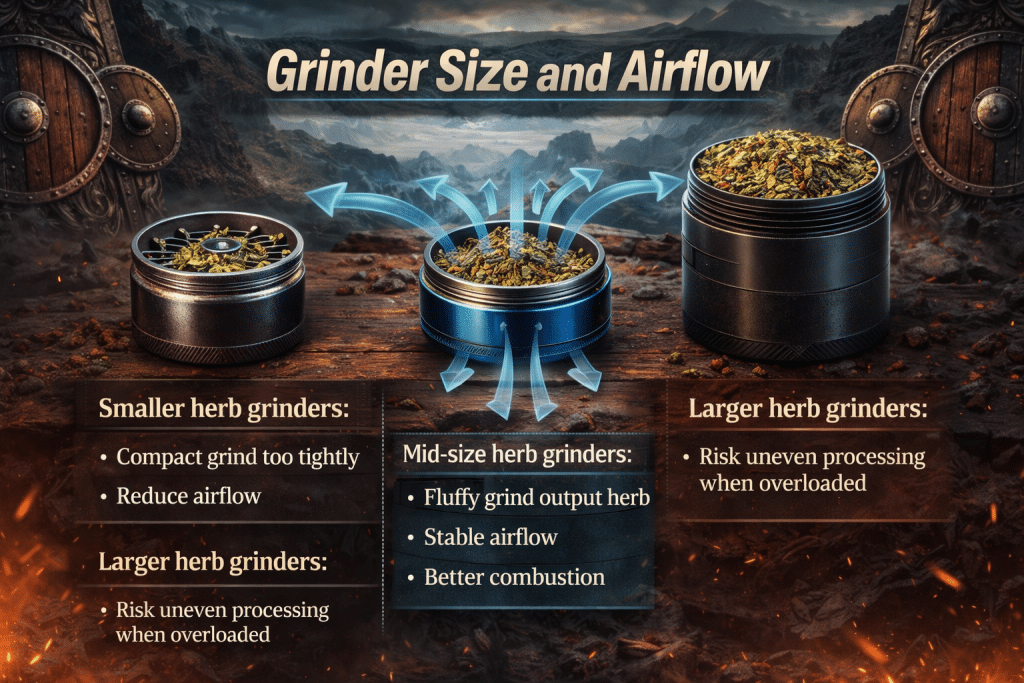
Smaller grinders:
- Compact grind too tightly
- Reduce airflow
Larger grinders:
- Risk uneven processing when overloaded
Mid-size grinders maintain:
- Fluffy grind output
- Stable airflow
- Better combustion
Grinder Size and Strain Behavior
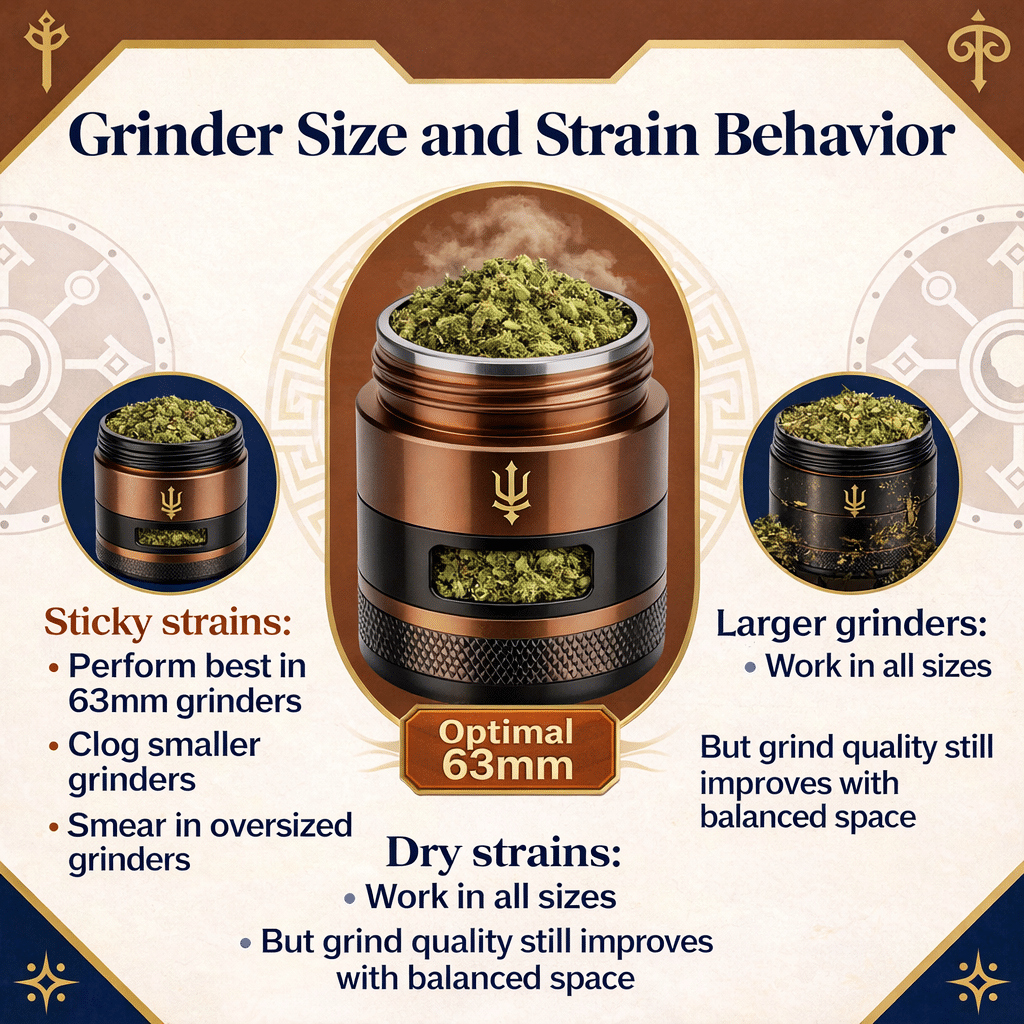
Sticky strains:
- Perform best in 63mm grinders
- Clog smaller grinders
- Smear in oversized grinders
Dry strains:
- Work in all sizes
- But grind quality still improves with balanced space
Hand Comfort and Fatigue
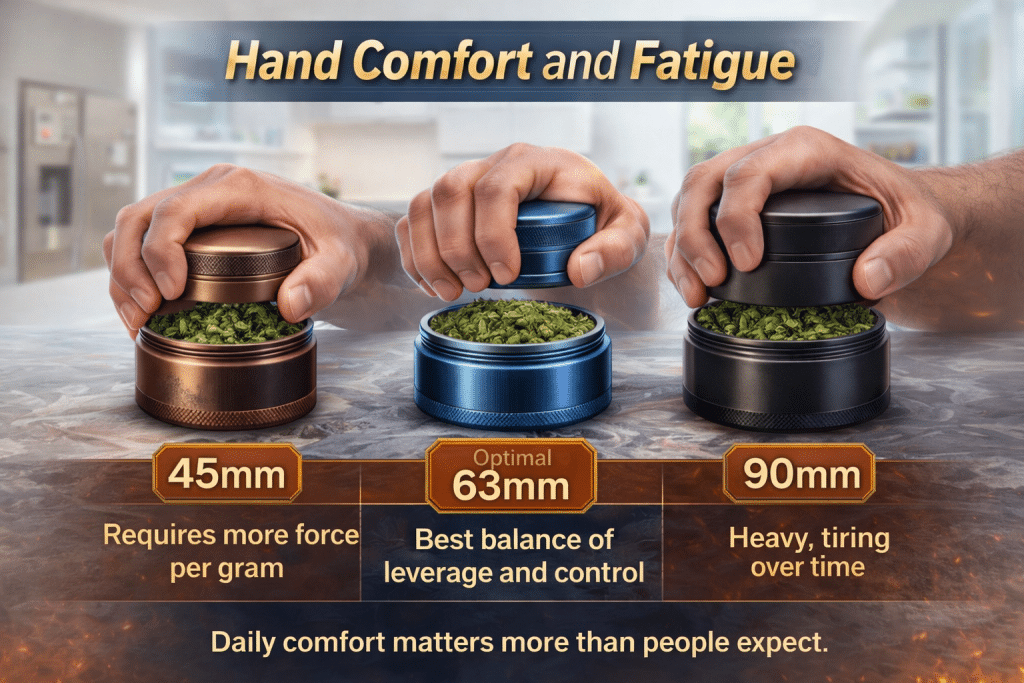
45mm:
- Requires more force per gram
63mm:
- Best balance of leverage and control
90mm:
- Heavy, tiring over time
Daily comfort matters more than people expect.
Grinder Size and Cleaning Frequency
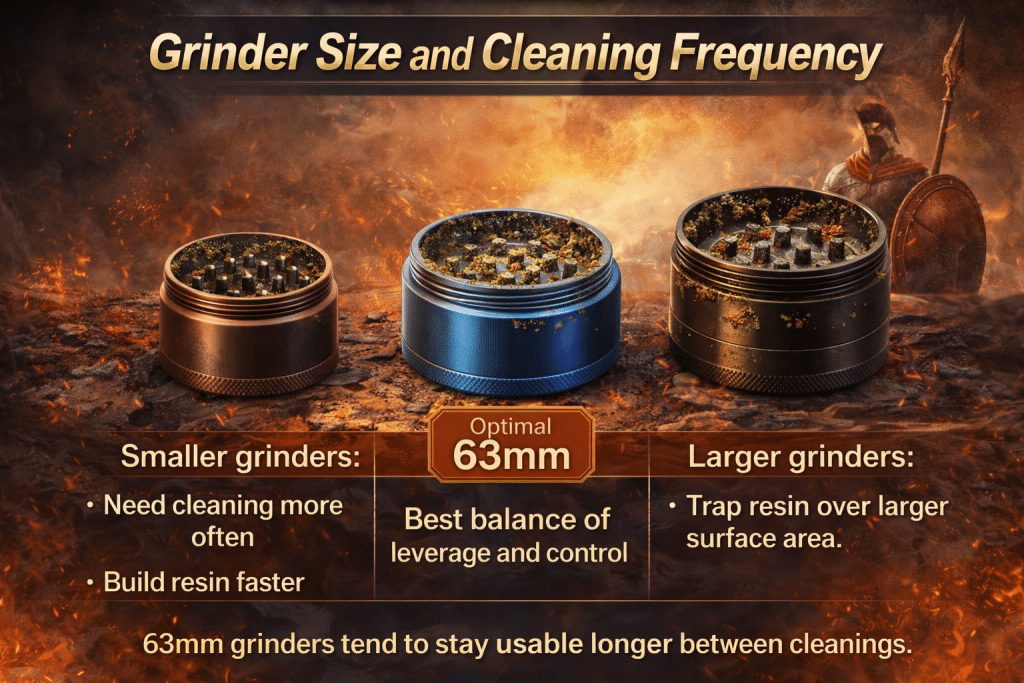
Smaller grinders:
- Need cleaning more often
- Build resin faster
Larger grinders:
- Trap resin over larger surface area
63mm grinders tend to stay usable longer between cleanings.
Which Grinder Size Should You Choose?
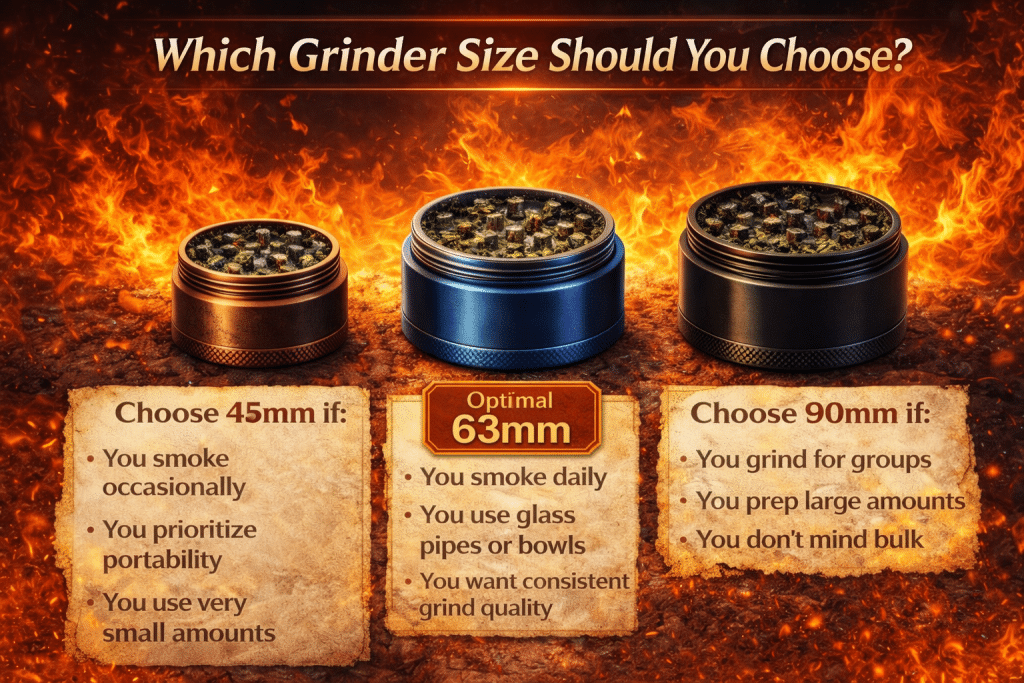
Choose 45mm if:
- You smoke occasionally
- You prioritize portability
- You use very small amounts
Choose 63mm if:
- You smoke daily
- You use glass pipes or bowls
- You want consistent grind quality
- You want one grinder that does everything
Choose 90mm if:
- You grind for groups
- You prep large amounts
- You don’t mind bulk
Final Verdict: Best Grinder Size for Daily Use in 2026
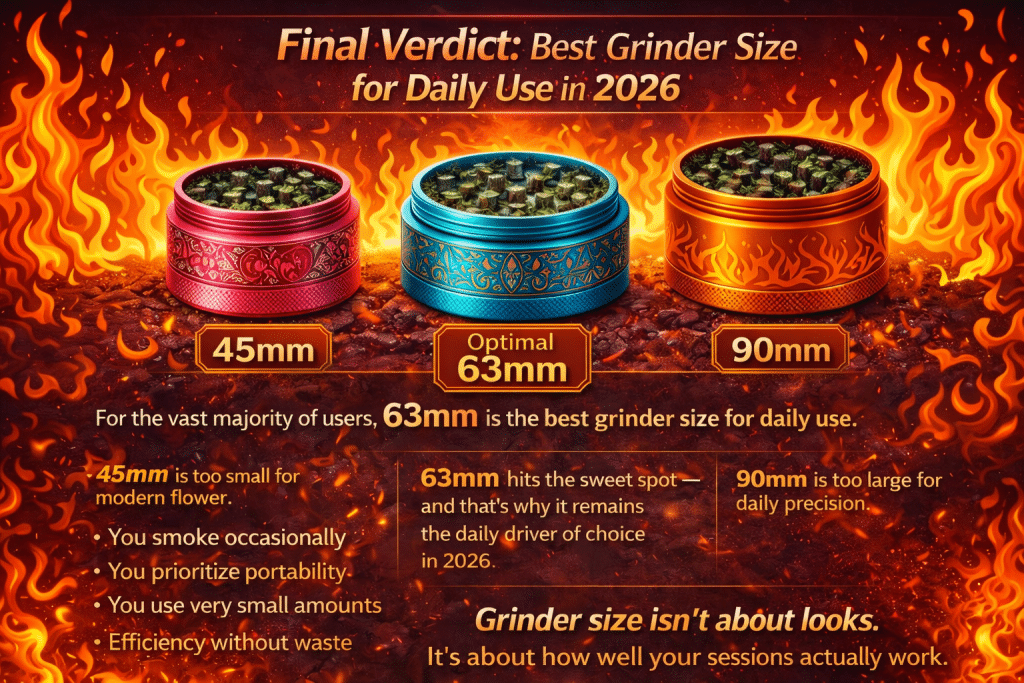
For the vast majority of users, 63mm is the best grinder size for daily use.
It delivers:
- Consistent grind
- Excellent airflow
- Comfortable handling
- Efficiency without waste
45mm is too small for modern flower.
90mm is too large for daily precision.
63mm hits the sweet spot — and that’s why it remains the daily driver of choice in 2026.
Grinder size isn’t about looks.
It’s about how well your sessions actually work.