
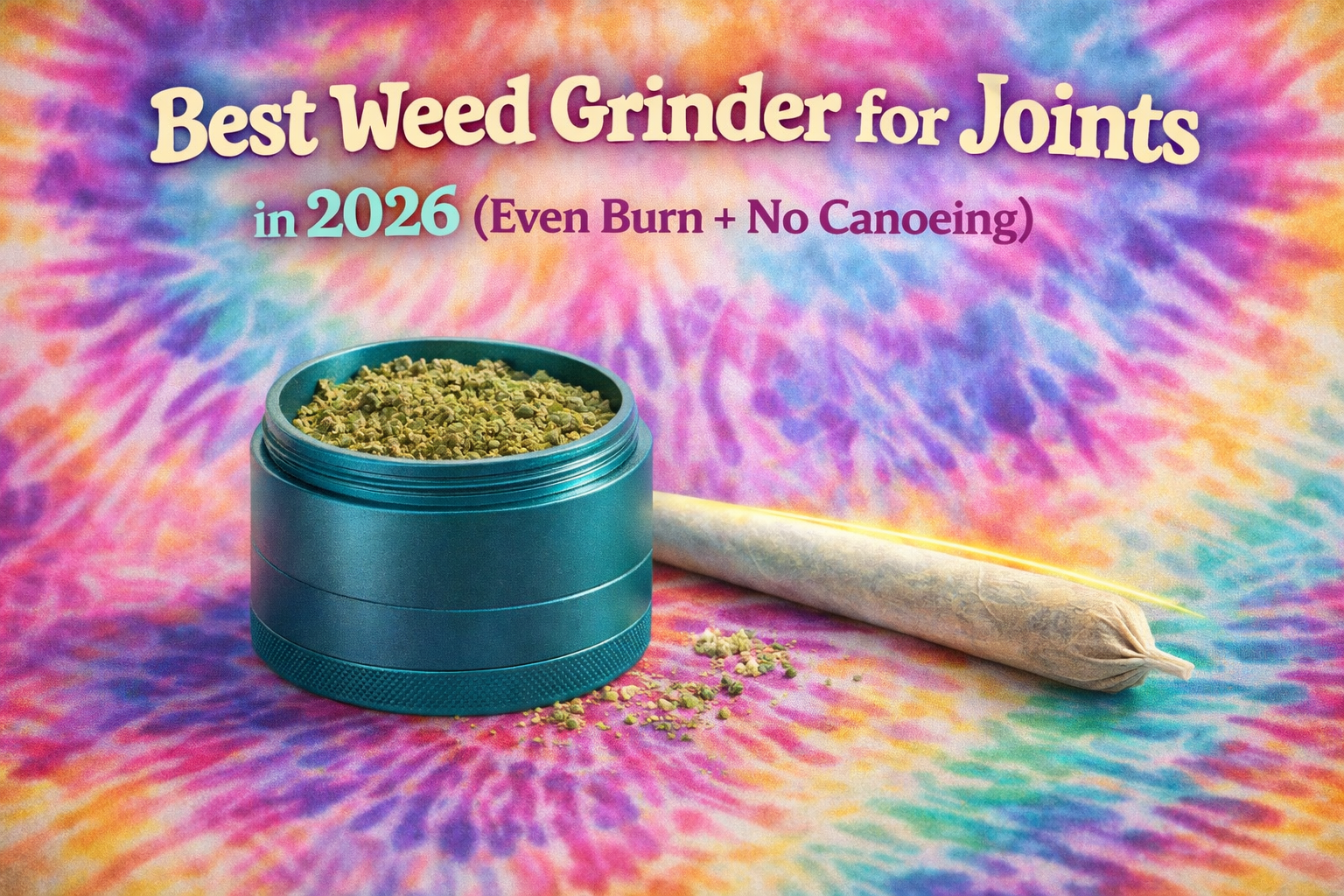
Rolling a perfect joint in 2026 isn’t about flashy paper or exotic flower — it’s about grind quality. Canoeing, uneven burns, harsh hits, and wasted weed almost always trace back to one problem: the grinder.
Modern cannabis is stickier, denser, and more resin-heavy than it was even a few years ago. That means grinders that “used to work fine” are now actively working against you. This guide breaks down exactly what makes a grinder ideal for joints, why most grinders fail at it, and how to choose one that delivers an even burn every time.
No hype. No influencer nonsense. Just mechanics, airflow, and combustion — the stuff that actually matters.
Why Joints Are the Hardest Test for a Grinder
Joints are brutally honest. There’s no water filtration, no airflow correction, and no bowl shape to compensate for mistakes. Once you light it, the burn tells the truth.
A joint exposes:
- Inconsistent grind size
- Powder buildup
- Compaction issues
- Moisture imbalance
If your joint canoes, tunnels, or burns unevenly, the grinder is almost always the culprit.
The Ideal Grind Size for Joints (2026 Standard)
The best grind for joints is medium-fine but fluffy — not powdery, not chunky.
What “Perfect Joint Grind” Actually Means
- Uniform particle size
- Enough surface area for combustion
- Enough structure to maintain airflow
- No dust settling at the paper seam
Too coarse = uneven burn and wasted flower
Too fine = airflow restriction, canoeing, harsh smoke
The grinder’s job is not to destroy flower — it’s to prepare it for controlled combustion.
Why Canoeing Happens (And How Grinders Cause It)
Canoeing occurs when one side of the joint burns faster than the other. That happens when airflow or density is uneven inside the roll.
Common grinder-related causes:
- Mixed dust + chunks
- Over-compressed grind
- Resin-smeared particles
- Uneven moisture distribution
A grinder that produces consistent particle size eliminates most canoeing before you even roll.
Tooth Design Matters More Than Brand Names
Most people obsess over brands. Professionals look at tooth geometry.
Good Grinder Teeth:
- Slice instead of crush
- Are evenly spaced
- Produce predictable output
- Don’t compact flower
Bad Grinder Teeth:
- Smash flower into powder
- Create inconsistent sizes
- Bind with sticky strains
- Degrade quickly
Grinders designed with cutting motion teeth preserve structure, which is critical for joints.
If you want to see grinders built specifically for controlled output, explore the main grinder lineup here:
👉 https://tahoegrinderco.com/product-category/all-products/
Best Grinder Styles for Joints
3-Piece Grinders (Top Choice)
3-piece grinders are the sweet spot for joint smokers.
Why they work:
- No over-separation of kief
- Maintains moisture balance
- Produces fluffy, rollable flower
- Easy to dose evenly
This is why so many daily joint smokers prefer 3-piece grinders:
👉 https://tahoegrinderco.com/product-category/all-products/3-piece-weed-grinders/
2-Piece Grinders (Excellent for Rollers)
For experienced rollers, a high-quality 2-piece grinder can be perfect.
Benefits:
- Maximum control
- No fine screen
- Fast prep
- Ideal for small personal joints
Well-machined 2-piece grinders shine here:
👉 https://tahoegrinderco.com/product-category/all-products/2-piece-weed-grinders/
4-Piece Grinders (Situational)
4-piece grinders can work, but they introduce variables:
- Finer grind
- Kief separation
- Drier flower
They’re better for bowls and bongs than joints — unless the grinder is very well tuned.
Grinder Material: Why Aluminum Wins for Joints
Anodized Aluminum (Gold Standard)
In 2026, anodized aluminum remains the best grinder material for joint smokers.
Why:
- Lightweight and easy to handle
- Doesn’t smear resin
- Produces fluffy, consistent grind
- Food-safe, inert surface
- Extremely durable
This is why premium aluminum grinders dominate daily-use setups.
Explore aluminum grinder options here:
👉 https://tahoegrinderco.com/product-category/all-products/4-piece-weed-grinders/
Stainless Steel (Less Ideal for Joints)
Stainless steel grinders are durable but:
- Heavier
- Tend to grind finer
- Can compact flower more
They’re excellent tools — just not optimized for joint rolling.
Grinder Size and Joint Performance
Size matters more than people think.
- Small grinders → inconsistent output
- Oversized grinders → over-processing
- Medium grinders → best control
Medium-sized grinders allow you to grind exactly what you need without destroying structure.
If you roll daily, medium-sized grinders offer the best balance.
How a Good Grinder Improves Joint Burn
With the right grinder:
- Flower packs evenly
- Airflow stays consistent
- Burn line stays straight
- Ash burns clean and white
- Flavor stays intact to the end
A grinder doesn’t just prep weed — it controls combustion physics.
Rolling Technique Still Matters (But Less Than You Think)
A perfect grind makes rolling forgiving.
Even if your roll isn’t flawless:
- Consistent grind compensates
- Airflow self-balances
- Canoeing becomes rare
Bad grind makes even expert rollers struggle.
Matching Grinder Choice to Joint Style
- Slim joints → slightly finer, uniform grind
- Fat joints → fluffy medium grind
- Cones → consistent density end-to-end
- Backrolled joints → clean, structured grind
The grinder determines how easy these styles are to execute.
Why Cheap Grinders Fail Joint Smokers
Cheap grinders:
- Smash instead of cut
- Produce dust
- Bind with sticky strains
- Lose alignment
- Wear out quickly
Joints amplify every one of these flaws.
The Best Weed Grinder for Joints Is Predictable
The best grinder for joints in 2026 isn’t about hype — it’s about repeatability.
You want:
- Same grind every time
- Same airflow every time
- Same burn every time
That consistency is what eliminates canoeing.
Final Thoughts: Even Burn Starts Before You Roll
If you’re chasing perfect joints, stop blaming papers, lighters, or technique. The grinder sets the foundation.
A grinder designed for:
- Uniform particle size
- Controlled airflow
- Resin-friendly performance
…will dramatically improve every joint you roll.
Fix the grind, and the burn fixes itself.