As cannabis flower continues to evolve in potency, density, and resin content, weed grinders are being pushed harder than ever before. In 2026, grinder material is no longer a cosmetic choice — it directly affects grind consistency, longevity, safety, and overall performance.
While many grinders look similar on the surface, the material they’re made from determines how they handle modern flower, how long they last, and how safely they perform over years of use. This guide breaks down the best weed grinder materials of 2026, comparing aluminum, stainless steel, and alternative materials — with a deep focus on why anodized aluminum has become the industry gold standard.
This article is about real-world performance, not marketing claims.
Why Grinder Material Matters More Than Ever in 2026
Modern cannabis strains are:
- Stickier
- Denser
- More terpene-rich
- More abrasive due to trichome density
This creates increased friction, heat, and wear inside grinders. Inferior materials degrade quickly, while properly chosen materials maintain consistency and safety long-term.
Grinder material affects:
- Grind consistency
- Resin buildup
- Tooth wear
- Structural integrity
- Safety during repeated use
In 2026, material choice separates disposable grinders from lifetime tools.
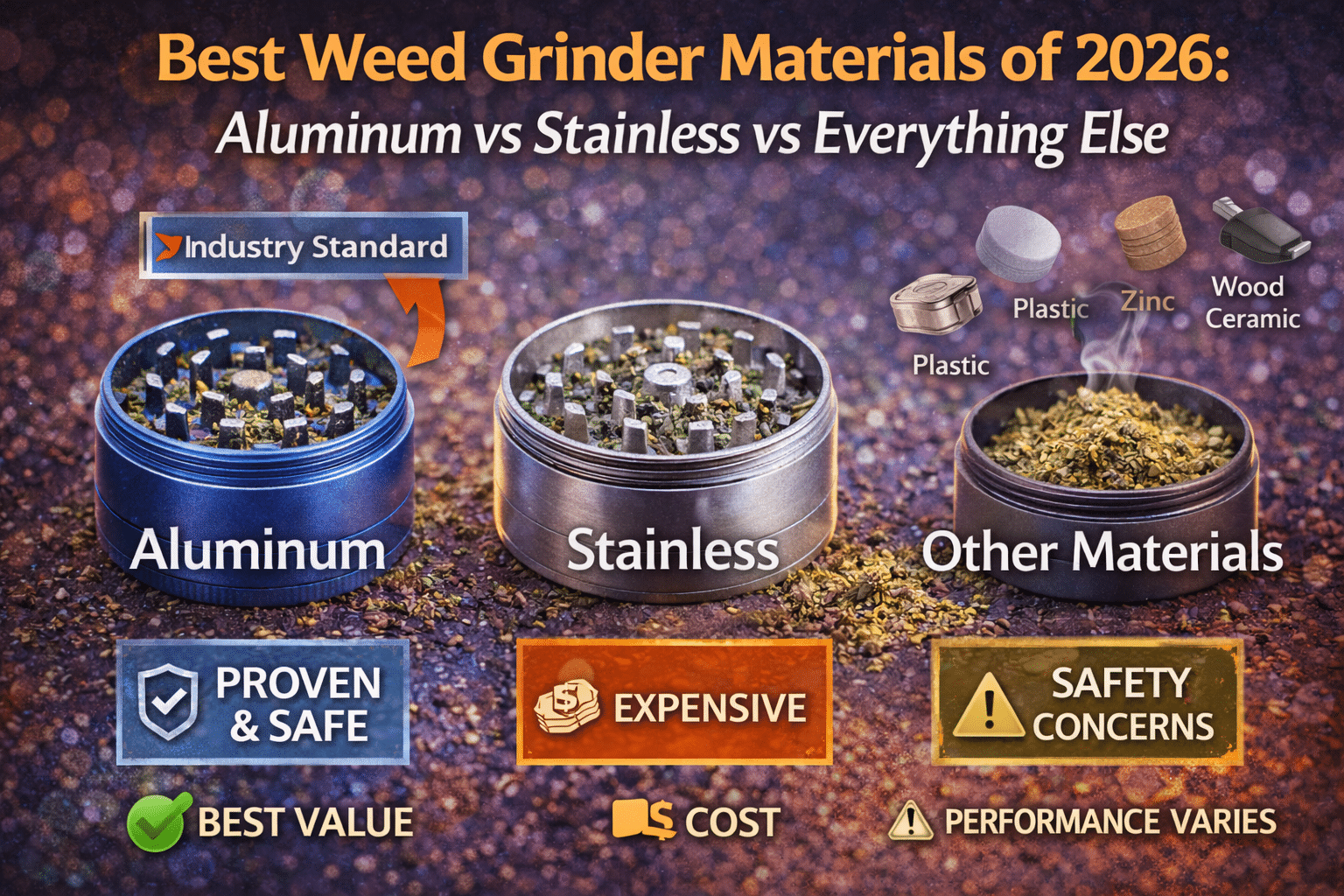
The Three Main Grinder Material Categories
Most grinders fall into one of three categories:
- Aluminum (typically anodized)
- Stainless steel
- Alternative materials (plastic, acrylic, zinc alloys, hemp composites, wood)
Each has advantages and drawbacks — but not all are suitable for long-term, high-quality use.
Aluminum Grinders: The Gold Standard of 2026
High-quality aluminum grinders dominate the premium grinder market in 2026, and for good reason. When properly machined and finished, aluminum offers the best balance of performance, durability, weight, and safety.
But not all aluminum grinders are created equal.
Why Anodized Aluminum Is the Industry Standard
Anodizing is the process that elevates aluminum from a good material to an exceptional one.
What Is Anodizing?
Anodizing is an electrochemical process that converts the surface of aluminum into a hard, non-reactive oxide layer. This layer is not paint or coating — it becomes part of the metal itself.
Key properties of anodized aluminum:
- Food-grade and inert
- Non-toxic and non-reactive
- Extremely hard and wear-resistant
- Corrosion-resistant
- Color-stable (no chipping or flaking)
This makes anodized aluminum ideal for repeated contact with plant material.
Why Anodized Aluminum Is Safe for Cannabis Use
Safety matters — especially for tools used daily.
Anodized aluminum:
- Does not leach chemicals
- Does not shed coating material
- Does not react with terpenes or resin
- Is widely used in food and medical applications
Because the anodized layer is integral to the metal, it does not wear off like paint or plating.
Durability: Why Anodized Aluminum Lasts So Long
The anodized surface is significantly harder than raw aluminum. This hardness improves:
- Tooth longevity
- Resistance to scratching
- Structural stability under torque
- Long-term grind consistency
In real-world use, anodized aluminum grinders maintain precision far longer than untreated or painted alternatives.
Grind Performance: Aluminum’s Real Advantage
Aluminum’s mechanical properties make it ideal for precision grinding.
Benefits include:
- Lightweight feel for controlled grinding
- Smooth rotational momentum
- Consistent tooth engagement
- Reduced user fatigue
Aluminum allows for tighter machining tolerances, which directly improves grind quality.
Stainless Steel Grinders: Durable but Not Ideal for Everyone
Stainless steel grinders are often marketed as the “ultimate” option due to their durability. While they excel in some areas, they also introduce trade-offs.
Advantages of Stainless Steel
- Extremely durable
- Resistant to denting
- Long lifespan
Drawbacks of Stainless Steel
- Much heavier
- Can produce a finer grind than desired
- Less forgiving for airflow-sensitive methods
- Reduced tactile feedback
For some users, stainless steel is appealing — but many find aluminum more comfortable and versatile for daily use.
Why Heavier Isn’t Always Better
Weight affects how grinders behave.
Heavier grinders:
- Encourage over-grinding
- Compress flower more easily
- Reduce control during use
For methods like glass pipes that rely on airflow, aluminum’s lighter weight often produces better results.
Zinc Alloy Grinders: A Common but Inferior Option
Many inexpensive grinders are made from zinc alloys.
Problems with zinc alloy grinders include:
- Softer material that wears quickly
- Inconsistent machining
- Higher risk of flaking coatings
- Potential safety concerns
Zinc alloys are inexpensive but lack the durability and precision required for modern flower.
Plastic and Acrylic Grinders: Disposable by Design
Plastic and acrylic grinders still exist, but they are fundamentally limited.
Issues include:
- Tooth wear
- Static buildup
- Poor grind consistency
- Structural failure under sticky strains
They may work temporarily, but they are not suitable for long-term use in 2026.
Hemp and Wood Grinders: Niche and Aesthetic
Hemp-based and wooden grinders appeal to users seeking natural materials, but they come with trade-offs.
Limitations include:
- Reduced durability
- Poor tolerance for resin-heavy flower
- Limited lifespan
They function better as novelty or backup tools than primary grinders.
Coatings vs Anodizing: A Critical Distinction
Many grinders advertise “coated” finishes, but coatings are not the same as anodizing.
Coatings:
- Sit on top of the metal
- Can chip or flake
- Wear unevenly
- Potentially contaminate flower
Anodizing:
- Becomes part of the metal
- Cannot chip or peel
- Maintains integrity under stress
- Safe for repeated use
This distinction is critical when evaluating grinder quality.
Long-Term Performance: Why Anodized Aluminum Wins
Over years of use, anodized aluminum grinders:
- Maintain tooth sharpness
- Preserve grind consistency
- Resist resin buildup
- Remain structurally sound
This longevity supports lifetime warranties and long-term ownership.
Heat, Friction, and Resin Management
Grinding generates friction and heat.
Anodized aluminum:
- Dissipates heat efficiently
- Reduces resin smearing
- Maintains smooth rotation
This leads to better performance during long or frequent sessions.
Environmental Considerations
Aluminum is one of the most recyclable materials in the world.
Benefits include:
- High recycling rate
- Lower long-term environmental impact
- Sustainable lifecycle
Anodized aluminum grinders support longevity over disposability.
Why Material Choice Should Match Usage Style
- Daily users: Anodized aluminum
- Glass pipe users: Anodized aluminum for airflow control
- Heavy users: Aluminum or stainless steel
- Portable use: Lightweight anodized aluminum
Matching material to usage improves satisfaction and performance.
The Biggest Myth: “All Metal Grinders Are the Same”
Metal alone doesn’t guarantee quality.
The difference lies in:
- Alloy selection
- Machining tolerances
- Surface treatment
- Design execution
Anodized aluminum done correctly outperforms many heavier, more expensive alternatives.
Final Thoughts: Anodized Aluminum Is the Benchmark of 2026
In 2026, the best weed grinder material is not defined by weight, hype, or novelty — it’s defined by performance, safety, and longevity.
Anodized aluminum stands at the top because it delivers:
- Consistent grind quality
- Food-grade safety
- Exceptional durability
- Comfortable daily use
- Long-term reliability
While stainless steel and alternative materials have their place, anodized aluminum remains the benchmark against which all other grinder materials are measured.
When precision matters and longevity counts, anodized aluminum isn’t just an option — it’s the standard.