
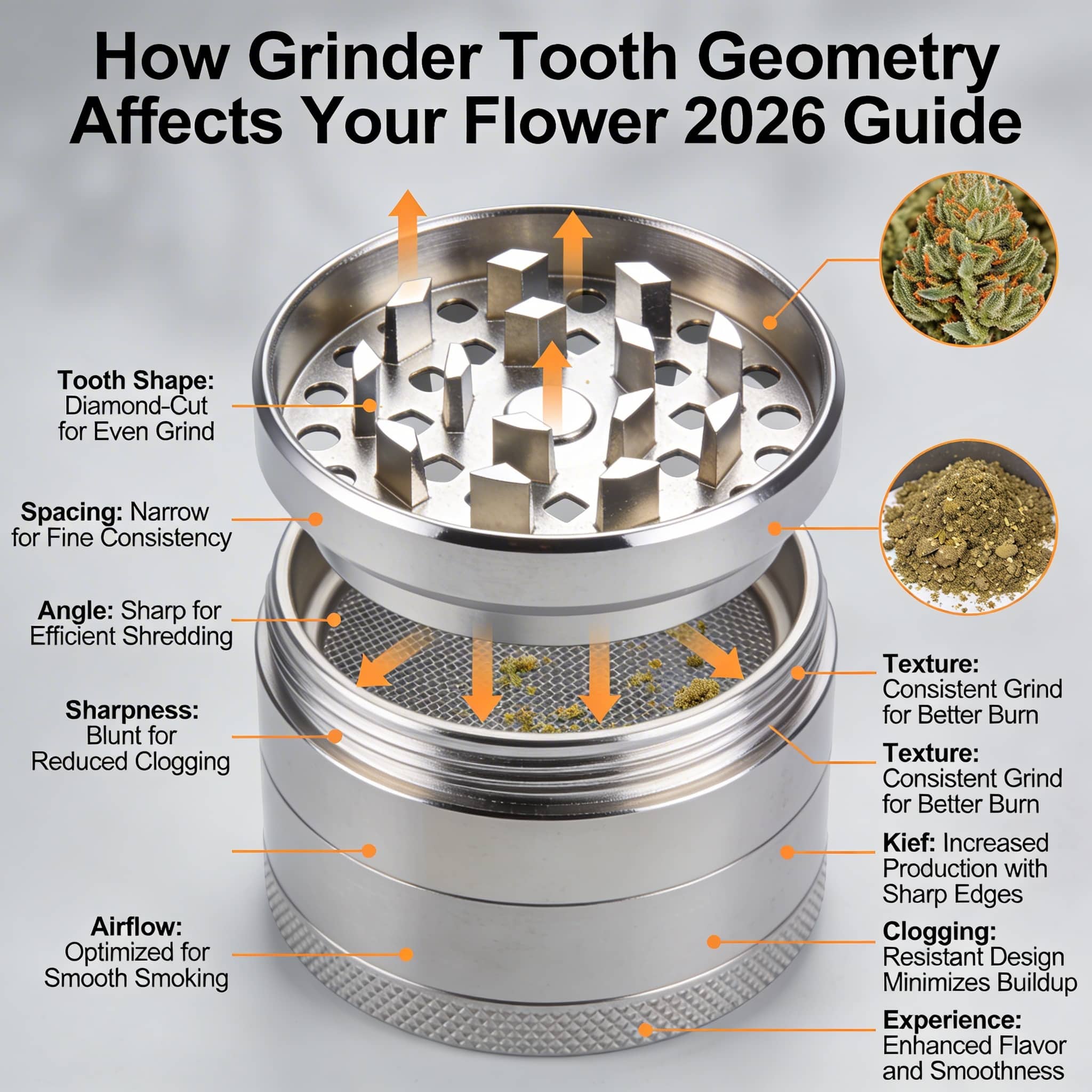
Most people focus on material when choosing a grinder.
Aluminum vs zinc.
CNC vs cast.
Anodized vs painted.
But one of the most overlooked factors in grind quality is tooth geometry.
The shape, spacing, angle, and sharpness of grinder teeth directly affect:
- Texture of your flower
- Airflow
- Consistency
- Kief production
- Clogging resistance
- Overall smoking experience
Let’s break down how tooth geometry works — and why it matters more than most buyers realize.
What Is Grinder Tooth Geometry?
Tooth geometry refers to:
- Tooth shape
- Tooth height
- Tooth spacing
- Cutting angle
- Edge sharpness
- Alignment between top and bottom chambers
Small differences in these variables can create very different results.
Two grinders made from the same metal can feel completely different based solely on tooth design.
1️⃣ Sharp vs Rounded Teeth
Sharp, Precision-Cut Teeth
Sharper teeth:
✔ Slice flower cleanly
✔ Maintain structure
✔ Produce fluffy consistency
✔ Improve airflow
Precision-machined teeth typically have cleaner cutting edges and more uniform height.
This produces a consistent texture that burns evenly.
Rounded or Dull Teeth
Over time — or in lower precision builds — teeth may be slightly rounded.
Rounded teeth tend to:
- Crush rather than slice
- Compress flower
- Create uneven texture
- Increase clogging
This can lead to tighter airflow and less consistent burn.
2️⃣ Tooth Spacing & Density
Spacing between teeth determines how aggressively the flower is broken down.
Tight Tooth Spacing
Produces:
- Finer grind
- More fragmentation
- Faster breakdown
Good for:
- Smaller bowls
- Rolling consistency
But if too tight, it may over-pulverize flower.
Wider Tooth Spacing
Produces:
- Slightly fluffier grind
- Better airflow
- Less compression
Often preferred for:
- Preserving texture
- Avoiding over-grinding
Balance is key. Too sparse, and the grinder may feel inefficient. Too dense, and it may clog more easily.
3️⃣ Tooth Height & Depth
Taller teeth:
- Engage flower more aggressively
- Can handle denser buds
- Increase cutting leverage
Shorter teeth:
- Offer more controlled breakdown
- May reduce over-grinding
Precision machining ensures uniform height, which improves consistency.
If tooth height varies slightly, grind texture becomes uneven.
4️⃣ Cutting Angle
This is where high-end grinders differentiate themselves.
The cutting angle affects whether the flower is:
- Sliced cleanly
- Torn
- Crushed
- Compressed
A properly engineered cutting angle allows the flower to be separated while maintaining structure.
Too aggressive of an angle can:
- Over-pulverize
- Create fine dust
- Increase screen clogging
Too passive of an angle can:
- Struggle with sticky flower
- Require excessive twisting
Geometry must balance efficiency with texture control.
5️⃣ Alignment Between Chambers
When the top and bottom teeth interlock correctly:
✔ Cutting is uniform
✔ Resistance is smooth
✔ Flower is evenly distributed
Poor alignment can cause:
- Uneven breakdown
- Grinding friction
- Increased wear
This is often where machining tolerances make a noticeable difference.
6️⃣ How Tooth Geometry Affects Airflow
Grind texture directly influences airflow.
Fluffier grind:
- Promotes better oxygen flow
- Burns evenly
- Reduces canoeing
- Improves consistency
Over-pulverized grind:
- Packs tightly
- Restricts airflow
- Can create harsh pulls
Tooth geometry plays a major role in that balance.
7️⃣ Sticky Flower & Clogging
Sticky, terpene-rich flower is the ultimate test.
Well-designed tooth geometry:
- Reduces surface sticking
- Maintains spacing
- Prevents over-compaction
Poor geometry may:
- Mash resin into chamber walls
- Create buildup between teeth
- Require frequent cleaning
Tooth shape affects how resin disperses during grinding.
8️⃣ Long-Term Tooth Wear
Material matters, but geometry affects longevity too.
Sharper, well-supported teeth:
- Maintain edge integrity longer
- Wear evenly
- Preserve grind consistency over time
Thin or poorly designed teeth may dull faster or deform under heavy use.
Why Precision Machining Matters for Geometry
Precision machining allows for:
- Consistent tooth height
- Uniform edge angles
- Tight spacing tolerances
- Clean cutting edges
Casting methods may introduce slight inconsistencies in tooth shape and spacing.
While small at first, these differences become noticeable over months of daily use.
What Texture Should You Look For?
Most experienced users prefer a grind that is:
✔ Even
✔ Slightly fluffy
✔ Not dusty
✔ Not chunky
✔ Free-flowing
Good tooth geometry creates this balance.
The grinder shouldn’t pulverize your flower — it should prepare it.
Final Thoughts
Tooth geometry affects your flower more than most buyers realize.
It influences:
- Burn rate
- Airflow
- Texture
- Consistency
- Cleaning frequency
- Overall feel
When comparing grinders, don’t just ask:
“What metal is it?”
Ask:
“How are the teeth engineered?”
In 2026, buyers who understand tooth geometry make more informed decisions — and typically experience better long-term performance.