
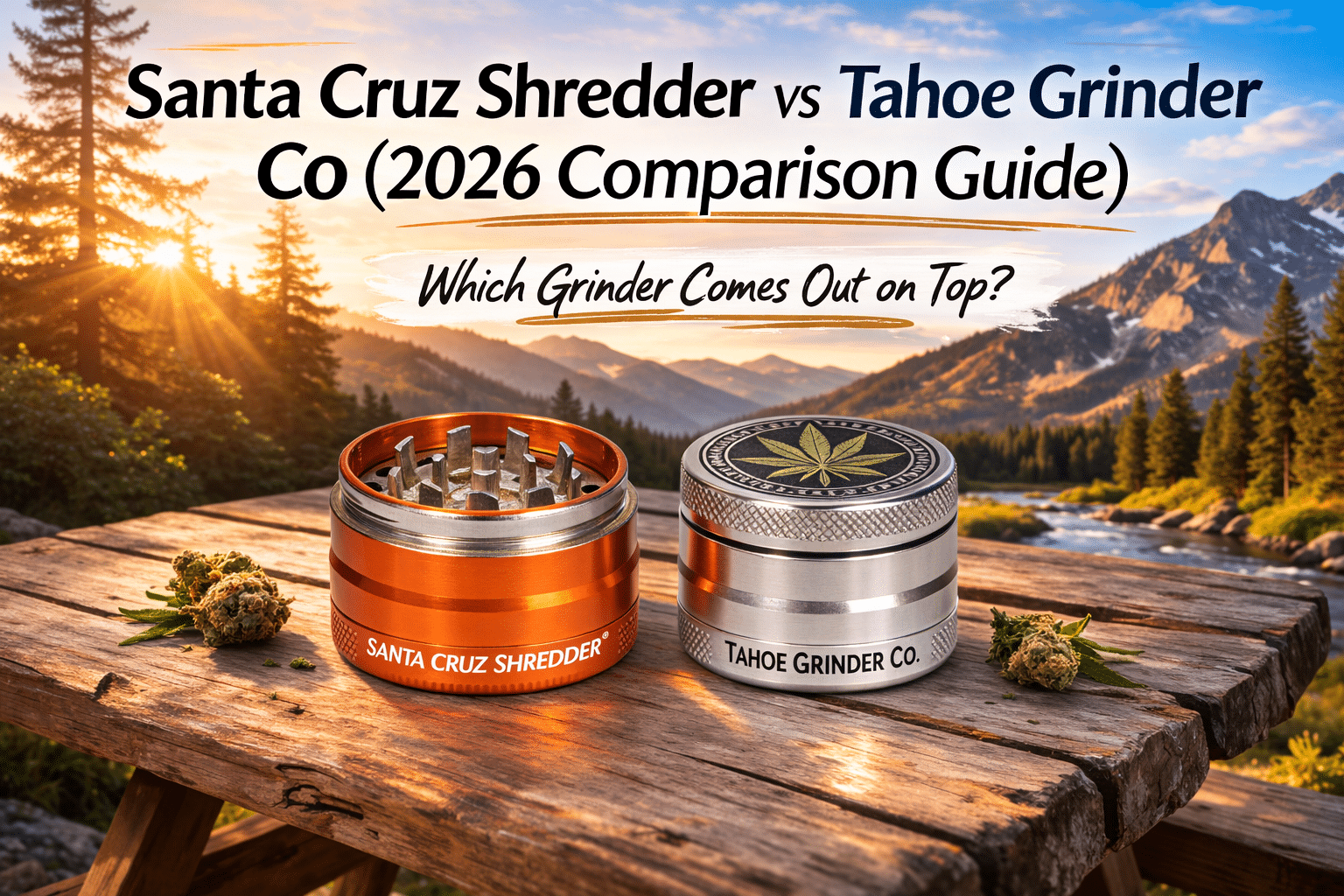
If you’re researching premium aluminum grinders in 2026, you’ve likely come across both Santa Cruz Shredder and Tahoe Grinder Co.
Santa Cruz Shredder
Both brands operate in the high-end aluminum grinder category. But how do they compare in materials, machining quality, design, and overall value?
Let’s break it down objectively.
Brand Overview
Santa Cruz Shredder
Santa Cruz Shredder helped popularize premium aluminum grinders in the cannabis accessory space. The brand is known for:
- Distinctive tooth design
- Anodized aluminum construction
- Wide distribution in smoke shops
- Recognizable name in the grinder category
They’ve built strong brand recognition over the years.
Tahoe Grinder Co
Tahoe Grinder Co focuses specifically on:
- CNC-machined aerospace-grade aluminum
- Tight machining tolerances
- Hard anodized finishes
- Clean, minimalist aesthetic
Rather than mass retail presence, Tahoe Grinder Co emphasizes precision machining and direct-to-consumer distribution.
Material & Construction
Aluminum Type
Both brands use anodized aluminum in their premium models.
When evaluating quality, look for:
- Aerospace-grade aluminum
- Consistent anodizing
- No paint or zinc alloy components
Hard anodizing improves durability and resistance to wear over time.
Tooth Geometry
Tooth design directly affects:
- Grind consistency
- Airflow
- Resistance to clogging
- Fluff vs pulverization
Santa Cruz Shredder is known for its distinctive tooth shape.
Tahoe Grinder Co uses precision-machined teeth designed for consistent flower breakdown while maintaining airflow.
Grind feel is subjective — some users prefer more aggressive cutting, others prefer a slightly fluffier texture.
Threading & Machining Tolerances
One major difference in premium grinders often comes down to machining precision.
Things to look for:
- Smooth thread engagement
- No binding under sticky flower
- Clean lid alignment
- Minimal wobble
CNC precision tolerances can improve long-term performance and reduce cross-threading issues.
Design & Aesthetic
Santa Cruz Shredder
- Established brand look
- Multiple colorways
- Recognizable style
Tahoe Grinder Co
- Minimalist engravings
- Coastal-inspired editions
- Topographic and map-based lid designs
- Subtle branding
Buyers looking for understated, modern aesthetics often gravitate toward simpler finishes.
Pricing & Value
Premium aluminum grinders typically fall into a similar pricing tier.
Value considerations include:
- Longevity
- Machining quality
- Screen durability
- Replacement frequency
A grinder built to last multiple years may provide better long-term value than replacing lower-cost units annually.
Which Grinder Is Right for You?
Choose Santa Cruz Shredder if you:
- Prefer an established legacy brand
- Like their distinctive tooth style
- Want something widely available in retail stores
Choose Tahoe Grinder Co if you:
- Prefer precision-machined builds
- Want minimalist coastal-inspired designs
- Value tight machining tolerances
- Prefer direct-to-consumer pricing
Final Verdict (2026)
Both brands sit in the premium aluminum grinder category.
The best choice depends on what you prioritize:
✔ Brand legacy
✔ Tooth feel preference
✔ Machining precision
✔ Design aesthetic
✔ Price-to-performance
In 2026, buyers are increasingly comparing performance and value rather than relying on name recognition alone.
Looking for a Premium CNC Aluminum Grinder?
Explore Tahoe Grinder Co’s precision-machined 4-piece aluminum grinders designed for durability, smooth threading, and long-term performance.