
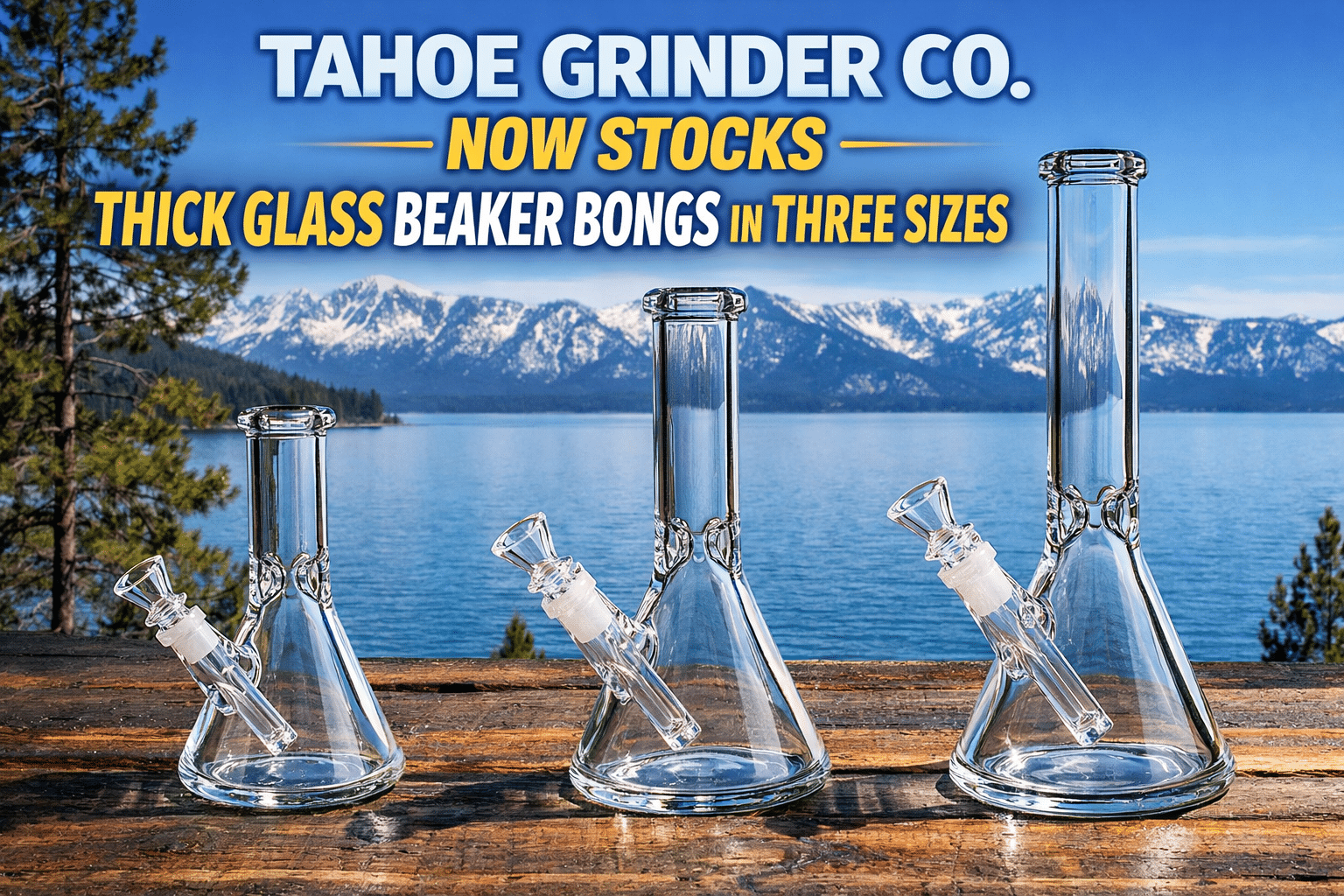
For smokers who appreciate durability, smooth filtration, and timeless design, beaker bongs have long been considered one of the most reliable styles of glass water pipes available. At Tahoe Grinder Co., we’re excited to announce that we now stock three different sizes of 9mm thick clear glass beaker bongs, designed for stability, performance, and everyday use.
Whether you’re looking for a compact portable bong, a balanced medium-size water pipe, or a large beaker bong with maximum filtration, our lineup provides options built from heavy borosilicate glass to deliver smooth hits and long-term durability.
Our newest additions include:
- Small 9mm Thick Glass Beaker Bong – compact and portable
- Medium Clear Beaker Water Pipe – balanced size and filtration
- Large 9mm Beaker Bong – maximum cooling and airflow
Each piece is crafted from ultra thick 9mm glass, making them significantly stronger and more stable than many standard glass pipes on the market.
Why Beaker Bongs Are One of the Most Popular Glass Water Pipes
Among the many styles of glass bongs available today, the beaker bong remains one of the most trusted designs. The wide, conical base allows the water chamber to hold more water compared to straight tube bongs. This added water capacity helps improve smoke filtration and cooling, resulting in smoother hits.
Because of this design, beaker style water pipes offer several key advantages:
• Greater water capacity for improved filtration
• Increased stability due to the wide base
• Smoother smoke diffusion
• Reduced risk of tipping compared to straight tubes
• Classic design trusted for decades
These benefits make beaker bongs one of the best choices for smokers who want both reliability and performance from their glass pieces.
Built From Heavy 9mm Thick Glass
One of the biggest differences between premium glass and budget glass pieces is thickness. Many inexpensive bongs use thinner glass that can feel fragile or unstable. Our new lineup of beaker bongs at Tahoe Grinder Co. is built from extra thick 9mm borosilicate glass, giving each piece a solid feel and improved durability.
Thicker glass offers several advantages:
• Increased resistance to minor impacts
• Heavier base for improved stability
• Premium feel and weight
• Longer lifespan compared to thinner glass
The 9mm glass construction used in these bongs helps ensure that each water pipe feels solid and dependable during everyday use.
Choosing the Right Beaker Bong Size
Different smokers prefer different glass sizes depending on their setup and personal preferences. That’s why Tahoe Grinder Co. now offers three different sizes of clear glass beaker bongs so customers can choose the right balance of portability and filtration.
Small Beaker Bong – Compact and Portable
For smokers who prefer a smaller glass piece that is easy to handle and store, our Small 9mm Thick Glass Beaker Bong delivers smooth filtration in a compact form.
This size is ideal for:
• Personal sessions
• Small spaces or travel setups
• Smokers who prefer lighter pieces
Despite its smaller footprint, the thick glass and classic beaker design still provide excellent stability and airflow.
➡ Buy the Small Beaker Bong here:
https://tahoegrinderco.com/product/small-9mm-thick-glass-beaker-bong-heavy-duty-clear-water-pipe/
Medium Beaker Bong – Balanced Size and Performance
The Medium Clear Beaker Water Pipe offers the perfect middle ground between portability and performance. This size provides increased water volume compared to smaller bongs, allowing smoke to cool more effectively before reaching the mouthpiece.
Medium beaker bongs are often considered the most versatile size because they offer:
• Improved smoke cooling
• Comfortable airflow
• Manageable size for everyday use
For many smokers, the medium size delivers the ideal balance of filtration and convenience.
➡ Buy the Medium Beaker Bong here:
https://tahoegrinderco.com/product/medium-clear-beaker-water-pipe-9mm-thick-heavy-glass-bong/
Large Beaker Bong – Maximum Filtration and Smooth Hits
For those who want the smoothest possible experience, the Large 9mm Beaker Bong provides the most water capacity and filtration. The expanded chamber allows smoke to diffuse through more water, helping cool the smoke before inhalation.
Large glass water pipes are popular among smokers who prefer:
• Maximum smoke cooling
• Larger airflow volume
• Longer draws and smoother hits
The thick glass construction combined with the wide beaker base creates a stable and impressive piece that performs exceptionally well during extended sessions.
➡ Buy the Large Beaker Bong here:
https://tahoegrinderco.com/product/large-9mm-beaker-bong-ultra-thick-clear-glass-water-pipe/
Why Thick Glass Bongs Are Worth It
When shopping for a glass bong or water pipe, glass thickness plays a major role in durability and overall quality. Thicker glass bongs tend to last longer and feel much sturdier during use.
A 9mm thick glass bong offers several advantages over thinner glass pieces:
• Stronger structure
• Reduced chance of cracking
• Improved weight and stability
• More premium feel
Because of these benefits, many experienced smokers prefer heavy glass bongs when choosing a reliable daily piece.
Clear Glass Water Pipes With a Classic Design
While some bongs feature colors or decorative elements, clear glass beaker bongs remain one of the most timeless styles available. Clear glass makes it easy to monitor water levels and maintain cleanliness while keeping the design simple and clean.
The minimalist look also pairs well with different bowls, downstems, and accessories, making clear glass water pipes a popular choice for both beginners and experienced smokers alike.
Shop Thick Glass Beaker Bongs at Tahoe Grinder Co.
At Tahoe Grinder Co., we focus on offering well-built smoking accessories designed for durability and performance. Our new lineup of 9mm thick glass beaker bongs gives customers the option to choose the size that best fits their setup.
Browse our available sizes below:
Small Beaker Bong
https://tahoegrinderco.com/product/small-9mm-thick-glass-beaker-bong-heavy-duty-clear-water-pipe/
Medium Beaker Bong
https://tahoegrinderco.com/product/medium-clear-beaker-water-pipe-9mm-thick-heavy-glass-bong/
Large Beaker Bong
https://tahoegrinderco.com/product/large-9mm-beaker-bong-ultra-thick-clear-glass-water-pipe/
Each piece is made from heavy 9mm borosilicate glass, giving you the durability, stability, and smooth filtration that beaker-style water pipes are known for.
If you’re looking for a thick glass bong built for everyday use, Tahoe Grinder Co. now has the perfect size for your collection.