
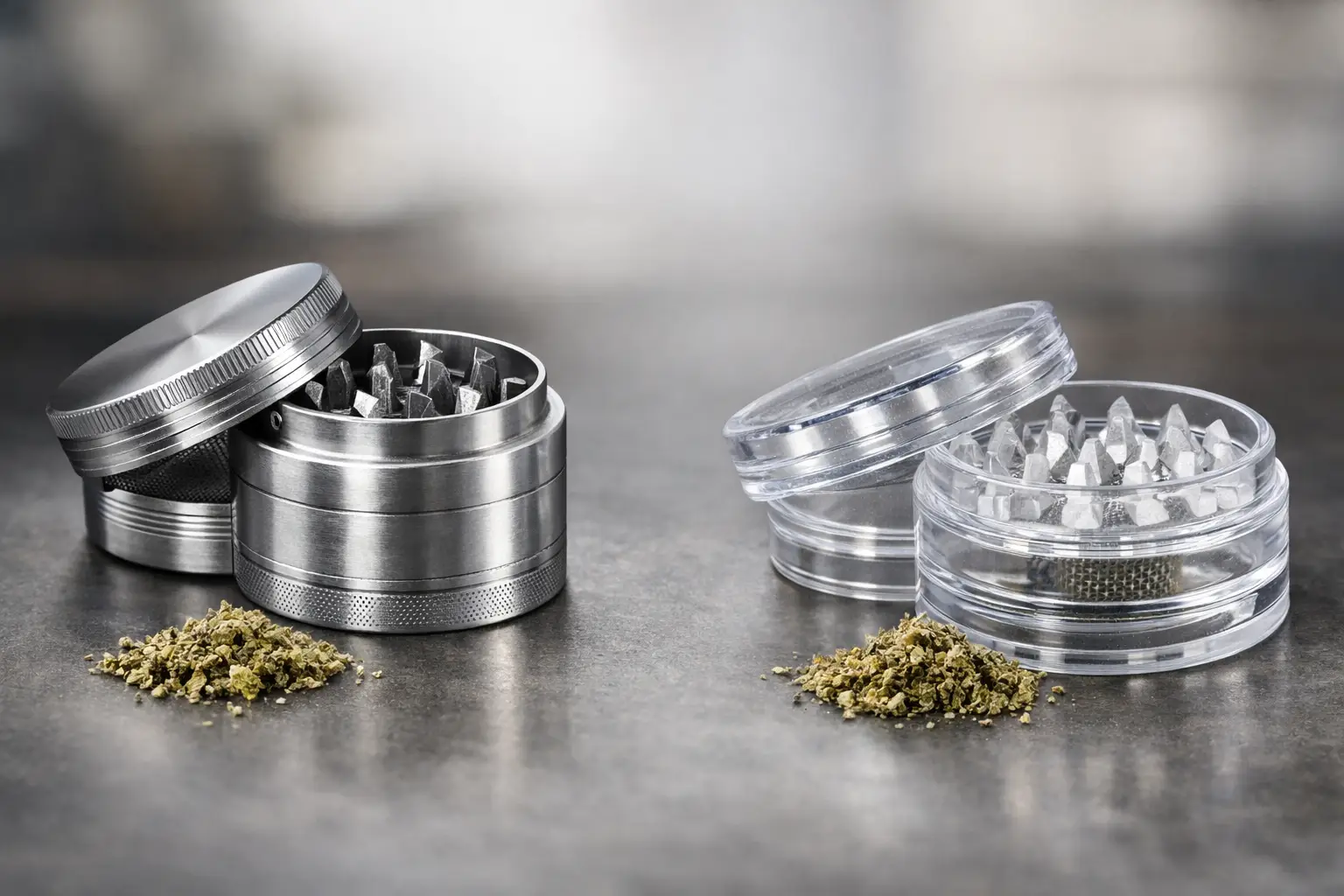
If you have ever twisted a cheap grinder until your wrist complained, you already know this is not a minor accessory decision. The real difference in aluminum grinder vs acrylic grinder comes down to performance under pressure – how it cuts, how long it stays smooth, and whether it still works after months of sticky flower, daily use, and a few accidental drops.
For cannabis consumers who actually use their grinder instead of treating it like a drawer accessory, material matters. A grinder is a tool. It should deliver a consistent grind, resist wear, and keep doing its job without chipped teeth, cross-threading, or a lid that suddenly feels like it belongs on a toy. That is where aluminum and acrylic part ways fast.
Aluminum Grinder vs Acrylic Grinder: What Changes in Real Use
On paper, both grinder types do the same job. They break down dried herb. In practice, they do not deliver the same experience.
An acrylic grinder is usually chosen because it is cheap, light, and easy to find. For someone buying a first grinder or grabbing something disposable, that low price can look appealing. But acrylic is still plastic. It is more likely to wear down, crack, or lose tooth sharpness with regular use. Once that happens, grind quality drops with it.
An aluminum grinder is built for repeat performance. Good aluminum grinders are cut from metal, not molded from plastic, which means tighter tolerances, stronger teeth, and more structural stability. The result is a smoother rotation, a more even grind, and a tool that feels solid in the hand instead of flimsy.
The gap gets wider the more often you smoke. If you grind once in a while, an acrylic grinder may get by for a bit. If you grind daily, pack bowls regularly, roll often, or care about consistency, aluminum becomes the obvious material.
Durability Is the First Major Separation
The fastest way to understand this comparison is to look at failure points.
Acrylic grinders usually fail in predictable ways. The teeth dull or snap. The lid fit gets sloppy. The body can crack if dropped. If the grinder has threads, they often wear down faster than metal threads, especially when resin builds up and users force it shut. You may save money upfront, but you are also buying a shorter lifespan.
Aluminum handles stress better. A well-machined aluminum grinder is less likely to chip, deform, or wear out under normal use. Teeth hold their shape longer. The body resists impact better. The mating surfaces stay more precise over time. That matters because grinders do not wear out all at once. They get worse gradually. They start sticking, grinding unevenly, and feeling rough. Most users notice the decline long before the grinder completely fails.
This is where premium manufacturing matters too. Not all aluminum grinders are equal. Precision machining, material grade, and finishing quality all affect how the grinder performs after hundreds of uses. Serious users can feel the difference between a grinder made to hit a price point and one made to stay in service for years.
Grind Quality Is Where Aluminum Pulls Ahead
A grinder is only as good as the consistency it produces. Uneven herb can burn poorly, roll inconsistently, and make the whole prep process messier than it should be.
Acrylic grinders tend to be less precise because molded plastic does not allow for the same tight tolerances you get with a properly machined metal grinder. That can lead to inconsistent tooth engagement and a rougher grind pattern. Some pieces come out too chunky, others too fine, and sticky flower can quickly expose weak cutting performance.
Aluminum grinders generally produce a more uniform texture. Stronger teeth and better alignment help the grinder cut through herb instead of mashing it. That means better airflow in a bowl, a more even roll in a joint, and less frustration during prep. For users who care about getting the same result every time, that consistency is not a luxury. It is the whole point.
The more resinous the flower, the more this matters. Dense or sticky buds expose weak grinder construction immediately. Acrylic can feel acceptable with dry herb, then turn into a struggle the moment the material gets tacky. Aluminum is better equipped for real-world cannabis, not just ideal conditions.
Maintenance and Cleanliness Are Not Equal
Every grinder gets dirty. Resin buildup is part of the job. The question is how the grinder handles it.
Acrylic is more vulnerable to wear from repeated cleaning, and lower-cost plastic grinders are not known for aging gracefully. Scraping residue off plastic teeth or inner walls can accelerate damage, especially if the grinder is already soft or worn. Once the edges lose definition, performance drops again.
Aluminum is better suited for routine maintenance. It holds up better to cleaning, and quality metal grinders tend to keep their structure and feel even after repeated use cycles. That makes ownership simpler. You clean it, keep using it, and expect it to perform like a serious tool.
There is also the issue of friction. A cheap acrylic grinder can start out rough and get rougher. A well-built aluminum grinder usually feels more controlled from the start, especially when the design avoids common failure points. That smoother operation becomes more valuable over time, not less.
Price Matters, but So Does Replacement Cost
The strongest case for acrylic is price. If your budget is extremely tight, an acrylic grinder may seem like the practical choice. It gets you in the game for less money.
But low initial cost is not the same as good value. If the grinder cracks, jams, or stops giving you a reliable grind, you are back in the market again. Buy enough cheap grinders and you eventually spend more while getting a worse experience the entire time.
Aluminum costs more upfront because there is more material value, more manufacturing involved, and usually a much higher quality standard behind the finished product. That higher entry price is justified when the grinder lasts, performs better, and does not need replacing every few months.
For buyers who are tired of disposable smoking accessories, aluminum makes more sense financially over the long haul. It is the same logic as buying a serious lighter, a proper rolling tray, or a glass piece that is built right the first time. Better tools improve the ritual and reduce the headache.
Who Should Actually Buy an Acrylic Grinder?
There are a few cases where acrylic still makes sense.
If you are buying a temporary grinder, need a backup, or just want the lowest-cost option possible, acrylic can serve a purpose. It is also light and simple, which may appeal to someone who barely grinds flower and does not care much about refinement.
But it is hard to recommend acrylic to anyone who smokes regularly. Daily users put real wear on a grinder. They notice uneven cuts, sticky rotation, and weak teeth faster than casual users do. Once your grinder becomes a friction point in the routine, cheap stops being cheap.
Who Should Buy an Aluminum Grinder?
If you use flower more than occasionally, aluminum is the better buy. That includes newer users who want to avoid wasting money on upgrades and experienced smokers who are done with mass-market grinder problems.
An aluminum grinder is especially worth it if you care about consistency, longevity, clean operation, and overall feel. It is the right choice for people who want their gear to work every time and keep working. That is even more true when the grinder is made from quality aluminum, machined with precision, and backed by a manufacturer that actually stands behind it.
This is why serious cannabis users gravitate toward premium metal grinders. They are not paying for looks alone. They are paying for reliable tooth geometry, tight tolerances, structural strength, and a better user experience every single day. That is exactly why Tahoe Grinder Co builds in 6061-T6 aluminum instead of chasing the race-to-the-bottom plastic market.
The Better Material Depends on How You Use It
There is no mystery answer here. If your priority is spending as little as possible right now, acrylic wins that one category. If your priorities include performance, durability, consistency, and long-term value, aluminum wins almost everything else.
That does not mean every user needs the most expensive grinder on the market. It means your grinder material should match how often you use it and how much frustration you are willing to tolerate. Most people who compare the two honestly end up in the same place: acrylic is acceptable as a short-term solution, while aluminum is the material you buy when you want the problem solved properly.
A grinder should make prep easier, not remind you that you settled. Buy for the way you actually smoke, and the right choice gets pretty obvious.