
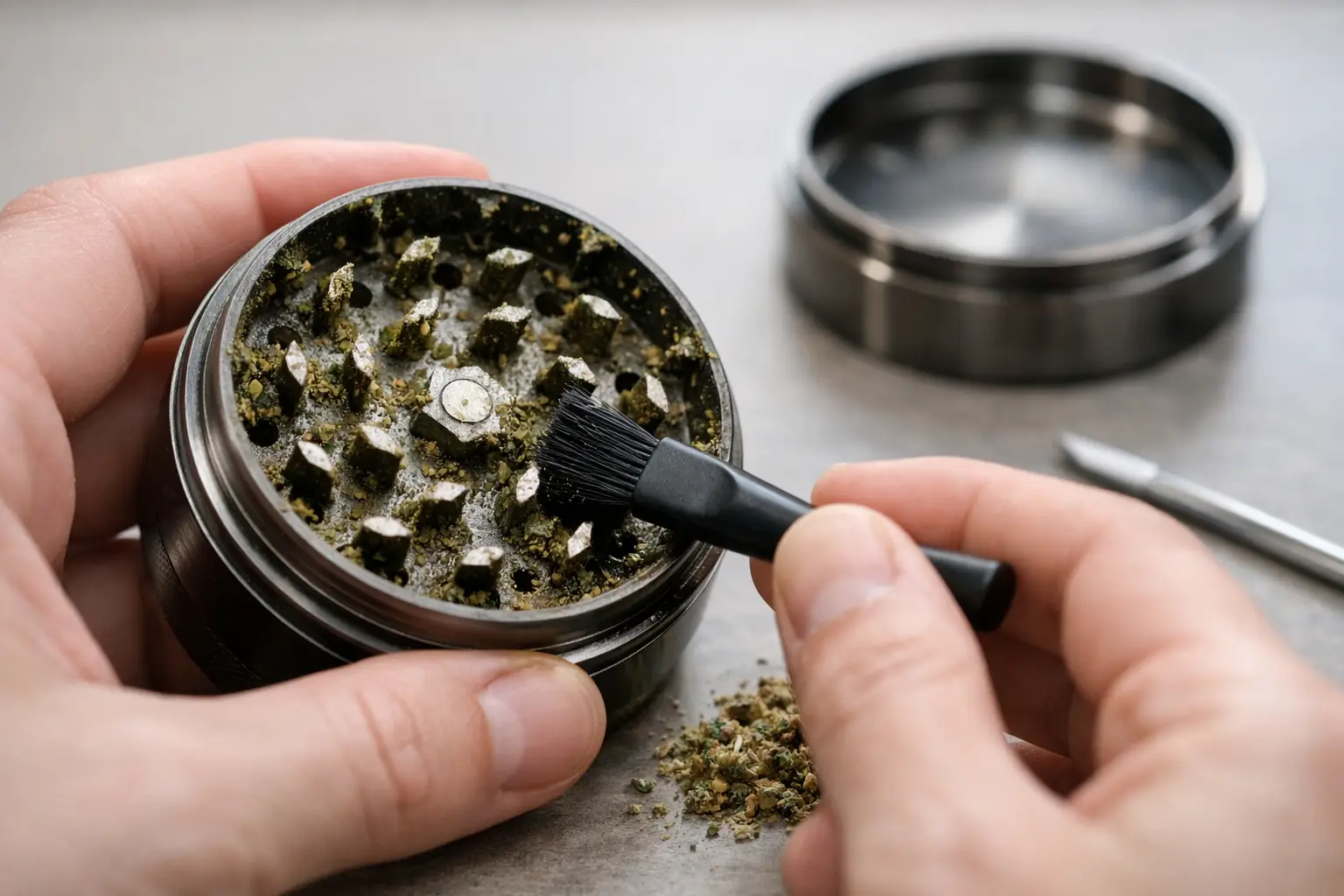
A grinder that starts sticking after a few sessions is not “normal wear.” It usually means resin, moisture, and fine plant material are stacking up on the teeth faster than the grinder can shed them. If you want to know how to prevent grinder teeth buildup, the answer is not just cleaning more often. It starts with how you prep your flower, how you use the grinder, and what kind of grinder you trust in the first place.
Cheap grinders hide the problem until they don’t. They feel fine out of the box, then the teeth start grabbing, the lid gets harder to turn, and the grind gets less consistent. A well-machined grinder resists buildup better, but even a premium grinder performs best when you use it with a little discipline.
Why grinder teeth buildup happens
Buildup is mostly resin mixed with tiny herb particles. As you grind, sticky trichomes and soft plant matter smear across the teeth, especially near the base where pressure is highest. Add a little moisture from fresh flower and a little heat from repeated twisting, and that residue starts acting like glue.
The condition of your herb matters more than most people realize. Overly fresh flower is the biggest culprit because it compresses instead of breaking cleanly. Instead of crisp separation, you get sticky clumps that pack into the teeth and sidewalls. Very dry flower can create a different issue – excess dust and fine particles that settle into every surface. That usually causes less jamming, but it still contributes to grime over time.
Grinder design matters too. Tight machining tolerances, sharp teeth geometry, and smoother interior surfaces give residue fewer places to collect. Poorly machined grinders with rough finishes and sloppy fitment tend to trap material earlier and jam harder.
How to prevent grinder teeth buildup before it starts
The easiest way to reduce buildup is to stop feeding your grinder conditions that create it. That means paying attention to flower texture, load size, and grinding technique.
Start with properly cured, properly dry flower
If your herb feels damp, spongy, or overly sticky to the touch, expect more buildup. Flower should have some give, but it should still break apart cleanly. When it is too wet, the teeth smear resin instead of slicing through material efficiently.
This is where a lot of people create problems without realizing it. They buy fresh, dense flower and drop full buds straight into the grinder. That puts maximum stress on the teeth and walls right away. Breaking larger nugs down by hand first reduces resistance and helps the grinder cut instead of mash.
There is a trade-off here. If flower gets too dry, the grind can become dusty and harsh for some users. The goal is not bone-dry herb. The goal is balanced moisture that grinds cleanly.
Don’t overload the grinding chamber
A packed grinder is a slow grinder. When the teeth can’t move material freely, they compress it into the walls and against each other. That pressure creates a resin paste much faster than a lighter load does.
Smaller batches usually produce a more even texture and less residue on the teeth. It may feel more efficient to cram everything in at once, but in practice, overloading creates drag, uneven grind size, and more cleanup later.
Use a steady twist, not brute force
If the lid meets resistance, forcing it harder usually makes the problem worse. A smooth back-and-forth motion works better than trying to muscle through one aggressive turn. The goal is to let the teeth shear the flower gradually instead of grinding it into a sticky mass.
This is especially true with dense strains. Some flower simply needs a lighter hand and a little patience. Strong grinder design helps, but no grinder performs at its best when it is treated like a vise.
Daily habits that keep teeth cleaner
Knowing how to prevent grinder teeth buildup is really about consistency. Small habits after each use do more than occasional deep cleaning.
After grinding, tap out leftover material instead of letting it sit packed between sessions. Loose particles left on the teeth become the base layer for the next round of resin. A quick brush with a soft-bristle tool keeps that layer from hardening.
It also helps to avoid storing ground herb in the grinder for long periods. That traps plant matter against the metal and gives oils more time to settle onto the teeth and walls. A grinder is a preparation tool, not a storage container.
Temperature can make a difference as well. Warm environments soften resin and make surfaces tackier. You do not need to baby your grinder, but leaving it in a hot car or near constant heat does not help. Cooler conditions generally keep residue firmer and easier to remove.
Cleaning without damaging the grinder
Even if your technique is solid, every grinder needs maintenance. The key is cleaning before residue turns into a hard, sticky coating.
Brush first, deep clean second
For routine maintenance, dry brushing is the first move. A soft brush removes loose herb and surface residue without introducing moisture or chemicals. If you do this regularly, deep cleaning becomes less frequent and less aggressive.
When a deeper clean is needed, disassemble the grinder and clear each section carefully. Focus on the teeth bases, sidewalls, and any edges where material tends to pack in. Avoid using random metal tools that can scratch the finish or alter the fit of machined parts. Scratches create new places for residue to cling.
Be careful with soaking and harsh cleaning methods
A lot of people jump straight to soaking because it is fast. Sometimes that works, but it depends on the grinder’s material, finish, and construction. Harsh methods can strip coatings on lower-quality grinders or affect smooth operation over time.
That is one reason premium materials and precision manufacturing matter. A serious grinder should be built to handle real use and real maintenance. Tahoe Grinder Co machines its grinders from 6061-T6 aluminum with tight tolerances because performance starts with the metal, not the marketing.
Still, even with a premium grinder, gentler routine care beats aggressive rescue cleaning every time.
How grinder design affects buildup
Not all grinders fight buildup equally. If you are constantly cleaning the teeth, the issue may not be your flower or your habits alone. It may be the grinder.
Sharp, well-shaped teeth cut cleaner than blunt or poorly aligned ones. Better cutting action means less crushing, less smearing, and less resin packed onto the contact points. Smooth internal surfaces also matter because rough machining marks give plant material somewhere to catch.
A properly fitted lid and chamber improve consistency too. When tolerances are sloppy, material shifts unpredictably and gets pushed into bad contact zones. Threadless magnetic designs can help here because they eliminate one common place where sticky residue builds and creates frustration.
Configuration plays a role, though it depends on how you use your grinder. A 2-piece grinder keeps things simple and direct, which some users prefer for quick sessions. A 3-piece or 4-piece grinder gives more separation and airflow through the process, which can help manage material movement. There is no universal best option for every smoker, but there is a clear difference between a grinder engineered for repeated use and one made to hit a price point.
Signs you need to change your routine
If your grinder starts feeling gritty, dragging mid-turn, or leaving uneven chunks, buildup is already affecting performance. The same is true if herb starts sticking to the teeth instead of falling through naturally.
At that stage, cleaning helps, but it is worth asking what caused it. Was the flower too moist? Were you overpacking the chamber? Are you letting material sit inside too long? Or are you trying to get premium performance out of a grinder that was never machined to deliver it?
That last question matters. A grinder should not feel disposable. If it jams constantly, wears down quickly, or demands constant workarounds, it is not doing its job.
The best long-term approach to prevent grinder teeth buildup
The real fix is a combination of good flower prep, lighter loading, consistent brushing, and better grinder construction. No grinder stays perfectly clean forever, especially if you use sticky, terpene-rich flower. But buildup should be manageable, not inevitable after every session.
Treat the grinder like a precision tool and it will reward you with a smoother turn, cleaner teeth, and a more consistent grind. And if you are constantly fighting buildup no matter what you do, that is usually your signal that the grinder itself is the weak link.
A great grinder should make your routine easier, not give you one more thing to fix.