
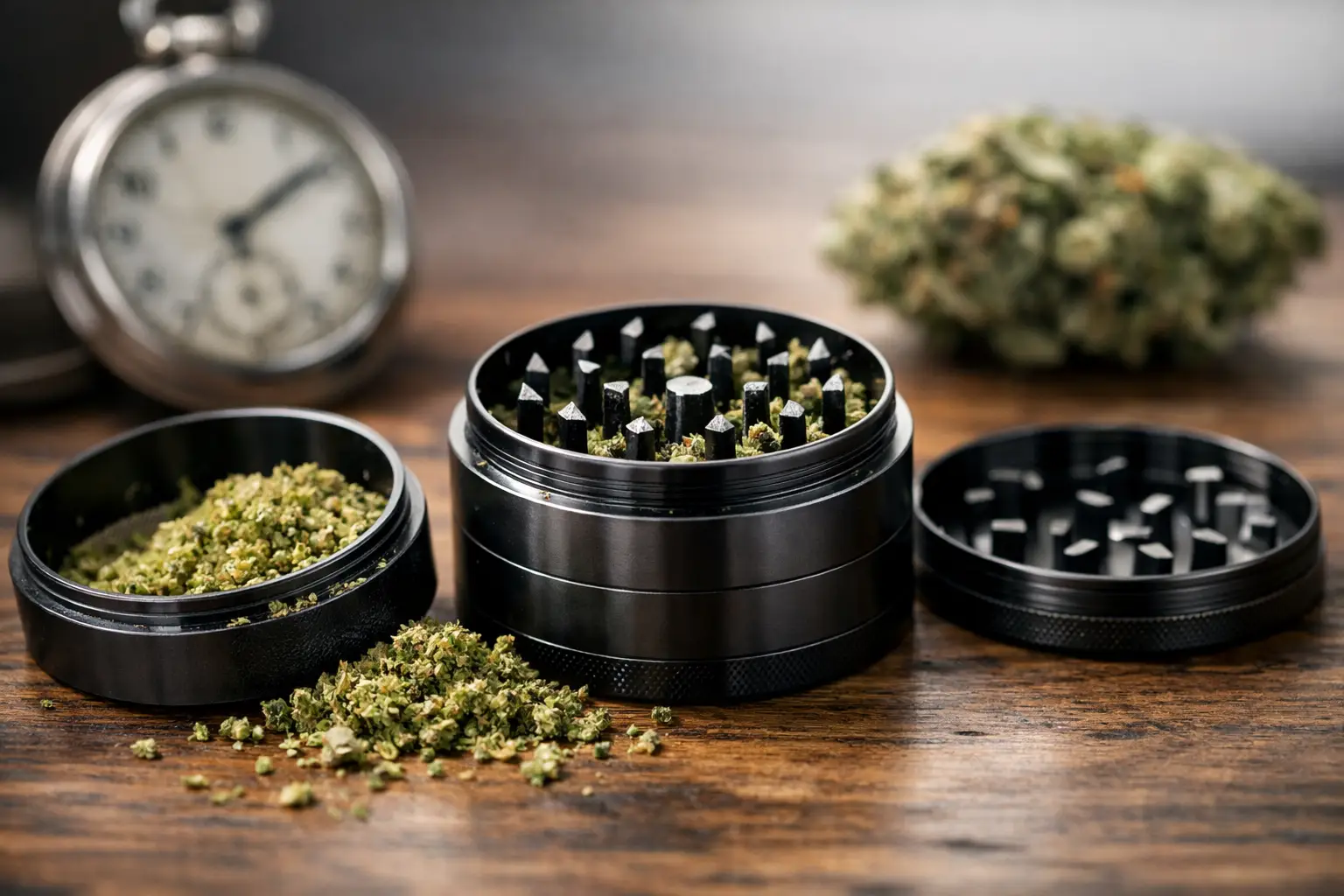
A grinder that binds after a few months, sheds metal dust, or turns every packing session into a forearm workout has already failed its job. So, how long should a weed grinder last? A well-made aluminum grinder should give you years of consistent use – and a precision-machined grinder can realistically last decades when it is built with the right material, teeth geometry, tolerances, and finish.
The wide gap between a disposable grinder and a lifetime tool comes down to manufacturing. Plenty of grinders look acceptable out of the box. Far fewer remain smooth, sharp, and clean after thousands of turns.
How Long Should a Weed Grinder Last in Real Use?
For an occasional consumer, even a decent grinder may appear to last forever because it only sees a few uses a month. For daily consumers, the weak points show up much faster. Low-grade metal teeth dull, painted finishes chip, coarse threads collect residue, and loose-fitting lids begin to wobble or cross-thread.
A cheap zinc alloy grinder may last anywhere from several months to a couple of years before performance becomes frustrating. That does not always mean it stops turning entirely. More often, it becomes noticeably worse: herb gets crushed instead of cleanly cut, the lid sticks, the chambers seize, or flakes begin appearing where they should not.
A quality 6061-T6 aluminum grinder should be a long-term purchase. With normal care, it can remain fully functional for many years. A CNC-machined model with tight tolerances, durable anodizing, and a thread-less magnetic closure eliminates several of the most common failure points before they become problems.
The better question is not simply whether a grinder still turns. Ask whether it still produces an even, reliable grind without sticking, wobbling, shedding material, or making you fight the tool. A serious grinder should perform like a serious tool every time you use it.
What Actually Wears Out a Grinder?
Grinding dried herb is not especially hard on quality aluminum, but the repeated force, friction, plant resin, and pressure expose poor engineering quickly. The parts most likely to fail are the teeth, closure system, threads, screen, and finish.
Dull or damaged teeth
Teeth do the real work. If they are poorly shaped, too thin, or made from soft pot metal, they can round off, bend, or break. Once that happens, the grinder stops slicing through herb efficiently. You will feel more resistance and get an inconsistent texture with more crushed material.
Well-designed teeth should be precisely machined, evenly spaced, and strong enough to maintain their shape over years of use. Sharp does not mean fragile. The goal is a geometry that cuts cleanly while distributing pressure across the grind.
Gummed-up threads and closures
Traditional threaded grinders can work well, but threads are magnets for resin and fine plant material. As buildup accumulates, the top becomes harder to remove, threading feels gritty, and cross-threading becomes more likely. A small manufacturing defect can make this worse from day one.
Magnetic, thread-less designs avoid that friction-heavy interaction. They are faster to open, easier to keep clean, and less likely to become the reason you replace an otherwise good grinder. The magnet must still be properly seated and strong enough to keep the grinder secure in regular use.
Cheap metal and weak finishes
Many bargain grinders are made from zinc alloy, often called pot metal. It is inexpensive to cast, but it does not offer the same durability, machining precision, or long-term confidence as aircraft-grade aluminum. It can corrode, chip, or wear more easily, especially around teeth and threads.
6061-T6 aluminum is a different class of material. It is lightweight, strong, corrosion-resistant, and ideal for precision CNC machining. Add a quality anodized finish and the grinder has far better protection against cosmetic wear and daily handling without relying on paint that can peel or flake.
Screens in multi-piece grinders
A 4-piece grinder adds a pollen screen and lower collection chamber. This setup gives consumers separate ground herb and fine trichome collection, but the screen is another component that needs attention. Screens can clog when resin and fine particles build up, and a cheap screen can tear or pull loose.
That is not an argument against 4-piece grinders. It is a reminder to buy one with a properly fitted screen and to clean it occasionally. If you want the simplest possible long-term setup, a 2-piece grinder has fewer components. If you value separated storage and collection, a quality 4-piece model is worth the added maintenance.
Material and Manufacturing Decide the Lifespan
A grinder is not durable because a product page calls it heavy-duty. It is durable because its material, machining process, and assembly standards support repeated real-world use.
Cast grinders are formed by pouring metal into a mold. This approach is affordable and fast, but it can leave inconsistent surfaces, less precise tooth shapes, and weaker details around the areas that take the most abuse. CNC machining starts with a solid block of aluminum and cuts each component to controlled dimensions. That produces cleaner mating surfaces, more consistent teeth, and a more precise overall feel.
Tight tolerances matter every time you twist the grinder. When the two halves align correctly, herb moves through the teeth as intended instead of catching between poorly matched surfaces. When a lid seats cleanly, it feels secure rather than loose or unpredictable. Those details are not cosmetic. They determine whether the grinder still feels premium after the novelty wears off.
Tahoe Grinder Co machines its grinders in-house in the USA from 6061-T6 aluminum, controlling design, machining, finishing, inspection, and fulfillment rather than treating the grinder as a generic imported accessory. That level of control is why a lifetime warranty can be a meaningful ownership promise instead of marketing filler.
Your Usage Habits Change the Answer
Even the best grinder needs reasonable care. If you force rock-hard, overly dry flower through any grinder, drop it repeatedly on concrete, or leave resin packed into every contact point for months, you are putting unnecessary stress on the tool.
Daily use does not ruin a premium grinder. Neglect and abuse are what shorten its useful life. The most practical maintenance routine is simple: tap out loose material after use, avoid overfilling the chamber, and clean sticky buildup before it turns into a hard layer. A soft brush is useful for teeth and screens. For deeper cleaning, use a method that is safe for anodized aluminum and any installed components, then make sure everything is completely dry before reassembly.
Do not scrape aggressively with a knife or metal tool. It is easy to gouge an anodized surface, damage a screen, or dull the edge of a tooth with the wrong tool. A grinder is built to process herb, not to survive being treated like a pry bar.
Signs It Is Time to Replace Your Grinder
A grinder does not need to be broken in half to be due for retirement. Performance tells the story first. If it takes far more effort than it used to, produces uneven chunks, binds when turning, or leaves visible flakes of coating or metal in the chamber, replace it.
Pay attention to closure problems too. A lid that no longer stays secure, threads that skip or cross-thread, and chambers that refuse to separate without excessive force are not minor inconveniences. They are signs that the grinder is no longer delivering clean, controlled performance.
For a 4-piece grinder, inspect the screen periodically. Replace the grinder or screen assembly if the mesh is torn, sagging, detached, or permanently clogged. Your ground herb should move through the grinder cleanly, not carry contamination from worn components.
Buy Once, Then Maintain It Like a Real Tool
The lowest-priced grinder is rarely the least expensive option over time. Replacing jammed, dull, poorly made grinders every year costs more than buying a properly engineered one that stays smooth for the long haul. It also means putting up with uneven grinds and sticky closures until you finally decide to upgrade.
Choose a grinder based on how you actually consume. A compact 2-piece model is excellent for simple, portable use. A 3-piece design adds a storage chamber. A 4-piece grinder is built for consumers who want separated ground herb and pollen collection. Larger diameters offer more leverage and capacity, while smaller grinders prioritize portability.
Whatever configuration fits your routine, demand quality where it matters: CNC-machined aluminum, durable teeth, clean chamber alignment, a reliable closure, and a manufacturer willing to stand behind the product. The right grinder should disappear into your routine – not because it is forgettable, but because it works perfectly every time you reach for it.