
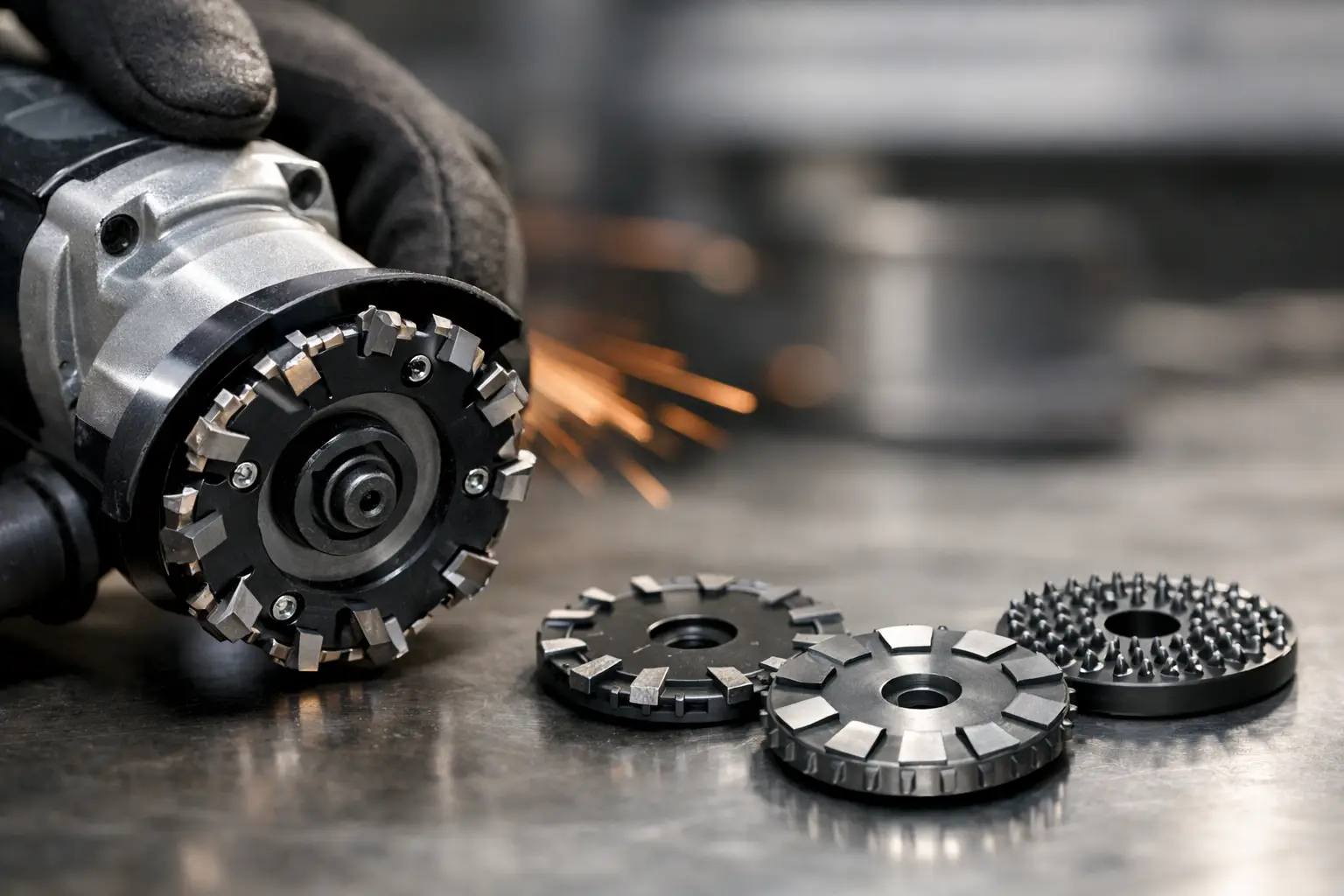
A grinder can be machined from premium aluminum, finished beautifully, and still perform badly if its teeth are wrong. Tooth geometry determines whether your herb breaks down into an even, smoke-ready texture or gets mashed into sticky clumps around the center post. Knowing how to pick grinder teeth means looking past novelty shapes and focusing on cutting action, spacing, chamber design, and machining quality.
The best teeth do not simply look aggressive. They bite into dried herb, pull it through the cutting path efficiently, and leave a consistent result without turning every session into a fight with a jammed lid.
How to Pick Grinder Teeth for Your Herb
Start with the texture you want from your flower. Most smokers want a medium, even grind that packs easily, burns consistently, and does not restrict airflow. The teeth should cut and separate the herb rather than pulverize it into powder. That distinction matters whether you are rolling, packing a bowl, or loading a dry-herb vaporizer.
For most adult consumers, diamond-shaped teeth are the strongest all-around choice. Their angled edges create multiple cutting points as the top rotates, which helps them catch loose buds from different directions. Well-machined diamond teeth are effective on everything from dry, fluffy flower to denser, slightly sticky buds.
Tooth shape alone is not the whole story. A cheap grinder can copy a diamond pattern and still grind poorly because the teeth are dull, inconsistently placed, or poorly aligned between the top and bottom halves. The pattern has to be executed with precision.
Diamond Teeth: The Everyday Performance Standard
Diamond teeth are usually pyramidal, with four sloped faces meeting at a point. That geometry lets the teeth shear herb as opposing rows pass one another. Instead of relying on one sharp blade edge, the grinder creates numerous small cutting zones throughout the chamber.
The practical benefit is a fast, controlled grind. Buds are less likely to skate around untouched, and the top requires less force than it would with shallow, rounded, or widely spaced teeth. This is why diamond teeth remain the go-to configuration for a serious all-purpose cannabis grinder.
Look for teeth with defined points and clean, uniform profiles. They should be substantial enough to resist wear but not so oversized that they crush material against the chamber walls. Big teeth may look tough, but thoughtful geometry beats brute size.
Shark Teeth and Curved Teeth: Useful, but More Specialized
Shark teeth and curved tooth profiles use hooked or swept cutting surfaces. They can grip dense flower effectively and may create a slightly different pull during rotation. Some users like the way these profiles grab sticky buds instead of letting them roll around the chamber.
The trade-off is consistency. A heavily hooked tooth can tear or mash softer herb if the spacing and tooth height are not carefully engineered. It can also trap more residue in tight angles, making cleaning more important. Curved teeth are not automatically better or worse than diamonds. Their performance depends on the complete cutting layout, not the name assigned to the shape.
Flat, blunt, or rounded pegs are generally a weaker choice for anyone who cares about grind quality. They tend to compress herb before breaking it apart, especially as resin builds up. If a grinder needs excessive pressure to do its job, the teeth are not doing enough of the work.
Tooth Count Matters Less Than Tooth Placement
Shoppers often ask for the ideal number of grinder teeth. There is no magic number because chamber diameter changes the equation. A compact grinder needs fewer teeth than a 90mm grinder, while an oversized model needs enough cutting points to keep material moving across the full surface.
What matters is coverage. The teeth should be positioned so there are no large dead zones where herb can sit without contacting an opposing tooth. The center area deserves special attention. If there is too much empty space around the center post, small buds may spin in place instead of getting cut.
At the same time, an overcrowded tooth pattern can work against you. Too many teeth with too little clearance may restrict movement, increase friction, and leave less room for herb to travel through the chamber. Sticky flower needs space to break apart. The right layout balances cutting density with open pathways.
A well-designed grinder uses staggered rows. When the lid turns, the teeth should pass between one another rather than collide tip-to-tip. This creates a continuous shearing action, spreads the load across the chamber, and reduces the chance of a stubborn chunk stopping the entire rotation.
Check the Height, Spacing, and Clearance
Teeth need enough height to engage buds before the top and bottom surfaces compress them. Short teeth often struggle with larger pieces of herb, forcing you to preload tiny fragments or apply more torque. Taller teeth can handle more material, but only when they have adequate clearance and a stable base.
Spacing between teeth affects the final texture. Wider spacing generally produces a coarser result and can handle larger, drier buds quickly. Tighter spacing can produce a finer grind, but it is more prone to clogging when the herb is fresh or resinous. Neither option is universally superior. Choose based on how you use your flower.
For rolling and standard bowls, a balanced medium spacing is usually the best answer. You want enough separation to keep the grinder moving freely, with enough cutting points to avoid oversized chunks. For vaporizer users, a slightly finer and more uniform result may be preferable, but avoid a grinder that turns every load into dust.
The clearance between opposing teeth is equally important. Proper clearance lets teeth pass closely enough to cut while preventing metal-on-metal contact. Poorly machined grinders can have inconsistent gaps, creating a rough feel, uneven grinding, or premature wear. Precision is not cosmetic here. It directly affects the action in your hand.
Material and Machining Decide How Long Teeth Last
Teeth are only as reliable as the material beneath them. Low-grade cast metal, thin anodized mystery alloys, and brittle materials can chip, flatten, or develop rough edges over time. Once teeth lose their defined geometry, grinding becomes slower and less consistent.
CNC-machined 6061-T6 aluminum is a proven premium choice because it is strong, lightweight, corrosion-resistant, and capable of holding precise dimensions. When the teeth are machined as part of the grinder body, rather than glued in or made from a separate weak insert, the cutting surface becomes a durable part of the tool.
A quality finish also matters. Smooth anodized surfaces make it harder for residue to cling compared with rough, porous finishes. No grinder is immune to sticky buildup, especially with high-resin flower, but clean machining and a quality finish make routine maintenance far easier.
This is where manufacturer control separates a real grinder from a generic import. Tahoe Grinder Co machines, finishes, assembles, inspects, and ships its grinders in-house in the USA. That level of control is how a tooth pattern becomes a repeatable performance feature rather than a hopeful design sketch.
Match the Teeth to the Grinder Configuration
Your preferred grinder style changes what you should expect from the teeth. A 2-piece grinder needs teeth that can process herb directly in the main chamber with minimal effort. Since there is no separate collection compartment, easy rotation and a controlled texture are the priorities.
A 3-piece grinder adds a storage chamber beneath the cutting section. The teeth still do the same job, but the hole pattern and transition into the lower compartment affect how quickly ground herb drops through. A good design prevents pieces from hanging up while avoiding oversized openings that let poorly ground material fall through.
In a 4-piece grinder, teeth work alongside a grinding plate and collection system. This configuration is ideal for users who want separated ground herb and fine-particle collection. The teeth should create a consistent enough texture that material passes through the screen area predictably. If the grind is too coarse, it can linger above the plate. If it is excessively fine, it may compact and slow the process.
Larger grinders need especially disciplined tooth layouts. More surface area lets you grind more herb at once, but a large empty chamber with weak tooth coverage is inefficient. An oversized grinder should feel controlled from edge to center, not like it only works when material happens to land in one spot.
Signs You Are Looking at a Bad Tooth Design
You do not need a machine shop to spot warning signs. If the teeth look uneven, have visibly blunt tips, or sit at inconsistent angles, move on. If the pattern leaves broad unworked spaces, expect buds to spin. If the grinder is very light for its size or its teeth look like thin cast pegs, durability is likely an issue.
Also pay attention to the surrounding engineering. A grinder with excellent teeth can still frustrate you if the threads bind, the lid wobbles, or the cutting chamber misaligns. Thread-less magnetic closures are a strong option when properly designed because they eliminate cross-threading and make loading faster. The closure must still hold the halves securely and keep the tooth rows aligned.
The real test is simple: a quality grinder should turn smoothly, process herb with moderate hand pressure, and produce a repeatable texture session after session. You should not have to force it, shake it endlessly, or scrape out packed material after every use.
Pick teeth that are sharp in geometry, evenly spaced, properly staggered, and machined from material built for years of rotation. A grinder is a working tool, not a disposable souvenir. When the teeth are engineered correctly, every other part of the experience gets easier.