
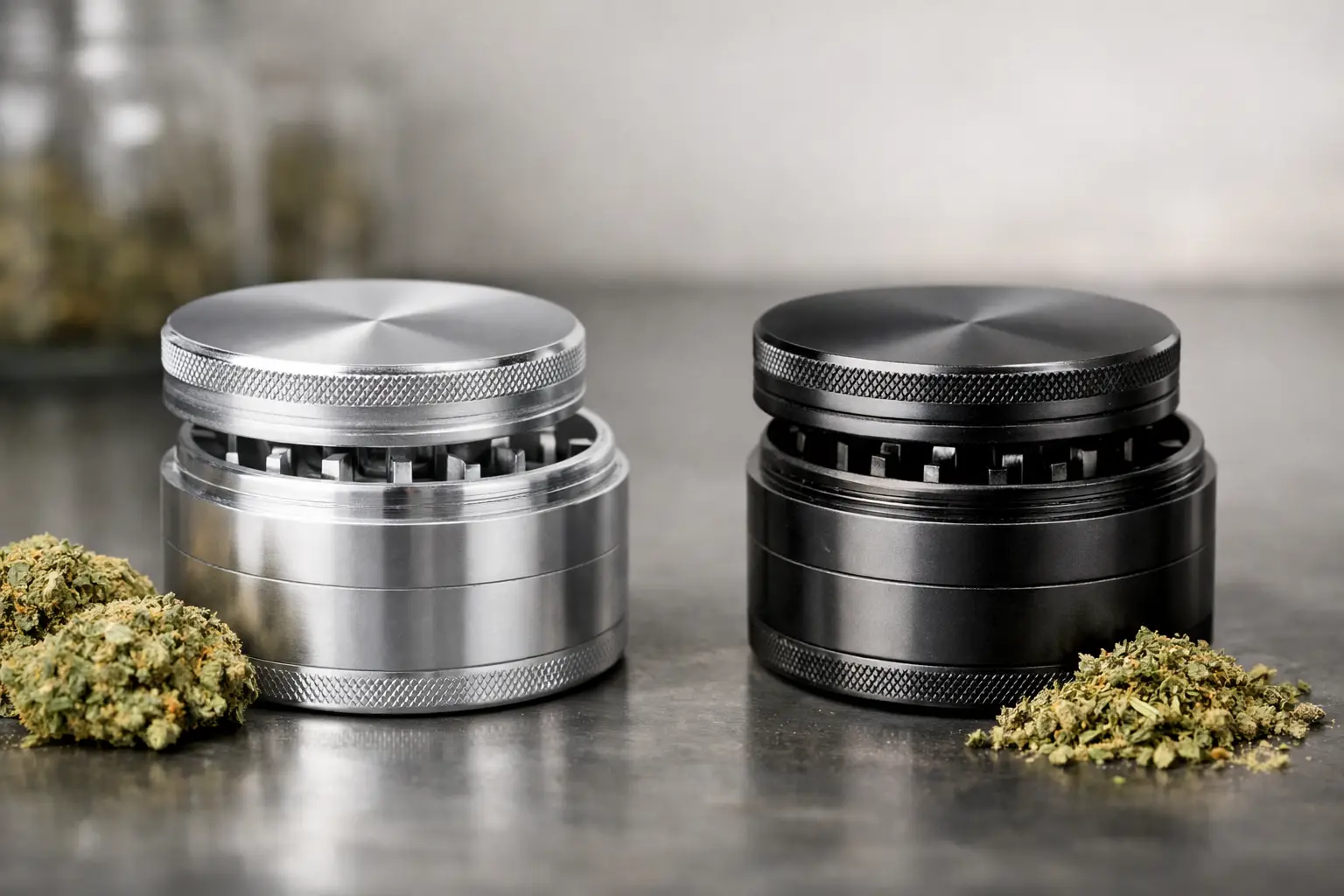
Cheap grinders usually give themselves away fast. The lid starts wobbling, the teeth lose their edge, the threads get gritty, and suddenly a basic prep step turns into a fight. That is why the aluminum vs zinc weed grinder question matters more than most people think. Material affects grind consistency, durability, feel in the hand, and whether your grinder still performs after months or years of real use.
If you want the short version, aluminum is usually the better material for anyone who cares about performance and longevity. Zinc grinders can look decent on day one and hit a lower price point, but they are often built to be cheaper, heavier, and less precise. For a serious cannabis user, that difference shows up quickly.
Aluminum vs zinc weed grinder: the real difference
On paper, both materials can be turned into a functional herb grinder. In practice, they tend to live in different quality tiers.
Most premium grinders are made from aluminum, especially aircraft-grade aluminum like 6061. That is not an accident. Aluminum is light, strong, corrosion-resistant, and well suited to precise CNC machining. Those traits matter because a grinder is not just a container with teeth. It is a moving tool with tight tolerances, repeated friction, and constant exposure to sticky plant material.
Zinc grinders are commonly made through die-casting. That process is cheaper and faster for mass production, but it usually does not deliver the same precision as CNC machining. A zinc grinder can absolutely grind weed, but that does not mean it will do it cleanly, smoothly, or consistently over time.
The difference is similar to the gap between a purpose-built tool and a commodity version of the same tool. Both may work at first. One keeps working the way it should.
Why aluminum dominates premium grinder manufacturing
A well-made aluminum grinder feels different immediately. It is lighter in the pocket, cleaner in operation, and more exact when you turn it. That comes from both the material itself and what manufacturers can do with it.
High-grade aluminum can be machined with tight tolerances, which helps keep the lid aligned, the chambers seated properly, and the teeth positioned for a more consistent cut. That precision reduces wobble, unnecessary friction, and the kind of slop that makes a grinder feel cheap.
Aluminum also gives manufacturers more control over the finish. Anodized aluminum surfaces tend to hold up better than the painted or plated finishes often used on lower-cost zinc grinders. That matters because the finish is not just cosmetic. It affects wear resistance, corrosion resistance, and how clean the grinder stays after repeated use.
For people who grind often, weight is another real advantage. Aluminum is strong without being overly heavy, so larger grinders still feel comfortable in your hand. A grinder should feel solid, not like a paperweight.
Where zinc grinders usually fall short
Zinc grinders exist for one main reason: cost. Die-cast zinc is cheaper to produce at scale, and that makes it attractive for low- to mid-tier products. If your only goal is spending as little as possible upfront, zinc will show up in a lot of options.
The trade-off is that many zinc grinders are less refined where it counts. The teeth may be cast rather than precisely machined. The fit between parts can be rougher. Threads can wear faster. Finishes may chip, fade, or degrade with time. The grinder might still function, but the experience is usually less smooth and less dependable.
Zinc is also heavier than aluminum. Some people mistake that extra weight for quality, but weight alone does not mean better engineering. In grinders, unnecessary heft often just means more bulk in your hand and pocket without a performance benefit.
That said, not every zinc grinder is garbage. A better-built zinc model can outperform an extremely cheap aluminum one. But if you are comparing well-made versions of both, aluminum is generally the stronger long-term choice.
Teeth, tolerances, and grind consistency
This is where material choice stops being abstract. The goal of a weed grinder is not just to shred flower. It is to produce a consistent texture that burns or vaporizes evenly.
Precision-machined aluminum grinders typically have sharper, more uniform teeth and better alignment across the cutting surfaces. That helps the grinder break down herb efficiently instead of smashing it unevenly. You get a more predictable result with less effort.
With zinc grinders, especially lower-end die-cast models, tooth geometry is often less exact. Over time, that can mean duller cutting edges and a rougher grind. Instead of a fluffy, even texture, you may get a mix of chunks, powder, and compressed material.
That inconsistency affects the session. Uneven herb packs worse, burns less evenly, and can make airflow harder to control. A grinder is a prep tool, but it has a direct effect on how the flower performs once it is rolled, packed, or loaded.
Durability over months and years
A grinder gets handled constantly, twisted under resistance, dropped, pocketed, and exposed to resin buildup. If the construction is weak, that abuse adds up.
Aluminum has a strong reputation here because it balances strength with machinability. A quality CNC-machined aluminum grinder is built to hold its shape and keep operating smoothly over long use cycles. When tolerances are right from the start, there is less chance of the parts developing excessive play later.
Zinc can crack or degrade in ways that are harder to ignore once wear sets in. Lower-end zinc grinders are also more likely to suffer from finish issues, stripped threads, or teeth damage after extended use. Again, this depends on build quality, but zinc products are far more common in the disposable end of the market.
For buyers who are tired of replacing grinders every year, this is usually where the decision gets made. The cheaper grinder is only cheaper if you buy it once.
How the finish affects cleanliness and wear
People often focus on teeth and forget the surface. That is a mistake. Weed grinders live in a sticky environment, and resin buildup exposes every weakness in the finish.
Anodized aluminum tends to resist wear and corrosion well, especially when the grinder is machined and finished correctly. It also gives the product a cleaner, more premium feel. The surface is less likely to flake or chip the way painted or plated surfaces sometimes can.
On zinc grinders, finishes vary a lot. Some are coated to improve appearance, but cheaper coatings can wear down with friction and cleaning. Once the finish starts going, the grinder not only looks worse – it usually feels worse too.
A premium grinder should age like a tool, not like a novelty item.
Who should buy zinc, and who should skip it
If you barely use a grinder, want the lowest possible upfront cost, and do not care much about long-term performance, a zinc grinder may be good enough. There is a market for basic tools, and not every buyer needs a premium setup.
But if you grind regularly, care about consistency, or have already dealt with sticky lids, weak teeth, and worn-out threads, zinc is usually a compromise you will notice. Frequent users benefit more from better materials because they put more cycles on the tool. That is where aluminum pulls away.
This is especially true for larger grinders and multi-piece designs. The more moving parts and the more precision involved, the more material quality and machining quality matter. A 2-piece grinder can hide flaws a little longer. A 4-piece grinder with a poor fit usually exposes them fast.
What smart buyers should actually look for
The aluminum vs zinc weed grinder debate matters, but material alone is not the full story. You should also look at how the grinder is made.
CNC machining is a major green flag. So is high-grade aluminum, tight tolerances, a clean finish, and a design that avoids weak points like sloppy threading or cheap assembly. Magnetic closures, well-cut teeth, and quality control matter just as much as the base metal.
That is why serious buyers do not just shop by price or color. They shop by construction. A grinder that is machined in-house, built from 6061-T6 aluminum, and backed with real confidence is playing in a completely different category than a generic cast zinc grinder sold as a throwaway accessory. That is the standard Tahoe Grinder Co builds around, and there is a reason premium users keep moving in that direction.
If you want a grinder that feels better on day one and still performs after heavy use, aluminum is the safer bet. Not because it sounds premium, but because the engineering advantage is real. Buy the material that gives you cleaner cuts, tighter fit, and fewer excuses to replace it later. Your flower deserves better than a grinder built to be average.