
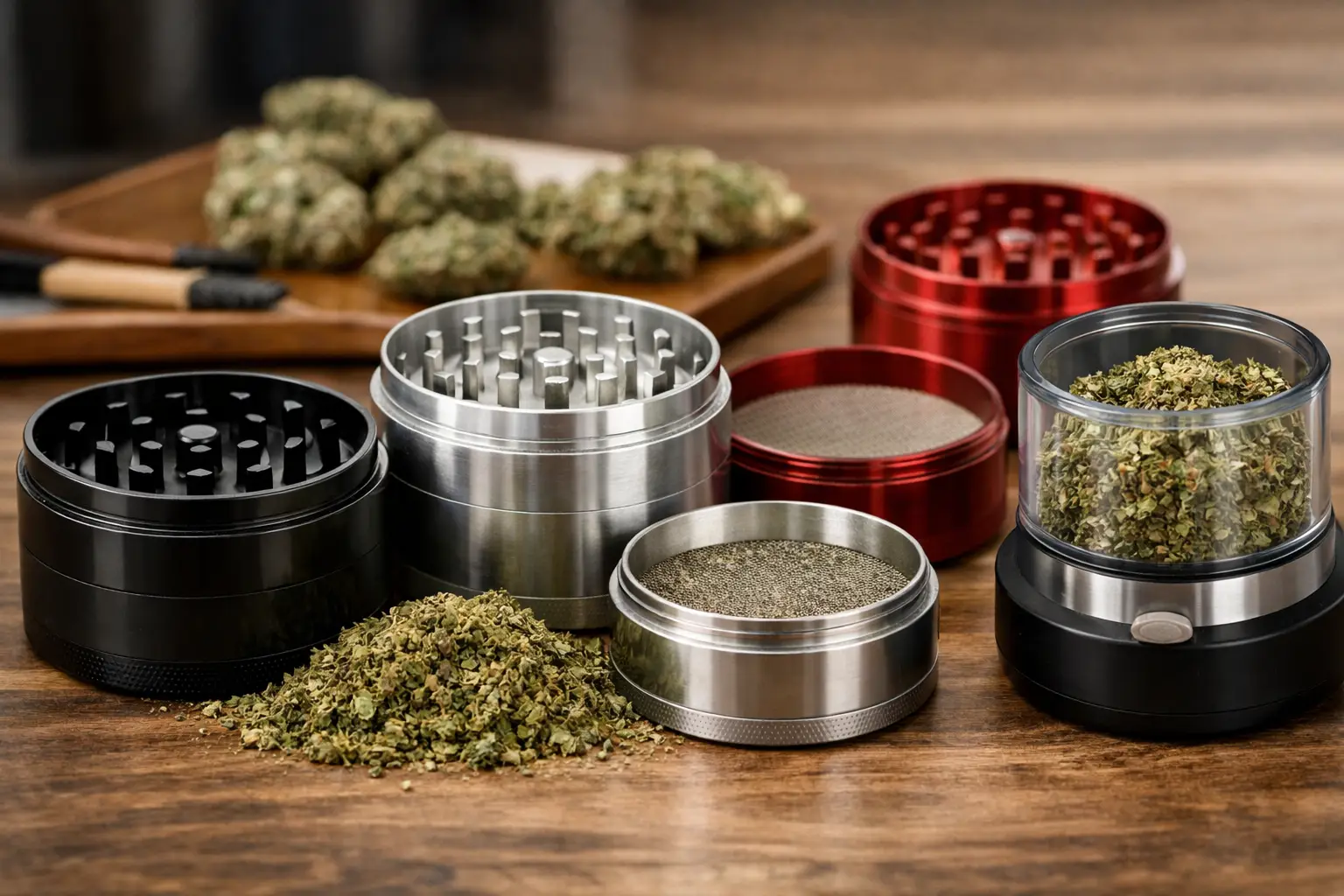
A grinder can feel fine right up until you load up for a bigger session and the whole thing starts fighting you. The teeth clog, the lid slips, the grind turns chunky on one side and powdery on the other, and suddenly prep takes longer than the session itself. If you’re trying to find the best grinder for large sessions, the real question is not just capacity. It is whether the grinder stays smooth, consistent, and controlled when you ask more of it.
That is where cheap grinders usually get exposed. Small-capacity models and poorly machined imports can get through light personal use, but larger bowls, group sessions, or back-to-back rolls demand better engineering. A serious grinder for high-volume use needs room to work, sharp tooth geometry, stable alignment, and a build that does not flex or bind when packed with herb.
What makes the best grinder for large sessions?
The short answer is diameter, tooth design, and machining quality. Most people start with size, and that makes sense. A larger grinder gives you more grinding surface, more leverage, and more capacity per turn. That means less refilling, fewer rotations, and a faster prep cycle when you are breaking down enough flower for several bowls or a stack of rolls.
But size alone is not enough. A wide grinder with mediocre teeth still produces mediocre results. When the tooth pattern is poorly spaced or dull, larger loads can compact instead of shred. That creates resistance, uneven texture, and wasted time. The best performers use precise tooth geometry that cuts efficiently across the full chamber instead of just mashing material toward the edges.
Machining quality matters just as much. Tight tolerances keep the halves aligned under pressure. That translates to a smoother turn, a cleaner cut, and less frustration when the grinder is loaded near capacity. If you have ever used a grinder that starts scraping or wobbling during a heavy grind, you have already seen what loose tolerances look like in practice.
Large diameter beats small diameter for session prep
For larger sessions, a grinder in the oversized range has a real advantage. More diameter means more teeth engaging the herb at once and more leverage in your hand. A properly built 90mm grinder feels different immediately. You are not forcing it through a dense load. You are controlling it.
That extra space also helps preserve consistency. In a cramped grinder, larger pieces get trapped and recirculated unevenly. Some sections get overworked while others stay chunky. A wider chamber gives flower more room to move across the cutting surfaces, which helps produce a more uniform texture. That matters if you care about even burning in a joint, smoother airflow in a bowl, or consistent packing in a cone.
There is a trade-off, though. Oversized grinders are less pocket-friendly and can feel excessive for someone who only preps a single personal bowl at a time. If your sessions are usually solo and light, a mid-size grinder may be enough. But if you regularly grind for multiple people or want fewer reloads during prep, larger diameter is the smarter tool.
Why tooth shape matters more than people think
A grinder’s teeth do not just break herb apart. They determine how efficiently the grinder feeds, cuts, and clears material. For large sessions, that becomes the difference between a grinder that stays smooth and one that gums up halfway through.
Well-designed teeth grab flower quickly and shear it into an even, usable texture. Poorly designed teeth tear inconsistently, create unnecessary drag, and leave more material stuck between the cutting surfaces. The problem gets worse with bigger loads because the grinder has to manage more contact points at once.
This is also why consistency in manufacturing matters. If the teeth are not machined cleanly and placed precisely, performance drops. A serious grinder should feel intentional, not random. When every tooth is doing its job, large loads break down with less effort and less waste.
2-piece, 3-piece, or 4-piece for bigger sessions?
This depends on how you use your flower.
A 2-piece grinder is direct and fast. You grind, open, and use the material right away. For people who want the fewest moving parts and the quickest workflow, a premium 2-piece can be excellent for larger sessions, especially if the diameter is generous. There is less to clean, less to assemble, and less to slow you down.
A 3-piece adds a storage chamber, which helps if you like to grind more at once and keep it ready. That can be useful for longer sessions or nights when you want to prep once and stop thinking about it.
A 4-piece adds a kief screen and bottom chamber. Some users love that setup because it separates material over time and gives you more control over what you collect. Others prefer a simpler build because screens can add maintenance and slightly change how quickly material moves through the grinder. Neither option is universally better. If maximum speed and simplicity are the goal, fewer pieces can be an advantage. If your routine includes storage and separation, the extra chamber earns its place.
The material should be non-negotiable
If you are shopping for the best grinder for large sessions, skip soft metals and mystery alloys. Heavy use exposes weak materials fast. Threads wear down, teeth lose their edge, and the body can deform just enough to create friction and misalignment.
High-grade aluminum is the standard for a reason. It gives you strength without unnecessary weight, resists corrosion, and holds precise machining well. 6061-T6 aluminum, in particular, has the kind of structural integrity that makes sense in a premium grinder built for repeat use. It is not just about durability on paper. It is about how the grinder feels after months and years of actual grinding.
The finish matters too. A clean, well-executed finish helps the grinder resist sticking and makes it easier to maintain. That becomes more important when you are processing larger amounts and creating more residue over time.
Threadless magnetic designs have a real advantage
For larger sessions, speed matters. So does reliability. Traditional threaded grinders can work well, but threads are also one of the areas where cheap construction starts to show wear. Cross-threading, binding, and residue buildup can turn a simple tool into a hassle.
A strong threadless magnetic design simplifies the experience. You open it faster, close it faster, and avoid one of the common failure points entirely. That is especially useful when the grinder is in regular rotation and sees heavier use. The lid stays secure, access is quick, and the workflow feels cleaner.
This is one of those details that sounds minor until you use it every day. Then it stops feeling like a feature and starts feeling like the obvious way the tool should have been built from the start.
The best grinder for large sessions should still be easy to clean
High-capacity grinding creates more buildup. Resin, fine particles, and sticky flower can all reduce performance over time. A grinder built for larger sessions should be able to handle heavy use, but it should also be designed so maintenance does not become a chore.
Simple internal geometry helps. So does a finish that does not hold onto residue unnecessarily. Removable screens can be useful if you choose a 4-piece model, but they should fit properly and not feel flimsy. Magnetic closure systems also reduce the amount of threaded residue you have to deal with.
A premium grinder is not one that never needs cleaning. It is one that returns to peak performance without a fight.
What to avoid when comparing options
If a grinder is marketed mainly on color, novelty, or price, be careful. For large sessions, weak design gets exposed fast. Thin walls, sloppy tooth patterns, poor alignment, and generic manufacturing all show up in the grind quality.
You should also be skeptical of oversized grinders that feel big but do not feel engineered. A larger body does not automatically mean better output. If the internal design is mediocre, all you have is more metal around the same old problems.
This is where direct manufacturing matters. A company that controls design, machining, finishing, inspection, and shipping has far more control over consistency than a reseller moving generic inventory. That difference shows up in the hand and over the long haul.
Tahoe Grinder Co builds around that idea – precision CNC machining, durable 6061-T6 aluminum, threadless magnetic designs, and a lifetime warranty because a grinder built correctly should not be disposable.
So what should you actually buy?
If your sessions are regularly shared, if you roll multiple pieces at once, or if you are tired of stopping mid-prep to refill a tiny grinder, go bigger. Look for a large-diameter grinder with sharp, well-spaced teeth, premium aluminum construction, and machining that stays smooth under load. If you want the simplest workflow, a large 2-piece can be a strong answer. If you want storage or kief separation, step into a 3-piece or 4-piece without compromising the build quality.
The right grinder for large sessions should make prep faster, not just possible. It should feel controlled when fully loaded, deliver a consistent grind, and keep performing after the novelty wears off. Once you use a grinder that is actually engineered for volume, it becomes very hard to go back.
Buy for the way you really smoke, not for the way cheap grinders are marketed. If your sessions run big, your grinder should be built the same way.