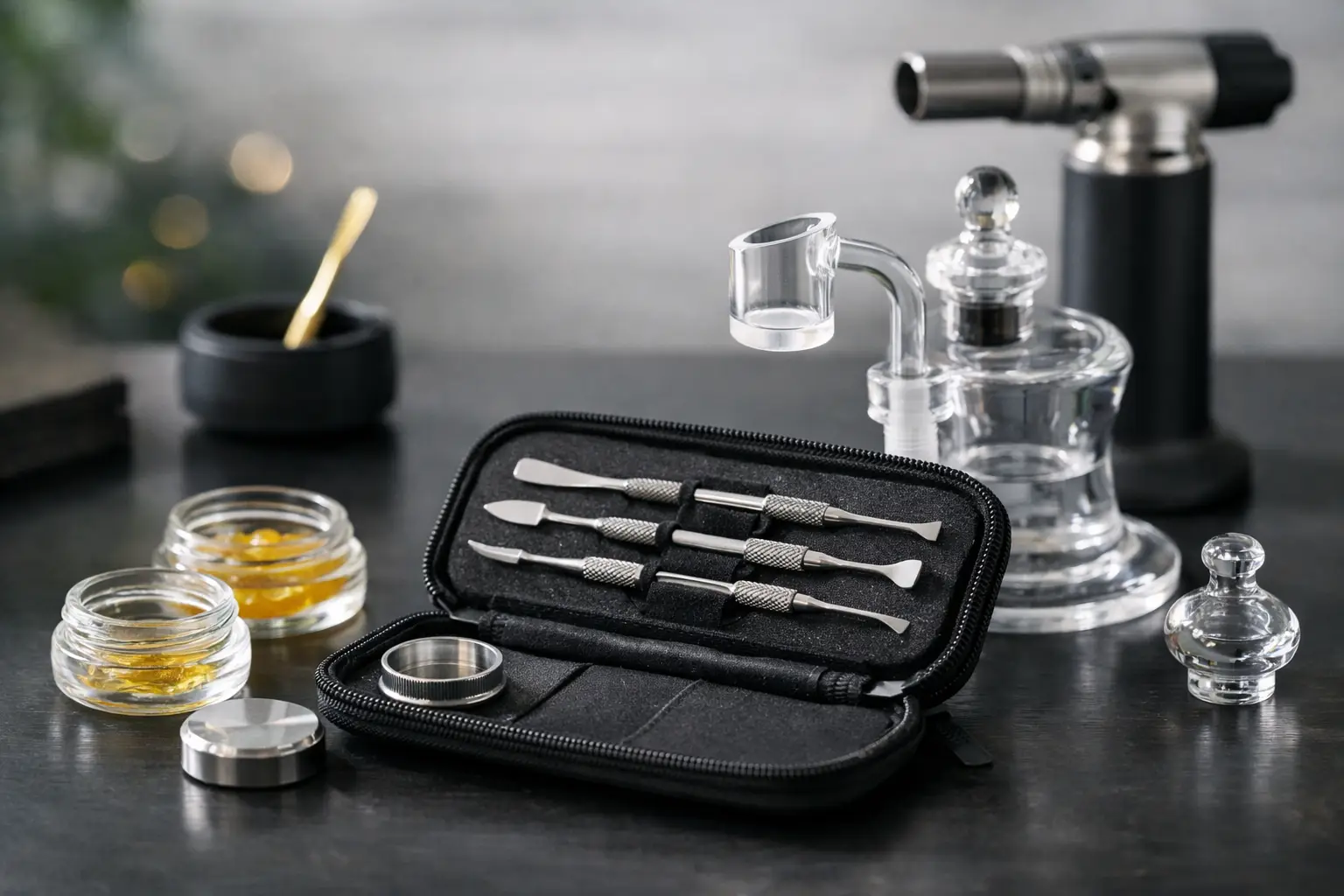
A bad dab tool shows its flaws fast. It smears instead of scooping, drags sticky concentrate across the jar rim, and makes a clean setup feel messy in one session. A good dab tool set for concentrate does the opposite – it gives you control, keeps your material where you want it, and makes every load more consistent.
That matters more than people think. Concentrates are not forgiving. Texture changes with temperature, terpene-rich extracts can get runny, and dense materials can cling to the wrong surface if the tool geometry is off by a little. If you care about clean handling, efficient loading, and less waste on your rig station, the tool set is not an extra. It is part of the performance.
What a dab tool set for concentrate actually needs to do
The job sounds simple until you use a cheap tool for a week. You need a tip that can pick up material without crushing it, a shaft that feels stable in hand, and a finish that releases concentrate cleanly instead of holding onto it. The best sets also give you more than one working end, because not every concentrate behaves the same.
Shatter, wax, crumble, budder, rosin, and sauce all ask for something different. A pointed tip can help break off a precise piece of shatter. A flat scoop works better for softer waxes. A small paddle gives you more control with buttery textures that want to spread instead of lift. If a set gives you only one generic shape, you will notice the limitation quickly.
There is also the issue of repeatability. Serious consumers do not just want to move concentrate from jar to banger. They want the same amount, loaded the same way, without sticking, flinging, or overhandling the material. That is where a well-made tool set separates itself from novelty accessories and gas station hardware.
Material quality is not a small detail
If you are shopping for a dab tool set for concentrate, start with the material before you start looking at colors or packaging. The tool is going to contact sticky, terpene-heavy extracts repeatedly, and it needs to stay smooth, rigid, and easy to clean.
Stainless steel is the safe standard for a reason. It offers good rigidity, solid corrosion resistance, and a surface that can be cleaned without much drama. It also holds up over time, which matters if you use concentrates regularly and do not want tips bending or edges dulling out after a month.
Titanium has its fans because it is light and durable, but the advantage depends on the actual machining and finish quality. Poorly finished titanium tools can still feel rough or inconsistent. In other words, material alone does not guarantee performance. Execution does.
Glass looks clean and can work well for certain users, but it is less practical for people who want an everyday station that can take real use. It is easier to chip, easier to lose confidence in, and not ideal if you prefer tools with a little more pressure and control in hand.
Silicone has a place around concentrates, but usually not as the actual precision tip. It is more useful for containers, mats, or support accessories than for the business end of a dab tool. If you want accuracy, rigidity still wins.
Tip styles matter more than set size
A lot of buyers assume a bigger set is automatically better. Not necessarily. What matters is whether the tool ends actually cover the textures you use most.
For firmer concentrates, pointed and spear-style tips give you precision. They let you chip, lift, and place smaller amounts with less mess. For softer concentrates, a scoop or spoon tip usually performs better because it supports the material instead of slicing through it.
Flat paddle tips sit in the middle and tend to be the most versatile. They can spread, lift, and guide material with more control than a sharp point, especially if your concentrate changes consistency with room temperature. Ball tips and specialty heads can be useful, but they are often more niche than essential unless you already know exactly how you like to load.
The best set for most users is not the one with the most pieces. It is the one with smart range. Two to four well-machined tool profiles will outperform a bloated set of gimmicky shapes every time.
Ergonomics and balance separate premium tools from cheap ones
This is where many low-end accessories fall apart. The tip might look fine in a photo, but once it is in your hand, the handle is too thin, the balance is off, or the finish feels slick in the wrong way.
A good dab tool should feel stable the moment you pick it up. That means enough body to control the tip without overgripping, enough length to keep your hand clear of heat, and enough weight to feel deliberate without becoming clunky. Thin, feather-light tools can feel cheap because they are cheap. They flex more, control less, and tend to wander when you need precision.
Balance also affects how cleanly you can load. When a tool is too handle-heavy or too tip-light, small movements become exaggerated. That is where people start tapping the banger rim, smearing the sidewall, or dropping material early. Better machining creates better control, and better control wastes less concentrate.
Cleanability is part of performance
A tool that is annoying to clean becomes a dirty tool. Once residue starts building up on the tip or along rough-machined edges, every session gets a little less precise. Your concentrate picks up old material, your jar rims get dirtier, and the whole process feels less controlled.
Smooth surfaces matter. Clean transitions matter. Sharp decorative grooves, unnecessary texturing, and rough finishing can all create places where concentrate hangs up. That might look interesting on a product page, but it does not help at the station.
If you use multiple concentrates, hygiene matters even more. Rosin, resin, and wax each leave different residue patterns, and flavor carryover is real. A clean, simple tool shape with quality finishing is easier to wipe down and easier to reset between sessions.
One tool or a full set?
It depends on how you actually consume. If you use one texture almost all the time and your setup stays simple, a single well-made dabber can be enough. But for anyone rotating textures, sharing a station, or keeping a more complete setup, a set makes more sense.
The practical advantage is not just variety. It is specialization. You keep a sharper tip for firmer material, a scoop for soft extracts, and a backup tool ready while another is being cleaned. That creates a cleaner workflow and reduces the temptation to force one bad tool to do every job.
For regular users, a set also tends to age better than a single overused piece. You spread wear across multiple tools, maintain cleaner handling, and keep better consistency over time.
What to avoid when buying a dab tool set for concentrate
The fastest way to waste money is to buy based on appearance alone. Flashy finishes, oversized kits, and generic listings can make a weak set look premium. Once it arrives, the problems are obvious – poor tip symmetry, rough edges, loose tolerances, and low-grade construction that feels disposable.
Watch for tools that are too ornate for their own good. Extra cutouts, gimmick shapes, and novelty styling usually add cleaning problems without adding control. The same goes for ultra-cheap bundled sets. If the price looks suspiciously low for multiple pieces, something gave way in the manufacturing.
You should also be skeptical of tools that do not clearly show their working ends. If the seller is hiding the actual tip geometry behind lifestyle shots, there is usually a reason. With concentrate tools, the business end is the whole point.
Matching the tool to your setup
Your banger size, your preferred loading style, and even your station layout should influence your choice. Longer tools can help if you want more distance from heat or use larger quartz pieces. Shorter tools may feel more direct for cold-start users or compact setups, but they need solid grip and control to avoid becoming awkward.
If you tend to preload carefully and care about clean placement, favor tips with more defined geometry. If you work fast and switch between textures, versatility becomes more important than surgical precision. There is no universal perfect profile. There is only the right tool for how you actually consume.
That is the broader point. Premium accessories are not premium because the branding says so. They are premium when the design, machining, and daily use all line up. That is the same standard serious consumers should apply across their setup, whether they are buying grinders, trays, mats, or dab tools from a performance-first manufacturer like Tahoe Grinder Co.
A well-made dab tool set should disappear into the routine. No sticking, no fighting the material, no second-guessing the tip. Just clean control, session after session. Buy for function first, and you will feel the difference every time the jar opens.