
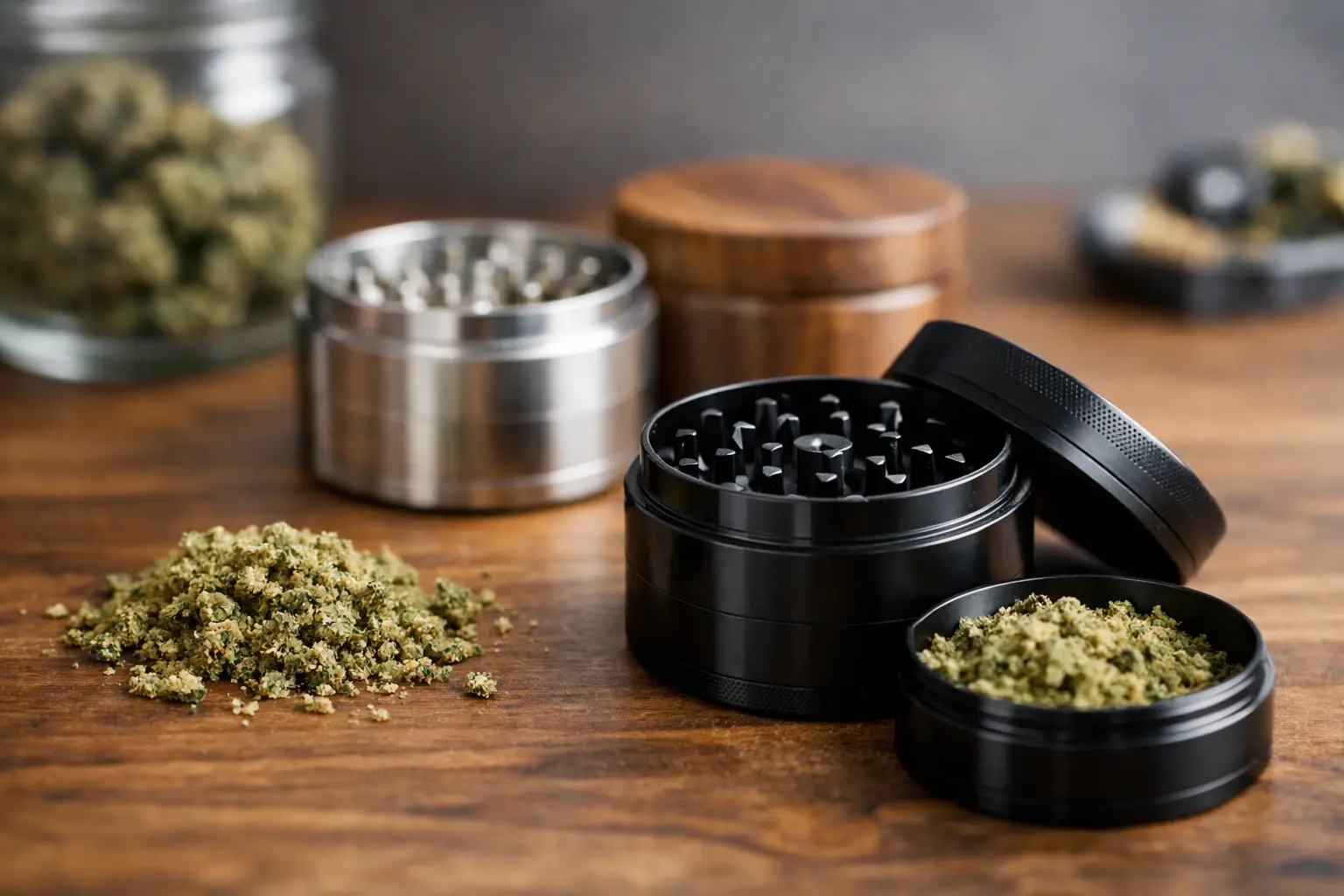
A bad grinder tells on itself fast. The teeth clog, the lid sticks, the threads start grinding against each other, and suddenly a simple prep step turns into a chore. If you’re trying to figure out how to choose a weed grinder, the right answer is not the cheapest one on the page. It’s the one that gives you a consistent grind, holds up under real use, and keeps working month after month without fighting you.
That starts with understanding what actually affects performance. Most grinders look similar at a glance, but they do not perform the same. Material quality, tooth design, chamber layout, tolerances, and closure style all change how the grinder feels in your hand and how your flower comes out on the other side.
How to Choose a Weed Grinder Based on Your Smoking Style
The best grinder for one smoker can be the wrong grinder for another. If you mostly roll joints and want a fluffy, even texture, your priorities may be different from someone packing bowls or collecting kief. Before you compare finishes or colors, think about how you actually use your flower.
If you want something simple and compact, a 2-piece grinder makes sense. It grinds and that’s it. Fewer parts mean a more direct experience, less bulk in your pocket, and less cleaning overall. For casual smokers or anyone who values speed over extra storage or separation, this setup can be the right move.
A 3-piece grinder adds a storage chamber beneath the grind plate. That gives you a little more convenience without getting overly complex. It’s a practical middle ground if you want ground herb held separately and ready to use.
A 4-piece grinder is the most versatile option for many buyers because it separates the ground flower and includes a screen for finer particles. That added chamber matters if you like organization, want a cleaner workflow, or appreciate the option to collect kief over time. The trade-off is size and a few more parts to maintain, but for many regular users, the added function is worth it.
Material Is Not a Detail. It’s the Whole Game.
If you want a grinder that feels good for a week, almost anything can pass. If you want one that still performs after heavy use, material becomes the first serious filter.
Plastic grinders are cheap for a reason. They wear down fast, the teeth can deform, and the overall feel is flimsy. They’re fine for occasional emergency use, not for anyone who actually expects performance.
Zinc alloy grinders tend to look better than they perform. They are common in lower-end products because they are inexpensive to cast, but they usually lack the precision and durability that define a premium grinder. Over time, tolerances tend to feel looser, coatings can wear, and the grind can become less consistent.
High-grade aluminum is where serious grinders separate themselves. A well-made aluminum grinder is lighter than steel, far more durable than plastic, and capable of precise machining that creates a smoother, more reliable action. 6061-T6 aluminum, in particular, is prized because it combines strength, low weight, and excellent machinability. When a grinder is built from that kind of material and machined correctly, you feel it immediately. The turn is cleaner. The fit is tighter. The tool feels engineered, not just assembled.
Pay Attention to Teeth Design and Cutting Performance
Most shoppers underestimate tooth geometry. They should not. Teeth do the actual work, and poor teeth design can ruin the entire experience even if the grinder looks premium from the outside.
You want teeth that cut efficiently and produce a consistent texture rather than crushing the flower unevenly. Sharp, well-spaced teeth help move herb through the grinder instead of compacting it into a sticky mess. Too few teeth can make grinding slow and uneven. Too many can overwork the flower or create unnecessary resistance, especially with denser buds.
This is also where machining precision matters. If the teeth alignment is off, the grinder can bind or shred inconsistently. Good grinders are built to maintain smooth rotation under pressure, not just when they’re empty on a product page.
Size Changes More Than Capacity
A lot of people choose grinder size based only on how much flower it can hold. That’s part of it, but not the whole decision.
Smaller grinders are easier to carry and store. They work well for solo sessions, travel, and lighter daily use. The trade-off is leverage. A compact grinder gives you less turning force, which can matter when the flower is sticky or dense.
Larger grinders give you more grinding surface, more capacity, and often a smoother, easier turn because your hand has better grip and leverage. They are especially useful if you prep larger amounts at once or simply want a more comfortable, controlled action. Oversized grinders can feel like overkill for some users, but for others they are the difference between a grinder that gets used and one that gets avoided.
Threaded vs Magnetic Closures
This is one of the clearest quality-of-life differences in modern grinder design. Traditional threaded grinders can work well, but they also create one of the most common frustrations in the category. Threads collect residue. Residue increases drag. Drag turns a simple open-and-close motion into a sticky, irritating one.
Magnetic designs eliminate that problem at the top closure. A strong magnetic lid is faster, cleaner, and easier to use day after day. It also removes thread wear from one of the most frequently handled parts of the grinder. If you have ever dealt with cross-threading or a lid that feels gritty after a few weeks, this feature is not a gimmick. It’s a real performance upgrade.
The Finish and Tolerances Matter More Than the Graphics
A grinder can have flashy artwork and still perform like junk. Don’t confuse surface style with build quality.
What matters is how precisely the parts fit together. Tight machining tolerances create smoother rotation, better alignment, less wobble, and a cleaner feel overall. Loose tolerances lead to inconsistency, rattling, and premature wear. This is one reason premium grinders cost more. Precision takes better materials, better manufacturing control, and better inspection standards.
The finish matters too. A durable anodized finish helps resist wear and keeps the grinder looking sharp after repeated use. More importantly, it reflects a product that was built with long-term ownership in mind, not quick turnover.
How to Choose a Weed Grinder Without Overpaying for Hype
Price matters, but context matters more. A grinder that costs less upfront can easily cost more over time if it jams, dulls, chips, or needs replacement after a few months.
The smarter way to judge value is to ask what you’re actually buying. Are you getting quality aluminum or cheap cast metal? Precision-machined parts or generic mass production? A grinder backed by a real warranty or one that becomes your problem the moment it arrives?
This is where a lot of buyers get burned. They compare grinders by diameter and price alone, even though the real difference is manufacturing quality. Two grinders can look almost identical in photos and feel completely different in use. One turns clean and cuts evenly. The other drags, binds, and starts wearing down right away.
A premium grinder should justify its price through performance, durability, and confidence. If the grinder is made in-house, inspected closely, and backed for the long haul, that’s not marketing fluff. That’s part of the product.
What Serious Buyers Should Look For
If you want a grinder you’ll still respect after the novelty wears off, focus on the details that affect daily use. Look for high-quality aluminum construction, precise machining, sharp and efficient teeth, and a configuration that matches how you actually smoke. Think about size in terms of comfort and leverage, not just storage. If convenience matters, magnetic closure designs are hard to beat.
It also makes sense to look at who made the grinder. Brands that control their own production usually have a better handle on consistency than sellers pushing generic inventory from unknown factories. When a company machines, finishes, assembles, and inspects its own grinders, there is less guesswork in the final product. That’s a major reason performance-focused buyers gravitate toward specialists like Tahoe Grinder Co instead of random smoke shop listings.
The right grinder should feel like a tool, not a compromise. It should make prep faster, cleaner, and more consistent. And once you use a well-built grinder with real machining behind it, the cheap ones stop feeling like bargains. They just feel cheap.
Choose the grinder that fits your routine, respects your flower, and is built to keep performing long after the first few sessions. That’s the one you’ll actually keep.