

Buying a weed grinder online is tricky. You can’t feel tolerances, test rotation, or see how it grinds. All you have are photos, specs, and marketing claims—and a lot of those are misleading.
The good news is that high-quality grinders leave fingerprints.
If you know what to look for, you can spot quality—or spot junk—before you ever click “add to cart.”
This guide shows you how to evaluate grinders online, what specs actually matter, and the red flags that usually mean disappointment.
Start With the Photos (They Tell You More Than Specs)

High-quality grinders tend to show more—cheap ones hide details.
What GOOD Grinder Photos Show
Look for listings that include:
- Close-ups of the teeth
- Interior chamber shots
- Screens (if applicable)
- Threads or mating surfaces
- Magnet placement
- Multiple angles, not just one hero shot
If a brand is confident in its machining, it will show it.
You’ll see this transparency on grinders like those shown here:
https://tahoegrinderco.com/product-category/all-products/
Red Flag: Exterior-Only Photos
If all you see is:
- Closed grinder
- One angle
- Heavy filters or lighting
That usually means the inside isn’t worth showing.
If teeth, screens, or threads aren’t visible, assume they’re generic or poorly finished.
Teeth: The #1 Visual Indicator of Quality
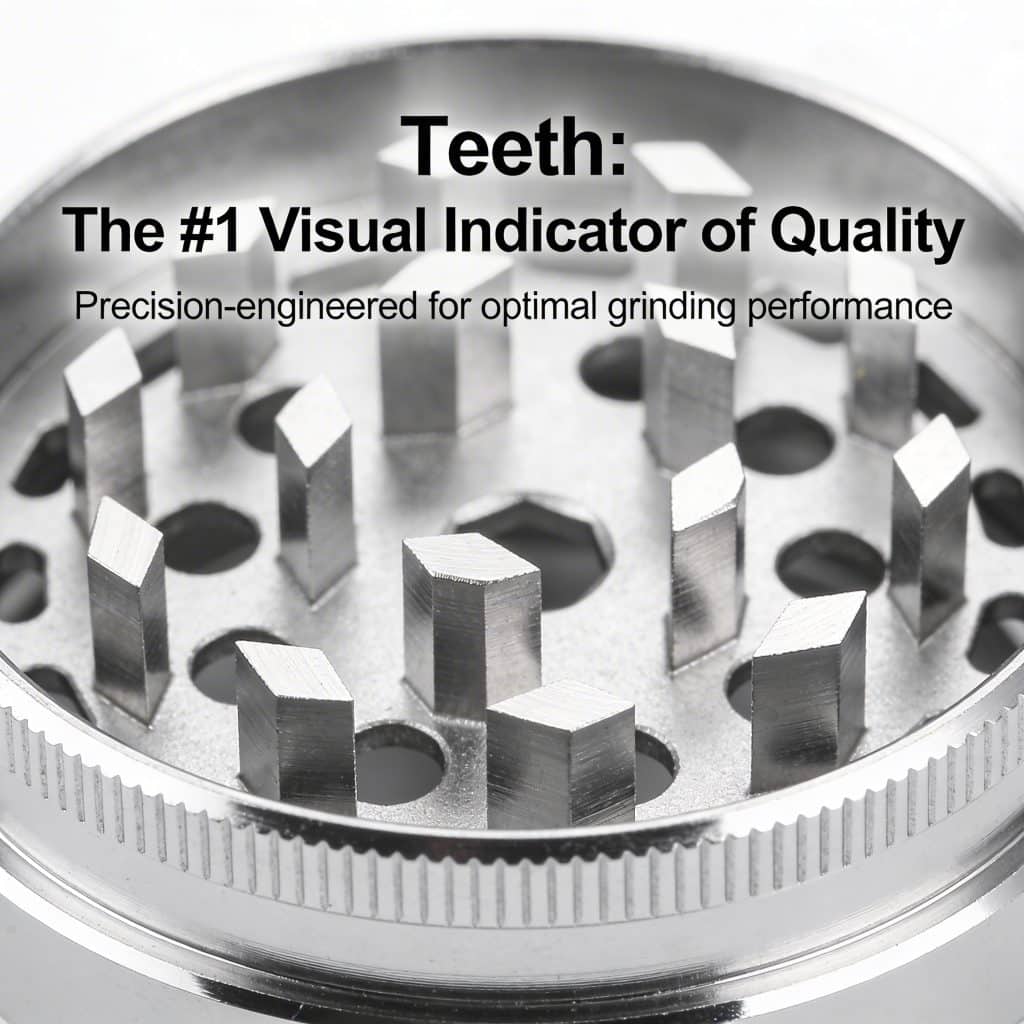
Teeth matter more than almost any other feature—and photos can reveal a lot.
What High-Quality Teeth Look Like
- Clean, sharp edges
- Consistent shape and spacing
- Machined (not rounded or bubbly) appearance
- Even depth across all teeth
Well-machined teeth look intentional.
Red Flag: “Aggressive” or Random Teeth
Watch out for:
- Too many teeth packed tightly
- Rounded or dull-looking edges
- Irregular spacing
- Teeth that look cast, not cut
These grinders shred flower instead of slicing it, creating dust and clogging downstream.
Screens: Look Closely or Skip It

If the grinder claims to have a kief catcher, the screen photo matters.
Good Screen Indicators
- Even mesh
- Clean edges
- Flat seating
- No visible glue blobs or warping
Cheap screens clog fast and contaminate kief.
Multi-chamber grinders worth inspecting closely can be found here:
https://tahoegrinderco.com/product-category/all-products/4-piece-weed-grinders/
Red Flag: No Screen Photo
If a listing mentions a kief catcher but doesn’t show the screen, assume:
- Inconsistent mesh
- Poor tension
- Cheap installation
Good screens are a selling point. Brands show them.
Specs That Actually Matter (And Ones That Don’t)
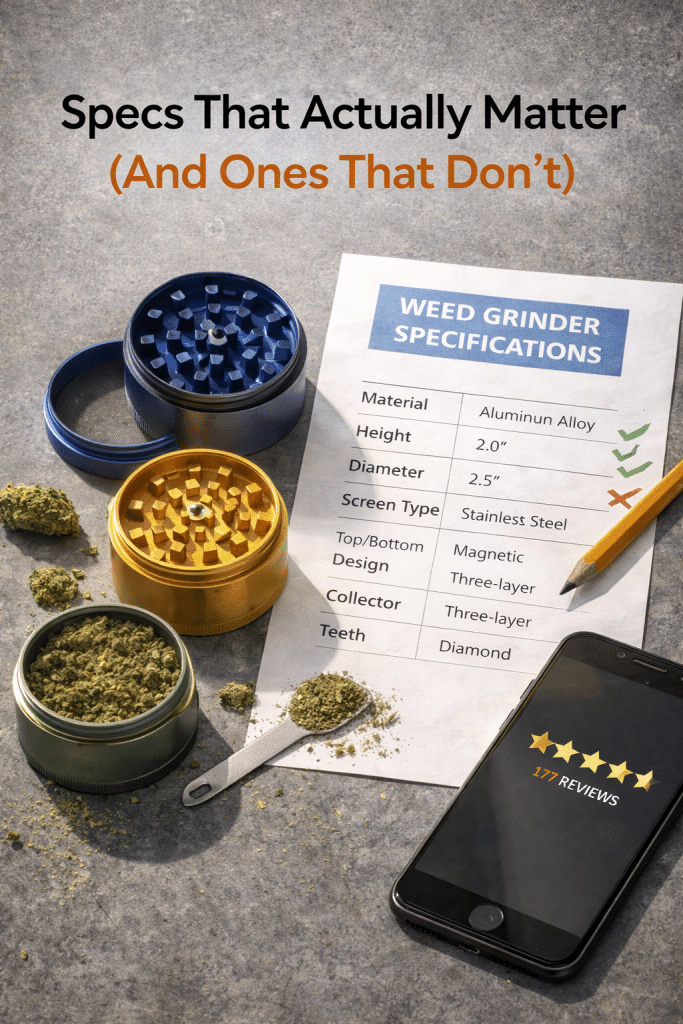
Specs That Matter
Material
- Look for CNC-machined aluminum
- Avoid vague terms like “metal alloy”
Diameter (Size)
- Listed in inches or millimeters
- Tells you capacity and leverage
Magnet Type
- Neodymium magnets are a good sign
- Weak or unspecified magnets are a red flag
Manufacturing Location
- “USA-made” or specific country is better than vague “imported”
Grinders with clear, honest specs are usually better built.
Specs That Don’t Matter Much
- Number of teeth (by itself)
- “Aircraft-grade” without context
- Buzzwords like “ultra-sharp”
- Color options as a quality signal
Specs should explain how it’s made, not just how it sounds.
Threaded vs Threadless: What to Look For Online
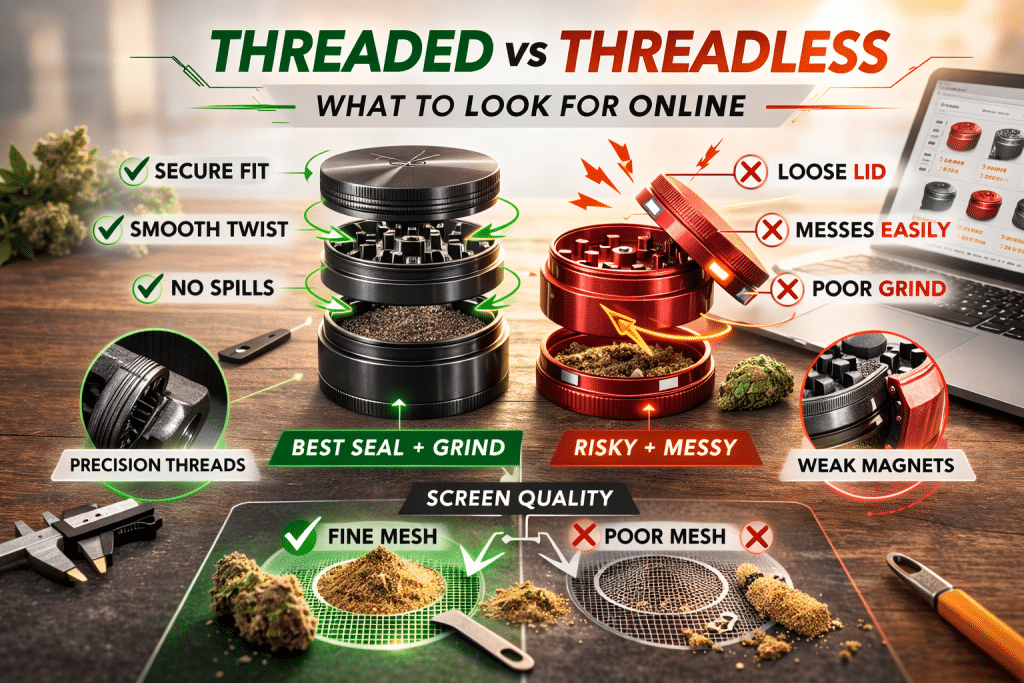
Threaded Grinders
In photos, inspect:
- Thread depth
- Clean lead-ins
- Smooth edges
Threads should look crisp, not rough or uneven.
Threaded designs are common in:
https://tahoegrinderco.com/product-category/all-products/3-piece-weed-grinders/
https://tahoegrinderco.com/product-category/all-products/4-piece-weed-grinders/
Threadless Grinders
Look for:
- Flat, clean mating surfaces
- Centered magnet pockets
- Even alignment
Threadless grinders only work if tolerances are tight.
These are most common in simpler designs like:
https://tahoegrinderco.com/product-category/all-products/2-piece-weed-grinders/
Red Flags in Product Descriptions
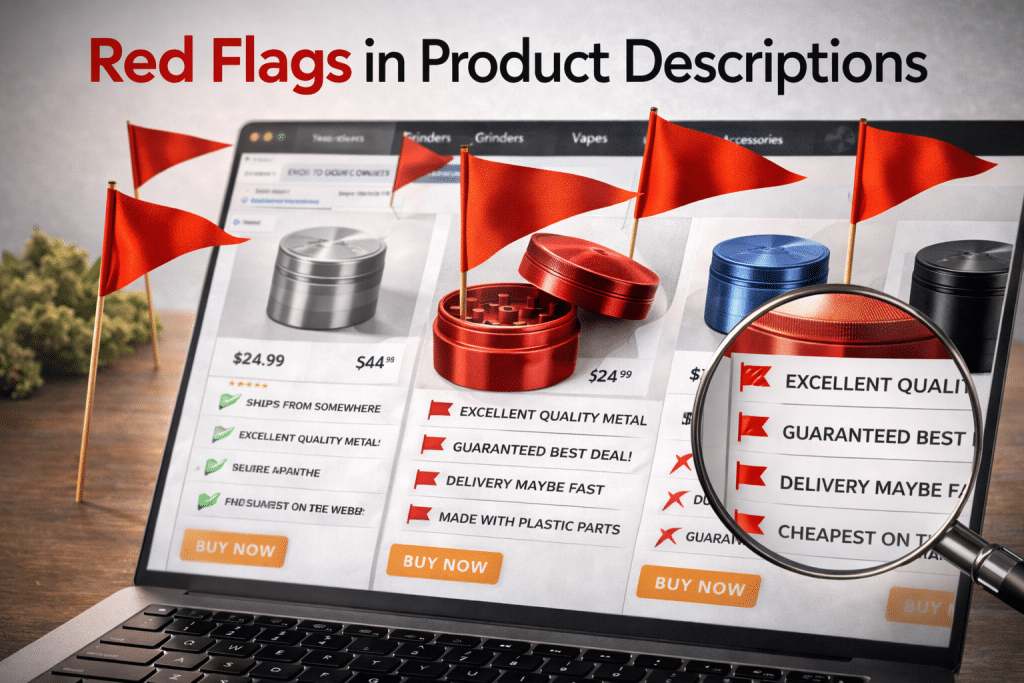
Certain phrases often signal low quality.
🚩 Red Flag Phrases
- “Zinc alloy”
- “Cast metal”
- “Super lightweight” (for metal grinders)
- “Sharp teeth guarantee” (without showing them)
- No mention of tolerances or machining
If the description avoids manufacturing details, there’s usually a reason.
Price vs Quality: What’s Realistic?
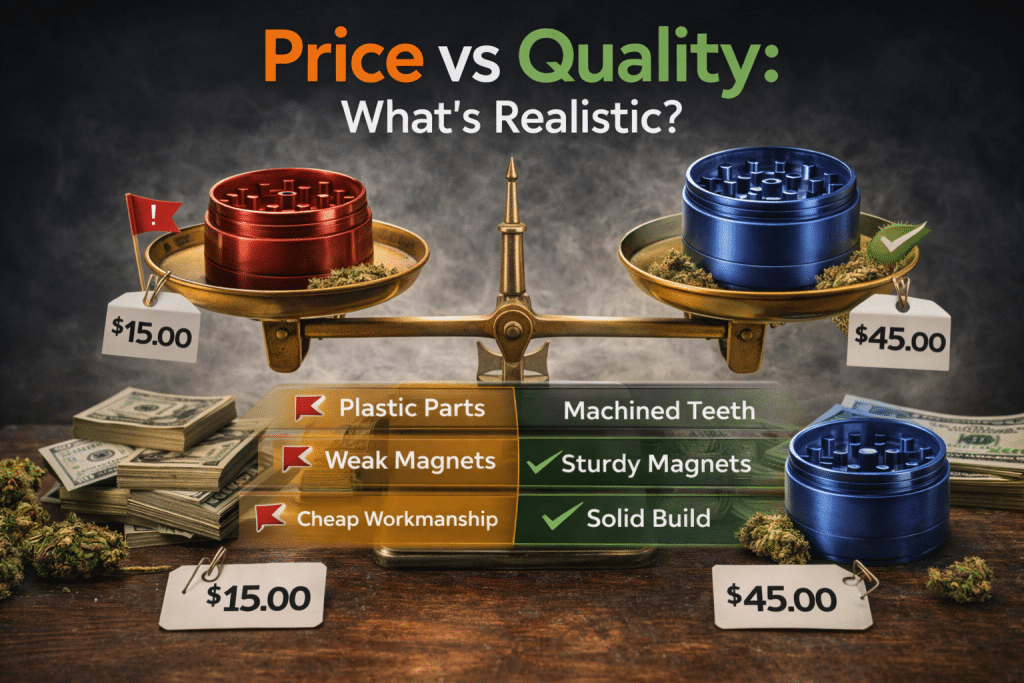
Ultra-cheap grinders are cheap for a reason.
Low prices usually mean:
- Cast parts
- Loose tolerances
- Minimal QC
- Short lifespan
High-quality grinders cost more because:
- CNC machining costs more
- Skilled labor costs more
- Quality control costs more
You’re buying process, not just metal.
You can see grinders built around manufacturing quality here:
https://tahoegrinderco.com/product-category/all-products/
Warranty Is a Quality Signal

A real warranty tells you how confident a company is.
Good Signs
- Lifetime or long-term warranty
- Clear explanation of coverage
- Easy contact method
Red Flags
- No warranty mentioned
- “Warranty varies” with no details
- Short 30–90 day coverage on a “premium” product
Companies don’t offer strong warranties on disposable products.
Reviews: Read Between the Lines

Don’t just look at star ratings.
Look for reviews mentioning:
- Smooth rotation
- No sticking over time
- Consistent grind
- Easy cleaning
- Longevity
Red flag review patterns include:
- “Worked great at first”
- “Hard to open after a few weeks”
- “Gets sticky fast”
Those point to tolerance and finishing problems.
Quick Buyer Checklist (Save This)

Before buying a grinder online, ask:
- Can I see the teeth clearly?
- Are the interior chambers shown?
- Is the material clearly stated?
- Are dimensions listed?
- Is there a real warranty?
If you answer “no” to more than one, keep looking.
Final Takeaway: Transparency = Quality

High-quality grinders don’t rely on mystery.
They:
- Show the inside
- Explain how they’re made
- Stand behind the product
- Don’t hide behind buzzwords
If a listing gives you enough information to judge it critically, that’s usually a good sign.
If it feels vague, flashy, or evasive—it probably is.
Browse grinders that don’t hide their build quality here:
https://tahoegrinderco.com/product-category/all-products/