
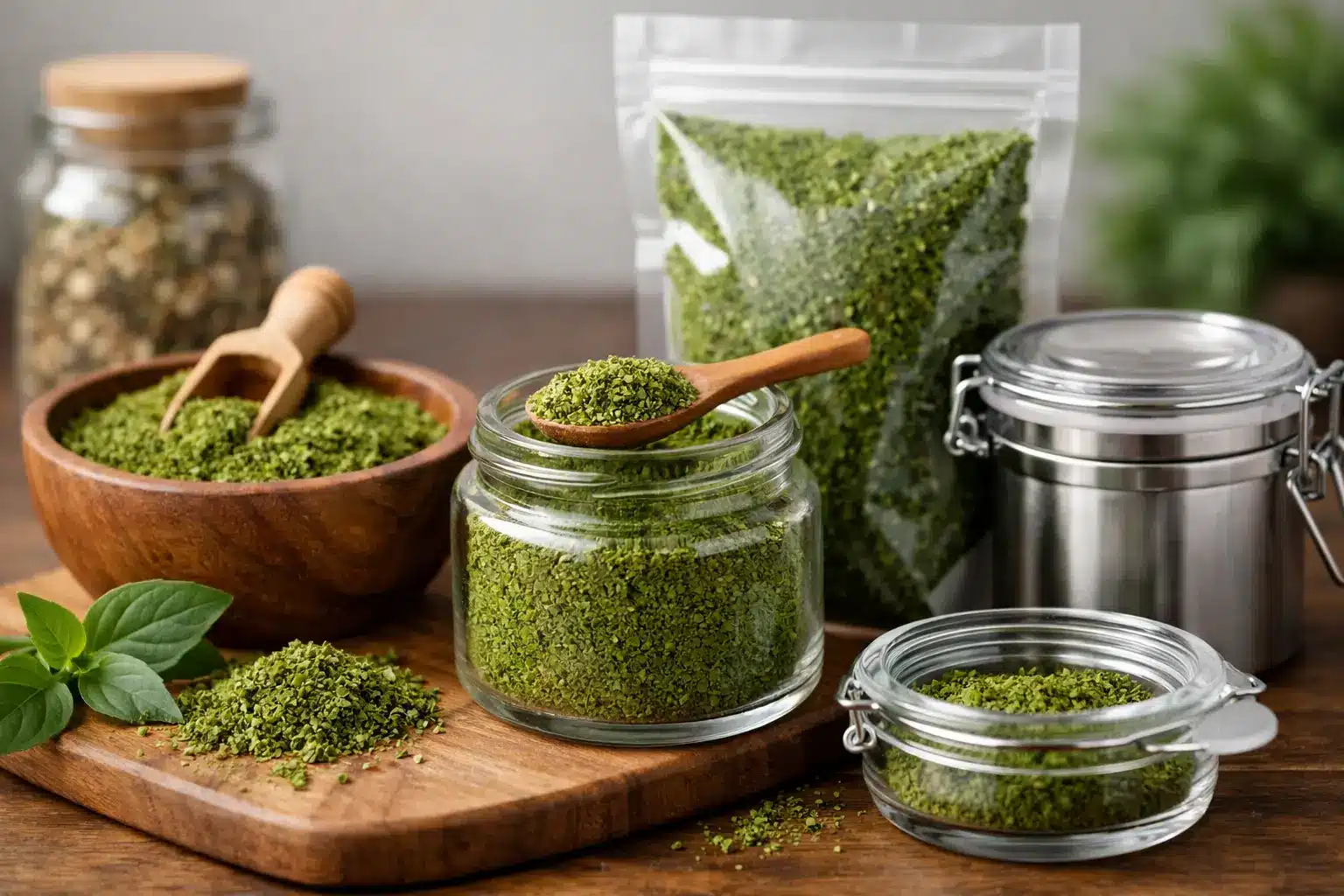
Freshly ground herb has a short window where it smells sharp, breaks apart evenly, and delivers the character you selected it for. Knowing how to store ground herb means protecting that window from its biggest enemies: air, light, heat, excess moisture, and unnecessary handling. Grind only what you expect to use soon, then store the rest with the same attention you would give quality whole flower.
For serious consumers, storage is not an afterthought. A precise grind improves preparation and consistency, but poor storage can leave that same material dry, flavorless, sticky, or clumped by the next session.
How to Store Ground Herb the Right Way
The best setup is simple: use a small, clean, airtight glass container with an opaque exterior or keep it in a dark cabinet. Fill the container with only enough ground herb for a few sessions rather than keeping a large supply pre-ground.
Glass is the preferred material because it does not absorb odor, transfer flavors, or build static the way cheap plastic containers can. A screw-top glass jar with a reliable seal gives ground herb a controlled environment without turning storage into a complicated ritual. Pick a size that leaves minimal empty space once the herb is inside. Less air in the container generally means slower aroma and moisture loss.
Store the jar in a cool, dark, stable location. A drawer, cupboard, or closed storage box away from direct sunlight works well. Avoid a windowsill, vehicle, garage, or any spot that regularly gets hot. Heat accelerates the breakdown of aromatic compounds and can dry ground herb faster than most people expect.
The goal is not to lock herb away forever. The goal is to keep it in peak condition until you are ready to pack, roll, or load it.
Why Ground Herb Goes Stale Faster Than Whole Flower
Grinding exposes dramatically more surface area to oxygen. That is exactly why a well-built grinder improves preparation: it creates an even texture that burns and packs more consistently. But that increased surface area also lets volatile terpenes escape more quickly.
Every time ground herb sits open on a rolling tray, in a loose bag, or inside an unsealed grinder, it is losing something. The first signs are usually subtle – less aroma, a drier feel, and a flatter flavor. Leave it long enough, and the material may become harsh, crumbly, and less enjoyable to use.
Whole flower has natural structure that provides some protection. Ground herb does not. It is ready to use, which makes it convenient, but that convenience comes with a shorter freshness timeline. For that reason, the best storage strategy begins before the herb reaches the jar: do not grind more than you need.
Use the Right Container, Not the Nearest One
Airtight glass is the standard because it performs without introducing new problems. A small mason-style jar or compact glass storage jar is usually enough for a personal amount of ground herb. The seal matters more than decorative packaging.
Plastic bags are acceptable for very short transport, but they are not a premium long-term solution. They can trap static, crush delicate ground material, and provide inconsistent protection against air. Thin containers with snap-on lids are no better if the seal is weak. If you can smell the herb strongly through the closed container, the container is likely not doing enough to contain aroma or preserve freshness.
Metal containers can work if they have an airtight seal and a clean interior, but they should be kept away from heat. Clear glass is also fine when it stays inside a drawer or cabinet. If it will sit out in the open, choose tinted or opaque storage instead.
Do not store ground herb loose in a grinder for extended periods. A quality aluminum grinder is built to mill herb cleanly and withstand real use, but its chambers are not meant to replace a purpose-built airtight storage container. Leaving material in the grinder can expose it to more air each time you open it, while residue can also accumulate around teeth and threads or magnetic closures.
Keep Moisture Balanced, Not Extreme
Dry herb burns quickly and can feel harsher. Herb that is too moist may clump, resist an even grind, and create storage concerns. The ideal condition is pliable enough to handle without turning to dust, yet dry enough to break apart and prepare cleanly.
If your ground herb is already slightly dry, do not try to fix it with a damp paper towel, orange peel, lettuce, or other household moisture tricks. Those methods are inconsistent and can introduce unwanted moisture or contaminants. When a humidity-control solution is appropriate, use a purpose-made pack designed for dried herb and follow its instructions carefully.
That said, a humidity pack is not always necessary for a small amount of ground herb you plan to use over the next few days. An airtight jar in a cool, dark place is often all you need. Overcorrecting moisture can be just as frustrating as letting the herb dry out.
Skip the Refrigerator and Freezer
The refrigerator seems logical because it is cool, but it is usually the wrong environment for ground herb. Refrigerators cycle humidity and temperature, and repeated removal can create condensation. Moisture is the last thing finely ground plant material needs.
Freezing has similar downsides. Cold, brittle trichomes can separate more easily with handling, and thawing can introduce condensation if the container is opened too soon. Freezers are sometimes discussed for long-term storage of whole flower under tightly controlled conditions, but they are not the practical answer for an everyday supply of ground herb.
A dark cabinet at normal room temperature is more dependable. Stable conditions beat extreme conditions.
Make Small-Batch Grinding Your Default
The cleanest answer to freshness is to grind less at one time. Instead of filling an entire storage jar with pre-ground herb for the week, grind enough for the day or for several near-term sessions. Keep the rest as whole flower in its own airtight container.
This approach gives you better control over texture, aroma, and moisture. It also lets you adjust your grind based on how you are using the herb. A medium, fluffy consistency may suit a roll, while a slightly different texture may work better for a particular device. Pre-grinding everything removes that flexibility.
A precision grinder makes small-batch preparation easy because it cuts rather than mashes. Tahoe Grinder Co machines its grinders in-house from 6061-T6 aluminum so adult consumers can rely on consistent tooth alignment, durable construction, and a controlled grind without fighting cheap hardware that jams or sheds performance over time.
Keep Your Grinder Clean Between Storage Cycles
Residue is part of using herb, but buildup should not become permanent. Sticky material caught around the teeth or inside the chamber can make future grinding less efficient. It may also cause fresh herb to pick up stale residue and make it harder to get an even result.
After each session, tap out loose material and brush the chamber when needed. For a deeper clean, separate removable components and use the cleaning method appropriate for the grinder’s material and finish. Make sure every part is completely dry before reassembly.
Cleaning is especially worthwhile when you switch strains or when the grinder begins to feel less smooth. A premium tool should deliver precise performance session after session, and basic maintenance protects that experience.
A Simple Storage Routine That Holds Up
For most adult consumers, a practical routine looks like this: keep whole flower sealed in a larger airtight glass jar, grind a small amount when you are ready to prepare, and transfer any unused ground herb into a smaller sealed jar. Put that jar in a dark cupboard and use it within several days for the best aroma and texture.
If you are traveling locally where legal, use a smell-resistant, sealed container and keep it out of direct heat. Do not leave ground herb in a hot car, loose in a bag, or exposed on a tray between sessions. Convenience is not worth sacrificing material you paid for.
Your herb should smell like herb when you open the container, not like the container itself. Keep the batch small, keep the seal tight, and let your grinder do what it was engineered to do: prepare fresh flower when the session calls for it.