
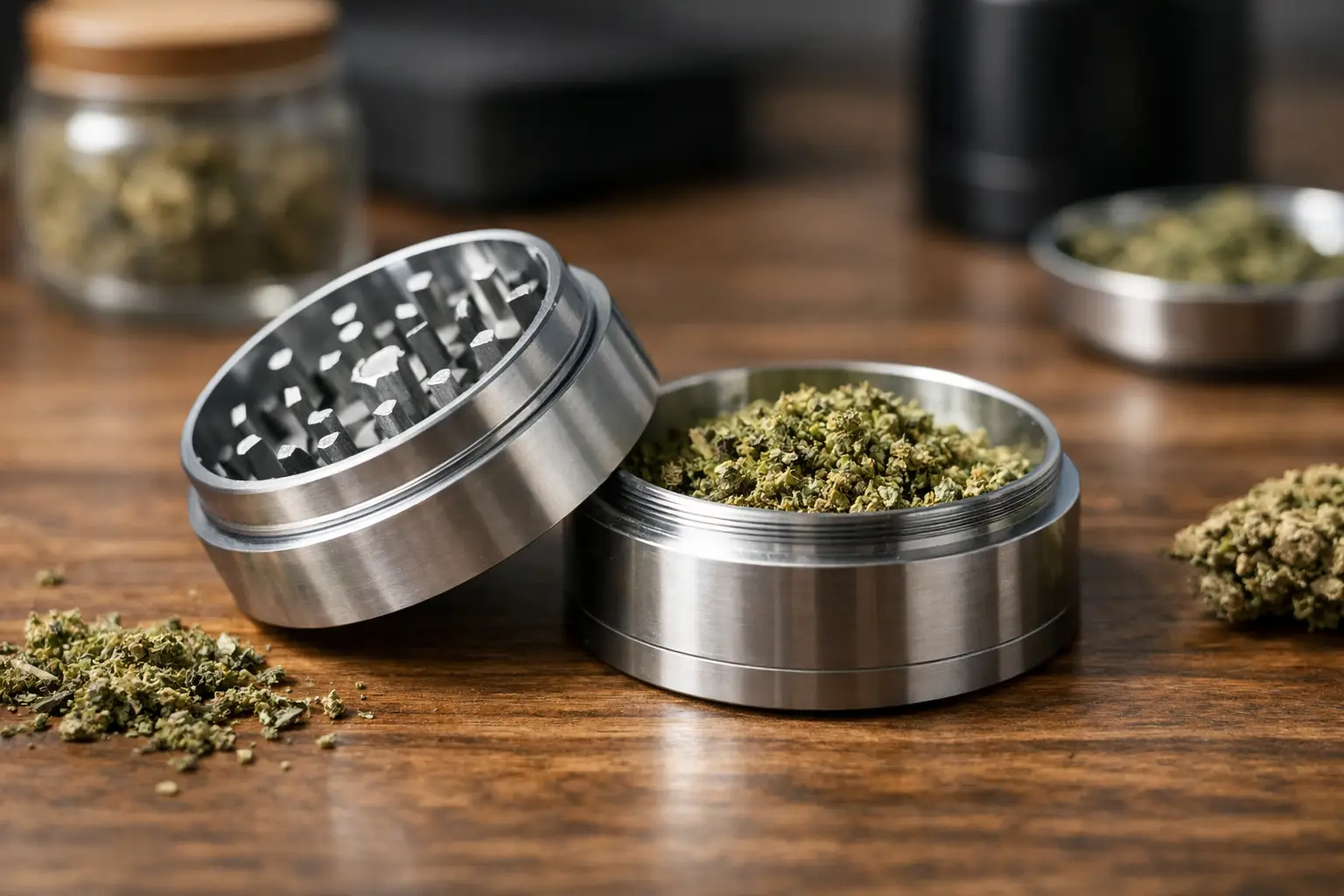
That bargain grinder feels like a win right up until it starts sticking, shredding unevenly, or leaving you twisting harder than you should. If you’re asking is a metal grinder worth it, the real question is how much grind quality, consistency, and durability matter to your smoking routine.
For most cannabis users, the answer is yes. A well-made metal grinder is worth it because it grinds more evenly, lasts dramatically longer, resists wear better than plastic or soft alloy options, and makes the entire prep process cleaner and easier. The catch is that not every metal grinder is built to the same standard. Material, machining, tooth design, and overall construction decide whether you’re buying a serious tool or just a heavier version of a cheap grinder.
Is a metal grinder worth it for daily use?
If you grind flower regularly, a metal grinder usually pays for itself fast. Daily use exposes every weakness in a low-quality grinder. Threads get rough, teeth dull down, lids stop lining up cleanly, and sticky flower turns a minor annoyance into a full fight.
A properly machined metal grinder handles repeated use without that gradual breakdown. The teeth stay sharper, the body stays true, and the fit between parts remains consistent. That matters more than people think. A grinder is not just a container with teeth. It is a precision tool that controls texture, airflow, and how evenly your flower burns or vaporizes.
When the grind is too chunky, your bowl can burn unevenly. When it is too fine or inconsistent, airflow suffers and the session gets harsher than it needs to be. A quality metal grinder gives you a more predictable result every time, which means less waste and less frustration.
For occasional users, the value question depends more on expectations. If you only grind once in a while, a cheaper grinder may technically get the job done. But even then, the difference in feel and performance is obvious. Better materials and tighter tolerances simply make the process smoother.
What makes metal better than plastic or wood?
Plastic grinders are inexpensive, lightweight, and easy to find. They are also far more likely to wear out, crack, or lose cutting efficiency. Teeth can snap. Lids can loosen. Static and material buildup can make them feel cheap fast. For someone who actually cares about consistency, plastic is usually the first thing to upgrade.
Wood grinders have visual appeal, but they are rarely the best performance choice. Wood can swell or shift with use and environment, and many wooden grinders still rely on metal pins or simpler tooth patterns that do not deliver the same grind quality as a well-engineered all-metal design.
Metal, especially quality aluminum, gives you the strength and precision these other materials struggle to match. It holds tolerances better, supports sharper and more durable tooth geometry, and stands up to repeated opening, closing, and grinding without feeling worn out after a few months.
That is why experienced users tend to move toward metal and stay there. Once you use a grinder that feels solid, cuts cleanly, and keeps working the way it should, it is hard to go back.
Not all metal grinders are equal
This is where people either get real value or waste money. Saying a grinder is metal tells you almost nothing by itself. Pot metal, low-grade alloy, poor finishing, and loose manufacturing standards can still produce a grinder that binds, sheds finish, or feels sloppy in the hand.
The best metal grinders are usually made from quality aluminum with precise machining and a design that accounts for real-world use. That means properly cut teeth, clean fitment, durable finish work, and a closure system that does not become a problem when resin starts building up.
A grinder can look premium in a product photo and still perform like a budget piece once you actually put flower through it. Weight alone is not quality. Smooth operation is quality. Consistent tooth engagement is quality. Tight tolerances are quality.
That is one reason serious buyers look beyond generic marketplace listings and start paying attention to how a grinder is made, where it is made, and whether the company behind it actually controls production.
The performance difference you actually notice
The biggest advantage of a good metal grinder is not that it is metal. It is that a good metal grinder creates a better grind with less effort.
You notice it when the lid turns smoothly instead of grinding against itself. You notice it when sticky flower breaks down cleanly without packing into useless clumps. You notice it when the texture is fluffy and even instead of random chunks mixed with powder.
That consistency affects everything after the grind. Rolls pack more evenly. Bowls light more predictably. Vaporizers perform better with a uniform texture. Even cleanup is usually easier when the grinder is built with better geometry and tighter tolerances.
For heavy users, this is not a small comfort upgrade. It changes the daily experience. A grinder is one of the most touched tools in your setup. If it performs badly, you feel it every session.
Is a metal grinder worth it if it costs more?
Usually, yes – if the higher price is tied to actual engineering and manufacturing quality.
Cheap grinders often create a replacement cycle. You buy one, it jams, wears out, or disappoints, then you replace it with another grinder in six months. On paper, each purchase seems minor. Over time, it adds up to more than the cost of buying a quality grinder once.
A premium metal grinder costs more upfront because better materials, better machining, and better quality control cost more to produce. That is not marketing fluff. Precision manufacturing has a real cost, especially when the product is made to hold up for years rather than just survive the return window.
This is where lifetime warranty coverage and in-house manufacturing matter. If a company is willing to stand behind its grinder long term, that usually signals confidence in the build. Tahoe Grinder Co, for example, builds around that exact ownership mindset: a grinder should not feel disposable.
That said, not every user needs the most expensive model on the market. If your budget is tight, the smart move is not just buying the priciest grinder you can find. It is buying the best-made grinder within your range, with attention to material, design, and build quality.
Which metal grinder style makes the most sense?
Worth depends partly on configuration. A 2-piece grinder is simple, compact, and easy to use. It is a strong choice for users who want straightforward grinding with minimal parts.
A 3-piece grinder adds a storage chamber below the grinding plate, which can be useful if you want ground flower separated and ready to go. A 4-piece grinder adds a screen and lower chamber for kief collection, which appeals to users who want maximum functionality from one tool.
None of these designs is automatically best for everyone. If you value simplicity and portability, 2-piece might be the better buy. If you like organization and extra separation, 3-piece or 4-piece may be worth the added complexity. The key is matching the grinder to how you actually use flower, not how a product page tells you to use it.
Who should skip one?
There are a few cases where a metal grinder may not be necessary. If you rarely consume flower, prefer hand-breaking, or only need a grinder in occasional social situations, a premium metal model may be more tool than you need.
There is also a difference between a basic metal grinder and a premium one. If someone buys the cheapest metal grinder available and expects top-tier performance, disappointment is likely. The material gives the design potential. It does not guarantee execution.
So yes, there are situations where the answer is not automatically yes. But for anyone who uses dry herb regularly and wants a more consistent, efficient prep experience, metal is usually the right category to buy into.
The real value comes from ownership
A grinder should not be something you tolerate. It should be something you trust every time you reach for it.
That is the strongest argument for going metal. You are not just paying for a tougher shell. You are paying for smoother operation, better grind consistency, less hassle with sticky flower, and a tool that keeps doing its job long after cheap options start failing. When that grinder is made from quality aluminum, machined with precision, and built to hold tolerances over time, the value becomes obvious.
If your current grinder feels like the weak point in your setup, you already have your answer. Buy the one that performs like it was engineered to stay on your tray for years, not months.