
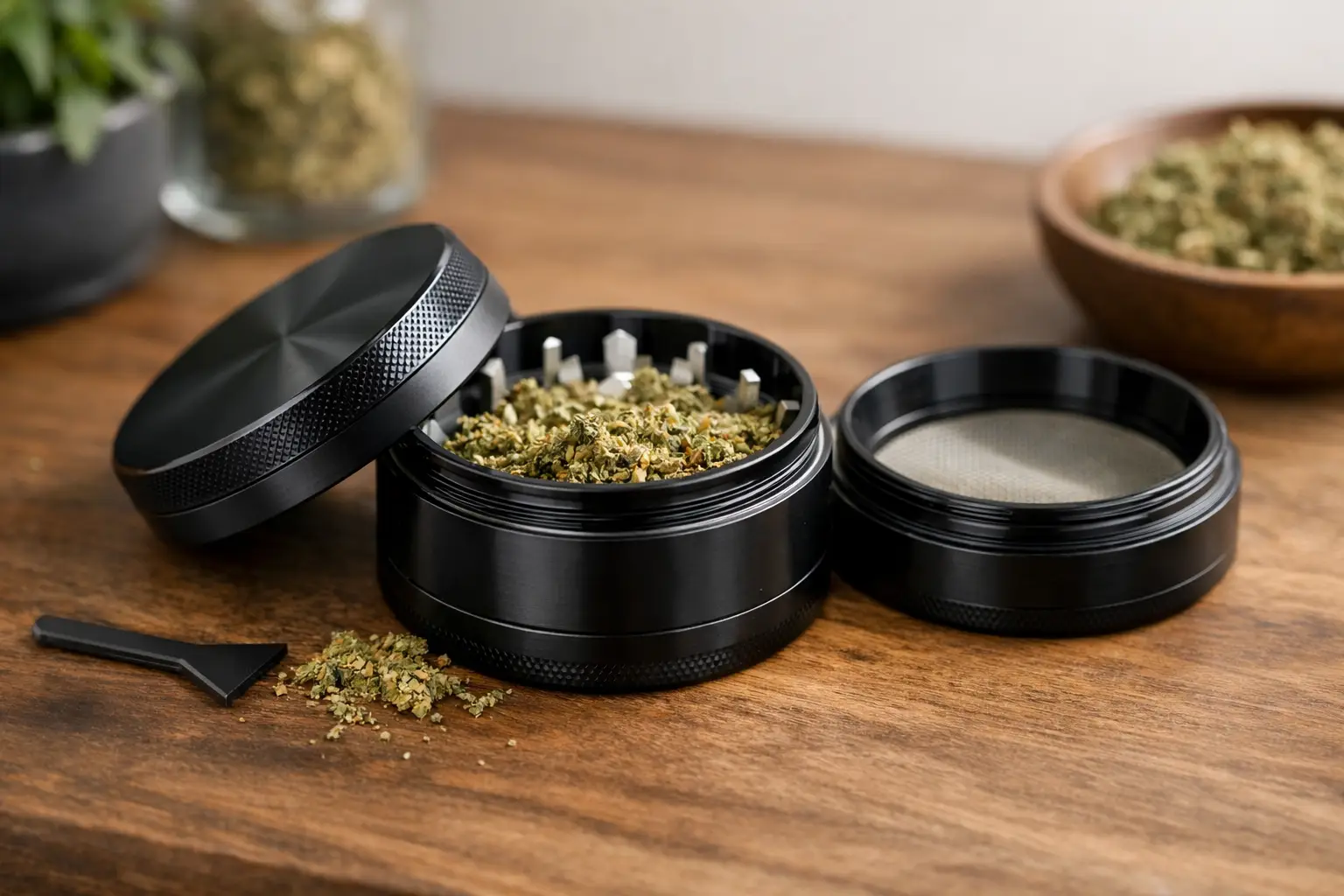
A grinder that makes you fight the lid before you can pack a bowl is not doing its job. The real magnetic herb grinder benefits show up in the moments that cheap grinders usually ruin: when your hands are sticky, your herb is dense, or you simply want a consistent grind without wrestling stripped threads.
A magnetic lid is a small engineering decision with a major effect on daily use. It removes the most common point of frustration on basic grinders – the threaded top – and replaces it with fast, controlled access. For adult cannabis consumers who use their grinder regularly, that means less mess, less wear, and a tool that feels built for the long haul.
Why a Magnetic Lid Changes the Experience
Traditional screw-top grinder lids rely on threads that have to line up perfectly. Fine herb particles, resin, pocket lint, and normal wear can make that process rough over time. Cross-thread the lid once, and a budget grinder can go from annoying to unusable.
A properly fitted magnetic lid avoids that problem. It seats quickly, stays secure during normal grinding, and lifts off without the repeated twisting that can gum up a threaded design. You get direct access to the teeth and loading chamber, which makes loading herb, checking the grind, and cleaning the unit noticeably easier.
That convenience is not about cutting corners. It is about removing a failure point. Precision machining matters here because the lid and body need a close, repeatable fit. A magnet alone cannot compensate for sloppy tolerances, uneven mating surfaces, or a grinder body that flexes under pressure.
Magnetic Herb Grinder Benefits in Daily Use
The best accessories do not demand attention. They work the same way on the hundredth session as they did on the first. A magnetic grinder earns its place by making herb preparation faster while protecting the quality of the grind.
Faster loading, less interruption
With a screw-on lid, loading can become a two-handed process: set the grinder down, line up the threads, turn carefully, then hope nothing catches. A magnetic lid lets you lift, load, close, and grind with far less fuss. That is especially useful when you are preparing a small amount and do not want herb sitting exposed on a table or tray.
The lid also gives you a clear view of the teeth before you start. You can distribute dense flower around the chamber instead of cramming one oversized nug into the center. That simple habit reduces resistance, helps the teeth do their job, and produces a more even result.
No cross-threading at the top
Cross-threading is one of those failures that starts small. The top may feel slightly rough, then it begins to bind, and eventually the lid will not seat correctly. Resin and fine plant material only accelerate the problem.
Magnetic closure eliminates top-lid cross-threading because there are no top-lid threads to damage. For a grinder you carry, use often, and expect to keep for years, that is a serious durability advantage. It is also a cleaner experience, since you are not grinding residue into tiny thread channels every time you open and close the tool.
For multi-piece grinders, this does not necessarily mean every section is thread-free. A 3-piece or 4-piece model may still use threaded lower chambers to keep the ground-herb and pollen compartments secure. The key advantage is where it counts most often: the upper loading chamber you open every session.
A more secure lid than friction-fit designs
Not every quick-open lid is a good lid. Loose friction-fit caps can pop off in a pocket, while weak magnets can feel unreliable when you are grinding denser material. The goal is controlled retention: strong enough to keep the lid seated through normal handling, but easy enough to remove without prying at the edge.
That balance depends on magnet placement and machining accuracy. A lid should sit flush rather than rock, rattle, or leave an exposed gap. If the lid moves around before grinding begins, the issue is not a lack of effort from the user. It is poor fitment.
Cleaner handling when resin builds up
Resin is part of using dried herb. Over time, it can make any grinder less pleasant if the design does not account for it. A magnetic lid makes routine maintenance simpler because there are fewer tight top threads where sticky material can accumulate.
You can remove the lid, brush out the teeth, and wipe the contact surfaces without trying to dig debris from narrow grooves. That does not mean a magnetic grinder never needs cleaning. It means cleaning takes less effort, so most owners are more likely to do it before performance drops.
The Magnet Is Only as Good as the Grinder Around It
A magnetic lid is a meaningful upgrade, but it should not be the only feature driving your decision. Some low-cost grinders advertise magnets while cutting corners everywhere else: soft metal, dull teeth, rough finishes, weak threading on lower chambers, and inconsistent assembly.
Start with the material. 6061-T6 aluminum is a proven choice for premium herb grinders because it offers strength without unnecessary weight. It holds up to regular use, resists the flimsy feel of thin cast metal, and gives CNC machining the stable foundation it needs for precise teeth and clean mating surfaces.
Then look at the teeth. Sharp, well-spaced teeth cut through flower instead of crushing it into an uneven clump. Tooth geometry affects the effort required to turn the grinder, the texture of the finished herb, and how much material gets trapped during use. More teeth are not automatically better. Their shape, sharpness, spacing, and alignment matter more than a meaningless tooth count.
Finally, consider the finish and assembly quality. A grinder should feel solid in the hand, turn smoothly under load, and close with confidence. Rough edges, loose parts, or a lid that lands crooked are not cosmetic flaws. They are signals that the entire manufacturing process lacks control.
Tahoe Grinder Co machines its grinders in-house in the USA, maintaining control from design and CNC machining through finishing, inspection, and direct fulfillment. That is the difference between buying a serious tool and hoping a generic import holds together.
Choosing the Right Magnetic Grinder Configuration
The right grinder depends on how you prepare herb, how much you use at one time, and whether you want storage or pollen collection built into the tool.
A 2-piece magnetic grinder is direct and fast. It is ideal for users who want to grind a small amount and immediately transfer it to a bowl, paper, or vaporizer. Fewer parts mean quicker cleaning and a compact profile, but there is no separate chamber for holding ground herb.
A 3-piece grinder adds a lower compartment beneath the teeth. This configuration is a strong middle ground for people who want their material collected neatly after grinding without adding a screen or extra maintenance. It works well for daily users who value organization and a cleaner prep surface.
A 4-piece grinder includes a screen and pollen chamber. It offers the most separation and storage, which can make sense for frequent users preparing more herb at a time. The trade-off is additional parts to clean and more threads below the magnetic top. Choose it when those functions matter to you, not because more chambers automatically mean better performance.
Size matters, too. Compact grinders travel easily and suit smaller sessions, while larger diameters give you more tooth surface, more leverage, and more capacity. An oversized 90mm grinder is built for users who are tired of processing dense flower in several small batches. It is less pocket-friendly, but far more efficient at home.
What to Expect From a Quality Magnetic Lid
A quality magnetic lid should feel deliberate. It should snap into place cleanly, remain stable while you turn the grinder, and come off without sticking so hard that it becomes its own hassle. You should not hear constant rattling, see visible gaps, or need to press down aggressively just to keep it aligned.
Keep in mind that magnets are not designed to make a grinder spill-proof. If you toss a loaded grinder loosely into a bag, turn it upside down repeatedly, or subject it to hard impacts, any lid can be challenged. For carrying herb, keep the grinder upright and use a case or dedicated storage solution when needed.
The best performance also comes from basic care. Do not overload the teeth, especially with unusually sticky flower. Break down large pieces before loading, brush out buildup periodically, and avoid forcing a grinder that is clearly packed beyond capacity. Good engineering gives you a larger margin for error, but it cannot change the physics of compressed, resin-heavy material.
Buy the Feature, Not the Gimmick
Magnetic closure is worth having because it solves a real daily-use problem. It speeds up access, avoids top-thread damage, and makes a grinder easier to keep clean. But the feature only delivers when it is paired with precision-cut teeth, durable aluminum, accurate fitment, and a configuration that matches the way you use herb.
A premium grinder should not feel disposable after a few sticky sessions. Choose one that opens cleanly, cuts consistently, and stays dependable long after the novelty wears off. That is when a magnetic lid stops being a selling point and becomes part of a better ritual.