
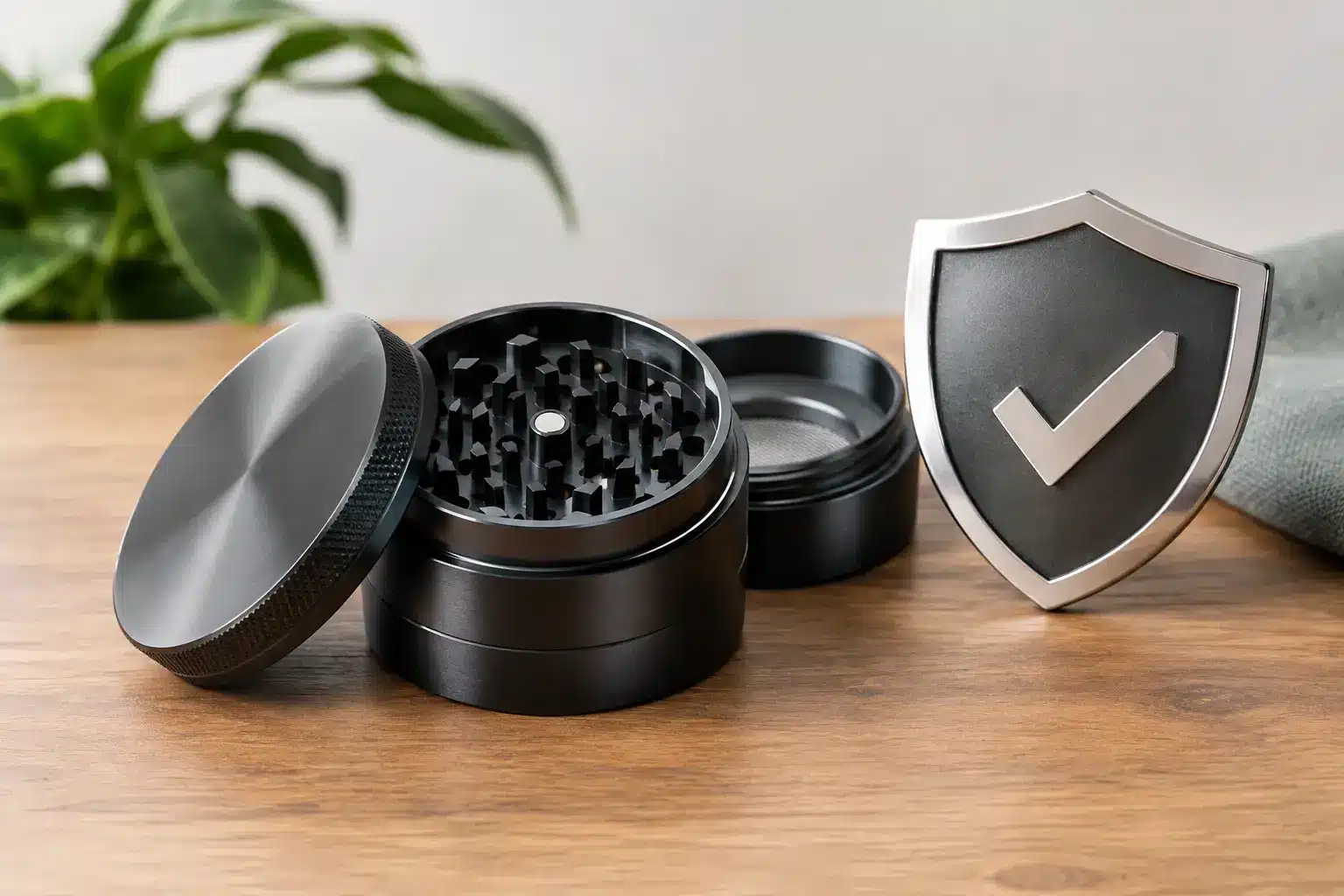
A premium herb grinder warranty is not a throwaway line at the bottom of a product page. It is a manufacturer putting its name behind every tooth, thread, magnet, and finished surface. When a grinder is built to be used daily, carried everywhere, and cleaned repeatedly, the warranty reveals whether the company expects its product to hold up or expects you to replace it when the weak points show.
Cheap grinders make big promises because they have to. Their teeth dull, their paint flakes, their threads bind, and their lids loosen long before the purchase feels like a value. A serious warranty changes the equation. It tells you the grinder was designed as a long-term tool, not a disposable accessory with a flashy finish.
What a Premium Herb Grinder Warranty Should Cover
The first thing to understand is that a warranty is only as credible as the product behind it. Lifetime coverage sounds strong, but the real question is why a manufacturer can offer it. A company that controls design, CNC machining, finishing, assembly, inspection, and fulfillment has a clear answer. It knows the material, the tolerances, and the components in every grinder it ships.
For a premium herb grinder, coverage should stand behind defects in materials and workmanship. That means the core functional parts of the grinder should be made to perform as intended: the lid should seat correctly, the grinding teeth should remain secure, the chambers should align, and the closure system should operate without becoming a constant fight.
The exact terms always matter. Normal cosmetic wear, accidental damage, loss, unauthorized modifications, and misuse may not be covered by a lifetime warranty. That is reasonable. A warranty is not a replacement plan for every situation a grinder can encounter. It is proof that the manufacturer will address legitimate product failures rather than leaving the customer stuck with a bad tool.
Why Material Choice Makes Warranty Coverage Believable
A grinder made from thin, mystery-grade metal has no business being sold as a lifetime purchase. The material itself determines how well the grinder can resist pressure, impact, corrosion, and repeated contact between moving surfaces.
6061-T6 aluminum is the right starting point for a premium grinder because it offers strength without turning the tool into a brick. It machines cleanly, holds its shape, and supports the tight tolerances that make a grinder feel precise instead of loose and rattly. It is a material chosen for function, not just a polished product description.
That does not mean every aluminum grinder performs the same. The difference comes from how the material is machined. Poorly cut teeth can tear herb instead of shredding it evenly. Rough internal edges can collect residue. Loose threads can cross-thread or seize. A premium manufacturer engineers these details before the grinder reaches your hand, then inspects the finished product before it ships.
This is why a lifetime warranty carries more weight from an in-house manufacturer. The company is not guessing what happened at an overseas factory or passing you to a third-party seller. It built the grinder, so it can stand behind the grinder.
A Lifetime Warranty Is About Ownership, Not Hype
A good grinder earns a place in your routine. You should be able to pick it up months or years after purchase and get the same clean, consistent action you had on day one. That is the ownership standard a lifetime warranty is meant to support.
For cannabis consumers, consistency matters. An uneven grind can affect how herb packs, burns, and pulls. A grinder that jams turns preparation into unnecessary work. A lid that slips or a chamber that feels misaligned makes every session more frustrating than it needs to be. These are not minor annoyances when the tool is used every day.
A lifetime warranty also changes how you should compare price. The lowest-priced grinder is rarely the least expensive one to own. Replacing two or three mediocre grinders costs more than buying one engineered piece that stays in rotation. The premium is not just for a better finish or a heavier feel. It pays for material quality, precision machining, inspection, direct support, and the confidence that the manufacturer will be there if something is not right.
Tahoe Grinder Co builds its grinders in the USA with that long-view approach: precision CNC-machined aluminum, purpose-built configurations, and a lifetime warranty supporting the claim that this is the last weed grinder you will ever buy.
What to Check Before You Rely on Any Warranty
Do not stop at the word “lifetime.” Read the policy and look for plain answers. Who is covered? Does the warranty apply to the original purchaser? What kinds of defects qualify? What information is needed to start a claim? Does the company provide direct customer support, or does it send you through a maze of retailers and automated forms?
The best warranty process is straightforward because the brand has nothing to hide. You should be able to describe the issue, provide basic proof of purchase when required, and get a clear response from a real company. A manufacturer that ships direct can usually make this easier because there is no question about where the grinder came from or who is responsible for helping.
Also pay attention to the product design itself. A thread-less magnetic grinder removes one of the most common frustration points in conventional grinders: dirty, damaged, or cross-threaded lids. That is not just a convenience feature. It is an engineering decision that reduces a potential failure area. When a product is designed to avoid predictable problems, its warranty promise becomes far more credible.
The Right Grinder Configuration Still Matters
Warranty coverage protects your investment, but choosing the right configuration protects your experience. A 2-piece grinder is direct and portable, ideal for consumers who want a simple, fast grind. A 3-piece model adds a storage chamber. A 4-piece grinder separates fine material with a screen, giving users more control over collection and use.
Size matters just as much. A compact grinder is easy to travel with and works well for smaller sessions. A larger grinder gives you more surface area, more teeth, and more capacity for preparing herb without repeated loading. An oversized 90mm grinder is built for people who want serious output and a substantial tool in hand.
There is no single configuration that fits every smoker. The right choice depends on how much herb you prepare, whether you want storage or collection, and whether portability matters more than capacity. But every configuration should meet the same non-negotiable standard: it should grind smoothly, feel solid, and be built from components a manufacturer is willing to warranty for the long haul.
Make a Premium Grinder Last Even Longer
A lifetime warranty should not be an excuse to neglect the tool. Regular care keeps performance sharp and makes the grinder more enjoyable to use. Brush out loose herb after use, avoid forcing oversized or overly dense pieces through the teeth, and clean residue before it builds into a sticky layer around the moving parts.
Use appropriate cleaning methods for aluminum and allow every component to dry completely before reassembly. Avoid harsh scraping tools that can gouge finished surfaces or damage a screen. If your grinder uses magnets, keep the contact points clear so the lid closes cleanly and securely.
A well-made grinder is one of the few cannabis accessories you should be able to buy with a long memory. Choose the material carefully, look past generic warranty language, and buy from a manufacturer prepared to stand behind the tool long after the first session.