
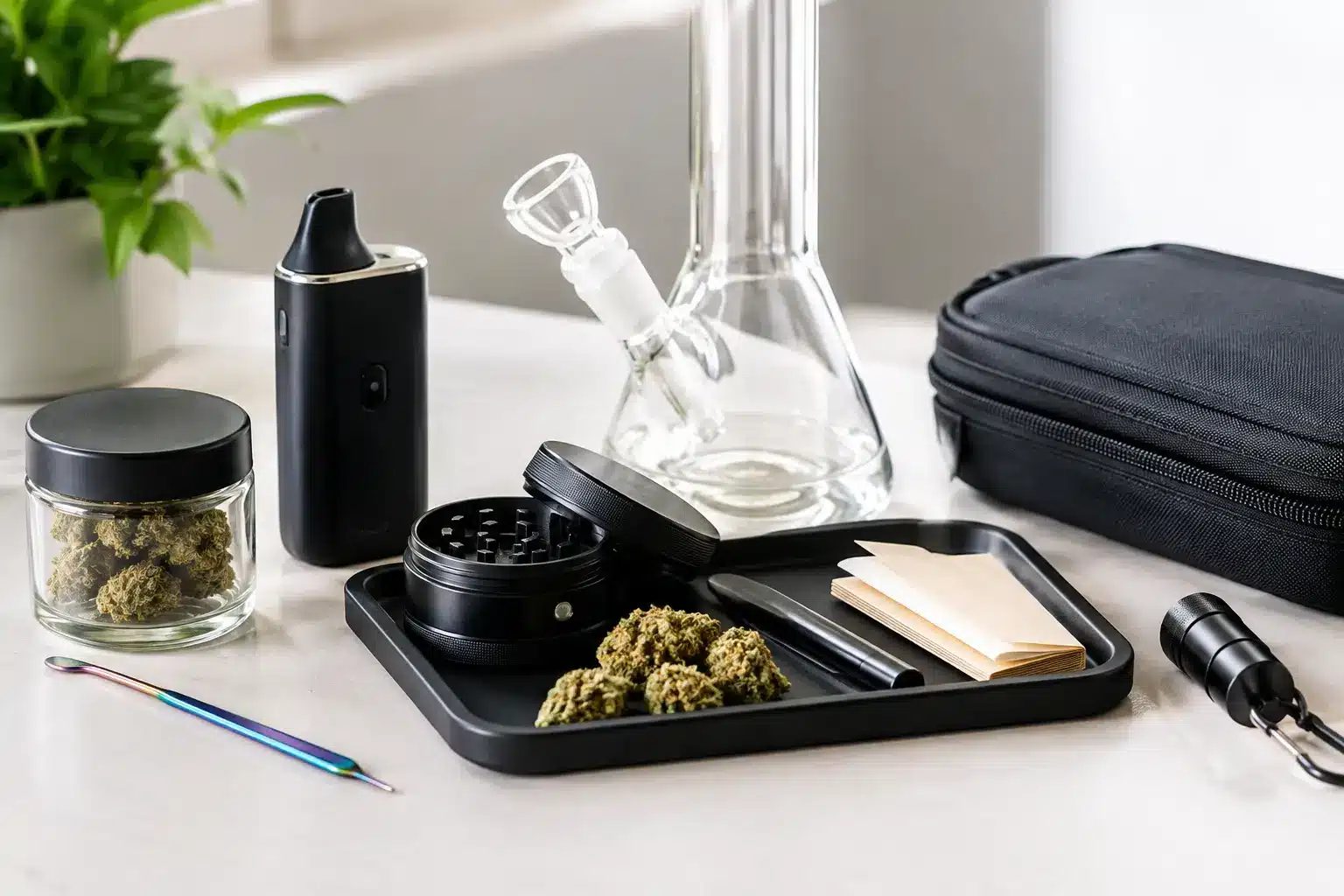
A real best weed accessories starter kit is not a pile of cheap smoke-shop extras. It is a small set of tools that makes every session cleaner, faster, and more consistent. Start with the tool that handles your flower, then add only the accessories that solve a real problem: prep, containment, cleanup, or storage.
The goal is simple. Buy fewer pieces, buy better pieces, and avoid replacing bent trays, dull grinders, and disposable clutter after a few months of use.
What Belongs in the Best Weed Accessories Starter Kit
For most adult flower consumers, the foundation is a grinder, a rolling or prep tray, a smoking device, a storage solution, and a cleaning tool. That is enough to cover the full routine without turning a drawer into a graveyard of novelty accessories.
The grinder deserves the largest share of the budget because it does the most work. Cheap grinders are usually built with soft metal, shallow teeth, loose threads, and poor tolerances. They can jam on dense flower, create an uneven texture, and leave material trapped in places that are difficult to clean. A bad grinder makes everything after it worse.
A precision-machined aluminum grinder changes the entire prep process. Sharp, properly spaced teeth cut through flower instead of crushing it into clumps. A consistent grind promotes a more even roll and steadier burn. It also gives you more control over texture, whether you prefer a slightly fluffier grind for a pipe or a finer consistency for rolling.
A rolling tray comes next because it keeps your material contained. You do not need a huge surface unless you regularly prepare multiple sessions at once. What matters is a flat, durable tray with raised edges and enough room for your grinder, papers, and flower. It saves product, reduces mess, and gives your setup a dedicated workspace instead of forcing you to prep on a desk, couch cushion, or kitchen counter.
Your smoking device depends on how you use flower. A simple pipe is direct and compact. Papers and cones make sense for people who enjoy rolling and want an easy way to share. A dry herb vaporizer is a different investment entirely, but it can appeal to consumers who want greater temperature control and less combustion. There is no universal winner. Build around the routine you will actually maintain.
Finally, add storage and cleaning. An airtight container helps preserve freshness and keeps odors more controlled. A small brush, cotton swabs, and a dedicated cleaning solution help prevent residue from becoming permanent buildup. These are low-cost additions that protect the gear you already bought.
Start With the Grinder, Not the Gimmicks
If your starter kit has one premium component, make it the grinder. It is the one tool you will reach for nearly every time you prepare dried herb.
Choose the right grinder configuration
A 2-piece grinder is the stripped-down option. It grinds flower quickly and is easy to carry, clean, and operate. It is ideal for someone who wants direct control and does not care about separate storage chambers.
A 3-piece grinder adds a lower chamber that catches the ground flower. This design is convenient for people who like to grind ahead of time or want less handling after the flower is processed. It keeps the workflow clean without adding much complexity.
A 4-piece grinder includes the grinding chamber, a storage chamber, and a screen that separates fine trichome-rich material below. For dedicated flower users, this is often the most capable configuration. It offers organization, capacity, and collection in one serious tool. The trade-off is that it has more parts to maintain, but quality threading and tight machining make that a nonissue compared with the frustration of a poorly made multi-piece grinder.
Size matters too. A compact grinder is better for travel and personal use. A larger grinder processes more flower per turn and gives you more leverage, making it the better choice for frequent users or anyone who prepares for a group. Do not buy oversized just because it looks impressive. Buy it if the capacity matches your sessions.
Material and machining are not minor details
Plastic cracks. Low-grade metal can dent, wear down, and leave you fighting the lid. A serious grinder should be made from durable aluminum and machined with enough precision that the parts fit correctly from day one.
6061-T6 aluminum is a proven choice for premium grinders because it balances strength with manageable weight. CNC machining matters because it allows the teeth, chambers, and mating surfaces to be produced to tighter tolerances. That translates into smoother operation, cleaner threading or secure magnetic closure, and a grinder that feels engineered instead of stamped out.
Tahoe Grinder Co builds its grinders in-house in the USA from 6061-T6 aluminum, controlling machining, finishing, assembly, inspection, and fulfillment rather than handing those details to a generic supplier. That level of control is why a premium grinder can earn its place as the last weed grinder you buy, especially when it is backed by a lifetime warranty.
Build the Rest of Your Kit Around Your Routine
Once the grinder is handled, resist the urge to buy every accessory in sight. Your kit should make preparation easier, not introduce more parts to lose or clean.
For rollers, the right add-ons are papers or wraps, filters, a dependable lighter, and a tray. Keep them together. Nothing kills momentum like finding your flower is ready and realizing the papers are in a different room.
For pipe users, prioritize a pipe that feels solid in the hand, a lighter, and cleaning supplies. A gemstone pipe can be a strong choice if you want a piece with weight, visual character, and long-term shelf appeal. Just remember that material and form affect maintenance. Any pipe with narrow pathways will need regular cleaning if you want clear airflow and clean flavor.
For consumers who use concentrates as well as flower, a dab tool and heat-resistant dab mat are practical additions. The tool gives you control over sticky material, while the mat protects the surface beneath your setup and keeps cleanup contained. They are not necessary for a flower-only kit, so do not buy them until your habits justify them.
A small airtight storage container is worth adding from the start. Keep it out of direct sunlight and away from excessive heat. If you buy more flower than you use in a few days, proper storage becomes more than a nice detail. It is part of protecting quality.
What to Skip When Buying Your First Kit
The fastest way to waste money is buying accessories for an imaginary version of your routine. A giant tray may look great online but become dead space in a small apartment. A dozen novelty containers will not outperform one good airtight container. A bargain grinder with loud graphics is still a bargain grinder if it binds after a month.
Skip fragile accessories that demand replacement, especially if they solve no clear problem. Avoid multi-tool gadgets that try to do everything and do none of it well. Be skeptical of vague claims about aircraft-grade materials when a seller cannot explain the alloy, machining process, or warranty behind the product.
Also avoid building your kit around price alone. The least expensive option often becomes the most expensive when it fails early and has to be replaced. Spend where performance is felt every session: the grinder, the tray, and the device you use most. Save on consumables and decorative extras until you know what you genuinely prefer.
Keep Your Starter Kit Performing Like It Should
Premium accessories still need basic care. Empty loose material from your grinder regularly, especially around the teeth and chamber edges. Do not force the lid when dense flower catches between surfaces. A quick brush after use prevents residue from turning into a sticky problem later.
Clean pipes and other smoking accessories before airflow becomes restricted. Store papers, filters, and dry herb in a clean, dry place. Give your tray a wipe-down instead of letting loose material and residue build up for weeks. These habits take minutes, but they keep your setup ready rather than turning each session into maintenance.
The best starter kit is the one that stays useful after the novelty wears off. Start with a grinder built for years of real use, add a clean prep surface and the smoking method you prefer, then let your actual routine decide what earns the next spot in the kit.