
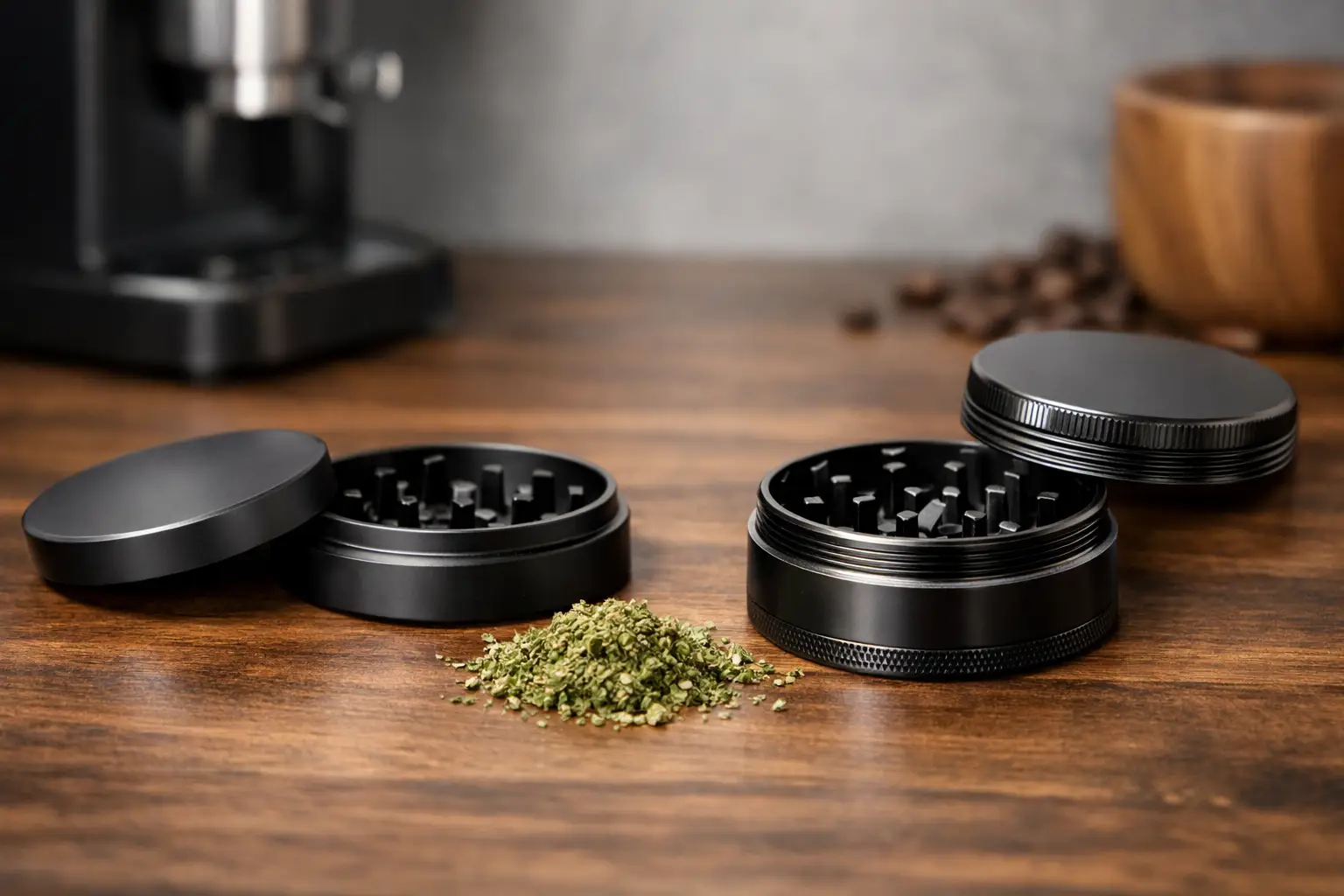
A grinder can have razor-sharp teeth, a solid feel, and a premium finish, then still become annoying every time you open it. The difference often comes down to the closure. In the threadless grinder vs threaded grinder debate, threaded designs rely on screw-on sections, while threadless designs use a precision-fit magnetic lid or chamber connection. That sounds like a small engineering decision. For anyone who grinds herb regularly, it changes the entire ownership experience.
Cheap threaded grinders made the screw-top design familiar, but familiar is not the same as better. Threads can collect resin, cross-thread, bind up, and wear down over time. A properly machined threadless grinder removes that friction point and gives you a faster, cleaner tool built for daily use.
What Is a Threaded Grinder?
A threaded grinder uses spiral grooves cut into the body and lid. To close it, you line up the threads and twist until the pieces tighten together. This system is common across basic 2-piece grinders and multi-chamber grinders because it is simple to manufacture and creates a mechanically secure connection.
When the threads are clean and machined accurately, a threaded grinder can work well. The issue is what happens after repeated sessions. Ground herb, sticky trichomes, pocket lint, and residue settle into the grooves. Instead of a quick twist, you may need to find the starting point, avoid misalignment, and force a lid that no longer wants to move smoothly.
Threaded designs are also more dependent on user alignment. Start the lid at an angle, apply pressure, and twist too quickly, and cross-threading becomes possible. Aluminum threads are not indestructible. Once they are damaged, the grinder can feel rough, close unevenly, or fail to seat correctly.
What Is a Threadless Grinder?
A threadless grinder eliminates screw-on connections in the areas designed for fast access. Most commonly, the top lid uses strong magnets and a precisely machined mating surface. Place the lid on the grinder, and it settles into position without hunting for a thread start or spinning it into place.
That design has one clear purpose: make a serious tool faster to use and easier to live with. You lift the lid, load your flower, replace the lid, grind, and move on. No twisting. No stripped lid threads. No gummy grooves around the opening.
A good threadless design is not simply a loose lid with a magnet added. The fit matters. Tight machining tolerances keep the lid centered, while the magnet supplies reliable holding force. The result should feel deliberate and secure, not rattly or improvised.
Threadless Grinder vs Threaded Grinder: The Real Differences
Speed and everyday convenience
Threadless grinders win on speed. This is especially obvious with a large-diameter grinder, where a threaded lid requires more rotation and a wider grip. A magnetic lid opens instantly and closes just as quickly, making loading and emptying less of a chore.
The advantage is not that twisting a lid is difficult. It is that tiny annoyances compound. If you grind every day, eliminating one sticky, repetitive step is a meaningful upgrade. Threadless closure also makes it easier to open a grinder one-handed when the other hand is holding a rolling paper, tray, or jar.
Resin buildup and cleaning
Threads create narrow channels, and narrow channels are where buildup loves to hide. Even quality threaded grinders eventually need attention around the screw areas. If residue dries inside those grooves, the sections can feel gritty or seize up.
Threadless magnetic lids have fewer tight, exposed channels around the opening. That does not mean any grinder is maintenance-free. Sticky herb can still collect near teeth, screens, and chamber edges. But the main access point is simpler to wipe clean, and there are no lid threads to scrub with a brush.
For users who prefer aromatic, resin-rich flower, this difference matters even more. The more potent and sticky the material, the faster weak grinder designs reveal their flaws.
Durability over years of use
A threaded grinder has a built-in wear surface every time it is opened and closed. High-quality threads last longer than cheap ones, but they still depend on the condition of the grooves. A drop, dent, or cross-threading mistake can affect the connection.
A threadless lid avoids that particular failure point. With no screw threads on the lid, there is nothing to strip and no alignment pattern to damage. The long-term durability then comes down to the grinder’s material, machining, magnet retention, and overall construction.
This is why premium aluminum matters. 6061-T6 aluminum offers the strength and corrosion resistance serious grinder users expect without the heavy, brittle feel associated with lower-grade cast metals. Pair it with CNC machining instead of loose mass-production tolerances, and the grinder closes and performs like a purpose-built piece of equipment.
Security in a bag or pocket
This is the area where threaded grinders have a natural argument. A fully tightened screw-top section is mechanically locked in place. If you carry a grinder loosely in a backpack, travel case, or packed gear bag, threads can provide extra peace of mind.
A well-designed magnetic lid is still secure for normal handling, but magnets are not a substitute for common sense. If your priority is tossing a loaded grinder into a bag where it will be crushed, shaken, or hit by other gear, keep it in a protective case or choose a design with a secure lower chamber. Threadless is built for access and clean operation, not careless storage.
The Chamber Design Matters Too
The closure type is only one part of the decision. A 2-piece grinder is the most direct setup: teeth on the top and bottom, ground herb collected in the same space. It is simple, compact, and ideal for users who want to grind and pack immediately.
A 3-piece grinder adds a separate storage chamber below the teeth. That gives your ground flower a dedicated place to land, which makes it easier to control texture and load a bowl, joint, or vaporizer without digging around the teeth.
A 4-piece grinder adds a screen and lower collection chamber for fine material. For some users, that extra separation is worth having. Others prefer fewer components and faster cleanup. The right answer depends on your routine, not a one-size-fits-all feature checklist.
Threadless access makes particular sense at the top grinding chamber because that is the section you open most often. Some multi-piece grinders may still use threaded lower sections to keep storage chambers securely joined. That hybrid approach can offer fast top access while retaining a dependable connection below.
What Premium Machining Changes
The best grinder is not defined by magnets alone. A poorly made threadless grinder can still wobble, have weak teeth, or use a magnet that feels underpowered. Likewise, a precision-threaded grinder can outperform a cheap magnetic model. Manufacturing quality decides whether the concept delivers.
Look for clean CNC-machined teeth that are designed to cut herb rather than mash it into a clump. Check for consistent fit between components, a smooth finished surface, and enough weight to feel stable without becoming bulky. Large grinders also need a strong grip pattern and enough leverage to handle dense flower without punishing your hands.
Tahoe Grinder Co builds its grinders in-house in the USA, controlling the machining, finishing, assembly, inspection, and fulfillment process rather than relying on anonymous drop-shipped hardware. That control shows up where it counts: precision fit, durable 6061-T6 aluminum construction, threadless magnetic designs, and a tool built to stay in rotation for years.
Which Grinder Should You Buy?
Choose a threadless grinder if you want fast access, fewer places for resin to cause problems, and a clean premium feel every time you prepare herb. It is the better daily-driver choice for most users, especially anyone replacing a sticky screw-top grinder that has become frustrating to use.
Choose a threaded grinder if maximum mechanical closure is your top priority or if you prefer the traditional screw-on feel. A quality threaded design is not automatically a bad design. It simply asks more of the user and has more opportunity to become difficult as residue and wear build up.
For most serious cannabis consumers, the better question is not whether magnets are trendy. It is whether you want to spend the next several years twisting, cleaning, and protecting fragile lid threads. A precision threadless grinder keeps the focus where it belongs: consistent herb preparation, a cleaner setup, and a tool that feels right every time you pick it up.