
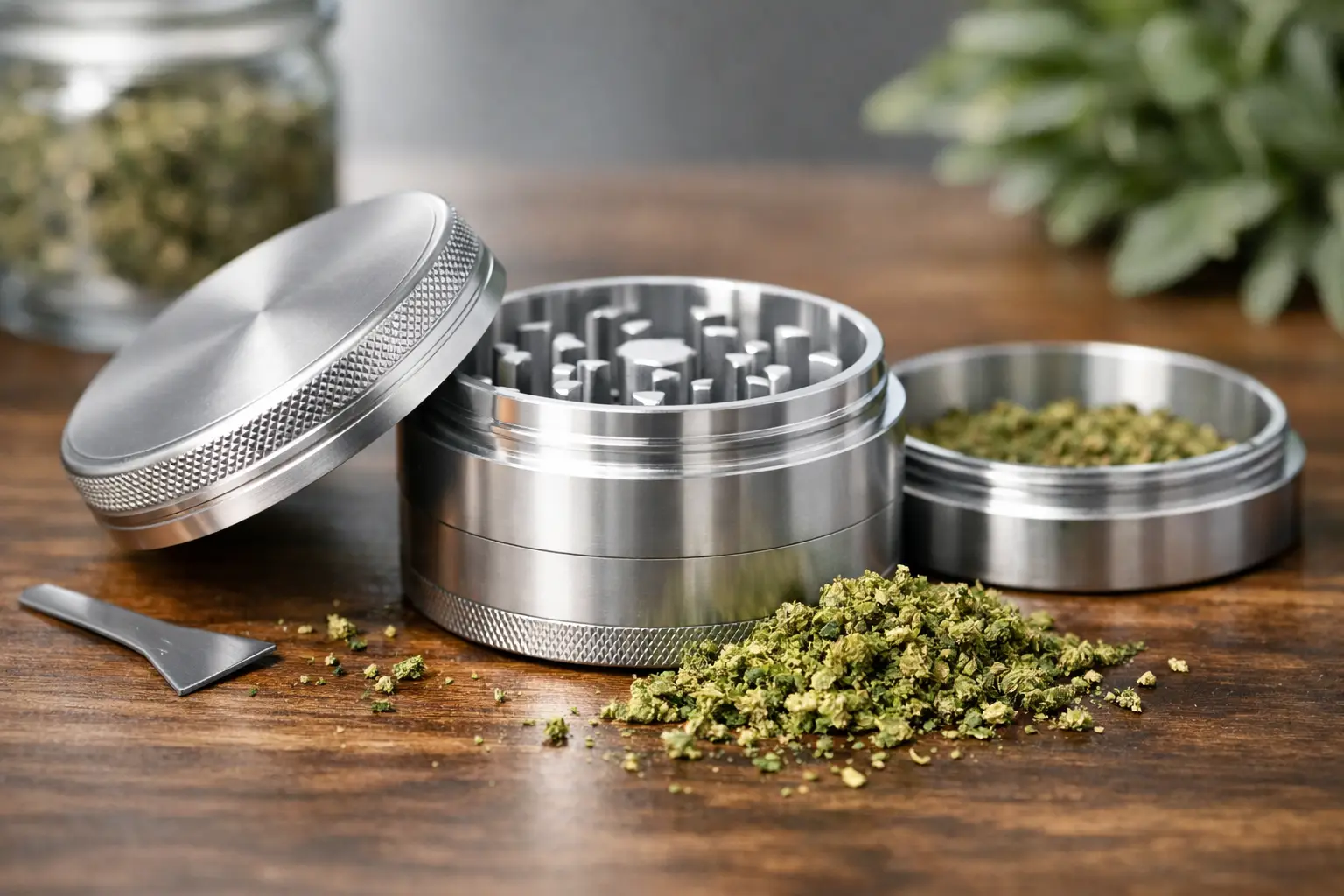
Cheap grinders usually fail the same way. The teeth dull, the threads bind, the finish starts to wear, and what should be a 10-second prep job turns into a fight with sticky flower. That is exactly why a 6061 aluminum herb grinder stands out. It is not just about metal choice on a spec sheet. It is about how the grinder feels after months of use, how consistently it cuts, and whether it still works like a precision tool instead of a disposable accessory.
For serious herb users, material matters because every weak point shows up fast. A grinder gets twisted, pocketed, dropped, overfilled, and used with dry flower one day and dense, resin-heavy bud the next. If the body flexes, the teeth chip, or the threads start crossing, performance falls off. A well-made grinder built from 6061 aluminum solves those problems at the source.
What 6061 aluminum actually changes
6061 aluminum has earned its reputation because it balances strength, machinability, corrosion resistance, and low weight better than many cheaper alternatives. In grinder terms, that means you can machine tight tolerances without ending up with a heavy brick in your hand. It also means the body can hold its shape under repeated use instead of gradually wearing into slop.
That matters more than most buyers realize. A grinder is a system, not just a shell with teeth. The lid fit, chamber alignment, tooth spacing, thread engagement or magnetic closure, and finish quality all depend on the base material being stable and machine-friendly. 6061-T6 aluminum is especially well suited for that kind of precision work.
You will sometimes see grinders made from generic pot metal or low-grade zinc alloys marketed as durable because they feel heavy. Weight is not the same as quality. A heavier grinder can still have poor tolerances, brittle teeth, rough threads, and weak finishes. A properly machined 6061 aluminum grinder feels solid without feeling clumsy, and that balance makes daily use noticeably better.
Why a 6061 aluminum herb grinder cuts better
The quality of the grind starts with geometry, but geometry only works if the material supports it. Sharp, well-machined teeth need a body that keeps them aligned. If the lid wobbles or the chamber tolerances are loose, the flower gets torn inconsistently instead of sliced cleanly.
That is where a 6061 aluminum herb grinder pulls ahead. The material allows for precise CNC machining, which helps keep tooth shape consistent from unit to unit and chamber to chamber. The result is a more even grind texture, better airflow in a bowl or joint, and less wasted herb stuck in awkward dead spots.
Consistency is the real performance marker. Plenty of grinders work fine when they are brand new. The difference shows up later. With a better material and better machining, the grinder keeps producing the same texture over time instead of slowly degrading into a sticky, uneven mess.
6061 vs zinc grinders
This is the comparison that matters for most buyers because the low end of the market is packed with zinc grinders. They are cheap to produce, easy to cast in flashy shapes, and common in smoke shops that prioritize price over long-term use.
The trade-off is performance. Cast zinc grinders often rely more on molding than precision machining, so tolerances can be rough from the start. Threads may feel gritty. Teeth can be less precise. Coatings may chip or wear faster. Once resin starts building up, any underlying sloppiness becomes more obvious.
A 6061 aluminum grinder, especially one that is CNC machined, is typically cleaner in its fit and more reliable in motion. It tends to resist the cheap, crunchy feel that makes users over-tighten, force turns, or smack the grinder against a tray to get it unstuck. If you use your grinder regularly, that upgrade is not subtle.
There is a cost difference, and that is the honest part. A premium 6061 model will usually cost more up front. But if the alternative is replacing a grinder every time the threads bind, the teeth chip, or the finish starts flaking, the cheaper option stops being cheap.
The role of 6061-T6 in long-term durability
Not all 6061 aluminum is presented the same way in product descriptions. When you see 6061-T6, the T6 refers to a heat-treated temper that improves strength and hardness. For grinders, that matters because repeated torque and contact wear are part of normal use.
A grinder does not need to be indestructible in some fantasy sense. It needs to handle real-life abuse without losing precision. That means surviving drops, resisting deformation, and keeping parts aligned after repeated opening and closing. 6061-T6 is one of the reasons premium grinders hold their performance longer under daily stress.
It also supports better finishing. Anodizing on quality aluminum parts can provide a cleaner, more durable surface than the painted or coated finishes common on lower-end grinders. That helps with wear resistance and keeps the grinder looking like a premium tool instead of something that starts aging badly after a few months.
Why manufacturing matters as much as material
Material alone does not make a great grinder. A badly made 6061 grinder can still underperform. The real advantage appears when the aluminum is paired with proper CNC machining, controlled finishing, and consistent inspection.
This is where experienced buyers separate buzzwords from real build quality. If a company controls machining in-house, it can hold tighter tolerances, refine tooth patterns, test closure systems, and catch defects before products ship. If a seller is just importing whatever a factory offered at the lowest bid, the material spec becomes less meaningful.
That is why shoppers looking for The Last Weed Grinder You’ll Ever Buy should pay attention to how the grinder is made, not just what it is made from. Precision is a manufacturing discipline. 6061 aluminum simply gives a serious manufacturer the right foundation to execute it well.
Choosing the right 6061 aluminum herb grinder design
The right configuration depends on how you use your flower. If you want maximum simplicity, a 2-piece grinder is fast, compact, and easy to clean. It is ideal for users who want a straightforward grind with fewer parts and less maintenance.
A 3-piece design adds storage below the grind chamber, which many users prefer for convenience. You can prep more flower at once without carrying a separate container. A 4-piece grinder adds a kief chamber, which is useful if you like collecting finer material over time.
Size matters too. Smaller grinders travel well and handle quick sessions, while larger models process more herb with less repetition. If you regularly grind for groups or roll multiple joints at once, a larger diameter makes the job easier. If you are mostly grinding solo and want something pocket-friendly, compact can be the better call.
The best answer is not always the biggest or most complex version. It depends on your routine, how much flower you grind per session, and whether convenience or capacity matters more.
What to look for before you buy
If you are comparing options, do not stop at the phrase 6061 aluminum. Look at the teeth design, the closure style, the chamber configuration, and whether the grinder is actually CNC machined. Check if the fit is built around traditional threads or a thread-less magnetic design. Both can work, but a well-executed magnetic system can reduce one of the most common failure points in cheap grinders – sticky, cross-threaded closures.
Also pay attention to warranty coverage. A lifetime warranty says something about how a manufacturer views its own product. Companies do not offer long-term confidence on grinders they expect to fail early.
For buyers who want a serious upgrade, Tahoe Grinder Co has built its reputation around this exact standard – premium 6061-T6 aluminum, precision CNC machining, tight tolerances, and direct control over production. That matters because it turns a common accessory into a dependable piece of daily hardware.
Is 6061 aluminum worth it?
If you grind occasionally and treat accessories as disposable, maybe not. A cheap grinder will still grind herb for a while. But if you use flower consistently, care about texture, hate jams, and want something that feels engineered instead of mass-produced, 6061 aluminum is absolutely worth it.
You are paying for cleaner machining, better structural integrity, stronger long-term performance, and a better experience every time you prep a bowl, blunt, or joint. That is the difference between buying on price and buying on use.
The best grinder is the one that disappears into your routine because it does its job right every single time. That is what a well-made 6061 aluminum grinder is supposed to do.