
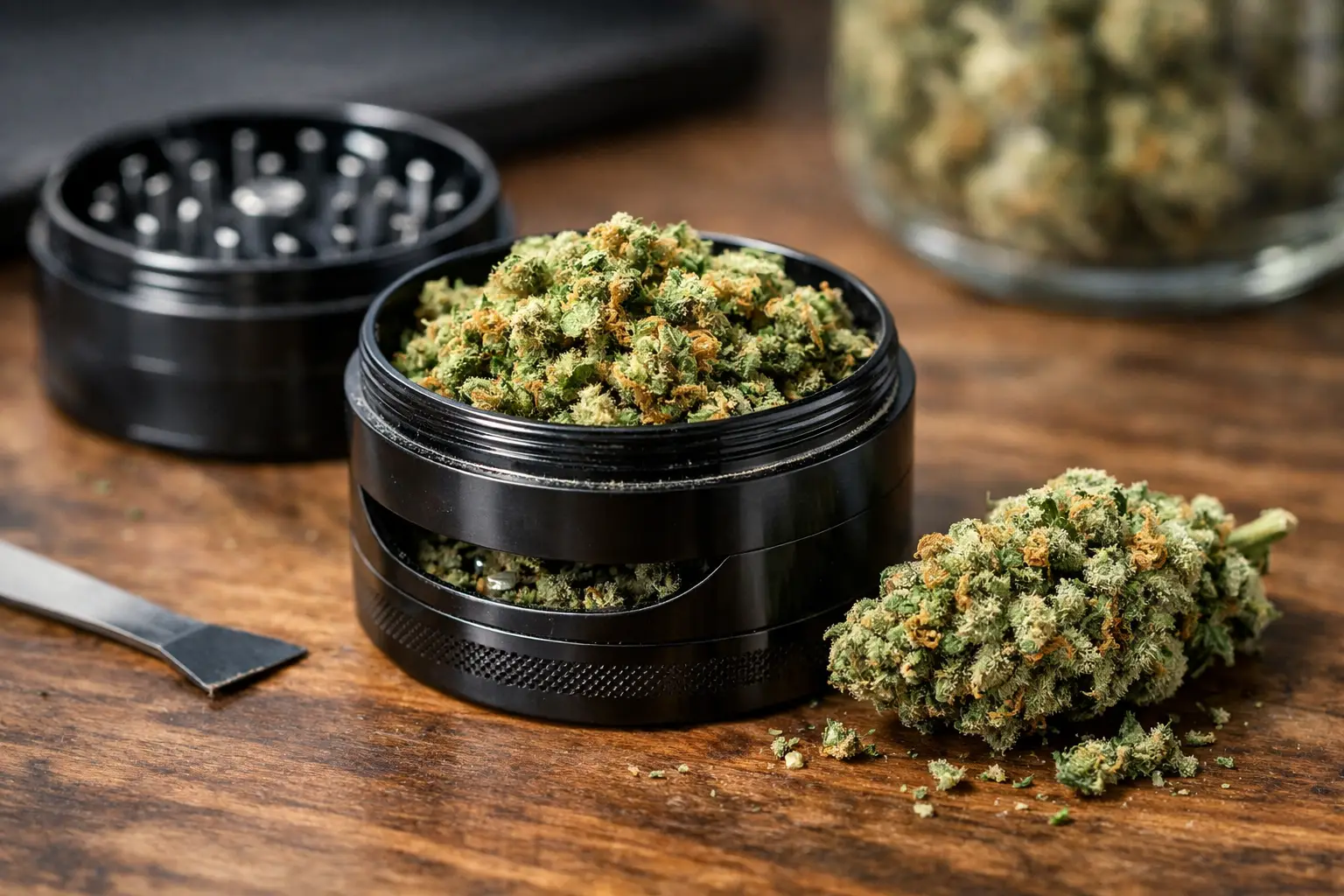
Sticky flower exposes bad grinder design fast. The teeth cake up, the threads bind, the lid starts fighting you, and suddenly a simple grind turns into a mess on your tray. If you are shopping for a weed grinder for sticky bud, you are not looking for a gimmick. You are looking for a tool that keeps cutting when dense, resin-heavy flower would stop a cheap grinder cold.
That means the real question is not just which grinder looks good or has the most chambers. It is which one is actually engineered to deal with sticky material day after day without turning maintenance into part of the ritual.
What sticky bud does to a grinder
Sticky bud is loaded with resin. That resin is great in your bowl, joint, or vape, but it is hard on moving parts. As you break flower apart, trichome-rich material transfers onto the teeth, walls, lid, and any threaded surfaces. On low-quality grinders, that buildup happens fast because the internal surfaces are rough, the teeth are poorly shaped, and the tolerances are sloppy.
The result is familiar. Instead of cutting cleanly, the grinder starts mashing flower into clumps. The lid drags. The grind gets uneven, with fluffy pieces mixed with dense chunks. If the grinder uses threads, sticky residue can make opening and closing more annoying every session.
A good weed grinder for sticky bud is built to resist those problems, not just survive them for a few weeks.
The best weed grinder for sticky bud starts with machining
This is where a lot of buyers get misled. They focus on color, chamber count, or whether a grinder comes with a pollen scraper. None of that matters if the grinder itself is poorly made.
For sticky flower, precision matters more than extras. Tight machining tolerances keep the lid aligned and the cutting surfaces consistent. Smooth interior walls give resin less opportunity to cling in problem spots. Well-cut teeth shear through flower instead of crushing it. Strong magnets help the lid stay planted while you work, especially when the bud has real density and moisture.
Material matters too. A grinder made from quality aluminum will generally outperform cheap pot metal or low-grade alloys because it can be machined more precisely and hold up better over time. A serious grinder should feel solid, cut cleanly, and keep doing both after months and years of use.
That is the difference between a disposable accessory and a real piece of hardware.
Tooth design matters more than most people think
If a grinder struggles with sticky flower, tooth design is often the reason. Teeth are not just there to look aggressive. Their shape, spacing, and sharpness determine whether the grinder slices flower apart efficiently or just compresses it into a resin-packed mess.
With sticky bud, overly crowded teeth can backfire. More teeth does not automatically mean better performance. If there is not enough room for material to move and fall, resin-heavy flower can gum up the chamber faster. A cleaner layout with well-shaped teeth often performs better because it keeps the cutting action consistent.
Sharpness also matters, but not in the cheap, stamped-metal sense. You want teeth that are precisely cut and durable, not edges that feel rough at first and wear down quickly. When the tooth geometry is right, the grinder does less fighting and more cutting. That means less force in your hands and a more even result in the chamber below.
Why threadless magnetic designs have an edge
Threads and sticky resin are not natural friends. If you have ever had to pry apart a grinder because flower glued the lid in place, you already know the problem. Resin collects in the threads, friction increases, and every opening feels worse than the last.
That is why a threadless magnetic design can be a major advantage for sticky flower. A strong magnetic closure keeps the lid secure without introducing one of the biggest failure points in traditional grinders. You remove the lid, load flower, grind, and open it again without dealing with sticky thread buildup.
This does not mean every threaded grinder is bad. A well-made one can still perform well. But if your main goal is reducing friction, cleanup headaches, and long-term binding issues, threadless construction is a smart place to start.
Choosing the right size for sticky bud
Size changes performance more than people expect. Small grinders are portable and convenient, but sticky flower can overwhelm them faster because there is less room for material to circulate while grinding. If you pack them too full, you end up forcing the turn instead of letting the teeth do the work.
A medium or large grinder often handles sticky bud better because it gives the flower more space to move through the teeth. That helps preserve a more even texture and reduces clogging during longer sessions. It also makes it easier to grind without overloading the chamber.
That said, bigger is not automatically better for every user. If you mostly prep small amounts at a time, a compact grinder can still work well if it is properly machined and you do not overstuff it. The right size depends on how much flower you usually grind, how sticky your bud tends to be, and whether you prioritize portability or throughput.
2-piece, 3-piece, or 4-piece for sticky flower?
This depends on how you use your herb after grinding it. A 2-piece grinder is the most direct setup. It grinds and holds your flower in the same chamber. For many users, that simplicity is a real advantage with sticky bud because there are fewer surfaces and transitions where resin can collect.
A 3-piece grinder adds a storage chamber below the grinding plate, which can make loading and handling easier. A 4-piece grinder adds a screen for pollen separation, which some users prefer, especially if they like a more refined chamber setup.
The trade-off is simple. More pieces can mean more functionality, but also more surfaces to keep clean. If you smoke sticky, fresh, resin-rich flower regularly, a 2-piece or well-designed 3-piece can feel more efficient in daily use. If you want maximum organization and separation, a 4-piece still makes sense, but quality matters even more because sticky flower will expose any weakness in fit and finish.
How to use a weed grinder for sticky bud without gumming it up
Even the best grinder can be abused. Sticky flower needs a slightly better approach.
Start by resisting the urge to overload the chamber. Dense, tacky nugs need room to move. If you pack too much in at once, you are asking the grinder to compress before it can cut. Break larger buds into smaller pieces first, especially if they are fresh and heavy with resin.
Use steady pressure instead of brute force. A quality grinder should not need to be muscled through a turn. If it feels like a fight, check the load. Too much flower, stems in the wrong position, or excess moisture can all slow things down.
Regular cleaning helps too, but there is a difference between maintenance and babysitting. A premium grinder should not need constant scraping to stay usable. Still, removing residue before it hardens will keep performance consistent and protect the smooth feel that separates a high-end grinder from a throwaway one.
What to avoid when buying a grinder for sticky bud
Cheap grinders usually fail in predictable ways. Weak magnets let the lid shift. Rough machining creates drag points. Poorly shaped teeth mash flower instead of cutting it. Soft materials wear down, and once the geometry goes, performance follows.
Bad coatings are another red flag. Sticky resin will find every flaw in the finish, and coatings that chip, flake, or wear unevenly have no place in a grinder that is supposed to last. For serious use, clean machining and quality aluminum beat gimmicky finishes every time.
You should also be skeptical of grinders that try to win on accessories instead of engineering. Extra tools and flashy packaging do not fix poor cutting performance. If the grinder itself is not built correctly, the rest is filler.
What serious buyers should look for
If you want the last grinder you buy, focus on fundamentals. Look for precision CNC machining, durable 6061-T6 aluminum, a design that minimizes binding, and a tooth pattern built for consistent cutting. Look at whether the company actually controls manufacturing or just resells generic imports with a logo added after the fact.
That difference matters because sticky flower is a performance test. It tells you quickly whether a grinder was engineered with intention or sourced for margin. Brands that machine, inspect, and ship their own products have more control over quality and consistency. That translates into a better feel in the hand and a better result on your tray.
Tahoe Grinder Co built its reputation around that exact standard – premium grinders made to perform like serious tools, not disposable accessories.
When your flower is sticky, the grinder has to be better than average. Not prettier. Not trendier. Better built. Choose one that cuts clean, opens easily, and keeps doing both after resin, pressure, and real use. Your bud already does the heavy lifting. Your grinder should keep up.