
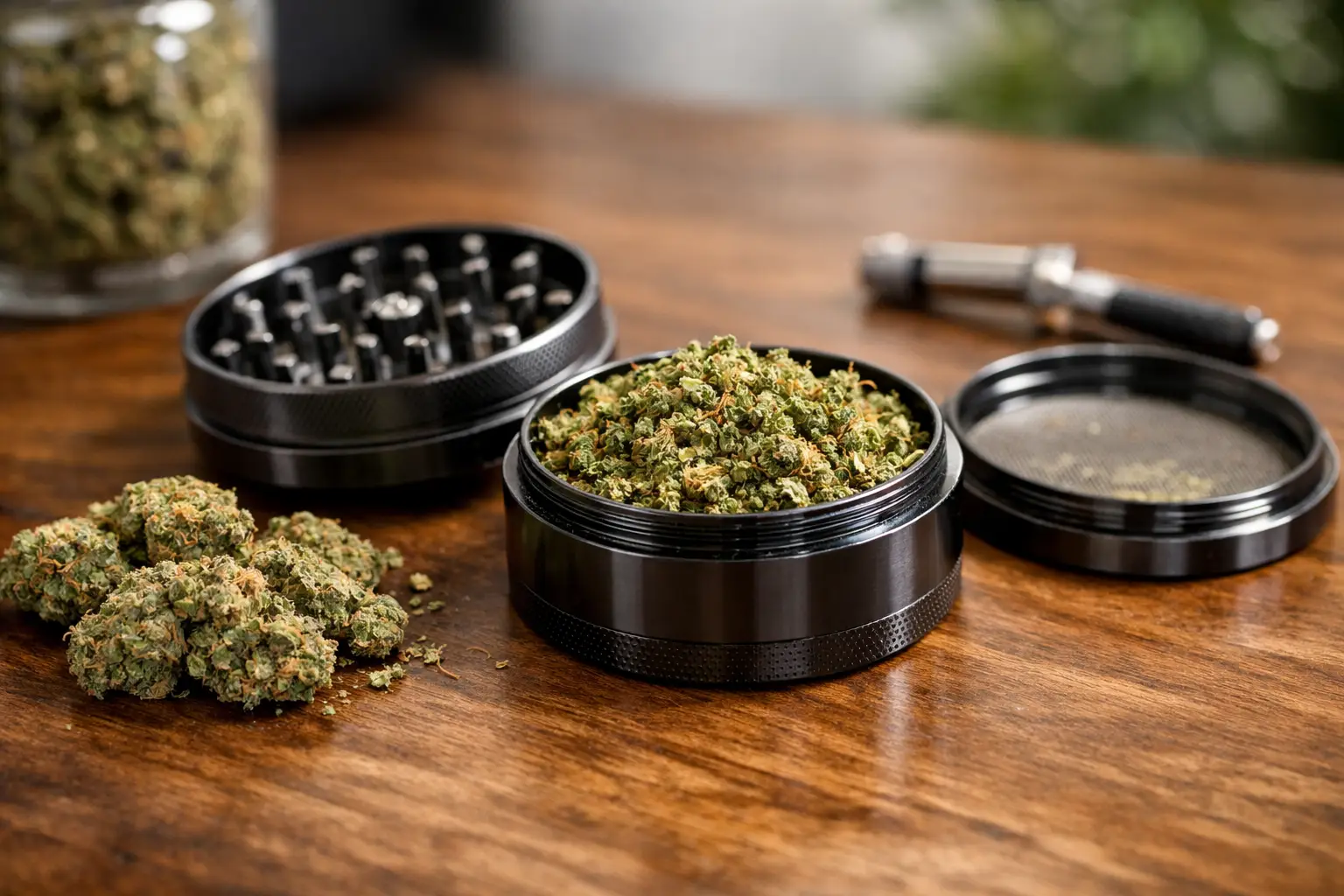
A grinder tells on itself fast. If it binds after a week, sheds coating into your flower, or leaves you with a lumpy, uneven shred, it was never built to be the best weed grinder in the first place. Serious herb users feel that difference immediately – in the roll, in the burn, and in how often they have to fight their own gear.
The truth is simple: most grinders look better online than they perform in real life. Clean product photos can hide loose tolerances, weak magnets, soft metal, and tooth patterns that mash flower instead of cutting it cleanly. If you want a grinder that earns its place every day, you need to judge it like a tool, not a trinket.
What makes the best weed grinder?
The best weed grinder is not just the one with the flashiest finish or the biggest number of chambers. It is the one that delivers a consistent grind, turns smoothly under load, resists wear, and keeps doing that month after month. That comes down to engineering, not gimmicks.
Material is the first filter. Cheap zinc alloy grinders are common because they are inexpensive to cast, but they tend to wear faster, feel rougher, and have less precise fitment. High-quality aluminum, especially 6061-T6, is a different class. It is strong, lightweight, corrosion-resistant, and well suited to precision machining. For a grinder you plan to keep, aluminum is the benchmark.
How that aluminum is made matters just as much. CNC machining gives manufacturers tighter control over tolerances than low-cost cast construction. That tighter fit affects everything – how smoothly the grinder rotates, how securely the lid seats, how well threads align if threads are used, and how consistently the teeth engage the herb. Precision shows up in feel, but it also shows up in performance.
Then there is the cutting system. Teeth are not just decoration. The shape, spacing, height, and pattern all influence whether your flower gets sliced into an even texture or crushed into a sticky mess. A good grinder creates a fluffy, usable consistency that burns evenly and packs cleanly. A bad one compresses material, clogs early, and forces you to overwork the herb.
Why cheap grinders fail so often
A low-end grinder usually fails in predictable ways. It jams because the fit is sloppy or the teeth geometry is poor. It gets harder to turn because resin builds up in rough internal surfaces. It wears down because the metal is soft or coated instead of properly finished. None of that is a mystery. It is what happens when a product is designed to hit a price point instead of a performance standard.
That is why bargain grinders often feel acceptable for a few uses, then quickly become frustrating. They may look almost identical to a premium grinder from a distance, but the ownership experience is completely different. Tight machining tolerances, proper finishing, and durable materials are expensive to do well. There is no shortcut around that.
The result is a false economy. Spend less upfront, and you often end up replacing the grinder, dealing with inconsistent flower prep, or settling for a tool that never really works the way it should. For regular smokers, that trade-off makes less sense the more often the grinder gets used.
Best weed grinder materials and build choices
If you are comparing grinders seriously, start with the body construction. CNC-machined aluminum stands out because it offers the best combination of durability, precision, and long-term usability. It feels substantial without being overly heavy, and it holds shape better than many lower-grade alternatives.
Magnetic lids are another feature worth paying attention to, especially on modern thread-less designs. A strong magnetic closure can make daily use faster and cleaner by eliminating cross-threading and reducing the small annoyance of screwing and unscrewing parts every session. That said, the magnet has to be strong and the mating surfaces have to be machined correctly. Otherwise, it is just a novelty.
Finish quality also matters more than people think. A properly finished grinder resists sticking, feels cleaner in the hand, and holds up better over time. Poor finishes can scuff easily or create drag where parts should move smoothly. If a grinder feels rough when it is new, it rarely improves with age.
One more point that separates premium from disposable: manufacturing control. When a company designs, machines, finishes, assembles, inspects, and ships its own grinders, there is far more accountability built into the process. That level of control tends to produce better consistency than generic imported inventory sold by storefronts that never touched the product before it hit a shelf.
Choosing the right grinder type
The best weed grinder for one user is not automatically the best for another. Configuration matters.
2-piece grinders
A 2-piece grinder is the most direct option. You grind and access your flower in the same chamber. It is simple, compact, and ideal for people who want speed with minimal parts. If you mostly grind small amounts and value portability, a high-quality 2-piece can be the right call.
The trade-off is that you do not get storage separation or pollen collection. For some users, that is a benefit because there is less to maintain. For others, it is too limited.
3-piece grinders
A 3-piece grinder adds a storage chamber beneath the grinding plate. That gives you more capacity and a cleaner workflow if you like to prep more than one session at a time. It is a strong middle ground for users who want convenience without going fully multi-stage.
4-piece grinders
A 4-piece grinder includes a screen and lower chamber for pollen collection. For many experienced users, this is the most versatile setup because it separates finer material while keeping the main grind chamber efficient. If you want a full-featured grinder with more utility, a well-built 4-piece earns its reputation.
The trade-off is maintenance. More parts mean more surfaces to keep clean and more design variables that need to be executed properly. A premium 4-piece is excellent. A cheap one is usually where problems multiply.
Size matters more than most buyers expect
Grinder size changes the experience in a real way. Smaller grinders are easier to carry and store, but they can feel cramped if you grind often or prefer larger loads. Larger grinders give you more leverage, better capacity, and often a more comfortable turn, especially with sticky flower.
That is why oversized options, including 90mm grinders, have such a strong following. They are built for people who do not want to fight their equipment. More diameter means more working room and, in many cases, smoother operation under pressure. If you prep for multiple sessions or simply want a more substantial tool in hand, larger formats make sense.
Still, bigger is not automatically better. If you mostly travel light or only grind enough for a quick personal session, a compact grinder may fit your routine better. The best choice matches your actual use, not just the biggest spec on the page.
The details that separate premium from average
A grinder can have good material on paper and still disappoint if the fundamentals are off. That is why experienced buyers look at the smaller details.
Tooth alignment matters. So does chamber fitment. So does the consistency of the rotation when the grinder is loaded with dense flower. These are performance indicators, not minor cosmetic issues. A premium grinder should feel controlled and deliberate, not loose, gritty, or unpredictable.
Warranty coverage is another strong signal. If a manufacturer backs the grinder for life, that says something about how confident they are in the machining, materials, and long-term durability. Disposable brands usually do not make promises they expect to pay for later. Real manufacturers do.
This is also where USA-based production can matter. It does not automatically guarantee quality, but when a company is machining and fulfilling in-house, it can maintain tighter oversight and faster response if anything goes wrong. That is a real advantage for buyers who care about consistency and service after the sale.
How to tell if you found the best weed grinder for you
Ask a few practical questions. Do you want a compact daily carry or a large-capacity workhorse? Do you prefer a simple 2-piece setup or a 4-piece grinder with more separation? Do you want the fastest possible access, or do you care more about extra storage and collection features?
Then look at the build. If the grinder is made from premium aluminum, precision machined, designed for smooth operation, and backed by a lifetime warranty, you are looking in the right category. If it is vague about materials, relies on flashy visuals, or feels interchangeable with a hundred generic listings, it probably is.
That is the real standard. The best weed grinder should make every session easier, cleaner, and more consistent without asking for much in return. Buy the one built like it expects to be used for years, because the right grinder should disappear into your routine and quietly outperform everything cheap enough to disappoint you twice.