
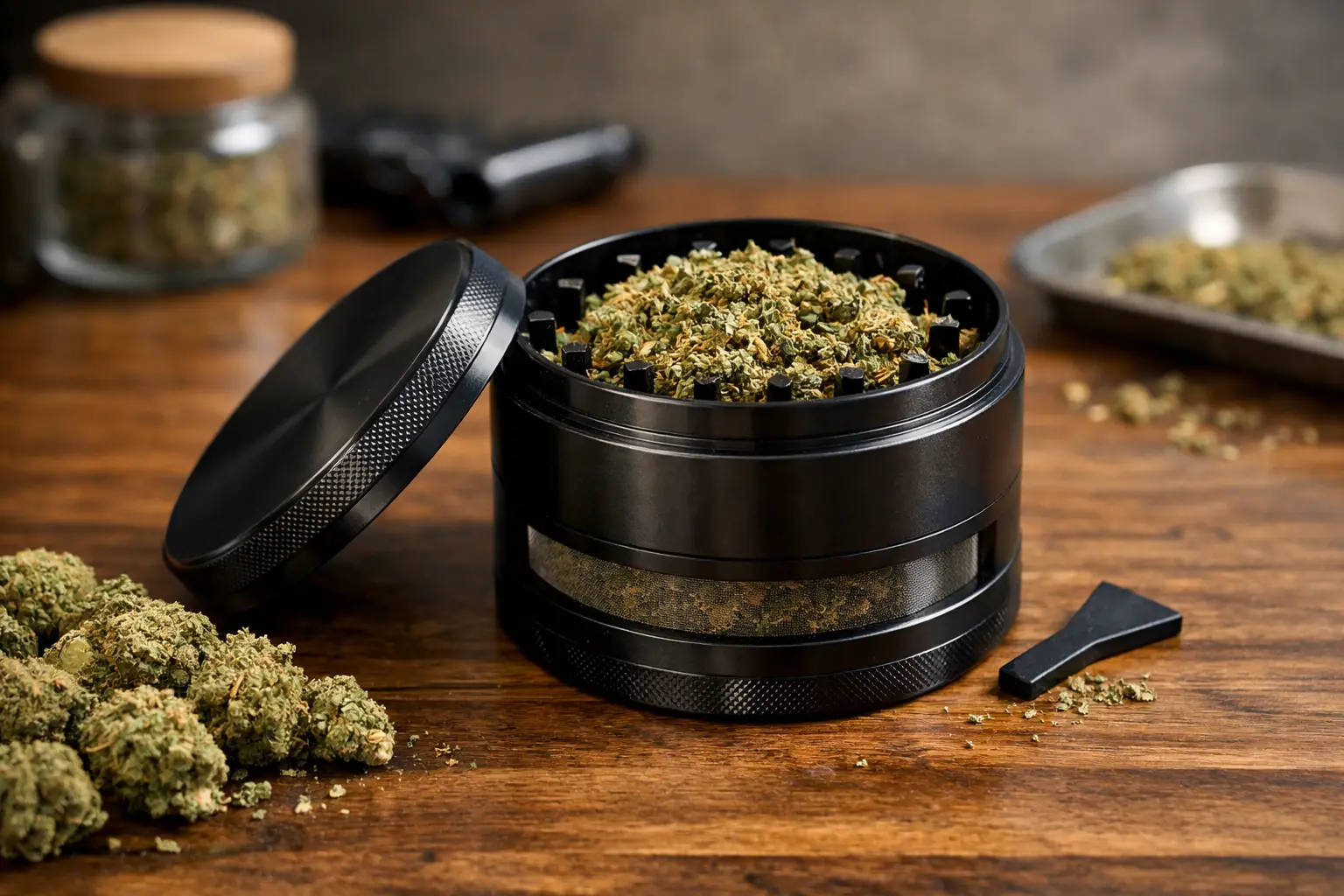
A small grinder feels fine right up until you pack for two people, grind a dense nug, and spend the next minute reloading the chamber because there just is not enough room. That is where an oversized weed grinder review gets useful. The real question is not whether a 90mm grinder looks bigger on the table. It is whether the added diameter actually improves grind quality, speed, comfort, and long-term reliability enough to justify the jump.
For serious flower users, the answer is often yes. But not every large grinder deserves the upgrade label. Size alone does not fix poor machining, weak teeth geometry, sloppy tolerances, or a lid that drifts off center after a few months. An oversized grinder only earns its keep when the engineering matches the footprint.
What an oversized weed grinder review should actually measure
Too many grinder reviews stop at first impressions. Bigger body, heavier feel, nice finish, done. That misses the point. A grinder is a performance tool. If it cannot process herb quickly, evenly, and repeatedly without binding up, the size does not matter.
A proper oversized weed grinder review should look at four things first. The grind has to be consistent across a full chamber, not fluffy on one side and chunky on the other. The grinder should move through larger loads with less effort than a smaller unit. It should stay aligned and smooth under pressure, especially with sticky flower. And it should be built from material that can take years of use without thread wear, tooth damage, or wobble.
That last part matters more in oversized models than most buyers realize. As diameter increases, any slop in machining becomes more obvious. Cheap large grinders can feel impressive in the hand but perform worse than a well-made mid-size grinder because the lid fit, tooth engagement, or chamber alignment is not precise enough.
Why 90mm changes the experience
A true oversized grinder, especially in the 90mm range, changes how you prep flower. The obvious benefit is capacity. You can load more herb at once and finish the job in fewer turns. That matters if you roll multiple joints, pack several bowls, or simply do not want to stop and refill halfway through grinding.
The less obvious benefit is leverage. A larger diameter gives your hand more surface area to work with, so the rotation feels easier and more controlled. On dense or resin-heavy flower, that difference is not cosmetic. It directly affects comfort and speed.
There is also a workflow advantage. Larger chambers give flower more room to move through the teeth pattern instead of getting compacted too tightly in one spot. When the geometry is right, that extra space helps produce a more even texture with less mashing. You are cutting and breaking down the herb instead of crushing it into resistance.
That said, bigger is not automatically better for every user. If you mostly grind small personal amounts, a 90mm grinder can feel like overkill. It takes up more pocket or drawer space, and some people prefer the tighter, more compact feel of a smaller mill. The oversized format makes the most sense when volume, speed, and comfort are priorities.
Build quality is where oversized grinders separate fast
This is where premium models pull away from generic imports. On a large grinder, machining quality is everything. If the body is made from low-grade metal, if the lid fit is loose, or if the teeth are stamped instead of precisely cut, the oversized design becomes a liability.
A serious grinder should use high-grade aluminum, ideally 6061-T6, with CNC-machined components and tight tolerances. That gives the grinder structural integrity without unnecessary weight, and it helps maintain smooth operation over time. Precision also affects how cleanly the teeth meet the flower. Better geometry means less tearing, less wasted motion, and a more predictable final consistency.
Thread design matters too. Traditional threaded grinders can work well, but they also create a common failure point. Cross-threading, gunk buildup, and rough engagement are familiar problems. A thread-less magnetic design removes that friction point entirely. On an oversized grinder, that is a meaningful upgrade because the lid is larger and gets handled more aggressively during normal use.
If a manufacturer controls machining, finishing, inspection, and fulfillment in-house, that is not just branding language. It usually means better consistency from unit to unit and tighter quality control before the grinder reaches the customer. That matters when you are buying a premium tool instead of another disposable accessory.
Performance in real use
The best oversized grinders do three things better than standard-size models. They clear more flower in fewer turns, they stay smoother under a heavy load, and they produce a more usable grind for rolling or packing.
With dry to moderately sticky herb, a well-machined 90mm grinder should feel fast. You load it, rotate with controlled pressure, and the teeth do the work without that gritty, choppy drag common in cheaper grinders. With stickier flower, resistance will increase, but a good oversized model still has an advantage because the larger body gives you more torque and better hand placement.
Consistency is where mediocre grinders get exposed. If the teeth pattern is poorly designed, you end up with a mixed grind that burns unevenly. Fine dust on one side, larger bits on the other, and too much compression during the process. A better oversized grinder maintains a more balanced texture across the chamber, which helps with airflow, burn, and overall session quality.
If you are choosing between 2-piece, 3-piece, and 4-piece designs, the right setup depends on how you use flower. A 2-piece is straightforward and fast, ideal if you want simple prep with fewer parts. A 3-piece gives you more separation and storage utility. A 4-piece adds pollen collection and more complete chamber organization. In oversized form, all three can work well, but the added diameter is especially useful in multi-piece grinders because it offsets the extra complexity with better handling and throughput.
Where oversized grinders can disappoint
An honest oversized weed grinder review has to mention the trade-offs. First, portability is worse. A 90mm grinder is not what most people want in a jeans pocket. It is better suited to home use, travel kits, or a dedicated station where convenience comes from capacity, not compactness.
Second, weight can go either way. Premium aluminum keeps the grinder strong without making it a brick, but some oversized models still feel bulky if you are used to a compact piece. That is not a defect. It is just part of the format.
Third, cheap large grinders often promise capacity but deliver frustration. Bigger parts require better machining. If a manufacturer cuts corners, the grinder can wobble, bind, or wear prematurely. That is why oversized is not a category you should shop by diameter alone. The details matter more here, not less.
Who should buy an oversized grinder
If you regularly prep flower for group sessions, prefer grinding once instead of multiple small batches, or want more hand-friendly leverage, an oversized grinder is an easy case to make. It is also a smart upgrade for anyone who is tired of small grinders clogging up, struggling with dense flower, or forcing awkward grip changes during use.
If you only grind tiny amounts for occasional solo sessions, a smaller premium grinder may be the better fit. The performance can still be excellent, and the compact footprint is easier to live with day to day. The key is matching grinder size to actual use, not buying the largest option just because it looks more serious.
For buyers who do want the oversized format, the best option is the one built like a long-term tool, not a novelty. Look for precision CNC machining, quality aluminum, clean magnetic engagement, sharp tooth geometry, and a lifetime warranty that signals real confidence in the product. That combination is what turns an oversized grinder from a bigger accessory into a better one.
Tahoe Grinder Co built its reputation on exactly that logic. A grinder should not just look premium. It should be machined, assembled, inspected, and backed like the last one you plan to buy.
So, is a 90mm grinder worth it? If you value speed, capacity, control, and a more efficient prep experience, absolutely. Just do not confuse oversized with overbuilt. The right large grinder earns its size every time you use it.