
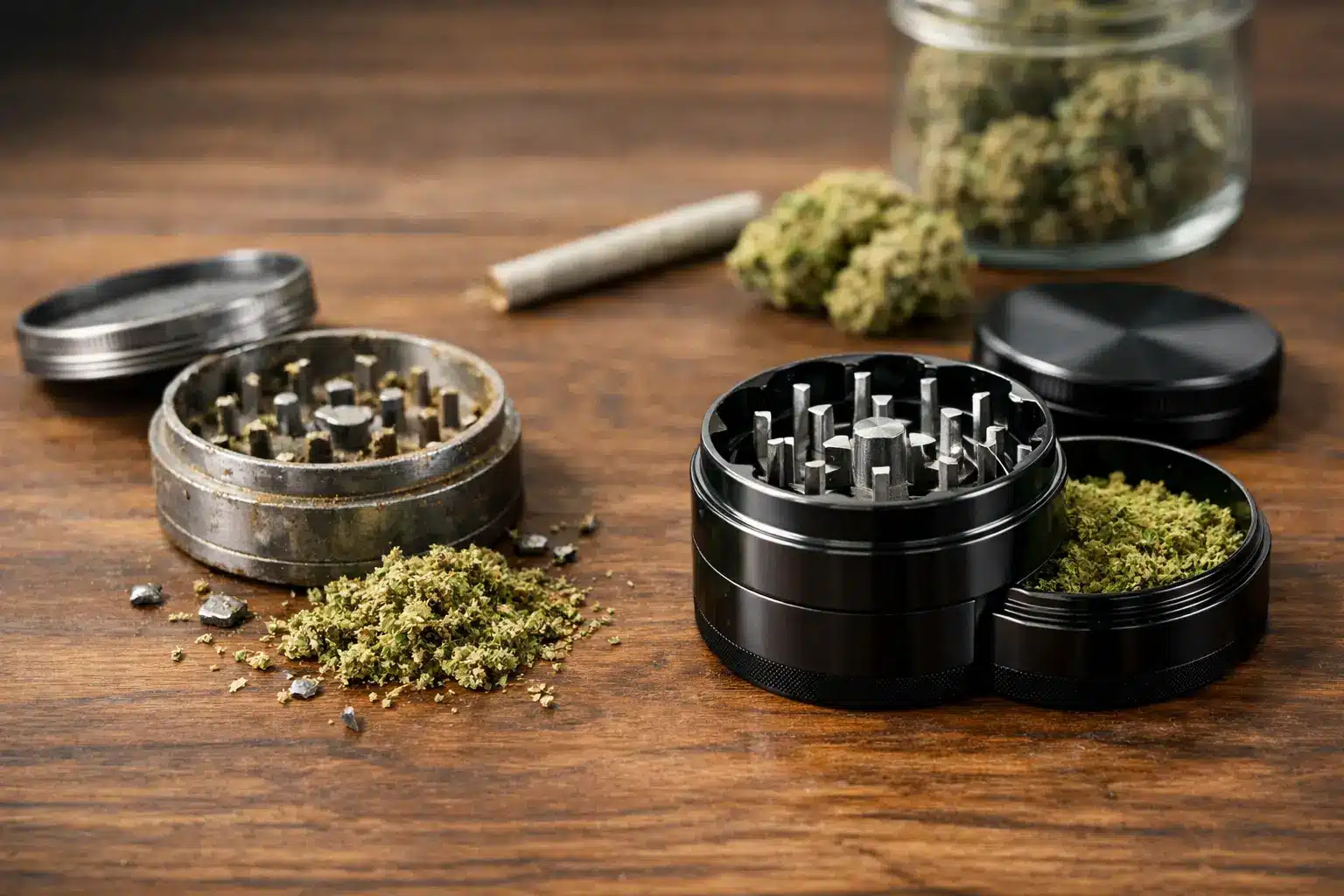
A grinder can look fine in the display case, feel fine for its first few turns, and still become the weak link in every session. The real difference shows up after sticky flower hits the teeth, fine material starts collecting in the threads, and the lid no longer spins the way it did on day one. So, are cheap weed grinders bad? Usually, yes – not because every low-priced grinder is automatically unusable, but because low cost often comes from the exact corners that determine long-term performance.
A grinder is a mechanical tool. Its material, tooth geometry, machining tolerances, finish, and assembly all matter. When those details are neglected, the result is familiar: uneven flower, jammed threads, teeth that dull or bend, metal flakes, stripped finishes, and a grinder that gets replaced far sooner than it should.
Are Cheap Weed Grinders Bad for Your Herb?
Cheap grinders are not necessarily bad because they cost less. A simple two-piece grinder with honest materials and clean machining can be a smart purchase. The problem is that many bargain grinders are built to win on initial price, not to deliver years of controlled, consistent use.
That usually means cast alloy instead of properly machined aluminum, shallow or poorly shaped teeth, thin walls, loose-fitting parts, and coating choices that prioritize appearance over durability. You may save money at checkout, then pay for it with wasted herb, a frustrating prep routine, and another replacement grinder a few months later.
Flower should be cut cleanly and evenly, not crushed into random chunks or pulverized into dusty powder. A quality grinder creates a texture that is easier to pack, easier to roll, and more predictable in a bowl or vaporizer. That consistency starts with tooth design and ends with the precision of every part that turns against another.
Low-Grade Metal Does Not Hold Up
Many inexpensive grinders rely on soft, unknown alloys. These materials can dent, deform, or wear down quickly, especially around the teeth and threaded areas. Once the teeth lose their cutting edges, the grinder starts mashing herb rather than shearing it. Sticky strains make the issue even more obvious.
Premium 6061-T6 aluminum is a different class of material. It is lightweight, strong, corrosion-resistant, and well suited to precision CNC machining. More importantly, it supports a grinder design that stays true over repeated use. You should not have to baby a daily-use tool to keep it functioning.
Dull Teeth Create an Uneven Grind
Tooth count alone does not tell you whether a grinder is good. The geometry matters more. Teeth need enough height, spacing, and edge definition to pull flower through efficiently without turning every bud into fine dust.
Cheap teeth are often blunt, inconsistent, or poorly positioned. Some are stamped or cast with rough edges. Others are too small to handle denser flower without repeated twisting and force. That is when users start overloading the chamber, cranking the lid, and wondering why their grinder suddenly feels stuck.
A precision-machined grinder should do the work with controlled turns. It should break down properly loaded flower into a consistent texture without requiring brute force.
The Problems That Show Up After the First Week
The first few grinds rarely tell the full story. Almost any new grinder can feel smooth before residue builds up. Long-term performance is where cheap construction gets exposed.
Poor tolerances are one of the biggest problems. If the lid, chamber, and threads are not machined to fit correctly, small amounts of ground herb can work their way into the wrong places. The grinder begins to bind, cross-thread, or squeak. A lid that once closed smoothly now needs alignment and pressure.
Cheap finishes can also become an issue. Painted or low-quality coated grinders may scratch, chip, or wear at high-contact points. A grinder should be built from a material worth using, not dressed up to hide a weak one.
Then there is the screen in many four-piece grinders. A poorly made screen can clog quickly, sit unevenly, or fail at the edges. That defeats the point of choosing a multi-chamber setup in the first place. If you want separated ground flower and a lower collection chamber, the screen needs to be properly fitted and supported.
Why Precision Changes the Entire Experience
Good machining is not a cosmetic upgrade. It affects every part of the grinder’s function.
Tight tolerances help components align correctly. Cleanly machined teeth cut more predictably. Properly finished surfaces reduce unnecessary friction. A well-designed magnetic lid holds securely while eliminating the threaded top that can collect debris and become a source of jams.
That is why a quality grinder feels different in the hand. It opens cleanly, closes confidently, and turns with purpose. There is no rattle from loose parts, no guessing whether the lid is seated, and no hesitation before grinding dense flower.
The right configuration also matters. A two-piece grinder is direct, portable, and ideal for users who want ground flower immediately. A three-piece design adds a storage chamber below the teeth. A four-piece grinder separates ground flower from finer material using a screen and collection chamber. None is automatically best. The best setup depends on how you consume, how much flower you prepare at once, and whether you want separate collection.
What should not be negotiable is the quality of the tool itself. A large 90mm grinder, for example, needs especially solid construction. More diameter means more leverage and capacity, but it also puts more demand on the lid, teeth, and overall alignment. Cheap large grinders can feel impressive until they start flexing, binding, or wearing unevenly.
When a Cheap Grinder Can Make Sense
There are a few cases where a lower-cost grinder is reasonable. If you need a temporary backup, travel often and do not want to risk your primary piece, or only grind flower occasionally, a basic grinder may get the job done.
The key is to treat it like a temporary compromise, not a performance purchase. Do not expect the same consistency, durability, or ownership experience you would get from a grinder designed and manufactured with long-term use in mind.
A cheap grinder can also be acceptable if it is simple. Fewer parts mean fewer places for poor manufacturing to cause trouble. A basic two-piece model with solid metal construction is often a better bet than a flashy four-piece grinder made with weak alloy, unreliable threads, and a questionable screen.
What to Look for Instead of the Lowest Price
Before buying any grinder, look past the color, logo, and number of chambers. The details below tell you far more about what you are actually getting:
- Material: Look for durable, clearly identified aluminum such as 6061-T6 rather than vague claims about “metal.”
- Manufacturing method: CNC machining delivers more consistent fit and tooth geometry than low-cost cast construction.
- Tooth design: Clean, sharp, properly spaced teeth should cut flower efficiently without excessive force.
- Lid and closure: A secure magnetic lid can avoid the clogged, cross-threaded top common on cheaper designs.
- Warranty and accountability: A lifetime warranty signals that the manufacturer expects its grinder to survive daily use.
These are not luxury details. They are the difference between a tool you use without thinking and one you fight with every time you want to prepare flower.
A Better Grinder Costs Less Over Time
The cheapest grinder is rarely the least expensive grinder to own. Replace a $15 or $20 grinder several times, lose herb to bad teeth and stuck chambers, and spend every session dealing with inconsistent performance, and the bargain disappears quickly.
A premium grinder is built to remove that friction. Tahoe Grinder Co machines its grinders in-house in the USA, controlling the process from design through inspection instead of relying on generic, mass-produced hardware. That level of control is what makes serious accessories feel serious: the material is known, the fit is intentional, and the performance is not left to chance.
Buy for the way you actually use cannabis. Choose the size that fits your sessions, the chamber count that fits your routine, and a grinder made from materials that can handle years of real use. When the tool is right, preparing flower becomes the easiest part of the session – exactly as it should be.