
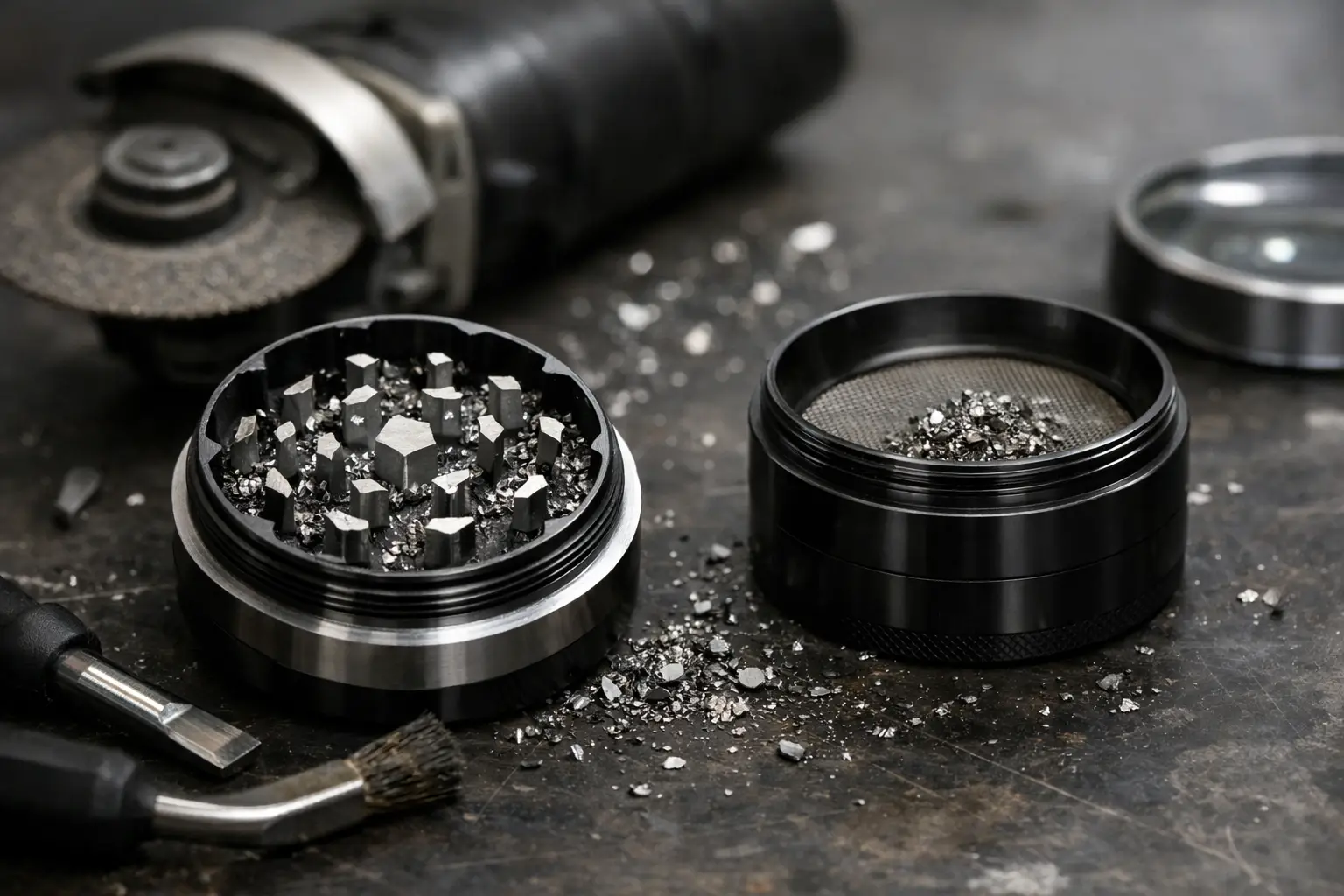
A grinder should break down flower, not break down into it. If you are asking, “why does my grinder shed metal,” do not ignore visible flakes, chips, or gritty residue. A quality herb grinder is designed to handle repeated use without depositing material into your cannabis. When it appears to be shedding, the cause is usually poor material selection, rough machining, damaged teeth, worn finish, or parts rubbing where they should not.
The good news is that not every shiny mark means metal is entering your grind. The bad news is that true metal flakes are not normal, and a grinder producing them is not a tool worth trusting. Here is how to tell the difference, what causes the problem, and when it is time to retire a cheap grinder for good.
Why Does My Grinder Shed Metal?
The most common answer is simple: the grinder was not made to tight enough standards. Low-cost grinders are often cast from soft, inconsistent alloys, then quickly coated, painted, or lightly finished to look better than they perform. Their teeth may have sharp burrs left from production, their threads may not align cleanly, and their moving surfaces may rub under pressure.
Every time you twist the lid, those imperfections create friction. Over time, friction can scrape a finish, shave a rough edge, or grind two poorly fitted surfaces against each other. Add sticky, dense flower and a user applying extra force, and the wear accelerates.
A premium grinder should not depend on luck or a cosmetic coating to survive daily use. The material, machining, finish, and fit of every moving component matter.
New-grinder burrs and machining debris
A brand-new grinder can occasionally have a tiny burr or fragment left behind after manufacturing. Burrs are raised, sharp remnants created when a cutting tool exits the material. On a properly made CNC-machined grinder, parts are finished, cleaned, and inspected before assembly. On rushed mass-market pieces, that final attention is often missing.
Before loading a new grinder, inspect the teeth, lid, chambers, and threads under bright light. Run a clean fingertip carefully along non-sharp surfaces and look for rough spots, loose fragments, or powdery debris. Then wipe the grinder thoroughly with a clean, dry microfiber cloth. If flakes continue appearing after cleaning, stop using it.
Soft metal and poor alloy quality
Not all aluminum grinders are equal. Aluminum is an excellent choice for a grinder when the grade and manufacturing process are right. It is lightweight, corrosion-resistant, and strong enough for years of regular use. But cheap, soft aluminum or unknown pot-metal blends can wear rapidly, especially at the teeth and threaded connections.
Many bargain grinders are also made from die-cast zinc alloy. These can feel heavy in the hand, but weight is not proof of quality. Poor casting can leave porous surfaces, inconsistent tooth geometry, and weak edges that chip under repeated twisting. A heavy grinder that jams, scrapes, or sheds is still a bad grinder.
Machined 6061-T6 aluminum is a different class of material. It offers reliable strength and consistency, which gives the manufacturer a stable foundation for accurate tooth profiles, clean surfaces, and durable engagement between components.
Worn anodizing, paint, or mystery coatings
Some users describe color coming off a grinder as “metal shedding.” It may be a finish rather than the base metal, but it is still a red flag if it is flaking into the chamber. Painted grinders, decorative coatings, and low-quality anodizing can wear at contact points, especially around teeth, lids, and threads.
A properly anodized aluminum finish is integrated into the aluminum surface rather than sitting on top like paint. It is not indestructible, but it is far more resistant to ordinary abrasion. A finish should not be peeling off in visible chips after normal use.
If you see colored flakes, black coating fragments, or powder collecting in your flower chamber, discontinue use. Do not assume a quick rinse solves a failing finish. The underlying issue is wear, and wear will continue where parts contact each other.
Not All Marks Mean Your Grinder Is Failing
A few visual signs are often mistaken for metal loss. The difference matters because it tells you whether you need a simple cleaning or a replacement.
Shiny rub marks on the underside of a lid or around the outer edge can occur when metal surfaces settle into their normal contact path. On a well-made grinder, these marks should be minor, smooth, and stable. They should not create loose flakes or make the grinder feel gritty.
Dark residue can also be a mix of sticky trichomes, fine plant matter, dust, and old oils from handling. It may look alarming against bare aluminum, but it usually wipes away without revealing pits, chips, or rough spots. Residue is a maintenance issue. Visible particles that can be picked up or brushed out are a hardware issue.
A scratched screen is another separate concern. A stainless steel kief screen can collect resin and become discolored, but it should remain intact and firmly seated. If the screen is frayed, torn, loose, or shedding wire-like fragments, replace the grinder or have the component professionally addressed. Never keep running flower through damaged hardware.
The Friction Points That Cause Metal Wear
Grinders shed material most often where two components collide, scrape, or bind. The teeth are the obvious suspect, but they are not the only place to inspect.
Teeth that collide instead of interlock
Grinder teeth should pass each other with controlled clearance. They should cut and separate flower, not smash directly into opposing teeth. Poorly designed tooth patterns can collide when the lid is tightened, particularly if the grinder is overfilled or the parts flex under load.
Look for flattened tooth tips, gouges on opposing teeth, or a grinding sensation even when the chamber is empty. Those signs point to contact that should never be happening. Forcing the lid through that resistance can shave material from the teeth.
Threads that cross-thread or bind
Traditional threaded grinders are vulnerable to cross-threading when the lid is started at an angle. Dirty threads also create drag. If you have to fight the lid, stop and back it off rather than muscling it tighter. Forcing a misaligned thread can scrape aluminum from both sides and leave fine debris in the chamber.
Thread-less magnetic designs remove that particular failure point. They do not eliminate the need for quality machining, but they avoid the repeated thread-on-thread friction that causes many budget grinders to feel rough and deteriorate over time.
A warped lid or overloaded chamber
Even a good grinder has limits. Packing flower above the teeth, loading very sticky material in large chunks, or twisting at an angle can put uneven pressure on the lid. A thin, poorly built lid may flex enough for teeth to touch or outer edges to rub.
Break dense flower into smaller pieces and fill the chamber loosely. You want room for the teeth to work. If a grinder only turns when it is half-empty, however, that is not user error. It is a performance failure.
What to Do If You Find Metal Flakes
Do not keep using the grinder until you know what you are seeing. Empty the chamber and discard any herb that contains visible particles. This is not the place to take chances or try to pick flakes out of ground flower.
Clean the grinder with a dry brush or microfiber cloth first, then inspect every contact surface under direct light. Check the teeth, lid interior, chamber rim, threads or magnetic connection, and screen. Do not use abrasive tools that can create fresh scratches and confuse the diagnosis.
If the flakes came from a one-time manufacturing burr and the grinder is otherwise smooth, intact, and clean after inspection, monitor it closely. If you find repeated flakes, chipped teeth, peeling finish, binding threads, or a damaged screen, replace it. A grinder is a consumable-prep tool. It should not demand constant troubleshooting to remain usable.
How Better Manufacturing Prevents the Problem
The difference between a grinder that lasts a season and one built for years comes down to control. Precision CNC machining creates repeatable teeth, accurate chamber dimensions, and deliberate clearance between moving parts. That means the grinder turns with authority instead of scraping itself apart.
Material choice matters just as much. 6061-T6 aluminum delivers the strength and consistency needed for durable grinder components without the unnecessary bulk of cheap cast metal. A clean anodized finish adds surface protection, while thorough inspection catches burrs, poor fit, and cosmetic defects before the product reaches a customer.
At Tahoe Grinder Co, grinders are machined, finished, assembled, inspected, and shipped from the same USA-based operation. That level of control is not marketing filler. It is how a manufacturer protects the details that determine whether a grinder stays smooth, clean, and dependable after thousands of turns.
A lifetime warranty is also worth more than a slogan when it is backed by the company that actually makes the product. It signals that the grinder was designed as long-term equipment, not as a disposable accessory dressed up in bright colors and loose claims.
Choose the Grinder You Should Not Have to Replace
Your grinder should produce a consistent texture, turn cleanly, and keep its material where it belongs: in the grinder, not mixed into your flower. Minor residue is normal. Peeling finishes, loose flakes, chipped teeth, and gritty operation are not.
If your current grinder sheds metal, treat it as a clear standard for your next one. Buy for material quality, precise fit, durable finishing, and manufacturing accountability. The right grinder disappears into the routine – it works every time, and it never makes you question what ended up in your bowl.