
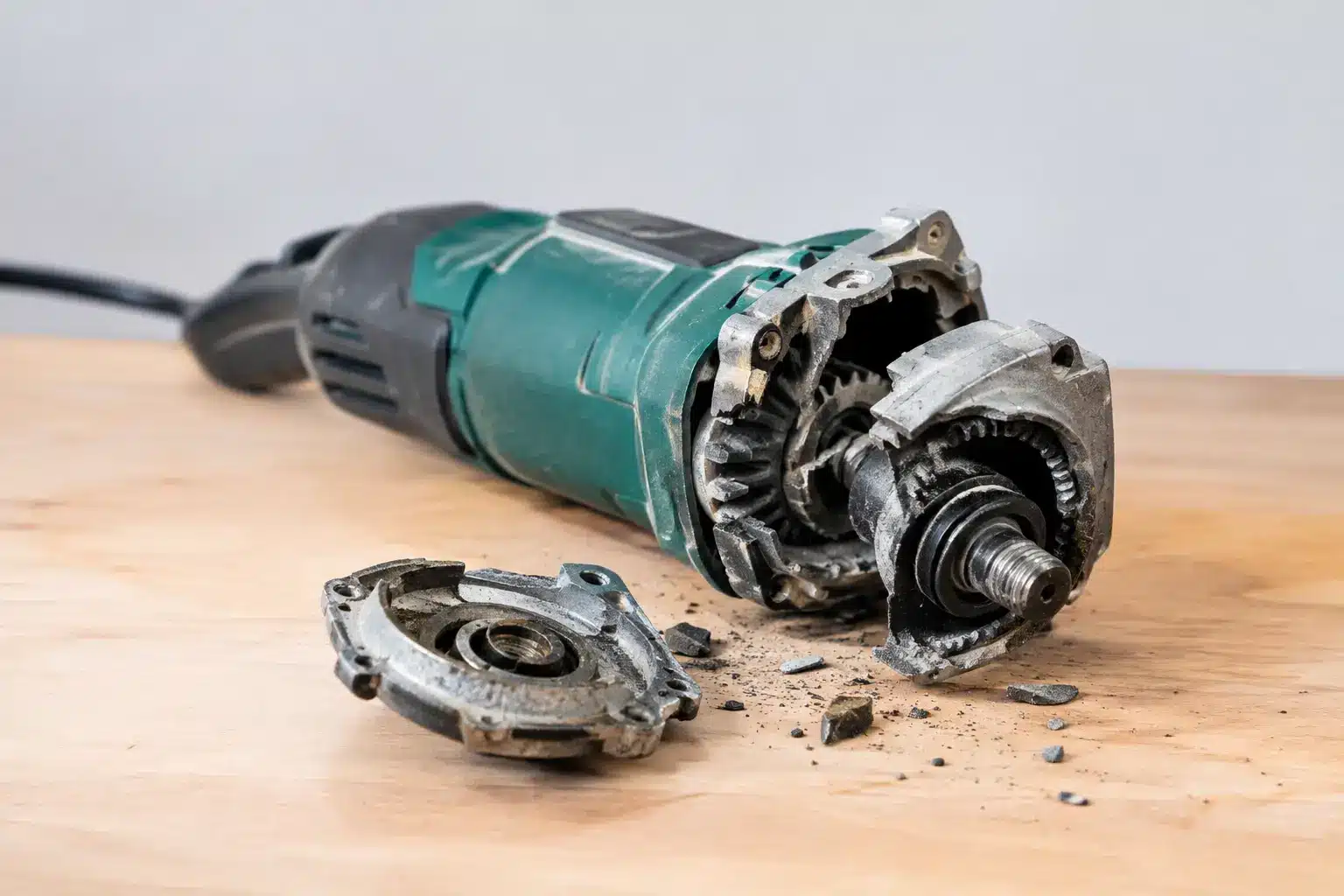
A grinder should disappear into the routine: load herb, twist cleanly, get a consistent result. In this cheap grinder failure case study, the opposite happened. What began as a low-cost four-piece grinder turned into a series of small failures that made every session slower, messier, and less predictable.
The lesson is not that every affordable grinder fails on day one. It is that low sticker prices often reflect shortcuts you can feel after the first sticky flower, the first packed chamber, or the first time the lid binds under pressure. A grinder is a mechanical tool. If the material, tooth geometry, threads, and fit are wrong, no amount of flashy color or oversized branding will make it perform.
The Cheap Grinder Failure Case Study Setup
The grinder in this case was a common budget-style aluminum grinder with four pieces: a magnetic lid, grinding plate, storage chamber, and pollen screen. It looked convincing out of the package. The finish was bright, the teeth appeared sharp, and the lid snapped into place with enough force to suggest quality.
Its weaknesses showed up once it was used the way a grinder is actually used. The test involved moderately sticky dried herb, regular cleaning, and repeated opening and closing over several weeks. Nothing abusive. No tools used to pry it apart, no deliberate overpacking, and no drop test. Just normal ownership.
That distinction matters. A serious grinder should not need delicate treatment to survive ordinary flower. Cannabis resin is sticky by nature. Fine plant material travels into seams. A grinder that works only when it is spotless and barely loaded is not a reliable tool.
Failure One: Teeth That Crush Before They Cut
The first issue was uneven grinding. Freshly packed herb near the outside edge broke down, while material closer to the center stayed partially intact. Instead of creating a uniform texture, the grinder produced a mix of powder, small flakes, and stubborn chunks.
Cheap grinders frequently use tooth shapes that look aggressive but are not engineered to feed herb through the plate efficiently. Some teeth are too blunt. Others are spaced poorly or sit in patterns that create dead zones. The user responds by twisting harder, which compresses resin-coated herb between the teeth instead of cutting it cleanly.
That extra force has consequences. It tires your hand, increases friction, and pushes sticky material into places where it does not belong. A consistent grind is not cosmetic. It affects how evenly a bowl packs, how a joint burns, and how easily you can portion herb without picking through chunks.
Precision-machined teeth are designed as a working system, not as decoration. Their shape, spacing, and relationship to the grinding holes determine whether herb moves through the chamber or gets mashed into a sticky plug.
Failure Two: The Lid Lost Its Smooth Rotation
Within a short period, the lid began to feel rough. At first, it was only noticeable when the chamber was full. Then it happened even with a small amount of flower. The lid would catch during a twist, release suddenly, and leave bits of herb pressed around the outer rim.
This is where machining tolerances separate a purpose-built grinder from a generic accessory. When mating surfaces are poorly finished or slightly out of round, resin buildup turns minor friction into a real operating problem. The lid may still technically close, but it no longer moves with control.
A magnetic lid does not solve that problem by itself. Magnets help secure the top, but they cannot compensate for sloppy fit. The best thread-less magnetic designs pair a secure closure with accurately machined contact surfaces, so the lid stays aligned as it turns instead of rocking, grinding, or catching at the edge.
The budget grinder eventually required a careful, two-handed twist to avoid spilling herb. That is a failure of ownership experience, not user technique.
Where Cheap Grinder Construction Gives Up
The most revealing failures came from the parts shoppers cannot evaluate from a product photo. A low-resolution listing can show a grinder from ten angles and still hide the material grade, the quality of the threads, the thickness of the screen ring, and the consistency of the internal machining.
Failure Three: Threads Started Binding
The storage chamber was threaded, and those threads became the grinder’s biggest daily frustration. Fine herb particles and resin collected inside them, which is normal. The abnormal part was how little contamination it took before the chamber began cross-threading.
Cross-threading is more than an annoyance. Each bad start damages the thread path further. The chamber becomes harder to close, then harder to reopen. Eventually, users tend to force it, and forcing soft metal threads is how a cheap grinder becomes permanently crooked or stuck.
Good threads need clean machining, adequate engagement, and consistent alignment from piece to piece. They also need material that does not deform the first time the grinder is tightened while slightly dirty. Cheap construction often creates a false economy here: the grinder costs less upfront, then demands more cleaning, more patience, and finally replacement.
Failure Four: The Screen Became the Weak Link
The pollen screen initially looked fine. After regular use, it sagged slightly at one edge and began retaining more fine material than it passed. Cleaning helped, but only temporarily. The screen assembly felt like an afterthought pressed into a chamber designed around cost rather than service life.
For some consumers, a two-piece grinder is the right answer because it keeps the design simple and direct. For others, a three-piece or four-piece configuration adds useful storage and separation. The configuration depends on how you prepare and carry herb. What should not depend on your preference is whether the components stay secure and functional.
A four-piece grinder has more interfaces, which means more opportunities for weak engineering to show up. If you want a screen, it needs a stable seat and a chamber that opens without a fight. If you do not want a screen, a premium two-piece design can eliminate unnecessary parts while delivering an exceptionally clean, consistent grind.
Failure Five: The Finish Hid Soft Metal
By the end of the test period, the outer finish had scuffs, but that was not the real concern. The more serious sign was wear around the threads and teeth. Small bright marks appeared where the coating had rubbed away, revealing soft underlying metal that was beginning to deform.
Not all aluminum is equal. Durable grinder construction starts with a material chosen for strength and machinability, then relies on controlled machining to preserve that advantage. 6061-T6 aluminum is a proven choice because it provides the structural integrity a daily-use grinder needs without making the tool unnecessarily heavy.
A premium grinder also earns its price through control. When a manufacturer handles design, CNC machining, finishing, assembly, inspection, and fulfillment in-house, there is accountability at every stage. Tahoe Grinder Co builds that control into its USA-made grinders rather than handing the product off to an anonymous supply chain and hoping the pieces match.
What This Failure Actually Costs
A cheap grinder rarely fails in one dramatic moment. It taxes every session in small ways: the extra twist, the stuck thread, the herb caught in the rim, the inconsistent texture, the cleanup you did not plan to do. Then comes the replacement purchase.
That is why the lowest price is not always the lowest cost. A grinder made from durable aluminum, machined with tight tolerances, and backed by a lifetime warranty is built for a different ownership model. You buy it once because the tool is meant to keep working.
There is still room for honest trade-offs. A compact grinder is easier to carry but has less capacity. An oversized 90mm grinder gives you more grinding surface and leverage but takes up more space. A four-piece model offers separation and storage, while a two-piece keeps the workflow fast. Choose the format around how you use herb, then refuse to compromise on the engineering that makes that format dependable.
The best grinder does not ask you to baby it, force it, or replace it after a few sticky sessions. It gives you a clean turn, an even grind, and the confidence that tomorrow’s prep will work exactly like today’s.